
Posted on Feb 24, 2015

USAF Force distribution: Does it seem too "hard" or "harsh"?

45.6K
221
83
6
6
0

In a recent article for AFSA CMSAF Cody outlined the force distribution numbers that will be in effect starting with SMSgts this year (July 15). The breakdown was for SrA/SSgt/TSgt 5% would receive "Promote Now" (highest rating), 15% would receive "Must Promote" with no limit on the other 3 recommendations. For MSgts 10% will be stratified and 20% of SMSgt will be stratified.
My Question is does this seem too "hard" or "harsh"?
My Question is does this seem too "hard" or "harsh"?
 Promotions
 Rank
Rank Retention
Posted 11 y ago
Responses: 25
9
9
0

Seeing the APR, then the EPR system and the promises that "this system won't become inflated" during my 24 years, I see it difficult to truly reach those percentages effectively. Oh sure, the percentages will be reached - I've just seen too many people rated up under the "Whole Person Concept" while others managed their responsibilities in the duty section.
(9)
(0)
MSgt Jim Pollock
Wish I could plus this up a hundred times. It always drove me nuts that duty performance was just another equally weighted factor among other "whole person" factors.
(3)
(0)
8
8
0
In my career field, I value the guy who is always at work, ready to work far more than the one who volunteers for everything and is never there. I feel like we've been doing more with less and it's hard for me to push ppl to do extracurricular activities when they're doing more work, working longer hours, and deploying more often. Just my 2 cents.
(8)
(0)
CMSgt (Join to see)
MSgt Clute....my 2 cents is there are a lot of folks who like to say they work too long hours etc to volunteer....at the same time I see them playing video games on their time off, out partying etc....it doesn't take much to spend a couple hours 1 day to volunteer in the community/base.....I work plenty of hours, take classes, have a family and can still get out and volunteer....I even recruited my family to go along with me to volunteer at times so we can spend time together and give back so it's not like sacrificing family time to do it....all I'm saying is there are ways to git'er done....I don't care for the career volunteers either so I see what you are saying about those that volunteer for everything....
(3)
(0)
TSgt (Join to see)
SMSgt Steve Pecht, I understand what you are saying, I truly do. There is always a way to get it done, but that will always come at the expense of something with family. Just one situation I deal with (volunteering) is a dual military couple, both going to school, and raising/managing 3 children with daily homework/projects, maintaing a household and family time. They literally have 0 time to compete with other members volunteer time. I don't believe volunteering should hold as much weight as it currently does.Members like this do a wonderful job in today's Air Force (at least mine do) and should not have to take a "penalty". Just my 2 cents. After all, according to CMSAF Rodney McKinley " Service before self does not mean you stop taking care of your families. Our families are a critical element of the Air Force family. Our service should enhance their health, morale and welfare – not take away from it."
Reference: http://secure.afa.org/EdOp/2009/Service_Before_Self_Perspective%20_17%20Feb%2009_.pdf
Reference: http://secure.afa.org/EdOp/2009/Service_Before_Self_Perspective%20_17%20Feb%2009_.pdf
(2)
(0)
7
7
0
I'll believe it works when I see it. They did this, numbers of 5's, 4's 3's etc allowed to be given, back in 94 and it did not work. The stratification became political rather than merit based. Comments were made along the lines of " I just used up my 10%, 20% (or whatever the % was) and now I can't stratify someone who deserves it." "How can I not give my 1st Sgt, Squadron Supt, Group Supt, etc a stratification." Unless strict guidelines are issued and followed this is going to be interesting to observe. Much like herding cats.
(7)
(0)
Lt Col (Join to see)
Well, we're acting like our commanders have never stratified people before. All officer promotions are based on stratifications. And we, to, often PCS right before the promotion recommendation is made, leaving a new commander to figure out where we fit into his already-decided stratifications.
On the plus side, an enlisted troop realistically has several chances at each promotion, whereas an officer is really one and done.
On the plus side, an enlisted troop realistically has several chances at each promotion, whereas an officer is really one and done.
(0)
(0)
SMSgt Bryan Raines
Lt Col (Join to see) Well sir it is not the commanders per say but the promotion system didn't do so hot in the past with enlisted stratification so thus the concern. Also unless things have changed greatly the officer OPR or whatever it is called now was designed for that purpose. In addition if you don't get promoted to the SNCO ranks the first couple of times you are pretty much done. I am curious though, for Lt and Capt unless you really screwed up you were going to get promoted. Major was about 3 or 4 chances then after that you had basically 2 chances at Lt. Col and Col depending on your career field. What is the process now?
(1)
(0)
Lt Col (Join to see)
Oh, no. If you don't make captain, you have really screwed something up. The promotion rate to major is actually fairly high (92% last year), but the promotion rate for guys passed over on their first attempt is essentially zero. Technically four shots at LtCol, but that's because the really fast burners can get promoted up to two years below the in-zone promotion year. Not many people are even considered for that, and most who are considered don't make it. Then there's one below...slightly less competitive, but still a small number. Then in-promotion zone (IPZ). The numbers there are roughly 70% to Lt Col. Miss IPZ, and again, while you can technically be considered on future boards, the reality is you are done being promoted.
(2)
(0)
7
7
0

The percentages matter less than how the Commander comes to who gets that top rating since it will basically become a golden ticket to promotion.
Example: My unit has 10 MSgts. So only one gets that top rating.
Who gets it?
Annual award winner? That could be 6 different people!
Who the CC knows best?
Last time up for promotion?
Checklist based?
What will the real discriminators be? PT score, work peformance, extra curriculars?
Example: My unit has 10 MSgts. So only one gets that top rating.
Who gets it?
Annual award winner? That could be 6 different people!
Who the CC knows best?
Last time up for promotion?
Checklist based?
What will the real discriminators be? PT score, work peformance, extra curriculars?
(7)
(0)
SMSgt Judy Hickman
TSgt Joshua Copeland I'm really interested in how other Sq's plan to handle this in the future. When we accomplished our rack and stack with our SSgts for the EPRs that just closed our 31 Jan 15, it was really difficult. 98% of my 26 SSgts had firewall 5 EPRs and DP statements from their additional raters. I hope the new EPR will stop over inflation, but i'm not confident it will.
(4)
(0)
TSgt Joshua Copeland
SMSgt Judy Hickman, that will be the advantage going forward since the EPR itself wont have a "rating" from the supervisor or promotion statements like we are use too. They will have to be judge based on the word picture and whatever process the unit uses to rack and stack. I am going to guess at least some units will do a excel spreadsheet with checkboxes. He/She with the most boxes is #1 and go down from there.
(2)
(0)
SMSgt Judy Hickman
TSgt Joshua Copeland I currently use the same format for DSD. I just hope that additional raters/flight chief's start thinking about racking and stacking at their level to ensure we get the right people DP's at the Sq/Gp/Wg level.
(2)
(0)
SMSgt (Join to see)
I believe folks at the SNCOA were told the other day your sq has to have a certain # of MSgts (# was 12 I believe) to keep the CC decision at sq level.
(0)
(0)
6
6
0

Do you know if he mentioned a revision to the AFI and when the new EPR forms would be released? That's been the biggest concerns I've heard from my enlisted guys so far.
While they take credence in what CMSAF has to say, until it is in writing in the AFI or an official AFPC memorandum to the AFI, I don't think many people are truly "believing" everything about the new updates to the system yet.
While they take credence in what CMSAF has to say, until it is in writing in the AFI or an official AFPC memorandum to the AFI, I don't think many people are truly "believing" everything about the new updates to the system yet.
(6)
(0)
(1)
(0)
Maj Matt Hylton
Thanks, that is what I had heard as well - figured they didn't want to cause any confusion with the A1C/SrA EPRs before the SCOD.
(1)
(0)
SSG Leonard J W.
Maj Matt Hylton: it's great to see officers looking out for the best interests of their troops! I commend you, sir!
(1)
(0)
5
5
0

I don't know if it's too harsh. But we definitely needed something other than giving everyone a firewall 5 unless they've got an article 15.
What is the normal promotion rate to SSgt/TSgt/MSgt? Does the 20% of promote recommendations track well with promotion statistics? Does it still leave room for someone with just a "promote" instead of "promote now" or "must promote" to make the next rank?
Officers have a "Definitely promote", "promote", and "do not promote". Getting the "definitely promote" gives you, essentially, a 100% success rate for promotion. The number for senior raters to hand out this year was 75%. Promotion to major was 92%. So even folks with a strong record who didn't get a "definitely promote" still got promoted.
On the other hand, officer promotions are basically one-and-done. If you don't make it on your first board, your career is probably over...somewhat different than enlisted promotions.
What is the normal promotion rate to SSgt/TSgt/MSgt? Does the 20% of promote recommendations track well with promotion statistics? Does it still leave room for someone with just a "promote" instead of "promote now" or "must promote" to make the next rank?
Officers have a "Definitely promote", "promote", and "do not promote". Getting the "definitely promote" gives you, essentially, a 100% success rate for promotion. The number for senior raters to hand out this year was 75%. Promotion to major was 92%. So even folks with a strong record who didn't get a "definitely promote" still got promoted.
On the other hand, officer promotions are basically one-and-done. If you don't make it on your first board, your career is probably over...somewhat different than enlisted promotions.
(5)
(0)
TSgt Joshua Copeland
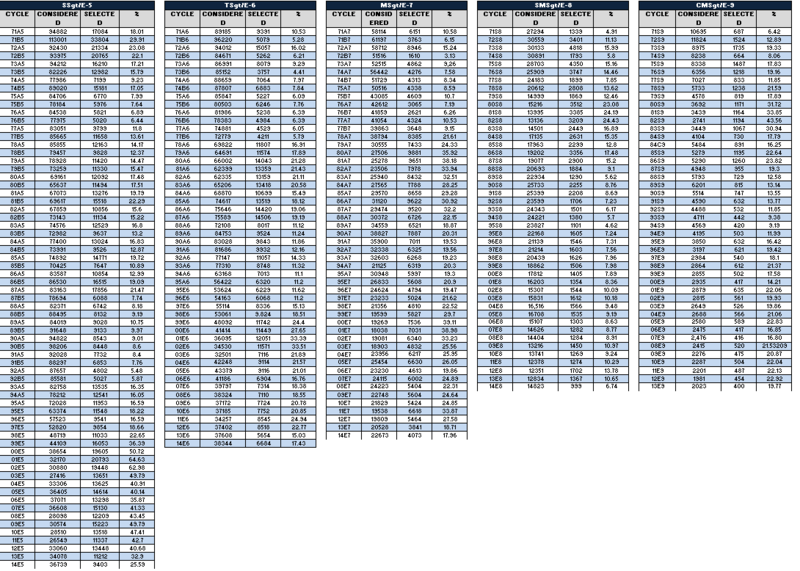
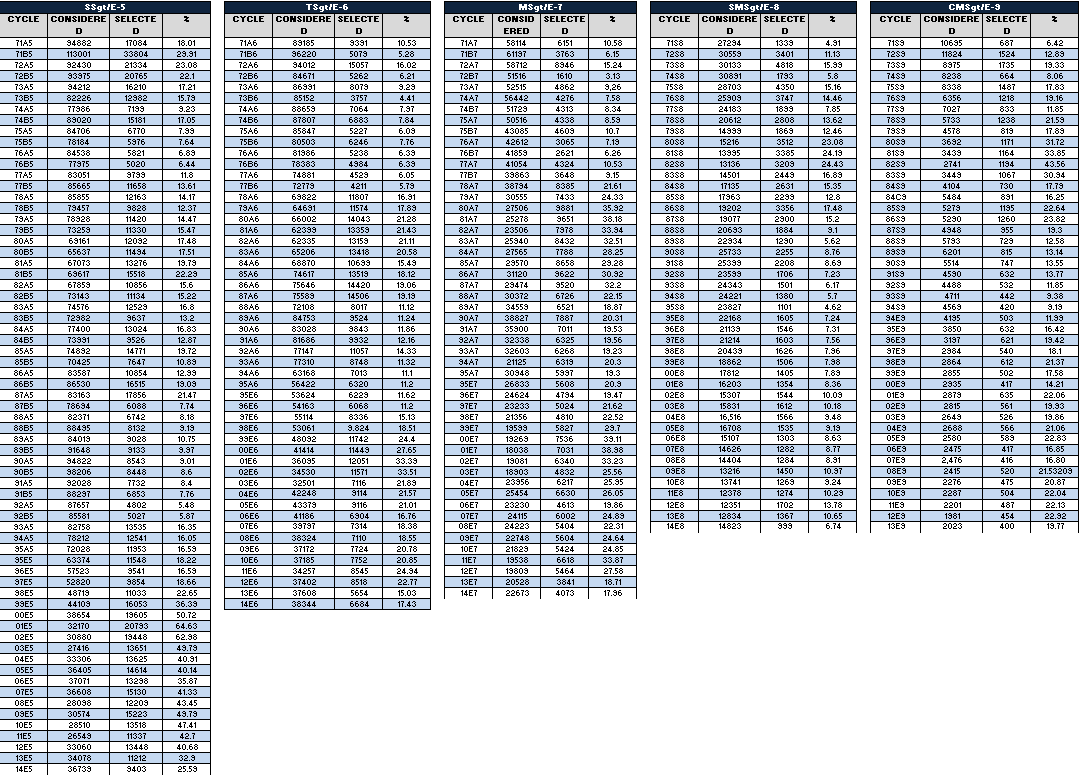
Lt Col (Join to see) attached is a chart of the historical promotion percentages by Rank and Cycle.
(2)
(0)
TSgt Joshua Copeland
Across all ranks/averaged over time, yep. SMSgt hovers closer to 10%
Here are today's numbers that go released for 15E8
Number Eligible: 14,362
Number Selected: 1,257
AF-Wide Selection Rate: 8.75%
Here are today's numbers that go released for 15E8
Number Eligible: 14,362
Number Selected: 1,257
AF-Wide Selection Rate: 8.75%
(1)
(0)
3
3
0

SMSgt (Join to see), this might be a can of worms that you've just opened, Senior. I work with a lot of USAF 35EX personnel, and they are definitely up-in-arms about it.
If the rating chain favors you, and you're a decent NCO, then you will usually be a "Promote Now" (or "1/1" in the Army). If they don't like you, but you're an undeniable go-getter, then you might get a "Promote Now," but a "Must Promote" ("2/2" in the Army) is much more likely because their favorites will be the "Promote Now" individuals.
In my professional opinion and experience, stratification reinforces something that we have worked very hard to get rid of: the "Good Ole Boy" system. I've personally seen a lot of "fluff" bullet comments during my Army service. On paper, the top-notch individuals who are outside of the "circle" will meet the standard while the "run-of-the-mill" individuals will be "the best thing since sliced bread." Just my 2 cents...
If the rating chain favors you, and you're a decent NCO, then you will usually be a "Promote Now" (or "1/1" in the Army). If they don't like you, but you're an undeniable go-getter, then you might get a "Promote Now," but a "Must Promote" ("2/2" in the Army) is much more likely because their favorites will be the "Promote Now" individuals.
In my professional opinion and experience, stratification reinforces something that we have worked very hard to get rid of: the "Good Ole Boy" system. I've personally seen a lot of "fluff" bullet comments during my Army service. On paper, the top-notch individuals who are outside of the "circle" will meet the standard while the "run-of-the-mill" individuals will be "the best thing since sliced bread." Just my 2 cents...
(3)
(0)
MSgt (Join to see)
Were you the best of the best your entire career sir? I see this common view from SNCOs and a lot of us junior NCOs agree that they all more than likely got to their rank now by using the inflated EPR system. I'm not saying you are one of those, but see it from our view.
(1)
(0)
SSG Leonard J W.
MSgt (Join to see), thanks for the reply. No, I would not say that I was the best of the best throughout my entire career. However, I have usually been among the best throughout, but the Army promotion system is a bit different than the Air Force system:
Local promotions for Junior Enlisted Soldiers (Private (PVT/E1) to Specialist (SPC/E4)) are usually automatic. Soldiers get promoted based upon Time in Service (TIS) as long as they are basically staying out of trouble. If they are lazy and/or irresponsible, then they won't get promoted until they seem ready. The company commander (usually an O3) is the promotion authority.
Promotion to Corporal (CPL) is either a lateral appointment or a Department of the Army (DA) promotion. This is normally reserved for E4s who are functioning in an E5 position or higher. The company commander approves lateral appointments. The DA promotion basically requires DA acknowledgement, which is a bit more complicated, so I won’t discuss it here.
DA semi-centralized promotions (Sergeant (SGT) and Staff Sergeant (SSG)) work a bit differently. These promotions require that one meet or exceed a specified amount of points. Points are gained based upon awards and decorations, deployments, marksmanship scores, PFT scores, civilian education, the commander's recommendation, and a "promotion board" score. The promotion board is normally composed of a Command Sergeant Major (CSM/E9) and several First Sergeants (1SGs/E8s). The CSM normally serves as the president of the board. When appearing before the board, mastery of basic combat and combat-related skills, oral communication skills (one must be confident), and situational awareness about current events are required. One will be tested, and I have seen many people kicked out of those boards for being cocky or unknowledgeable. A good board appearance and commander's recommendation are both important parts of the points, but they alone will not guarantee promotion. One still must 'reach the points cutoff.' This system leaves little room for the inflated system that we both mentioned, because the responsibility is mostly upon the individual Soldier.
The final promotion category is the DA centralized promotion system (Sergeant First Class (SFC) to Sergeant Major (SGM)/Command Sergeant Major (CSM). This is where an inflated system can hold more weight. These boards convene in one specific location, so they are completely records based. The DA photo, NCOERs (same thing as EPRs), and Academic Evaluation Reports, and Civilian Education are all considered. If one receives a lot of inflated ratings on evaluations, then they may appear better than their peers. Soldiers with the best ‘word pictures’ usually get promoted.
I hope this helps, SSgt. Your questions are welcome anytime.
Local promotions for Junior Enlisted Soldiers (Private (PVT/E1) to Specialist (SPC/E4)) are usually automatic. Soldiers get promoted based upon Time in Service (TIS) as long as they are basically staying out of trouble. If they are lazy and/or irresponsible, then they won't get promoted until they seem ready. The company commander (usually an O3) is the promotion authority.
Promotion to Corporal (CPL) is either a lateral appointment or a Department of the Army (DA) promotion. This is normally reserved for E4s who are functioning in an E5 position or higher. The company commander approves lateral appointments. The DA promotion basically requires DA acknowledgement, which is a bit more complicated, so I won’t discuss it here.
DA semi-centralized promotions (Sergeant (SGT) and Staff Sergeant (SSG)) work a bit differently. These promotions require that one meet or exceed a specified amount of points. Points are gained based upon awards and decorations, deployments, marksmanship scores, PFT scores, civilian education, the commander's recommendation, and a "promotion board" score. The promotion board is normally composed of a Command Sergeant Major (CSM/E9) and several First Sergeants (1SGs/E8s). The CSM normally serves as the president of the board. When appearing before the board, mastery of basic combat and combat-related skills, oral communication skills (one must be confident), and situational awareness about current events are required. One will be tested, and I have seen many people kicked out of those boards for being cocky or unknowledgeable. A good board appearance and commander's recommendation are both important parts of the points, but they alone will not guarantee promotion. One still must 'reach the points cutoff.' This system leaves little room for the inflated system that we both mentioned, because the responsibility is mostly upon the individual Soldier.
The final promotion category is the DA centralized promotion system (Sergeant First Class (SFC) to Sergeant Major (SGM)/Command Sergeant Major (CSM). This is where an inflated system can hold more weight. These boards convene in one specific location, so they are completely records based. The DA photo, NCOERs (same thing as EPRs), and Academic Evaluation Reports, and Civilian Education are all considered. If one receives a lot of inflated ratings on evaluations, then they may appear better than their peers. Soldiers with the best ‘word pictures’ usually get promoted.
I hope this helps, SSgt. Your questions are welcome anytime.
(2)
(0)
MSgt (Join to see)
SSG Leonard J W. I did not mean to reply to you, I actually replied to the SMSgt above. Sorry about the confusion but great post.
(2)
(0)
3
3
0

Time will tell how this works out. The issue is some raters will want to do right by their airmen and still attempt to give them the highest marks because they want to do the right thing while other raters will possibly give them appropriate ratings while the airman has done more than another that received a higher mark.
I don't know why the promotion system isn't the same across the board for all branches. Testing honestly doesn't promote the best, it promotes those who test better. Maybe the inability to test is an indictment on that Airman but I have met plenty who just couldn't test but were professionals and leaders through and through.
I don't know why the promotion system isn't the same across the board for all branches. Testing honestly doesn't promote the best, it promotes those who test better. Maybe the inability to test is an indictment on that Airman but I have met plenty who just couldn't test but were professionals and leaders through and through.
(3)
(0)
SSG Leonard J W.
SSgt (Join to see): Well stated! Everyone has strengths and weaknesses - the key is to capitalize on how to best identify those individuals. I think most promotion systems are flawed in some way.
(2)
(0)
SSgt (Join to see)
SSG Leonard J W. I agree with any of the systems being flawed, I just believe that the board system has come the furthest in establishing the weeding process
I was curious though, how exactly is the Army promotion system broken down?
I was curious though, how exactly is the Army promotion system broken down?
(2)
(0)
SSG Leonard J W.
SSgt (Join to see), that is a great question! Our system is point based, ranging from deployments to awards to board scores. It's also not perfect, but most people seem to adapt to it. Then there are the others who are terrified of speaking in front of others...they don't do so well in the board, but they can still be promoted if they have enough points from other categories.
(1)
(0)
3
3
0

I can not speak to the USAF forced distribution but I can speak to what the Army does and why. Some thoughts:
- Promotion rates vary over time based upon supply and demand. Low supply and high demand in 2008 meant near 100% promotion rates. High supply and low demand in 1993/94 and 2015 means lower than historical average promotion rates across all cohorts (officer, warrant officer, enlisted).
- There have been some short sighted (nicer words than stupid) decisions over time. No box checks for company grade officers in the mid/late 2005-2010 and restricted file OERs for LTs are two examples in my opinion.
- No forced distribution generally results in inflated evaluations over time and places 100% of the promotion decision onto a board.
- Forced distribution on the senior rater helps to prevent evaluation inflation and helps the senior rater to have more of a vote in the promotion process.
- In the Army, no forced distribution and no box check merely meant that senior raters did not have the pressure on them to do their job of counseling their subordinates properly. Forced distribution helps to keep pressure on the senior raters to counsel properly since it is more obvious to the rated Soldier where they fall within the senior raters enumeration scale. More counseling is a good thing.
- Forced distribution and promotion rates, however, are NOT causally related. Promotion rates are more directly related to supply and demand issues. Soldiers who receive the second highest "must promote" versus "promote now" will get promoted in the low supply / high demand times but less likely in the other times.
- At the end of the day, I (and I believe most Soldiers) believe what the board results are telling me more so than what the senior leaders say the effect of a policy change will be. I am not saying that the senior leaders lie. I am saying that I believe evidence more than promises.
- Promotion rates vary over time based upon supply and demand. Low supply and high demand in 2008 meant near 100% promotion rates. High supply and low demand in 1993/94 and 2015 means lower than historical average promotion rates across all cohorts (officer, warrant officer, enlisted).
- There have been some short sighted (nicer words than stupid) decisions over time. No box checks for company grade officers in the mid/late 2005-2010 and restricted file OERs for LTs are two examples in my opinion.
- No forced distribution generally results in inflated evaluations over time and places 100% of the promotion decision onto a board.
- Forced distribution on the senior rater helps to prevent evaluation inflation and helps the senior rater to have more of a vote in the promotion process.
- In the Army, no forced distribution and no box check merely meant that senior raters did not have the pressure on them to do their job of counseling their subordinates properly. Forced distribution helps to keep pressure on the senior raters to counsel properly since it is more obvious to the rated Soldier where they fall within the senior raters enumeration scale. More counseling is a good thing.
- Forced distribution and promotion rates, however, are NOT causally related. Promotion rates are more directly related to supply and demand issues. Soldiers who receive the second highest "must promote" versus "promote now" will get promoted in the low supply / high demand times but less likely in the other times.
- At the end of the day, I (and I believe most Soldiers) believe what the board results are telling me more so than what the senior leaders say the effect of a policy change will be. I am not saying that the senior leaders lie. I am saying that I believe evidence more than promises.
(3)
(0)
SMSgt (Join to see)
Sir, thanks for the thoughts. I agree with you, especially that those with the lower rankings will get promoted. It's going to be hard for us AF folks to wrap our head around until it happens for the first time. We will still promote roughly the same percentage and most of the time it is more than 5%. Promotions are also in your particular career field so really how many of the top 5% will an individuals career field really have.
(2)
(0)
SSG Leonard J W.
COL Jason Smallfield, PMP, CFM, CM, your post is well stated (as always). You have accurately identified trends and flaws that our top leaders may not have noticed...
(0)
(0)
2
2
0
This just means it will be even MORE cut throat than it has already become. People in highly visible locations that leadership often sees will get the high marks even if then just sit on their butts. A hard charger that could be giving their all and might work nights, will most likely be overlooked...we can already see that happening!
(2)
(0)
Read This Next


 Continue with Facebook
 Continue with Google