
Posted on Jun 13, 2015

What are the defining characteristics of a truly outstanding officer?

25.5K
109
35
21
21
0

What defining qualities facilitate true greatness for an officer? What habits should be cultivated in order to achieve excellence throughout one's career? What does exemplary leadership look like? This question is deliberately broad, because any detail or anecdote would be incredibly helpful in my own professional development. Thanks so much in advance to any officers, warrant officers, NCOs, and junior enlisted who take the time to provide their valuable input!
 Leadership
 Leadership Development
 Officer
Posted >1 y ago
Responses: 22
3
3
0

2
2
0

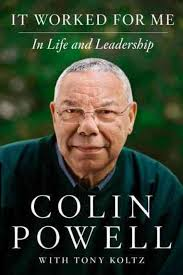
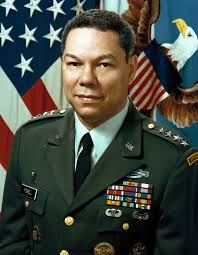
I like General Collin Powell Leadership philosophy.
Good leadership involves responsibility to the welfare of the group, which
means that some people will get angry at your actions and decisions. It's
inevitable, if you're honorable. Trying to get everyone to like you is a sign
of mediocrity: you'll avoid the tough decisions, you'll avoid confronting the
people who need to be confronted, and you'll avoid offering differential
rewards based on differential performance because some people might
get upset. Ironically, by procrastinating on the difficult choices, by trying
not to get anyone mad, and by treating everyone equally "nicely" regardless
of their contributions, you'll simply ensure that the only people you'll wind
up angering are the most creative and productive people in the organization.
http://www.blaisdell.com/powell/
http://mic.com/articles/65663/colin-powell-s-13-life-rules-for-any-future-leader
Good leadership involves responsibility to the welfare of the group, which
means that some people will get angry at your actions and decisions. It's
inevitable, if you're honorable. Trying to get everyone to like you is a sign
of mediocrity: you'll avoid the tough decisions, you'll avoid confronting the
people who need to be confronted, and you'll avoid offering differential
rewards based on differential performance because some people might
get upset. Ironically, by procrastinating on the difficult choices, by trying
not to get anyone mad, and by treating everyone equally "nicely" regardless
of their contributions, you'll simply ensure that the only people you'll wind
up angering are the most creative and productive people in the organization.
http://www.blaisdell.com/powell/
http://mic.com/articles/65663/colin-powell-s-13-life-rules-for-any-future-leader
(2)
(0)
2
2
0

2
2
0
I'd recommend the book "once an eagle". I've molded my style after that. To answer your question, be willing to learn and seek advice. Don't shirk the hard duties, stand up for yourself and your subordinates when you are right and cultivate a culture among those you work with of responsibility. There is no one correct method but those have served me well both enlisted and on the "dark side" of the commissioned officer world.
(2)
(0)
2
2
0

1
1
0

Quite simple. Just a management answer. Treat people like people and they will respond. Don't wear your rank on your shoulder. do it from the heart and you will be a Pide Piper.
(1)
(0)
1
1
0

Personal Integrity
Personal Honor
Personal Courage (physical, moral and mental)
Personal Character
Personal Knowledge of his billet
Freely given loyalty to subordinates and ensure you earn theirs.
Personal Appearance (look like a leader!)
Mission is first. Always first. Train your men/women to that standard.
Ensure your senior NCO's (Staff NCO's) are 110% behind you. If not weed them out.
Explicitly trust your senior NCO's (Staff NCO's). Give them tasks that will both grow and challenge them.
Inspire your senior NCO's (Staff NCO's) to success and they will inspire their charges.
Never miss an opportunity to praise your men in public.
Be the same off base in civilian attire as on base in uniform.
Mission first is not a license to ignore, mistreat or abuse your subordinates. Take care of your men. Always go the extra mile for them. Ensure they know the chain of command also means they answer to you and to you only.
Never allow anyone else to chew your men our or to discipline your men. Make the other officer speak his issue to you. Then you do the correcting. It may make you the black sheep of the outfit. But, eventually your peers will catch on that that is part of respecting the chain of command and your men will follow you anywhere.
Personal Honor
Personal Courage (physical, moral and mental)
Personal Character
Personal Knowledge of his billet
Freely given loyalty to subordinates and ensure you earn theirs.
Personal Appearance (look like a leader!)
Mission is first. Always first. Train your men/women to that standard.
Ensure your senior NCO's (Staff NCO's) are 110% behind you. If not weed them out.
Explicitly trust your senior NCO's (Staff NCO's). Give them tasks that will both grow and challenge them.
Inspire your senior NCO's (Staff NCO's) to success and they will inspire their charges.
Never miss an opportunity to praise your men in public.
Be the same off base in civilian attire as on base in uniform.
Mission first is not a license to ignore, mistreat or abuse your subordinates. Take care of your men. Always go the extra mile for them. Ensure they know the chain of command also means they answer to you and to you only.
Never allow anyone else to chew your men our or to discipline your men. Make the other officer speak his issue to you. Then you do the correcting. It may make you the black sheep of the outfit. But, eventually your peers will catch on that that is part of respecting the chain of command and your men will follow you anywhere.
(1)
(0)
1
1
0

1
1
0

be the example in action, not just word... this was a big issue for at the unit I was in, lot of talk not so many good examples in practice.
(1)
(0)
0
0
0

Be yourself. Read about what makes leaders great; but integrate into your own personality rather than try to "copy it" Take care of your soldiers and build them as a team. While you are in charge and make the decisions, make sure you listen and consider advice from your Platoon Sgt. and other NCOs. Make sure you learn in detail your branch and specialty knowledge as general soldier knowledge. Try to be inspirational and enthusiastic but firm; friendly but not buddy-buddy. The fact that you are asking for this type of advice and input shows me that you are already showing leadership; the desire to learn by seeking advice from others. I learned a lot of this stuff the hard way. During my ROTC and Lieutenant years, I had to work on self-confidence. One thing that helped me was Toastmasters. Many military bases or nearby communities have a local Toastmasters club. Great for development not just formal speaking skills but overall self-development. Welcome to the US Army! I envy you just starting out your great adventure! My best to you for a rewarding career; I know you'll love it!
(0)
(0)
Read This Next


 Continue with Facebook
 Continue with Google