
Posted on Feb 16, 2015

What's your unit insignia or crest look like and what does it mean?

19.9K
134
74
5
5
0

I am regimental affliated with 321st Field Artillery Regiment. Will doing research for the 321st Regt Room at Fort Sill I was give this pin worn during WW II.
Distinctive unit insignia Description A Gold color metal and enamel device 1 1/8 inches (2.86 cm) in height overall consisting of a shield blazoned: Gules, two lion’s paws issuing out of the dexter and sinister base points chevron-ways Or. Attached below and to the sides of the shield a Gold scroll inscribed “NOLI ME TANGERE” in Red letters. Symbolism The shield is scarlet for Artillery. The lion’s paws are significant of Field Artillery, which may be likened to a mountain lion whose paw has great strength and power in felling and crushing a victim. Background The distinctive unit insignia was originally approved for the 452d Field Artillery Regiment on 1 February 1927. It was redesignated for the 321st Field Artillery Regiment on 21 November 1930. It was redesignated for the 321st Field Artillery Battalion on 15 April 1942. It was redesignated for the 321st Glider Field Artillery Battalion on 14 October 1942. It was redesignated for the 518th Airborne Field Artillery Battalion on 26 September 1951. The insignia was redesignated for the 321st Airborne Field Artillery Battalion on 31 July 1956. On 25 February 1958, it was redesignated for the 321st Artillery Regiment. The insignia was redesignated for the 321st Field Artillery Regiment effective 1 September 1971. Coat of arms Blazon Shield Gules, two lion’s paws issuing out of the dexter and sinister base points chevron-ways Or. Crest On a wreath Or and Gules, a cannon barrel palewise Sable winged Argent behind a lion sejant affronté with two heads addorsed of the first armed and langued Azure grasping in each forepaw a round of the third and surmounted by an escutcheon per pale Gules and of the fifth an annulet Argent, on a chief of the like three fleurs-de-lis Azure. Motto NOLI ME TANGERE (Don’t Tread On Me). Symbolism Shield The shield is scarlet for Artillery. The lion’s paws are significant of Field Artillery, which may be likened to a mountain lion whose paw has great strength and power in felling and crushing a victim. Crest The lion with one head facing forward and the other backward, brandishing a round in both directions, refers to the organization’s claim to have been the unit of the 101st Airborne Division to fire the first and the last rounds on German soil. The winged cannon stands for the former designation of the organization as a Glider Field Artillery Battalion and its assignment during World War II to the 101st Airborne Division. The red and blue escutcheon is from the arms of Bastogne; the annulet represents the enemy encirclement of that objective and refers to the unit’s distinguished action in its defense during World War II. The three fleurs-de-lis stand for the organization’s first war service, i.e., participation in three campaigns in France during World War I. Background The coat of arms was originally approved for the 452d Field Artillery Regiment on 1 February 1927. It was redesignated for the 321st Field Artillery Regiment on 14 November 1930. It was redesignated for the 321st Field Artillery Battalion on 14 April 1942. It was redesignated for the 321st Glider Field Artillery Battalion on 14 October 1942. It was redesignated for the 518th Airborne Field Artillery Battalion and amended to delete the Organized Reserves crest on 26 September 1951. The insignia was redesignated for the 321st Airborne Field Artillery Battalion on 31 July 1956. On 25 February 1958, it was redesignated for the 321st Artillery Regiment. It was amended to add a crest on 22 April 1966. The insignia was redesignated for the 321st Field Artillery Regiment effective 1 September 1971.
Distinctive unit insignia Description A Gold color metal and enamel device 1 1/8 inches (2.86 cm) in height overall consisting of a shield blazoned: Gules, two lion’s paws issuing out of the dexter and sinister base points chevron-ways Or. Attached below and to the sides of the shield a Gold scroll inscribed “NOLI ME TANGERE” in Red letters. Symbolism The shield is scarlet for Artillery. The lion’s paws are significant of Field Artillery, which may be likened to a mountain lion whose paw has great strength and power in felling and crushing a victim. Background The distinctive unit insignia was originally approved for the 452d Field Artillery Regiment on 1 February 1927. It was redesignated for the 321st Field Artillery Regiment on 21 November 1930. It was redesignated for the 321st Field Artillery Battalion on 15 April 1942. It was redesignated for the 321st Glider Field Artillery Battalion on 14 October 1942. It was redesignated for the 518th Airborne Field Artillery Battalion on 26 September 1951. The insignia was redesignated for the 321st Airborne Field Artillery Battalion on 31 July 1956. On 25 February 1958, it was redesignated for the 321st Artillery Regiment. The insignia was redesignated for the 321st Field Artillery Regiment effective 1 September 1971. Coat of arms Blazon Shield Gules, two lion’s paws issuing out of the dexter and sinister base points chevron-ways Or. Crest On a wreath Or and Gules, a cannon barrel palewise Sable winged Argent behind a lion sejant affronté with two heads addorsed of the first armed and langued Azure grasping in each forepaw a round of the third and surmounted by an escutcheon per pale Gules and of the fifth an annulet Argent, on a chief of the like three fleurs-de-lis Azure. Motto NOLI ME TANGERE (Don’t Tread On Me). Symbolism Shield The shield is scarlet for Artillery. The lion’s paws are significant of Field Artillery, which may be likened to a mountain lion whose paw has great strength and power in felling and crushing a victim. Crest The lion with one head facing forward and the other backward, brandishing a round in both directions, refers to the organization’s claim to have been the unit of the 101st Airborne Division to fire the first and the last rounds on German soil. The winged cannon stands for the former designation of the organization as a Glider Field Artillery Battalion and its assignment during World War II to the 101st Airborne Division. The red and blue escutcheon is from the arms of Bastogne; the annulet represents the enemy encirclement of that objective and refers to the unit’s distinguished action in its defense during World War II. The three fleurs-de-lis stand for the organization’s first war service, i.e., participation in three campaigns in France during World War I. Background The coat of arms was originally approved for the 452d Field Artillery Regiment on 1 February 1927. It was redesignated for the 321st Field Artillery Regiment on 14 November 1930. It was redesignated for the 321st Field Artillery Battalion on 14 April 1942. It was redesignated for the 321st Glider Field Artillery Battalion on 14 October 1942. It was redesignated for the 518th Airborne Field Artillery Battalion and amended to delete the Organized Reserves crest on 26 September 1951. The insignia was redesignated for the 321st Airborne Field Artillery Battalion on 31 July 1956. On 25 February 1958, it was redesignated for the 321st Artillery Regiment. It was amended to add a crest on 22 April 1966. The insignia was redesignated for the 321st Field Artillery Regiment effective 1 September 1971.
Edited 11 y ago
Posted 11 y ago
Responses: 33


5
5
0

LTC (Join to see), I had many throughout my career, but the one I'm most proud of is the Special Forces distinctive unit insignia. De Oppresso Liber is Latin for "to liberate the oppressed".
(5)
(0)
SPC Nancy Greene
Definitely Agree Sir; however, ‘close’ only counts in horseshoes & hand grenades’. LOLLTC Stephen C.
(0)
(0)
4
4
0


Based of the Vietnam Security Police Squadron, I think at at Tan Son Nu. If you like history or reading about battles the Battle of Tan Son Nu during Tet 68 is good.
(4)
(0)
4
4
0

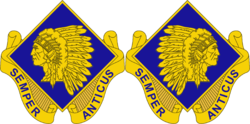
The 45th Infantry Brigade. One of the few insignia that is authorized a reverse image version (the Indian always faces forward). The blue field represents the infantry, and the Indian with war bonnet is the Oklahoma crest. The motto is "Semper Anticus"-Always Forward.
(4)
(0)
MSG (Join to see)
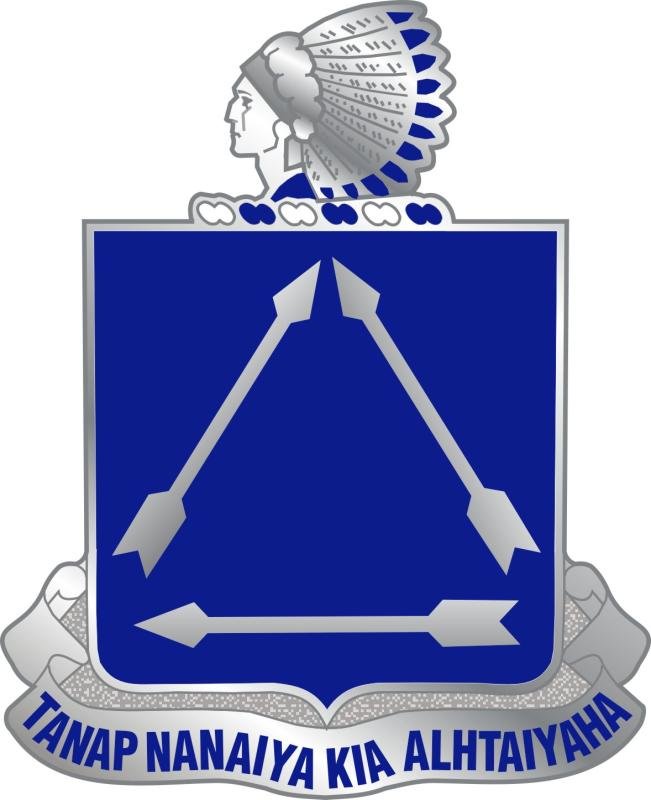
The 180th Cavalry Regiment converted from Infantry in 2010 and the infantry blue is still reflected. The three arrows are thought to represent the 180th's history as the 3rd Territorial Infantry Regiment. The motto is Choctaw and means "Ready in Peace and War"
(1)
(0)
MSG (Join to see)
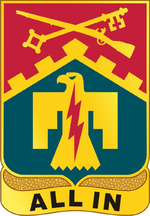
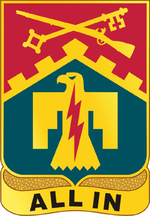
This one is close to me, I was involved in the design process. This is the 45th Brigade's Special Troops Battalion. It was a new unit and had no history of its own so the symbolism refers to the capabilities of the unit. In chief, the crossed key and rifle--the key representing the Military Intelligence company, and the Infantry that the battalion supports, the embattled chevron represents the Engineers. The thunderbird is shown with a thunderbolt on its chest, representing the Signal company. Red and gold reflect the Spanish heritage of Oklahoma and teal is the color for branch immaterial units. The motto, All In is representative of the employment ans mix of capabilities in the unit.
(1)
(0)
MSG (Join to see)
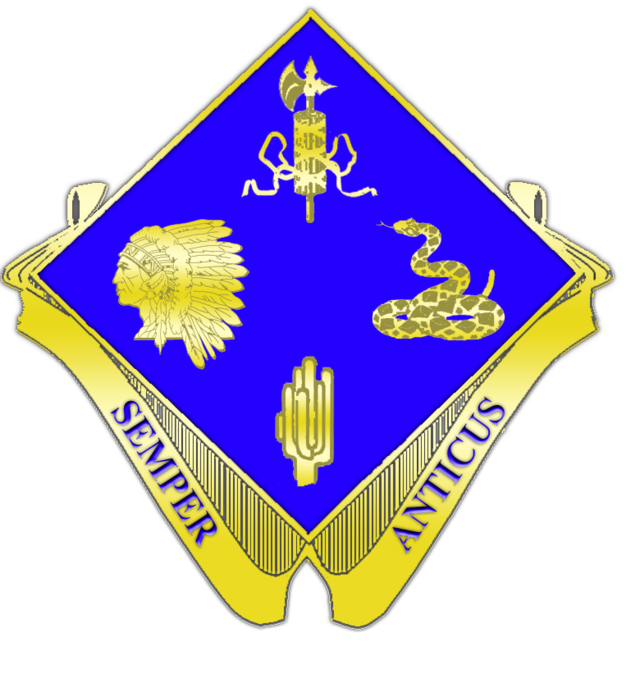
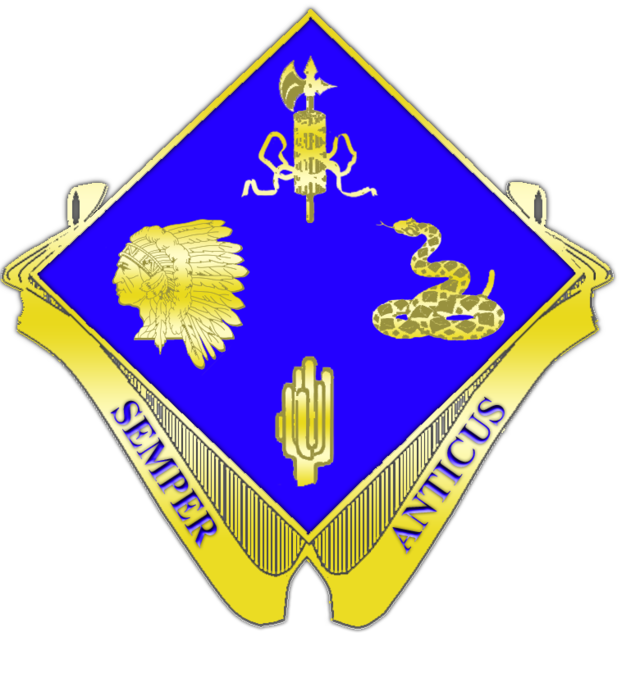
One more, the 45th Infantry Brigade is the inheritor of the lineage and honors of the former 45th Infantry Division. The division was split into three brigade sized elements: 45th Infantry, 45th Field Artillery, and the 90th Troop Command in 1968. In 1946, the Division had undergone a major change, going form a multi-state (OK, CO, NM, AZ) division to being an all-Oklahoma division. Prior to that change, the Division Hq insignia looked as above, with the crests of all four states represented (from top clockwise--CO, NM, AZ, OK).
(1)
(0)
MAJ Terry LaFrance
As most Thunderbirds know, the 45th and the 3rd ID shared many battlefields and fought alongside most of WWII. There's legend that talks about conversations between some 3 ID guys and some 45th guys. They wanted to know why the T Bird patch in the left shoulder faced forward and the one on the right to the rear. The 45th guys explained the the one looking forward was always looking toward the enemy and the one looking back was to make sure the 3rd ID was still behind them.
(1)
(0)
4
4
0

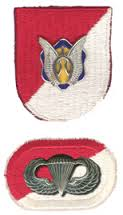
The winged spur is emblematic of cavalry and speed. The blue ribbon alludes to service with the American Expeditionary Forces. The 17th Cavalry Regiment was first constituted on 1 July 1916, making the 1st Squadron, 17th Cavalry Regiment, the oldest unit in the 82nd Aviation Brigade.
(4)
(0)
4
4
0
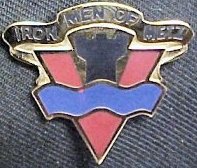
LTC (Join to see), I also served in the 95th Division (TNG). They became famous as the 95th ID in WWII and are known as the "Iron Men of Metz". This special designation was allowed because the name was given to them by the failed German defenders of the ancient, but heavily fortified French bastion of Metz during the fierce and relentless battle the 95th waged to capture the ancient city.
(4)
(0)
4
4
0

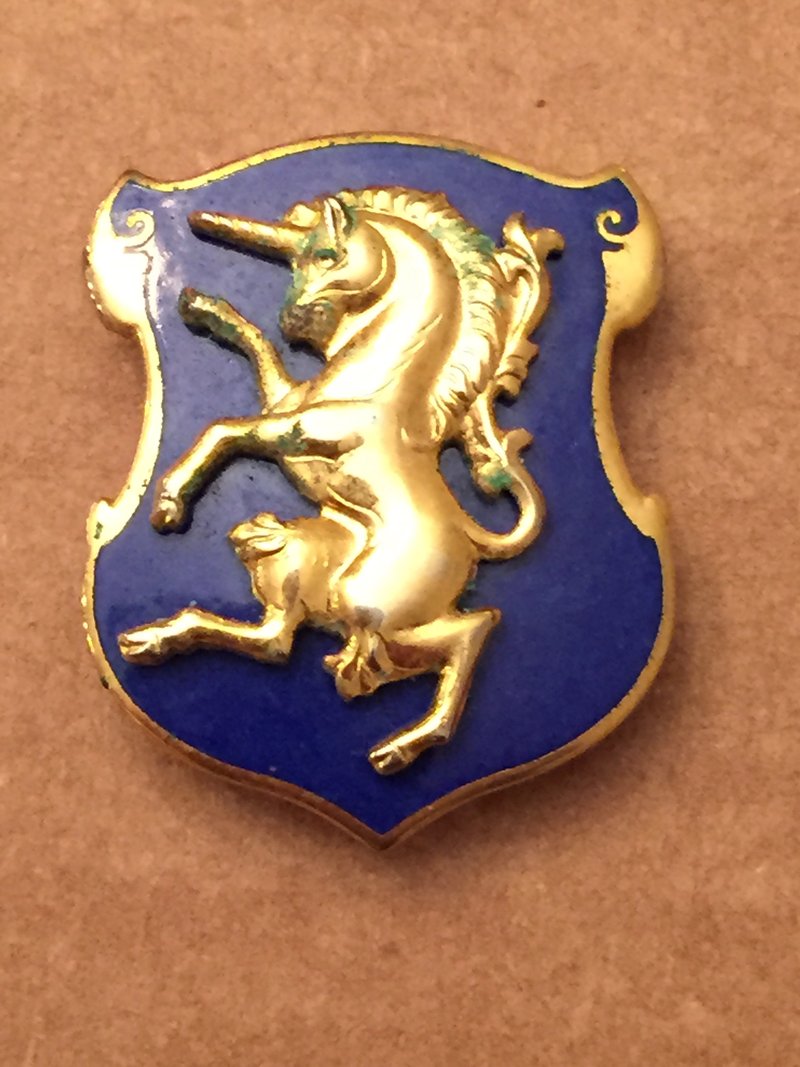
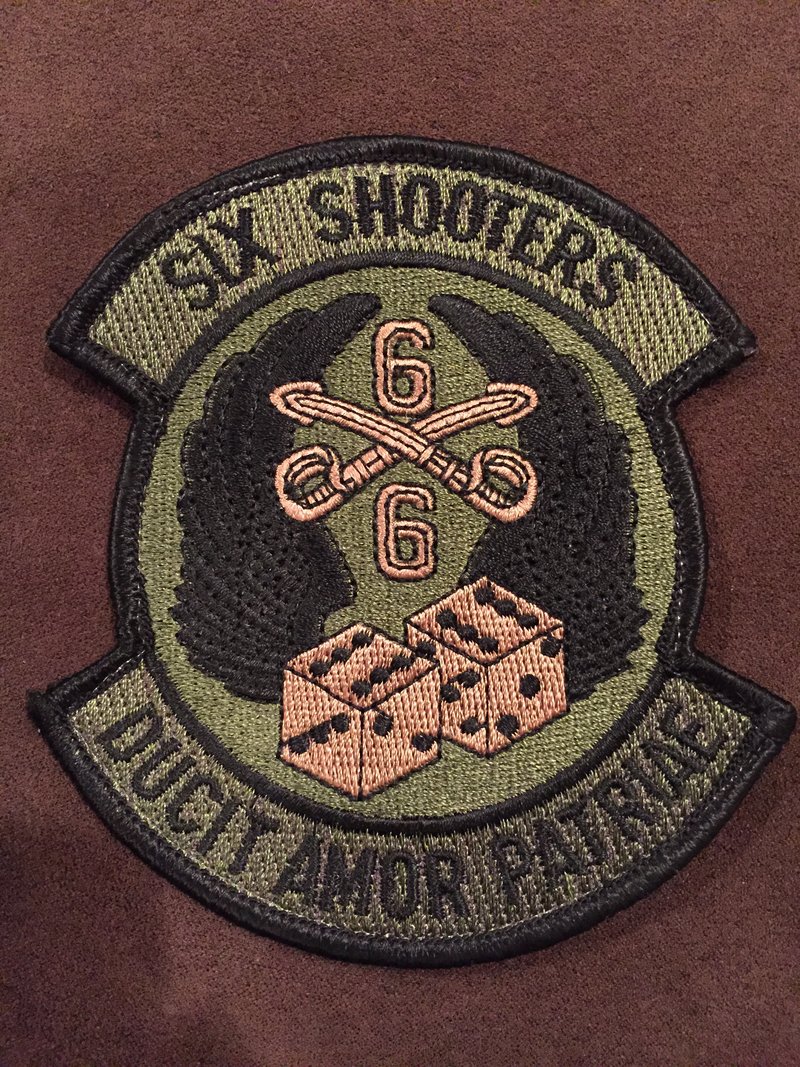
My first unit and my favorite crest and motto, translated is Love of Country. Six Shooters! Always Ready!
(4)
(0)
3
3
0

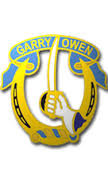
Not my current unit crest. But head and shoulders above any others as my favorite.
(3)
(0)
3
3
0
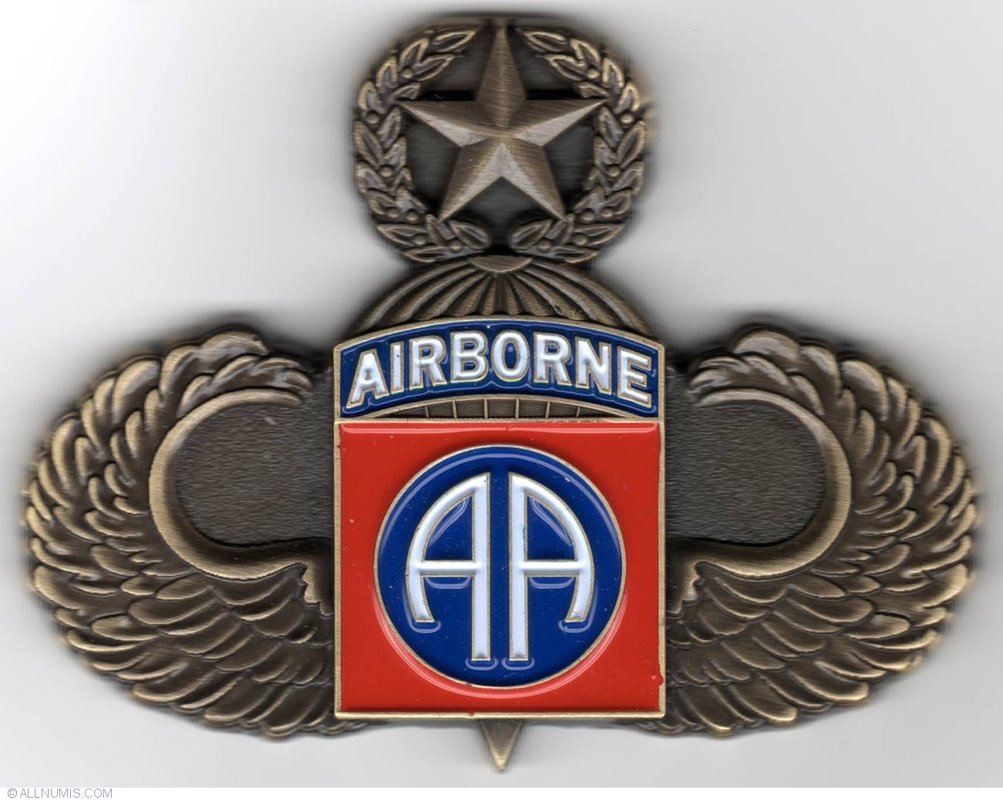
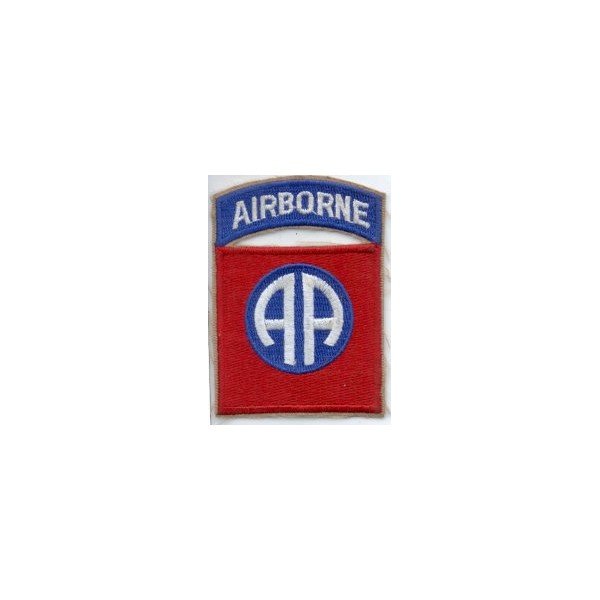
MAJ Terry LaFrance
gonna make me pick one? Have to give that some thought. The unit with my first platoon, the one in which I was a Co CDR, the one with which I went to Iraq? Hmmm…..
(2)
(0)
LTC Stephen C.
LTC (Join to see) and MAJ Terry LaFrance, the 82nd was constituted on 5 August 1917 at Camp Gordon, GA. Most people think that Camp Gordon was what is now Fort Gordon in Augusta. However, during WWI, Camp Gordon was in Atlanta, more specifically at the site of what is now Peachtree DeKalb Airport! My grandfather served there during WWI. Sergeant Alvin C. York, was the second of the All-American's MOH recipients.
(1)
(0)
MAJ Terry LaFrance
Just to avoid confusion, I was never in the 82nd. My comment just happened to land there, a quirk of the Updates tab.
(1)
(0)
3
3
0
Read This Next


 Continue with Facebook
 Continue with Google