
Posted on Feb 1, 2020


18
18
0
What training, education, experience, personality traits or other factors (dumb luck) helped you advance to the rank you hold now or the rank at which you separated or retired. Try to limit your response to 3 to 5 factors. This is intended as a possible leadership lesson for younger or less experienced RP members.
 Officers
 NCOs
NCOs Promotions
 Leadership
Posted 6 y ago
Responses: 16
7
7
0
Volunteering for additional duties that expand your skill set. Making sure you have the appropriate level of PME and civilian education completed for the next rank/grade
(7)
(0)
6
6
0

Lt Col Jim Coe: I attained the rank of Specialist Four; as I had been to college/my university.
(6)
(0)
5
5
0

Doing my job. Self-improvement. Motivation.
Edit - Add the last troop leading step of acronym BAMCIS - Supervise. The only person that can ensure orders are carried out as intended is the one that issues the order. Take nothing for granted before you put your name on the line.
Edit - Add the last troop leading step of acronym BAMCIS - Supervise. The only person that can ensure orders are carried out as intended is the one that issues the order. Take nothing for granted before you put your name on the line.
(5)
(0)
3
3
0

Cut off score for E6 was very high at 2002 points. I had max points in Civ Ed, Awards and Decorations. Completed mil correspondence x2000credits and still below cutoff. Prepared many hours of review, practice and potential board questions. Maxed board resulted in 2003 points - 1 pt above requirement. Completed Associate Degree, SF and other skill tng, positive and team player. 5 years to E7 - 2 more years to Warrant. Retired as CW3 with Masters Degree. Not bad for barely graduating from High School with terrible grades and attitude.
(3)
(0)
3
3
0
I'll start.
-Listening to what the Air Force told me I should do to get promoted and doing it. Have a Masters Degree. Complete professional education appropriate for rank. Broaden experience beyond cockpit.
-Demonstrating I could work hard and smart at jobs nobody else wanted (life support officer, safety officer, magazine editor, joint service staff officer) drawing positive attention to myself. Resulted in general officer endorsements on my OERs, which at the time were the gold standard for getting promoted.
-Keep up with technology and exploit it. I served when computers were coming into the Services in large numbers. I liked working with computers and learned new software quickly. Became a functional expert on both desk-top PCs and mainframe client-server systems. Capability to produce management information made my work valuable to Senior Officers. In today's world, I would look to becoming and expert on using web-based applications, wireless technology, and AI. (Example: I was a DTS approver. I believe I understood the systems functionality well and seldom struggled with it. Helped my employees and some supervisors use the system correctly.)
-Listening to what the Air Force told me I should do to get promoted and doing it. Have a Masters Degree. Complete professional education appropriate for rank. Broaden experience beyond cockpit.
-Demonstrating I could work hard and smart at jobs nobody else wanted (life support officer, safety officer, magazine editor, joint service staff officer) drawing positive attention to myself. Resulted in general officer endorsements on my OERs, which at the time were the gold standard for getting promoted.
-Keep up with technology and exploit it. I served when computers were coming into the Services in large numbers. I liked working with computers and learned new software quickly. Became a functional expert on both desk-top PCs and mainframe client-server systems. Capability to produce management information made my work valuable to Senior Officers. In today's world, I would look to becoming and expert on using web-based applications, wireless technology, and AI. (Example: I was a DTS approver. I believe I understood the systems functionality well and seldom struggled with it. Helped my employees and some supervisors use the system correctly.)
(3)
(0)
2
2
0

I workwd very hard to demonstrate competence/expertise, even when it wasn't my MOS (Staff time, Orderly Room, MRT, etc.) I was the guy that my boss gave the hardest jobs because (s)he knew I would get it done.
I tried to always set the example. Showed my troops what right looks like. And showed them I was willing to do everything I was asking them to do. Guard duty, burning fecal matter, motor stables, PT, you name it.
I stayed out of trouble. 'Nuff said.
Integrity. 'Nuff said.
I tried to always set the example. Showed my troops what right looks like. And showed them I was willing to do everything I was asking them to do. Guard duty, burning fecal matter, motor stables, PT, you name it.
I stayed out of trouble. 'Nuff said.
Integrity. 'Nuff said.
(2)
(0)
2
2
0

2
2
0
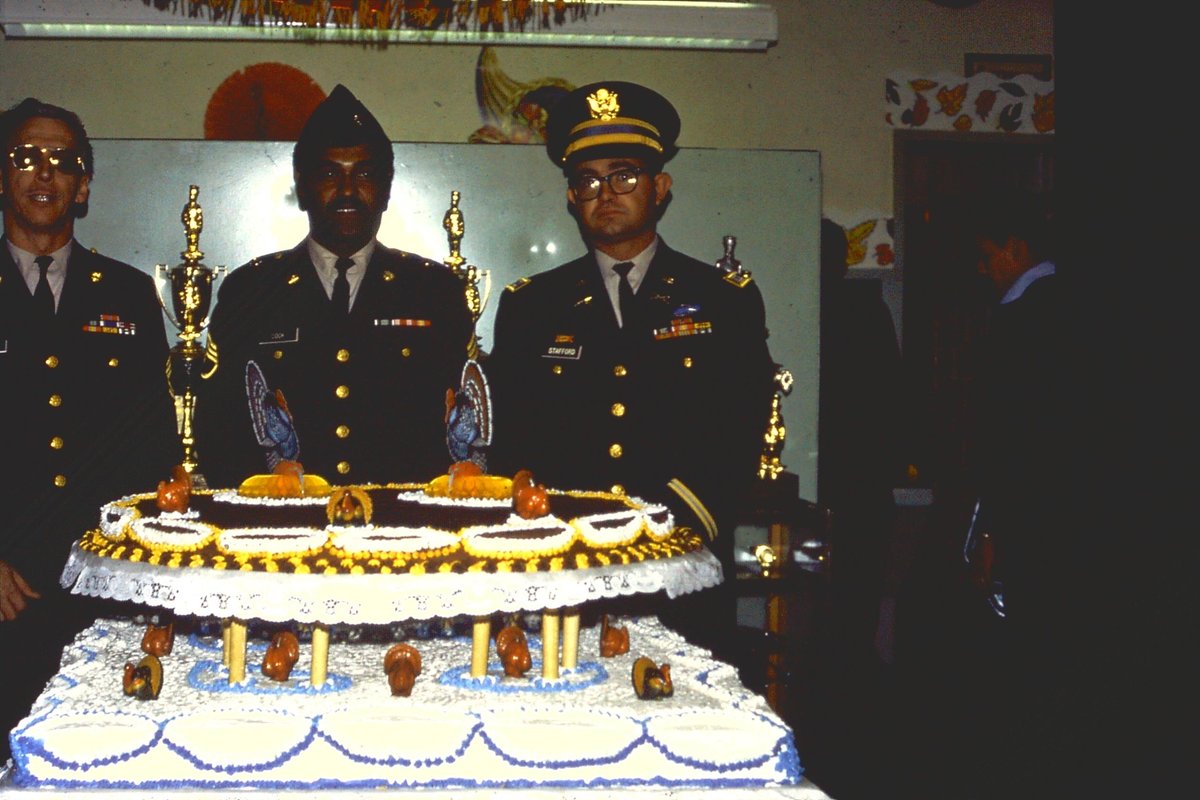
Working at least one pay grade level above what you are paid, being the one your piers seek for answers and do that one or two or three things extra in your duties to make sure your expertise is noted. This Thanksgiving Cake could have been a standard sheet cake - But all your commanders would not want their photos with this four foot by four foot 250-pound cake.
(2)
(0)
2
2
0
1
1
0

Relying on the advice of good NCOs at my first assignment gave me a step up during the rest of my career. Got more mentoring from them than my superiors. Taking advantage of all education/training opportunities. Good bosses that made opportunities available.
(1)
(0)
Read This Next


 Continue with Facebook
 Continue with Google