
Posted on May 4, 2021

Why do veterans have it so hard after leaving the military?

3.72K
131
40
4
4
0
Posted in these groups:  Veterans Affairs (VA)
Veterans Affairs (VA)
Posted >1 y ago
Responses: 17
10
10
0

Same reason prisoners have a hard time when they get released. Institutionalization.
(10)
(0)
7
7
0

There isn't one answer to this. Some suffer because they move back home and no longer have the workplace that serves as a brain trust of like minded individuals who have similar goals and similar experiences.
Others suffer because they don't have the structure they have become accustomed to over time.
A lot suffer because they didn't use available resources to prepare for their exit from Military service. They have what I call the getting out plan. Some folks focus so much on getting out that is their only plan. They have no plan beyond getting out and they end up at Mom's house and panic because they didn't do anything to get ready. They end up working the third shift at Walmart because they didn't apply for school, they don't have disability coming in because they didn't plan ahead with the VA, they didn't apply for jobs or sometimes they didn't even think of what they would do. They were so hyper focused on EAS'ing/ETS'ing they didn't do anything else and they end up a bump on a log trying to sort it out after the fact.
Other vets suffer because they have alot of unaddressed medical issues because they never went to medical to get it documented out of fear or stigma and they have an uphill battle trying to get VA benefits for undocumented issues.
Others suffer because they don't have the structure they have become accustomed to over time.
A lot suffer because they didn't use available resources to prepare for their exit from Military service. They have what I call the getting out plan. Some folks focus so much on getting out that is their only plan. They have no plan beyond getting out and they end up at Mom's house and panic because they didn't do anything to get ready. They end up working the third shift at Walmart because they didn't apply for school, they don't have disability coming in because they didn't plan ahead with the VA, they didn't apply for jobs or sometimes they didn't even think of what they would do. They were so hyper focused on EAS'ing/ETS'ing they didn't do anything else and they end up a bump on a log trying to sort it out after the fact.
Other vets suffer because they have alot of unaddressed medical issues because they never went to medical to get it documented out of fear or stigma and they have an uphill battle trying to get VA benefits for undocumented issues.
(7)
(0)
SSgt Christophe Murphy
SrA John Monette - That's where contacting the VA directly helps. Luckily out-processing has improved since your day.
(2)
(0)
CPL Raul Perez Jr
It depends on your MOS, but you are leaving a life you had for years. It people that understand each other. AS an old grunt, you need to find your passion and succeed. My 2 cents.
(1)
(0)
SSgt Christophe Murphy
CPL Raul Perez Jr - Even with a potentially viable MOS you could run into issues with credentialing, certifications and things like that. It's not automatic.
(1)
(0)
SP5 Ray Carletello


Ya stigma was big getting pinned with a label lazy weak not reliable etc etc non promotable hard to gain Rank when overseas I was sent to Air Mobil training as the XO and CO called it, it was a air assault training class that was not on the training agenda they were just experimenting with his training so not on my DD214 no record we were given a patch that only to be worn in South Korea when I return state side I had to remove from my Fatigues injured my back medics seen me nothing was. Document it The only evidence I have is the patch that I have I have till this day I was Basically told by the VA to go pound sand no evidence I’ll try to upload the photo of my patch
(0)
(0)
6
6
0
Which veterans? My experience has been that the majority of veterans who were good in the service also are relatively successful after the service. Now the folks who were unwilling to apply themselves in the service, it should come as no surprise that they are unwilling to apply themselves to a new job or career, and prove to be unsuccessful. Of course there are exceptions both ways - but generally speaking good Soldiers (Zoomies, Squids, Marines, Coasties, Guardians of the Galaxy) become good civilians.
(6)
(0)
SSgt Christophe Murphy
Saying only bad troops struggle when they get out is an over simplification of the situation. I don't disagree that some folks struggle because of their own actions or lack of action. That is a hard truth. But some people just struggle due to the change of culture from military life to the culture of everyday civilian life. That alone combined with any injuries they may have from service can leave a lasting impression.
(2)
(0)
SFC Casey O'Mally
SSgt Christophe Murphy - I never said that or intended to imply it. That's why I made sure to say there were exceptions, and stated it as a general rule.
Jimi Hendrix, from what I have read, was an absolute crap Soldier - seemed to do pretty good for himself. Audie Murphy is the epitome of a good Soldier - was a pretty crap civilian - and from what I have read was a pretty crap civilian mostly BECAUSE of his service.
Yes, good Soldiers can be bad civilians, and bad Soldiers can be good civilians. But in my experience, the majority of folks follow their good or bad habits out of the military and into the civilian world.
Jimi Hendrix, from what I have read, was an absolute crap Soldier - seemed to do pretty good for himself. Audie Murphy is the epitome of a good Soldier - was a pretty crap civilian - and from what I have read was a pretty crap civilian mostly BECAUSE of his service.
Yes, good Soldiers can be bad civilians, and bad Soldiers can be good civilians. But in my experience, the majority of folks follow their good or bad habits out of the military and into the civilian world.
(2)
(0)
SSG Edward Tilton
Mymilitary service goes back to the good old days of conscription. you didn’t have to want to be in my Army. There were even times when the Navy and Marines joined in.
Most soldiers had a right to complain, even many RA soldiers had only volunteered to avoid being assigned a job by the Army. Complaining was a point of pride, actually mostwere good soldiers but didn’t really care about promotion as they were getting out shortly.
For myself I was a soldier and that was what I wanted to be. I never have adjusted. I am in my 70s, I live outside an Army Base and shop at theCommissary
Most soldiers had a right to complain, even many RA soldiers had only volunteered to avoid being assigned a job by the Army. Complaining was a point of pride, actually mostwere good soldiers but didn’t really care about promotion as they were getting out shortly.
For myself I was a soldier and that was what I wanted to be. I never have adjusted. I am in my 70s, I live outside an Army Base and shop at theCommissary
(1)
(0)
SSG Bill McCoy
I agree that Veterans become good ... EMPLOYEES, even while being dumbfounded by civilian co-workers' attittudes and work ethic. Actually, more of a lack of work ethic.
I focused on hiring Veterans, and all but one were steller employees. That one exception had a RE3 (reenlistment code) which we didn't know because legally, you can NOT ask for a DD Form 214 until after a job is offered & accepted - at least not in the 80's. Most of the Veterans earned (key word, EARNED) promotions and several to supervisory in production jobs.
All that said, most also found it difficult to relate to their non-Veteran counterparts who had the attitude that they (civilians) were OWED their jobs.
I focused on hiring Veterans, and all but one were steller employees. That one exception had a RE3 (reenlistment code) which we didn't know because legally, you can NOT ask for a DD Form 214 until after a job is offered & accepted - at least not in the 80's. Most of the Veterans earned (key word, EARNED) promotions and several to supervisory in production jobs.
All that said, most also found it difficult to relate to their non-Veteran counterparts who had the attitude that they (civilians) were OWED their jobs.
(2)
(0)
5
5
0

Perhaps some cannot write a coherent sentence and that makes it more difficult?
(5)
(0)
4
4
0

It could be due to a variety of reasons - no single reason fits everyone. My first ETS (Navy) was in 1971 - one year after returning from Vietnam as a Marine Corpsman. Prospective employers were obviously not thrilled about Nam Vets - two actually told me they don't hire Nam Vets, or anyone who was in Germany because of drugs. Made me fume. The job I finally got didn't have pleasant co-workers - NONE were Veterans. After nearly 6 months, I joined the Army.
I got out of the Army in Dec '78 and was hired for security at a major steel producer. The only Vets in the department were WW2 guys - one a former POW in Germany; another a 2nd Ranger who landed on D-Day at Pointe du Hoc. No Korean Vets, and not a single Nam Vet - only one USAF Vietnam ERA Vet. The Vets were all okay; the non-Vets were FUBAR and worked harder at NOT working than actually doing their jobs. After 24+ years there, the company cut 450 of us - anyone between 20 and 30 years time. The mantra was to "cut healthcare costs, and PENSION costs." With a guaranteed pension at 30 years, they whacked anyone close, and anyone with extended illness/injuries of themselves, OR family members.
I have FEW friends who were pure civilians - meaning, non-Veterans of military or police service. All my friends are Veterans and cops/retired cops. I have a low tolerance for civilian attitudes. One executive told me that, "Veterans are all alike! You guys want everyting black and white!" and another told me, "Guys who chose the military instead of college are all stupid," -- that was before he found out I was a Vet. Since I was a department head, he ASSUMED I was, "one of the boys," because I was the only Veteran who was a department head.
In the military, one of the primary things drilled into us was, "There is NO exuse." In the civilian world, you get everyting from, "I couldn't sleep last night," or other lame excuses that would make me shake my head and wonder how business can survive with lazy, undedicated people. Civilians!
I got out of the Army in Dec '78 and was hired for security at a major steel producer. The only Vets in the department were WW2 guys - one a former POW in Germany; another a 2nd Ranger who landed on D-Day at Pointe du Hoc. No Korean Vets, and not a single Nam Vet - only one USAF Vietnam ERA Vet. The Vets were all okay; the non-Vets were FUBAR and worked harder at NOT working than actually doing their jobs. After 24+ years there, the company cut 450 of us - anyone between 20 and 30 years time. The mantra was to "cut healthcare costs, and PENSION costs." With a guaranteed pension at 30 years, they whacked anyone close, and anyone with extended illness/injuries of themselves, OR family members.
I have FEW friends who were pure civilians - meaning, non-Veterans of military or police service. All my friends are Veterans and cops/retired cops. I have a low tolerance for civilian attitudes. One executive told me that, "Veterans are all alike! You guys want everyting black and white!" and another told me, "Guys who chose the military instead of college are all stupid," -- that was before he found out I was a Vet. Since I was a department head, he ASSUMED I was, "one of the boys," because I was the only Veteran who was a department head.
In the military, one of the primary things drilled into us was, "There is NO exuse." In the civilian world, you get everyting from, "I couldn't sleep last night," or other lame excuses that would make me shake my head and wonder how business can survive with lazy, undedicated people. Civilians!
(4)
(0)
4
4
0


The military instills discipline. Use that discipline to plan, set goals, and implement your plan. You can succeed if you set you mind to succeed.
(4)
(0)
4
4
0

Report: Young vets are more successful than their civilian peers
Young veterans are better educated, better paid and better off than many of their civilian peers, which researchers believe could be due to their military service.
(4)
(0)
3
3
0
Because for the most part, we have left an organization that actually took care of and valued us and have went into the civilian world that could give a shit less for us.
(3)
(0)
SSG Bill McCoy
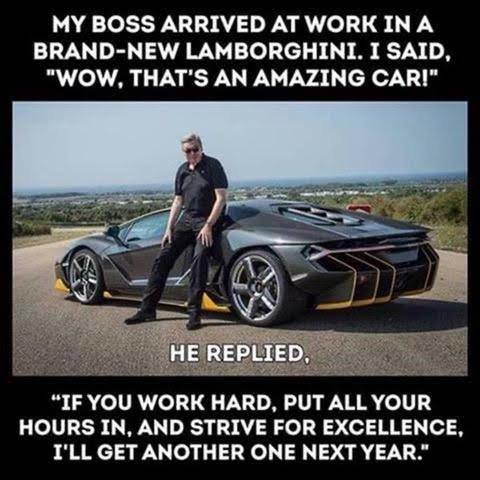
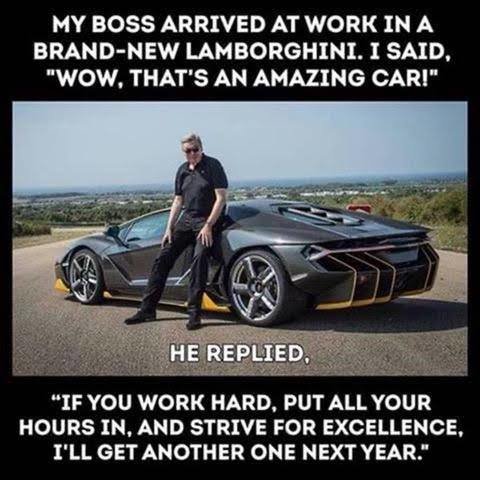
AMEN! To anyone who had a successful time in the military, whether one enlistment term, or a career, civilian attitudes can be repugnant; ESPECIALLY from executive management.
I recently saw this cartoon and it fits pretty well, the attitudes of fellow managers where I worked for over 20 years.
I recently saw this cartoon and it fits pretty well, the attitudes of fellow managers where I worked for over 20 years.
(2)
(0)
SFC Randy Hellenbrand
SSG Bill McCoy - Love your picture. I would suggest you take a gander at: Solidarity and Fragmentation, by Richard Oestreieher. It's about labor practices in the late 1800s.
(2)
(0)
3
3
0
I would think the few that have it hard, either made it that way themselves by failing to understand the situation fully... or they are failing to make their own situation better by reaching out to the resources they have. When I left, and during my break in service, I struggled for the first month or so after active duty. But, I took what I had, worked the channels I knew of and was a better person overall. It is the individual that make the individuals life better or worse, not the situation.
(3)
(0)
SFC Randy Hellenbrand
To a point. I was retired from the Army for 2 years and absolutely got George W'd. Everything was gone before I knew what happened. I did everything right, but I got a government that couldn't do anything right.
(0)
(0)
Read This Next


 Continue with Facebook
 Continue with Google