


125
125
0


I’m not sure any of the survivors of the battle of Sadr City will ever really be home again. It is indeed a long road. But the series taught me a lot about myself, a lot about others and helped me come to grip with who I am and where I want to go next.
My experience, both with the real ambush and the dramatized version, has been insane to say the least. Back in 2004 when my platoon was pinned down on a rooftop in Sadr City, I vividly recall talking with the soldiers I was with about who we wanted to play us in a movie if one was ever made. It was a joke. A tension reliever. I did not ever imagine it would really happen. Until it did. Fast forward thirteen years. There had been more war and more loss, but the battle of Sadr City still weighed heavily. My role in the battle was written about in Martha Raddatz’s book years before, but when I was first approached about being part of this mini-series project I was very scared. I was scared of opening up my life to others. I was scared of being vulnerable. I was scared of the responsibility and frightened to come face to face with the Gold Star Families. I hesitated knowing my family would see a cinematic representation of the day I was given the greatest gift of my life. The gift of time. More time than I know what to do with and not enough time to do all the things that should be done. My worries began to fade as soon as I met the screenwriter and showrunner, Mikko Alanne. I honestly don’t know if I would have been involved if it wasn't for Mikko, who I now consider such a good friend that I look at him as family. His reassuring manner and the gentle display of empathy rekindled my own sense of empathy. That is what sparked my acceptance of the project and my willingness to put my fears aside and become part of the project.
On the very first day I went down to the pre-production office I was blown away. It was like walking into a museum where my best friends were on display. Their pictures hung on the wall, and their exploits were captured and reproduced with painstaking detail. I remember seeing the first model of the set and the way the tiny, fake paper trees were lined around the outskirts of the buildings. Small, tan army men were placed next to vehicles and on rooftops. The memories flooded back. I broke down in tears in front of a room full of strangers, making noises like a preschool child. Luckily for me, I was there that day with one of my closest friends, Aaron Fowler. I needed his support. Aaron was shot 3 separate times that day in the attempts to rescue the platoon. I’ll forever be grateful to men like him. Not just for that day, but for the strength and vulnerability they show now. They value their family and friends and aren’t afraid to ask for help. It’s what I try to do as well.
Being able to be on set and walk through that re-created Sadr City in the heart of Ft. Hood was an experience like nothing else. To say it was surreal would be an understatement. One of the greatest joys was being able to invite my comrades to walk down those dusty streets and talk about the detail, and remember—together—that day that changed us all. I will treasure the memories of being there with members of Gold Star families and walking those same dusty streets. Sharing in their experience with them will be a memory I treasure like the birth of my children. It truly was unforgettable and I’m grateful that I was able to share it with so many people because this generation of veterans does not have the chance, and maybe never will, to revisit their battlefields and this was such a perfect re-creation.
Once production got rolling it was easy to turn my mind off to what was around me and to just answer questions the cast and crew had. I’d spoken at length to some people that I respect to help guide me through what was going on and how to deal with it. I’m very fortunate to have such a wide network of friends from my time in the Army. One of the key things that helped me cope and helped me open up publicly about my own memories is my strong relationship with those friends and my family. I know that staying connected to them is what made all the difference for me. And there was the added benefit that some of them were sharing more of their experiences from April 4, 2004, just like I was. Almost every day during production I learned something new about the battle that I had never known before.
Five months of intense exposure therapy in a safe and comfortable environment that looked and felt so much like Sadr City prepared me for the media onslaught once we wrapped the production. From Cannes, to New York, to Washington D.C. and finally to Los Angeles, I told the story of my experiences of being on set with the cast and crew and on the front lines so many years before to a global audience. It was a whirlwind like I have never seen, but more than that it was another affirmation of something I already knew; family is everything. I’m thankful that I have such a great support system backing me up while I traveled around talking about this project. It was a responsibility I did not take lightly, yet it was immensely healing telling my story over and over, being able to acknowledge and share great deeds I witnessed and to pass on the legacy of warriors.
I’m writing all this just a few days before the airing of the episode titled “Abandon Hope”. I’m still not quite sure how I will feel after it airs, or even years from now. To watch the talented actor, Jon Beavers portrayal of me is an out of body experience. From the beginning Jon has shown me and all of my Army brothers, as well as the families, such care and respect. I do know this though. I know that speaking out and telling my story has helped me heal. It has helped me come to grips with who I am. I am lucky. I encourage everyone to speak out and share their stories with the people that love them. It’s always much worse in your own head than it is in reality. So thank you to my family, my friends, and my new “Long Road Home” family. With that I have to acknowledge some people and organizations that were responsible for all of this. Foremost, the Gold Star families. It is not lost on me why I draw breath. When I see you I am reminded of what sacrifice really means. I hope that this experience has been helpful and not hurtful. I know that seeing your courage taught me so much. Thank you, Martha. Your steadfast love and dedication to the Lancer family has been how this all has started. Mikko, thanks for giving our story to the world via National Geographic and all the amazing writers like Lana Cho and Alan DiFiore. Coin holders, I hope you feel the burden of responsibility and the quiet comfort of joy in what you have created.
My experience, both with the real ambush and the dramatized version, has been insane to say the least. Back in 2004 when my platoon was pinned down on a rooftop in Sadr City, I vividly recall talking with the soldiers I was with about who we wanted to play us in a movie if one was ever made. It was a joke. A tension reliever. I did not ever imagine it would really happen. Until it did. Fast forward thirteen years. There had been more war and more loss, but the battle of Sadr City still weighed heavily. My role in the battle was written about in Martha Raddatz’s book years before, but when I was first approached about being part of this mini-series project I was very scared. I was scared of opening up my life to others. I was scared of being vulnerable. I was scared of the responsibility and frightened to come face to face with the Gold Star Families. I hesitated knowing my family would see a cinematic representation of the day I was given the greatest gift of my life. The gift of time. More time than I know what to do with and not enough time to do all the things that should be done. My worries began to fade as soon as I met the screenwriter and showrunner, Mikko Alanne. I honestly don’t know if I would have been involved if it wasn't for Mikko, who I now consider such a good friend that I look at him as family. His reassuring manner and the gentle display of empathy rekindled my own sense of empathy. That is what sparked my acceptance of the project and my willingness to put my fears aside and become part of the project.
On the very first day I went down to the pre-production office I was blown away. It was like walking into a museum where my best friends were on display. Their pictures hung on the wall, and their exploits were captured and reproduced with painstaking detail. I remember seeing the first model of the set and the way the tiny, fake paper trees were lined around the outskirts of the buildings. Small, tan army men were placed next to vehicles and on rooftops. The memories flooded back. I broke down in tears in front of a room full of strangers, making noises like a preschool child. Luckily for me, I was there that day with one of my closest friends, Aaron Fowler. I needed his support. Aaron was shot 3 separate times that day in the attempts to rescue the platoon. I’ll forever be grateful to men like him. Not just for that day, but for the strength and vulnerability they show now. They value their family and friends and aren’t afraid to ask for help. It’s what I try to do as well.
Being able to be on set and walk through that re-created Sadr City in the heart of Ft. Hood was an experience like nothing else. To say it was surreal would be an understatement. One of the greatest joys was being able to invite my comrades to walk down those dusty streets and talk about the detail, and remember—together—that day that changed us all. I will treasure the memories of being there with members of Gold Star families and walking those same dusty streets. Sharing in their experience with them will be a memory I treasure like the birth of my children. It truly was unforgettable and I’m grateful that I was able to share it with so many people because this generation of veterans does not have the chance, and maybe never will, to revisit their battlefields and this was such a perfect re-creation.
Once production got rolling it was easy to turn my mind off to what was around me and to just answer questions the cast and crew had. I’d spoken at length to some people that I respect to help guide me through what was going on and how to deal with it. I’m very fortunate to have such a wide network of friends from my time in the Army. One of the key things that helped me cope and helped me open up publicly about my own memories is my strong relationship with those friends and my family. I know that staying connected to them is what made all the difference for me. And there was the added benefit that some of them were sharing more of their experiences from April 4, 2004, just like I was. Almost every day during production I learned something new about the battle that I had never known before.
Five months of intense exposure therapy in a safe and comfortable environment that looked and felt so much like Sadr City prepared me for the media onslaught once we wrapped the production. From Cannes, to New York, to Washington D.C. and finally to Los Angeles, I told the story of my experiences of being on set with the cast and crew and on the front lines so many years before to a global audience. It was a whirlwind like I have never seen, but more than that it was another affirmation of something I already knew; family is everything. I’m thankful that I have such a great support system backing me up while I traveled around talking about this project. It was a responsibility I did not take lightly, yet it was immensely healing telling my story over and over, being able to acknowledge and share great deeds I witnessed and to pass on the legacy of warriors.
I’m writing all this just a few days before the airing of the episode titled “Abandon Hope”. I’m still not quite sure how I will feel after it airs, or even years from now. To watch the talented actor, Jon Beavers portrayal of me is an out of body experience. From the beginning Jon has shown me and all of my Army brothers, as well as the families, such care and respect. I do know this though. I know that speaking out and telling my story has helped me heal. It has helped me come to grips with who I am. I am lucky. I encourage everyone to speak out and share their stories with the people that love them. It’s always much worse in your own head than it is in reality. So thank you to my family, my friends, and my new “Long Road Home” family. With that I have to acknowledge some people and organizations that were responsible for all of this. Foremost, the Gold Star families. It is not lost on me why I draw breath. When I see you I am reminded of what sacrifice really means. I hope that this experience has been helpful and not hurtful. I know that seeing your courage taught me so much. Thank you, Martha. Your steadfast love and dedication to the Lancer family has been how this all has started. Mikko, thanks for giving our story to the world via National Geographic and all the amazing writers like Lana Cho and Alan DiFiore. Coin holders, I hope you feel the burden of responsibility and the quiet comfort of joy in what you have created.
Posted in these groups:  Command Post
 1st CAV
 Entertainment
 Operation Iraqi Freedom (OIF)
 11B: Infantryman
Command Post 1st CAV Entertainment Operation Iraqi Freedom (OIF) 11B: Infantryman
Posted 8 y ago
Responses: 30

14
14
0

Didn't know it was filmed at Hood, I recognized the outdoor museum in the first episode but its cool Sadr was mocked up there as well! Also you all did a very good job with the show, way to represent 1CAV!
(14)
(0)
SFC Eric Bourquin
it was pretty special to be able to have production at Ft. Hood. It was great going back to the MOUT site and revisiting my old "playground". It was very nostalgic.
(5)
(0)
11
11
0

SFC Eric Bourquin
I agree. I am forever thankful that people are investing their time by watching this show. The willingness to help keep our warriors legacies alive is something special.
(4)
(0)
11
11
0
8
8
0

SFC Eric Bourquin I departed Baghdad in Feb 2003, but I remember hearing about it. I had driven through that area while there. I have not watched the show as I really don't, haven't watched shows about Iraq. Maybe I will someday. I guess for you and others there, this is a good way to get it out, which I had a good friend tell me we all need to do. I sat down and wrote a book. I will admit there are a few things I didn't put in the book, both from deployment in Bosnia and Iraq, but most of it is there. I did feel a lot better after writing about it. Yea the book is published, but I don't expect to make money, it was more for me to just "get it out". Thanks for starting this thread. BOTB.
(8)
(0)
SGM Mikel Dawson
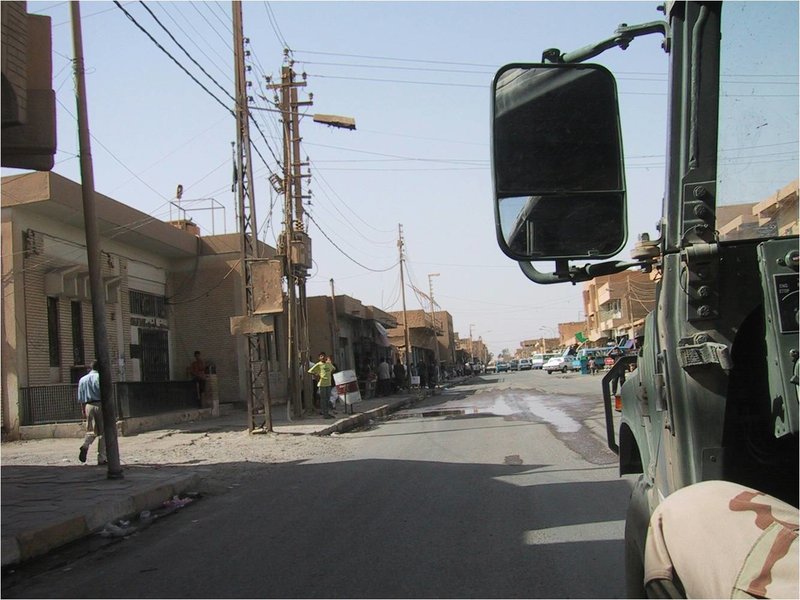
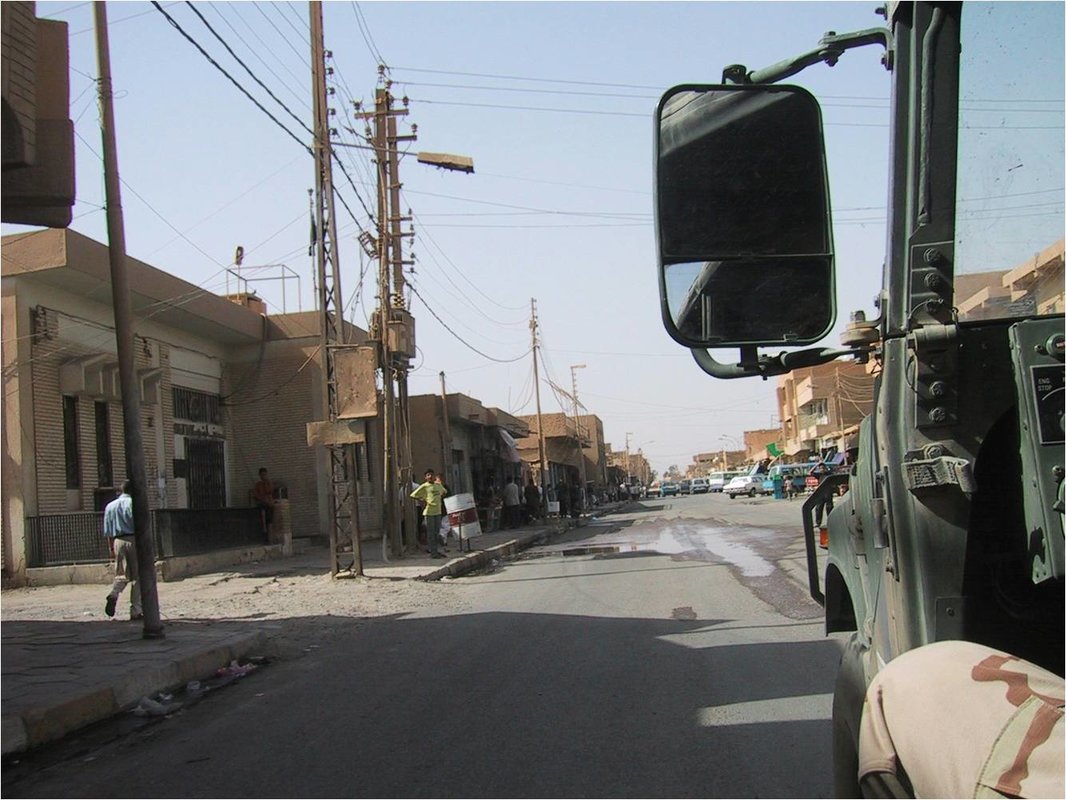
One more comment. We arrived it was a completely different attitude. We drove around in soft tops. Towards the end of our deployment this got restricted as things started going downhill fast. The attached pic is of that neck of the woods. We were headed out of to another base as the time. You can see we had no doors on and soft vehicles.
(6)
(0)
7
7
0

SFC Eric Bourquin. I have been watching the series even though it’s something that for me has been so hard to watch. It brings back lots memories and at times bad flashbacks. But as u said in your piece it’s a way to heal. I was in country in ‘04 and as I find out about stories like yours. I sometimes can’t believe how many of us survived such a hellhole. I was in Samarra and other places around my AO not to far from you and in April of that year all hell broke loose for us as well. This series will be a consistent reminder of those we lost and the sacrifices that brothers made for each other in battle. In closing I will share this, I learned something years ago from a Vietnam Veteran when I was a wet behind the ears private. Our job as survivors of war is to honor the brothers that we have lost. And to live everyday as they would have. Thank you for sharing your story. And thank you for you service.
(7)
(0)
SFC Eric Bourquin
CW4 Brian Haas - it was a pretty intense place around that time. Thanks for serving.
(4)
(0)
SSG Alvin Amezquita
CW4 Brian Haas You are definitely not lying about that brother. I want to say Thank you for your service and thank you for protecting us while we rode up and down MSR’s and when we needed direct fire air support. To me you guys were the angels in the sky and trust me when I say this you gentlemen saved my ass a few times.
(4)
(0)
CW4 Brian Haas
That’s good to hear. We’d preach to new guys, it’s not about us. It’s about our boys on the ground, and we’d do anything and everything we could for y’all. The heroes were down there below us, dealing with crap we can’t even imagine!!
(4)
(0)
7
7
0

I have been a diligent viewer of the series. It's one of those true stories that makes you frustrated at the events, angry because of the results and still proud of the heroism of both your squad and those that attempted the rescue. I've started reading the book just to understand the back story better, which the first couple of chapters seem to do a better job of detailing what a mess the area was when you deployed. That's often the case, you really won't understand the "Blackhawk Down" incident without reading the book.
(7)
(0)
SFC Eric Bourquin
Thank you for the honest feedback. I appreciate Long Road Home being compared to all of the projects you mentioned. It is amazing to me to see how far this is reaching. I am excited to see how much further it will reach. There are a lot of amazing stories out in the ranks that need to be shared. I hope I can continue in doing that.
(3)
(0)
CPT Lawrence Cable
SFC Eric Bourquin - Your welcome. I'll pick up Black Knight Dark Days on your recommendation.
Just curious, and you can feel free to tell me to screw off, but it sounds like you are going to do the Dale Dye thing. Dale and R.Lee are both getting a little old and it's time for some new blood in the industry.
Just curious, and you can feel free to tell me to screw off, but it sounds like you are going to do the Dale Dye thing. Dale and R.Lee are both getting a little old and it's time for some new blood in the industry.
(1)
(0)
SFC Eric Bourquin
CPT Lawrence Cable - I think you'll enjoy it. As to Dale Dye(hes the one who published Matt Fisk's book) and R. Lee, I'd be privileged if any more opportunities come my way. I know Dale Dye is working on a pretty cool project right now that seems really amazing. While working on The Long Road Home I had the amazing opportunity to meet and work with two pretty amazing individuals who both spent much time in horrible places. Michael Baumgarten and Jariko Denman of War Office Productions did some amazing things with out story. If you like the realism of the actors portrayal of the Soldiers, you can credit most of that to Mike and Jariko.
(1)
(0)
CPT Lawrence Cable
SFC Eric Bourquin - I'm not sure I would use the word like, but I think that it's important that we not glamorize combat and portray it for what it is for the Grunt, brutal, hard, ugly and dangerous work.
My wife made the comment on a visit to the Wall that it was a very sad and depressing place. I told her that maybe War Memorials should be sad and depressing to show the price paid.
I would recommend Bing West's books, I would start with "The Strongest Tribe". He is a very bright individual with access to the top decision makers as well as the grunt in the street, but he does write from the point of view that you have intimate knowledge of the area and decisions. I keep up with that part of the world more than most, but I will admit that I was on google quite a bit to understand what he was talking about.
My wife made the comment on a visit to the Wall that it was a very sad and depressing place. I told her that maybe War Memorials should be sad and depressing to show the price paid.
I would recommend Bing West's books, I would start with "The Strongest Tribe". He is a very bright individual with access to the top decision makers as well as the grunt in the street, but he does write from the point of view that you have intimate knowledge of the area and decisions. I keep up with that part of the world more than most, but I will admit that I was on google quite a bit to understand what he was talking about.
(2)
(0)
6
6
0

HN Kathleen M Peck
I commend you for your service and willingness to participate in this series. The more people know of the hardships of war and the toll it takes on our service men, women and families the more they will understand that war is really and truly "hell". Thank you for sharing!
(2)
(0)
5
5
0
Sergeant, yours is a superb write-up about the realities of war and the conflict held on a personal basis. I am happy for your ability to work with the cast and crew and to see it draw to a close. Now, the public needs to see the film and I hope to do so too.
(5)
(0)
SFC Eric Bourquin
Thank you for the kind words. This series helped spark a conversation at least in my life and those around me about what the cost of war is. I am happy it did it.
(0)
(0)
5
5
0

I’d give anything to be able to meet some of y’all that were on the ground. I flew cover that night in the Apaches overhead. I’ve met Lancer 06, that was while we were still deployed. Y’all were beasts on the ground, true warriors.
(5)
(0)
SFC Eric Bourquin
Thanks for the compliments. There is a bunch of us around. If you're ever in my neck of the woods look me up. We can go catch some fish.
(1)
(0)
5
5
0
It was definitely cool seeing that it was actually filmed at Fort Hood. I spent a total of 7 years there. both with 4ID in the late 90’s and 1ACB in 2008-2012
(5)
(0)
SFC Eric Bourquin
Haha, I've heard it called much worse! I loved all of the people I served there with. I've got so many great memories there.
(2)
(0)
CPL Jeremy Glenn
My overall experience was good with only a few exceptions. It’s a “great place” to be stationed. I just never got out of the Cav lol. Even when 4ID was there I was in a cavalry squadron lol. I love my time in the Cav though. Unique traditions and a very rich history.
(2)
(0)
SPC David Willis
CPL Jeremy Glenn - The day I reported to my unit I saw 367 4 ID and I was pumped went to the PX bought a 4 ID patch and showed up rocking it on my shoulder. Look around and see all these 1 CAV patches, they had reflagged earlier in the day and sent the rest of the units to Carson. Needless to say I got smoked for hours for reporting in the wrong uniform haha.
(4)
(0)
Read This Next


 Continue with Facebook
 Continue with Google