
Posted on Jun 29, 2025

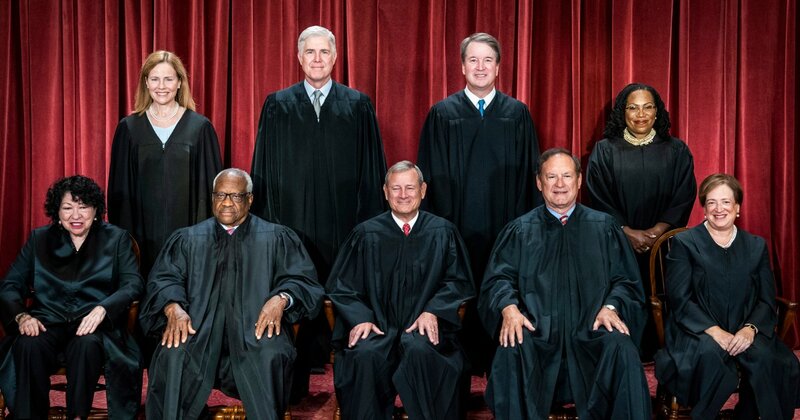
Opinion | Trump just used birthright citizenship to enable a presidential power grab

534
26
12
7
7
0
This from MSNBC, so right off the bat I'm against the opinion philosophically and politically. A judge in Podunk Oregon has no say in what I do here in Middle of Nowhere TN. Anchor Babies? don't like them either. If a woman wants her child born on US soil to take the risks involved in crossing the border illegally, I say she's a strong woman. But, it doesn't mean She gets to stay here to raise the child. Those children should become wards of the State and be put up for adoption. The children would retain their US Citizenship. I'm not against Birthright Citizenship, I'm against Anchor Babies. Two entirely different things, in my mind, with two different outcomes.
SGT James Murphy, CPT Jack Durish,
SPC Gary Welch, SGT Mark Anderson,
CPL Douglas Chrysler, LTC Trent Klug,
CSM Charles Hayden Passed 7/29/2025, SMSgt David A Asbury,
SSG William Jones,LTC David Brown
SSG Michael Noll, MAJ Dale E. Wilson, Ph.D.
SGM Erik Marquez, CW3 Harvey K.
SFC William Farrell, CPL Ronald Keyes Jr
Sgt (Join to see), SSG (Join to see)
SGT James Murphy, CPT Jack Durish,
SPC Gary Welch, SGT Mark Anderson,
CPL Douglas Chrysler, LTC Trent Klug,
CSM Charles Hayden Passed 7/29/2025, SMSgt David A Asbury,
SSG William Jones,LTC David Brown
SSG Michael Noll, MAJ Dale E. Wilson, Ph.D.
SGM Erik Marquez, CW3 Harvey K.
SFC William Farrell, CPL Ronald Keyes Jr
Sgt (Join to see), SSG (Join to see)
Opinion | Trump just used birthright citizenship to enable a presidential power grab
Posted from msnbc.comPosted in these groups:  Political Opinions
Political Opinions
Posted 8 mo ago
Responses: 7
6
6
0

When the 14th Amendment was introduced, it was never intended to be used as its been used since ratification and legal interpretations.
(6)
(0)
MSG Stan Hutchison
This is the same argument the left uses regarding the 2nd amendment, that it was intended to for a standing militia. I am not trying to argue that case over again but just pointing out the similarities.
(2)
(0)
SGM Jeff Mccloud
If they had intended it otherwise, they would have included language specifying so, there were plenty of examples of countries in the old world to draw from when they drafted it.
(0)
(0)
MAJ Byron Oyler
MSG Stan Hutchison - Anyone who supports firearms and Trump's executive order ending birthright citizenship is a fool. If an executive order can affect the 14th amendment then it can affect the 2nd.
(0)
(0)
LTC Trent Klug
They did just that.
"This amendment’s language was derived from the 1866 Civil Rights Act, which provided that “[a]ll persons born in the United States, and not subject to any foreign power” would be considered citizens.
Sen. Lyman Trumbull, a key figure in the adoption of the 14th Amendment, said that “subject to the jurisdiction” of the U.S. included not owing allegiance to any other country.
As John Eastman, former dean of the Chapman School of Law, has said, many do not seem to understand “the distinction between partial, territorial jurisdiction, which subjects all who are present within the territory of a sovereign to the jurisdiction of that sovereign’s laws, and complete political jurisdiction, which requires allegiance to the sovereign as well.”
In the famous Slaughter-House cases of 1872, the Supreme Court stated that this qualifying phrase was intended to exclude “children of ministers, consuls, and citizens or subjects of foreign States born within the United States.” This was confirmed in 1884 in another case, Elk vs. Wilkins, when citizenship was denied to an American Indian because he “owed immediate allegiance to” his tribe and not the United States.
American Indians and their children did not become citizens until Congress passed the Indian Citizenship Act of 1924. There would have been no need to pass such legislation if the 14th Amendment extended citizenship to every person born in America, no matter what the circumstances of their birth, and no matter who their parents are."
https://www.heritage.org/immigration/commentary/birthright-citizenship-fundamental-misunderstanding-the-14th-amendment
"This amendment’s language was derived from the 1866 Civil Rights Act, which provided that “[a]ll persons born in the United States, and not subject to any foreign power” would be considered citizens.
Sen. Lyman Trumbull, a key figure in the adoption of the 14th Amendment, said that “subject to the jurisdiction” of the U.S. included not owing allegiance to any other country.
As John Eastman, former dean of the Chapman School of Law, has said, many do not seem to understand “the distinction between partial, territorial jurisdiction, which subjects all who are present within the territory of a sovereign to the jurisdiction of that sovereign’s laws, and complete political jurisdiction, which requires allegiance to the sovereign as well.”
In the famous Slaughter-House cases of 1872, the Supreme Court stated that this qualifying phrase was intended to exclude “children of ministers, consuls, and citizens or subjects of foreign States born within the United States.” This was confirmed in 1884 in another case, Elk vs. Wilkins, when citizenship was denied to an American Indian because he “owed immediate allegiance to” his tribe and not the United States.
American Indians and their children did not become citizens until Congress passed the Indian Citizenship Act of 1924. There would have been no need to pass such legislation if the 14th Amendment extended citizenship to every person born in America, no matter what the circumstances of their birth, and no matter who their parents are."
https://www.heritage.org/immigration/commentary/birthright-citizenship-fundamental-misunderstanding-the-14th-amendment
Birthright Citizenship: A Fundamental Misunderstanding of the 14th Amendment
What’s the citizenship status of the children of illegal aliens? That question has spurred quite a debate over the 14th Amendment lately, with the news that several states—including Pennsylvania, Arizona, Oklahoma, Georgia, and South Carolina—may launch efforts to deny automatic citizenship to such children.
(1)
(0)
2
2
0

1
1
0

How can illegality be made legal? Why do we have the doctrine of fruit of the poisonous tree in other situations, but it seems to be overlooked in this?
(1)
(0)
Read This Next


 Continue with Facebook
 Continue with Google