
Posted on Dec 18, 2025

USAF Buying Lufthansa 747s To Serve As Future Air Force One Trainers, Spare Parts Sources

792
23
5
9
9
0
Nuclear War is the 'Climate Change/Climate Emergency' that this American President worries about.
We were scammed by President Biden.
Even a limited Nuclear exchange between India and Pakistan will cause famine and
enough global cooling to prevent good crop harvests for decades. National Geographic Magazine did a study on this over a decade ago.
Stupid Firebrand Economics Graduate DNC Congresswoman AOC (She does not follow Economics nor Finance 101 after She was brainwashed to hate Capitalism as a Socialist/Communist)with her Climate Emergency fearmongering 7 years ago and the Electric Car Mandates are now a thing of the past.
Canada still has an electric car Mandate by 2036.
President Trump voided California Governor Newsome's mandate. Electric cars are now a choice.
So much for President Trump being called a King.
We were scammed by President Biden.
Even a limited Nuclear exchange between India and Pakistan will cause famine and
enough global cooling to prevent good crop harvests for decades. National Geographic Magazine did a study on this over a decade ago.
Stupid Firebrand Economics Graduate DNC Congresswoman AOC (She does not follow Economics nor Finance 101 after She was brainwashed to hate Capitalism as a Socialist/Communist)with her Climate Emergency fearmongering 7 years ago and the Electric Car Mandates are now a thing of the past.
Canada still has an electric car Mandate by 2036.
President Trump voided California Governor Newsome's mandate. Electric cars are now a choice.
So much for President Trump being called a King.
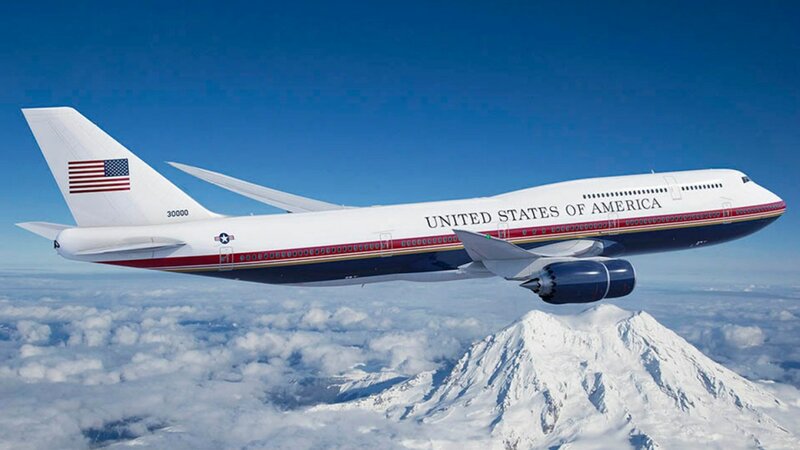
USAF Buying Lufthansa 747s To Serve As Future Air Force One Trainers, Spare Parts Sources
Posted from twz.comPosted in these groups:  Political Opinions
Political Opinions
Posted 1 mo ago
Responses: 3
5
5
0

4
4
0
Log in to National Geographic to read how a Nuclear war can blow the Stupid AOC Climate Emergency Narrative.
Regional nuclear war could trigger global cooling and famine | National Geographic https://share.google/6kGzjM5pDYO9r20JI
https://photos.app.goo.gl/toQ25XxctsmkvF519
CSM Chuck Stafford SFC (Join to see) SFC (Join to see) SSG Steven Mangus SFC Stephen King MSgt Stephen Council 1st Lt Padre Dave Poedel CPT (Join to see) Lt Col Charlie Brown LTC Matthew Schlosser
Regional nuclear war could trigger global cooling and famine | National Geographic https://share.google/6kGzjM5pDYO9r20JI
https://photos.app.goo.gl/toQ25XxctsmkvF519
CSM Chuck Stafford SFC (Join to see) SFC (Join to see) SSG Steven Mangus SFC Stephen King MSgt Stephen Council 1st Lt Padre Dave Poedel CPT (Join to see) Lt Col Charlie Brown LTC Matthew Schlosser
Regional nuclear war could trigger global cooling and famine
Even a limited nuclear conflict could spark "unprecedented climate change," U.S. government scientists warn.
(4)
(0)
Lt Col John (Jack) Christensen
We've had this conversation before, regional nuclear war would trigger the same effects as the bombs on Hiroshima and Nagasaki. Both those cities are thriving today.
(2)
(0)
LTC Stephen Conway
Lt Col John (Jack) Christensen
BLUF 100 Hiroshima Bombs. That is nothing compared to what Russia, China and the US have with MIRV warheads of higher kiloton or megaton yield.
To see what climate effects such a regional nuclear conflict might have, scientists from NASA and other institutions modeled a war involving a hundred Hiroshima-level bombs, each packing the equivalent of 15,000 tons of TNT—just 0.03 percent of the world's current nuclear arsenal. (See a National Geographic magazine feature on weapons of mass destruction.)
The researchers predicted the resulting fires would kick up roughly five million metric tons of black carbon into the upper part of the troposphere, the lowest layer of the Earth's atmosphere.
In NASA climate models, this carbon then absorbed solar heat and, like a hot-air balloon, quickly lofted even higher, where the soot would take much longer to clear from the sky.
PO3 Phyllis Maynard Lt Col John (Jack) Christensen
BLUF 100 Hiroshima Bombs. That is nothing compared to what Russia, China and the US have with MIRV warheads of higher kiloton or megaton yield.
To see what climate effects such a regional nuclear conflict might have, scientists from NASA and other institutions modeled a war involving a hundred Hiroshima-level bombs, each packing the equivalent of 15,000 tons of TNT—just 0.03 percent of the world's current nuclear arsenal. (See a National Geographic magazine feature on weapons of mass destruction.)
The researchers predicted the resulting fires would kick up roughly five million metric tons of black carbon into the upper part of the troposphere, the lowest layer of the Earth's atmosphere.
In NASA climate models, this carbon then absorbed solar heat and, like a hot-air balloon, quickly lofted even higher, where the soot would take much longer to clear from the sky.
PO3 Phyllis Maynard Lt Col John (Jack) Christensen
(1)
(0)
2
2
0
Read This Next


 Continue with Facebook
 Continue with Google