

18
18
0
Story of most murderous people of all time revealed in ancient DNA
Starting 5000 years ago, the Yamnaya embarked on a violent conquest of Europe. Now genetic analysis tells their tale for the first time
HUMANS 27 March 2019
THE iconic sarsen stones at Stonehenge were erected some 4500 years ago. Although the monument’s original purpose is still disputed, we now know that within a few centuries it became a memorial to a vanished people. By then, almost every Briton, from the south coast of England to the north-east tip of Scotland, had been wiped out by incomers. It isn’t clear exactly why they disappeared so rapidly. But a picture of the people who replaced them is emerging.
The migrants’ ultimate source was a group of livestock herders called the Yamnaya who occupied the Eurasian steppe north of the Black Sea and the Caucasus mountains. Britain wasn’t their only destination. Between 5000 and 4000 years ago, the Yamnaya and their descendants colonised swathes of Europe, leaving a genetic legacy that persists to this day. Their arrival coincided with profound social and cultural changes. Burial practices shifted dramatically, a warrior class appeared, and there seems to have been a sharp upsurge in lethal violence. “I’ve become increasingly convinced there must have been a kind of genocide,” says Kristian Kristiansen at the University of Gothenburg, Sweden. As he and others piece together the story, one question resounds: were the Yamnaya the most murderous people in history?
Before about 5000 years ago, Neolithic Europe was inhabited by people much like those who raised Stonehenge. They were farmers with an urge to work together and build large stone structures. “It looks like these people were quite communal,” says Kristiansen. And that community spirit continued into the afterlife: many of …
You can read by saving using the below.
Starting 5000 years ago, the Yamnaya embarked on a violent conquest of Europe. Now genetic analysis tells their tale for the first time
HUMANS 27 March 2019
THE iconic sarsen stones at Stonehenge were erected some 4500 years ago. Although the monument’s original purpose is still disputed, we now know that within a few centuries it became a memorial to a vanished people. By then, almost every Briton, from the south coast of England to the north-east tip of Scotland, had been wiped out by incomers. It isn’t clear exactly why they disappeared so rapidly. But a picture of the people who replaced them is emerging.
The migrants’ ultimate source was a group of livestock herders called the Yamnaya who occupied the Eurasian steppe north of the Black Sea and the Caucasus mountains. Britain wasn’t their only destination. Between 5000 and 4000 years ago, the Yamnaya and their descendants colonised swathes of Europe, leaving a genetic legacy that persists to this day. Their arrival coincided with profound social and cultural changes. Burial practices shifted dramatically, a warrior class appeared, and there seems to have been a sharp upsurge in lethal violence. “I’ve become increasingly convinced there must have been a kind of genocide,” says Kristian Kristiansen at the University of Gothenburg, Sweden. As he and others piece together the story, one question resounds: were the Yamnaya the most murderous people in history?
Before about 5000 years ago, Neolithic Europe was inhabited by people much like those who raised Stonehenge. They were farmers with an urge to work together and build large stone structures. “It looks like these people were quite communal,” says Kristiansen. And that community spirit continued into the afterlife: many of …
You can read by saving using the below.

Posted in these groups:  Science
 Psychology
Science Psychology
Posted 7 y ago
Responses: 7

11
11
0

Origins of Horse Domestication: Botai, Yamnaya, Sintashta
Professor Alan Outram, Head of Archaeology at University of Exeter is one of the world's leading experts on ancient horse DNA and the domestication of the ho...
Interesting, my friend SSgt (Join to see)
I did a little research on the Yamnaya.
To be honest I expect the "most murderous people of all time" is hyperbole.
More likely,
1. plague like-disease brought in my immune nomads severely impacted existing native populations.
2. Survivors intermarried in many cases - from India through England. :-)
Origins of Horse Domestication: Botai, Yamnaya, Sintashta
"Professor Alan Outram, Head of Archaeology at University of Exeter is one of the world's leading experts on ancient horse DNA and the domestication of the horse. In this interview he explains how his views have changed since his 2009 paper on the Botai domestication of the horse. Prof. Outram contributed to a paper, published in May 2018, entitled, “The first horse herders and the impact of early Bronze Age steppe expansions into Asia” in which the Yamnaya, most likely the Proto-Indo-Europeans, are posited as the potential domesticators of modern horses, rather than the Botai who were pushed out of Kazakhstan by the Yamnaya or related steppe pastoralists."
https://www.youtube.com/watch?v=50o0KSWB42Y
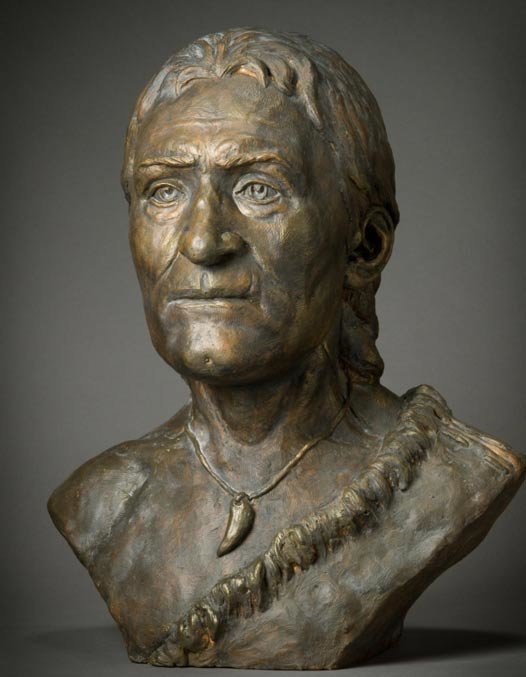
Image: A reconstruction of the Yamnaya skull. A typical Yamnaya individual from the Caspian steppe in Russia ca. 5,000-4,800 BC. Yamnaya people were tall and were buried in deep pits covered by a small barrow. Credit: Alexey Nechvaloda
Here is some information for 2015
Background from ancient-origins.net/yamnaya
Populations of hunter-gatherers weathered the Ice Age in apparent isolation in Caucasus mountain region for millennia, later mixing with other ancestral populations, from which emerged the Yamnaya culture that would bring this Caucasus hunter-gatherer lineage to Western Europe.
The first sequencing of ancient genomes extracted from human remains that date back to the Late Upper Paleolithic period over 13,000 years ago has revealed a previously unknown “fourth strand” of ancient European ancestry.
This new lineage stems from populations of hunter-gatherers that split from western hunter-gatherers shortly after the ‘out of Africa’ expansion some 45,000 years ago and went on to settle in the Caucasus region, where southern Russia meets Georgia today.
Here these hunter-gatherers largely remained for millennia, becoming increasingly isolated as the Ice Age culminated in the last ‘Glacial Maximum’ some 25,000 years ago, which they weathered in the relative shelter of the Caucasus mountains until eventual thawing allowed movement and brought them into contact with other populations, likely from further east.
This led to a genetic mixture that resulted in the Yamnaya culture: horse-borne Steppe herders that swept into Western Europe around 5,000 years ago, arguably heralding the start of the Bronze Age and bringing with them metallurgy and animal herding skills, along with the Caucasus hunter-gatherer strand of ancestral DNA – now present in almost all populations from the European continent.
The research was conducted by an international team led by scientists from Cambridge University, Trinity College Dublin and University College Dublin. The findings are published today in the journal Nature Communications.
“The question of where the Yamnaya come from has been something of a mystery up to now,” said one of the lead senior authors Dr Andrea Manica, from Cambridge’s Department of Zoology.
“We can now answer that as we’ve found that their genetic make-up is a mix of Eastern European hunter-gatherers and a population from this pocket of Caucasus hunter-gatherers who weathered much of the last Ice Age in apparent isolation. This Caucasus pocket is the fourth major strand of ancient European ancestry, one that we were unaware of until now,” he said.
Professor Daniel Bradley, leader of the Trinity team, said: “This is a major new piece in the human ancestry jigsaw, the influence of which is now present within almost all populations from the European continent and many beyond.”
Previously, ancient Eurasian genomes had revealed three ancestral populations that contributed to contemporary Europeans in varying degrees, says Manica.
Following the ‘out of Africa’ expansion, some hunter-gatherer populations migrated north-west, eventually colonizing much of Europe from Spain to Hungary, while other populations settled around the eastern Mediterranean and Levant, where they would develop agriculture around 10,000 years ago. These early farmers then expanded into and colonized Europe.
Lastly, at the start of the Bronze Age around 5,000 years ago, there was a wave of migration from central Eurasia into Western Europe – the Yamnaya.
However, the sequencing of ancient DNA recovered from two separate burials in Western Georgia – one over 13,000 years old, the other almost 10,000 years old – has enabled scientists to reveal that the Yamnaya owed half their ancestry to previously unknown and genetically distinct hunter-gatherer sources: the fourth strand.
By reading the DNA, the researchers were able to show that the lineage of this fourth Caucasus hunter-gatherer strand diverged from the western hunter-gatherers just after the expansion of anatomically modern humans into Europe from Africa.
The Caucasus hunter-gatherer genome showed a continued mixture with the ancestors of the early farmers in the Levant area, which Manica says makes sense given the relative proximity. This ends, however, around 25,000 years ago – just before the time of the last glacial maximum, or peak Ice Age.
At this point, Caucasus hunter-gatherer populations shrink as the genes homogenize, a sign of breeding between those with increasingly similar DNA. This doesn’t change for thousands of years as these populations remain in apparent isolation in the shelter of the mountains – possibly cut off from other major ancestral populations for as long as 15,000 years – until migrations began again as the Glacial Maximum recedes, and the Yamnaya culture ultimately emerges.
“We knew that the Yamnaya had this big genetic component that we couldn’t place, and we can now see it was this ancient lineage hiding in the Caucasus during the last Ice Age,” said Manica.
While the Caucasus hunter-gatherer ancestry would eventually be carried west by the Yamnaya, the researchers found it also had a significant influence further east. A similar population must have migrated into South Asia at some point, says Eppie Jones, a PhD student from Trinity College who is the first author of the paper.
“India is a complete mix of Asian and European genetic components. The Caucasus hunter-gatherer ancestry is the best match we’ve found for the European genetic component found right across modern Indian populations,” Jones said. Researchers say this strand of ancestry may have flowed into the region with the bringers of Indo-Aryan languages.
The widespread nature of the Caucasus hunter-gatherer ancestry following its long isolation makes sense geographically, says Professor Ron Pinhasi, a lead senior author from University College Dublin. “The Caucasus region sits almost at a crossroads of the Eurasian landmass, with arguably the most sensible migration routes both west and east in the vicinity.”
He added: “The sequencing of genomes from this key region will have a major impact on the fields of palaeogeneomics and human evolution in Eurasia, as it bridges a major geographic gap in our knowledge.”
David Lordkipanidze, Director of the Georgian National Museum and co-author of the paper, said: “This is the first sequence from Georgia – I am sure soon we will get more palaeogenetic information from our rich collections of fossils.”
Featured image: DNA was extracted from the molar teeth of this skeleton, dating from almost 10,000 years ago and found in the Kotias Klde rockshelter in Western Georgia. Credit: Eppie Jones.
By: Ancient-Origins
The Article ‘Fourth strand of European ancestry originated with hunter-gatherers isolated by Ice Age’ was originally published by Cambridge University and is being republished under a Creative Commons license."
FYI Lt Col John (Jack) Christensen Lt Col Charlie Brown LTC Greg Henning LTC Jeff Shearer Maj Bill Smith, Ph.D. Maj William W. 'Bill' Price Maj Marty Hogan CPT Scott Sharon CWO3 Dennis M. SFC Joe S. Davis Jr., MSM, DSL SSG William Jones SGT (Join to see) SGT John " Mac " McConnell SP5 Mark Kuzinski PO1 H Gene Lawrence PO2 Kevin Parker LTC Stephen Conway
I did a little research on the Yamnaya.
To be honest I expect the "most murderous people of all time" is hyperbole.
More likely,
1. plague like-disease brought in my immune nomads severely impacted existing native populations.
2. Survivors intermarried in many cases - from India through England. :-)
Origins of Horse Domestication: Botai, Yamnaya, Sintashta
"Professor Alan Outram, Head of Archaeology at University of Exeter is one of the world's leading experts on ancient horse DNA and the domestication of the horse. In this interview he explains how his views have changed since his 2009 paper on the Botai domestication of the horse. Prof. Outram contributed to a paper, published in May 2018, entitled, “The first horse herders and the impact of early Bronze Age steppe expansions into Asia” in which the Yamnaya, most likely the Proto-Indo-Europeans, are posited as the potential domesticators of modern horses, rather than the Botai who were pushed out of Kazakhstan by the Yamnaya or related steppe pastoralists."
https://www.youtube.com/watch?v=50o0KSWB42Y
Image: A reconstruction of the Yamnaya skull. A typical Yamnaya individual from the Caspian steppe in Russia ca. 5,000-4,800 BC. Yamnaya people were tall and were buried in deep pits covered by a small barrow. Credit: Alexey Nechvaloda
Here is some information for 2015
Background from ancient-origins.net/yamnaya
Populations of hunter-gatherers weathered the Ice Age in apparent isolation in Caucasus mountain region for millennia, later mixing with other ancestral populations, from which emerged the Yamnaya culture that would bring this Caucasus hunter-gatherer lineage to Western Europe.
The first sequencing of ancient genomes extracted from human remains that date back to the Late Upper Paleolithic period over 13,000 years ago has revealed a previously unknown “fourth strand” of ancient European ancestry.
This new lineage stems from populations of hunter-gatherers that split from western hunter-gatherers shortly after the ‘out of Africa’ expansion some 45,000 years ago and went on to settle in the Caucasus region, where southern Russia meets Georgia today.
Here these hunter-gatherers largely remained for millennia, becoming increasingly isolated as the Ice Age culminated in the last ‘Glacial Maximum’ some 25,000 years ago, which they weathered in the relative shelter of the Caucasus mountains until eventual thawing allowed movement and brought them into contact with other populations, likely from further east.
This led to a genetic mixture that resulted in the Yamnaya culture: horse-borne Steppe herders that swept into Western Europe around 5,000 years ago, arguably heralding the start of the Bronze Age and bringing with them metallurgy and animal herding skills, along with the Caucasus hunter-gatherer strand of ancestral DNA – now present in almost all populations from the European continent.
The research was conducted by an international team led by scientists from Cambridge University, Trinity College Dublin and University College Dublin. The findings are published today in the journal Nature Communications.
“The question of where the Yamnaya come from has been something of a mystery up to now,” said one of the lead senior authors Dr Andrea Manica, from Cambridge’s Department of Zoology.
“We can now answer that as we’ve found that their genetic make-up is a mix of Eastern European hunter-gatherers and a population from this pocket of Caucasus hunter-gatherers who weathered much of the last Ice Age in apparent isolation. This Caucasus pocket is the fourth major strand of ancient European ancestry, one that we were unaware of until now,” he said.
Professor Daniel Bradley, leader of the Trinity team, said: “This is a major new piece in the human ancestry jigsaw, the influence of which is now present within almost all populations from the European continent and many beyond.”
Previously, ancient Eurasian genomes had revealed three ancestral populations that contributed to contemporary Europeans in varying degrees, says Manica.
Following the ‘out of Africa’ expansion, some hunter-gatherer populations migrated north-west, eventually colonizing much of Europe from Spain to Hungary, while other populations settled around the eastern Mediterranean and Levant, where they would develop agriculture around 10,000 years ago. These early farmers then expanded into and colonized Europe.
Lastly, at the start of the Bronze Age around 5,000 years ago, there was a wave of migration from central Eurasia into Western Europe – the Yamnaya.
However, the sequencing of ancient DNA recovered from two separate burials in Western Georgia – one over 13,000 years old, the other almost 10,000 years old – has enabled scientists to reveal that the Yamnaya owed half their ancestry to previously unknown and genetically distinct hunter-gatherer sources: the fourth strand.
By reading the DNA, the researchers were able to show that the lineage of this fourth Caucasus hunter-gatherer strand diverged from the western hunter-gatherers just after the expansion of anatomically modern humans into Europe from Africa.
The Caucasus hunter-gatherer genome showed a continued mixture with the ancestors of the early farmers in the Levant area, which Manica says makes sense given the relative proximity. This ends, however, around 25,000 years ago – just before the time of the last glacial maximum, or peak Ice Age.
At this point, Caucasus hunter-gatherer populations shrink as the genes homogenize, a sign of breeding between those with increasingly similar DNA. This doesn’t change for thousands of years as these populations remain in apparent isolation in the shelter of the mountains – possibly cut off from other major ancestral populations for as long as 15,000 years – until migrations began again as the Glacial Maximum recedes, and the Yamnaya culture ultimately emerges.
“We knew that the Yamnaya had this big genetic component that we couldn’t place, and we can now see it was this ancient lineage hiding in the Caucasus during the last Ice Age,” said Manica.
While the Caucasus hunter-gatherer ancestry would eventually be carried west by the Yamnaya, the researchers found it also had a significant influence further east. A similar population must have migrated into South Asia at some point, says Eppie Jones, a PhD student from Trinity College who is the first author of the paper.
“India is a complete mix of Asian and European genetic components. The Caucasus hunter-gatherer ancestry is the best match we’ve found for the European genetic component found right across modern Indian populations,” Jones said. Researchers say this strand of ancestry may have flowed into the region with the bringers of Indo-Aryan languages.
The widespread nature of the Caucasus hunter-gatherer ancestry following its long isolation makes sense geographically, says Professor Ron Pinhasi, a lead senior author from University College Dublin. “The Caucasus region sits almost at a crossroads of the Eurasian landmass, with arguably the most sensible migration routes both west and east in the vicinity.”
He added: “The sequencing of genomes from this key region will have a major impact on the fields of palaeogeneomics and human evolution in Eurasia, as it bridges a major geographic gap in our knowledge.”
David Lordkipanidze, Director of the Georgian National Museum and co-author of the paper, said: “This is the first sequence from Georgia – I am sure soon we will get more palaeogenetic information from our rich collections of fossils.”
Featured image: DNA was extracted from the molar teeth of this skeleton, dating from almost 10,000 years ago and found in the Kotias Klde rockshelter in Western Georgia. Credit: Eppie Jones.
By: Ancient-Origins
The Article ‘Fourth strand of European ancestry originated with hunter-gatherers isolated by Ice Age’ was originally published by Cambridge University and is being republished under a Creative Commons license."
FYI Lt Col John (Jack) Christensen Lt Col Charlie Brown LTC Greg Henning LTC Jeff Shearer Maj Bill Smith, Ph.D. Maj William W. 'Bill' Price Maj Marty Hogan CPT Scott Sharon CWO3 Dennis M. SFC Joe S. Davis Jr., MSM, DSL SSG William Jones SGT (Join to see) SGT John " Mac " McConnell SP5 Mark Kuzinski PO1 H Gene Lawrence PO2 Kevin Parker LTC Stephen Conway
(11)
(0)
6
6
0

5
5
0
You are missing a link for further reading. Please post it since I wanted to email it to myself and read it later.
LTC Stephen F. MSgt David Hoffman
LTC Stephen F. MSgt David Hoffman
(5)
(0)
Read This Next


 Continue with Facebook
 Continue with Google