

Mexican American War

Mexican American War

8
8
0
The "Colonel's" Military Pay Through History - Series of Military Pay through the various wars of the United States (Mexican-American War) Just before the Civil War - still out of order...
During the Mexican-American War, the U.S. Regular Army included specialized units like infantry, artillery, cavalry, and engineering corps. At the beginning of the war, the army was small—just 7,365 soldiers—mostly organized into eight infantry regiments.
During the Mexican-American War (1846-1848), U.S. soldiers, particularly privates in the Regular Army, earned about $7 per month, a low wage that attracted many poor, uneducated, or immigrant recruits, with some volunteers also receiving land bounties later, while the government paid Mexico for territory rather than directly paying soldiers large sums for conquest.
Key Details on Soldier Pay:
Base Pay: Around $7 monthly for enlisted men.
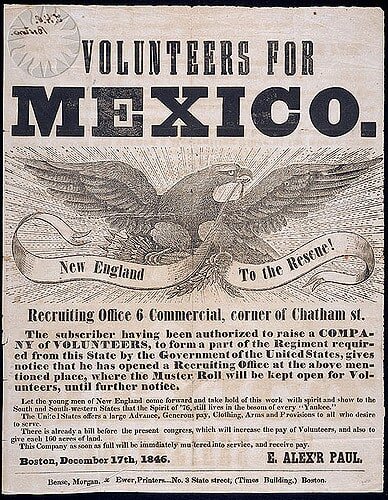
Recruitment: The low pay, combined with promises of land (bounties for volunteers), drew many, including a significant number of foreign-born soldiers, especially Irish, to enlist for the standard five-year terms.
Comparison: This pay was slightly higher than the $6/month during the Revolutionary War but much lower than the $13/month Union soldiers received in the Civil War.
Government Payments (Not Soldier Pay):
Territory: The U.S. paid Mexico $15 million (plus assuming $3.25 million in citizen debts) for vast territories after the war, as outlined in the Treaty of Guadalupe Hidalgo.
In essence, soldiers received modest pay, but the promise of land, combined with the government's financial transactions with Mexico for territory, defined the economic aspects of service in that conflict.
Enlisted soldiers signed up for five-year terms and were paid about $7.00 a month. Because of the low pay, most recruits were people with few job options or limited education, along with many foreign-born individuals. By 1845, immigrants made up 42% of the army—about half of them were Irish, and the rest came from different parts of Europe.
When needed, the government could call for volunteers to join state-raised regiments under the Militia Act of 1792. These volunteer units had to go wherever the War Department assigned them, but official state militias couldn’t be forced to serve outside their home state’s borders.
Details About the Mexican American War
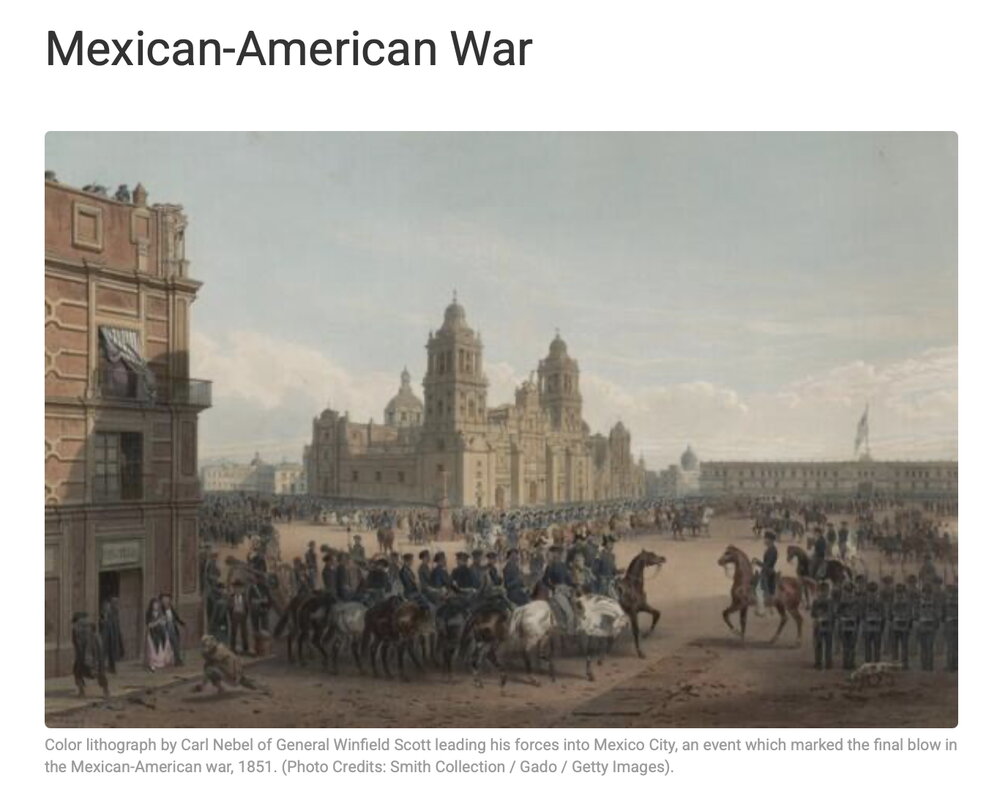
In 1846, The United States of America went to war with Mexico, eager to annex Texas and California to expand the Union from sea to shining sea. For the next two years, the American Army would fight increasingly dispirited Mexican forces, until eventually, they reached Mexico City itself.
Before the Army could march to the halls of Montezuma, they first needed to defeat the Mexican forces in the field. For General Zachary Taylor, that meant securing the Texas border.
General Taylor’s forces, sent to the disputed Mexican-American border, found himself engaging Mexican forces commanded by General Mariano Arista in early May of 1846. The bulk of General Arista’s Army consisted of cavalry, and General Taylor, though outnumbered, endeavored to put to the test his new flying artillery.
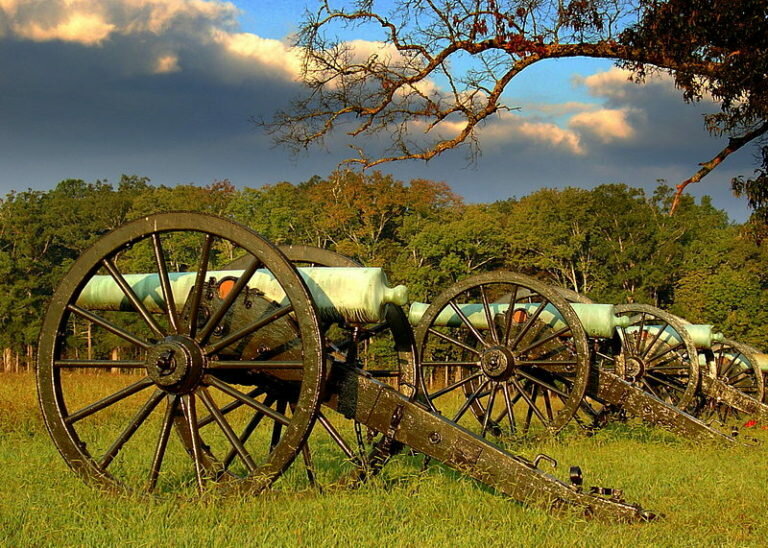
Developed by Major Samuel Ringgold, lighter guns were mounted on carriages and pulled by specially trained crews and teams of horses. Artillery proved to be the decisive force of the battle, with both sides engaging in artillery duels to silence their opponents.
General Taylor’s battle report gives an appropriately detailed account of the battle. Another firsthand account of the battle stems from the memoirs of a young junior American Army officer by the name of Ulysses S. Grant.
General Taylor’s report explained the source of the battle,
“Mexican troops were reported in our front, and were soon discovered occupying the road in force. I ordered a halt upon reaching the water, with a view to rest and refresh the men, and form deliberately our line of battle.
The Mexican line was now plainly visible across the prairie, and about three-quarters of a mile distant. Their left, which was composed of a heavy force of cavalry, occupied the road resting upon a thicket of chapparal, while masses of infantry were discovered in succession on the right, greatly outnumbering our own force.”
A young Second Lieutenant Grant wrote of the two sides’ armaments in his memoirs, noting that while both infantry carried flintlock muskets with paper cartridges.
“The artillery was generally six-pounder brass guns throwing only solid shot; but General Taylor had with him three or four twelve-pounder howitzers throwing shells, besides his eighteen-pounders before spoken of, that had a long range. This made a powerful armament.”
The Mexican artillery consisted entirely of solid shot. In the coming artillery duels, in which Grant would take part, the American artillery had a clear advantage. With both lines formed up in preparation for battle –the artillery, according to Grant, a rod or two ahead of the infantry (a rod being about sixteen and a half feet), the battle report explained that, “while the columns were advancing, Lieutenant Blake, topographical engineers, volunteered a reconnoisance (sic) of the enemy’s line, which was handsomely performed, and resulted in the discovery of at least two batteries of artillery in the intervals of their cavalry and infantry.
These batteries were soon opened upon us, when I ordered the columns halted and deployed into line, and the fire to be returned by all our artillery. The 8th infantry, on our extreme left, was thrown back to secure that flank. The first fires of the enemy did little execution, while our 18-pounders and Major Ringgold’s artillery soon dispersed the cavalry which formed his left.”
The American artillery’s bombardments were so intense they set fire to the grass, throwing a thick pall of smoke to mingle with the puffs and clouds of black powder clogging the battlefield.
General Taylor’s report noted, “The fire of artillery was now most destructive; openings were constantly made through the enemy’s ranks by our fire, and the constancy with which the Mexican infantry sustained this severe cannonade was a theme of universal remark and admiration.”
Despite their courage, the combined effect of American artillery and cavalry devastated both the Mexican flanks and center. A Mexican effort to assault the American left flank was rebuffed by a countering maneuver by an artillery battery. With the artillery constantly bombarding the Mexicans, and dragoons and cavalry harassing them at every turn, the Mexicans retreated, withdrawing from the field as the sun set.
As General Taylor reported, Loading...“Our loss this day was nine killed, forty-four wounded, and two missing. Among the wounded were Major Ringgold, who has since died, and Captain Page, dangerously wounded; Lieut. Luther slightly so.”
The General reported his force totaling 2,288 men and officers, and that the Mexican force numbered, “according to the statements of their own officers taken prisoner…” over 6,000 troops, with ten artillery pieces at minimum, and an unknown number of irregulars.
Their losses, based on interrogation by a young Lieutenant George Meade, were estimated to be “not less than 200 killed and 400 wounded – probably greater.”
General Arista’s commissary report on the battle declared 102 killed, 129 wounded, and 26 missing. Regardless of the casualties, the battle proved a resounding success for artillery, a lesson the US Army would see again and again throughout the war, especially by a future Rebel general by the name of Thomas Jackson.
During the Mexican-American War, the U.S. Regular Army included specialized units like infantry, artillery, cavalry, and engineering corps. At the beginning of the war, the army was small—just 7,365 soldiers—mostly organized into eight infantry regiments.
During the Mexican-American War (1846-1848), U.S. soldiers, particularly privates in the Regular Army, earned about $7 per month, a low wage that attracted many poor, uneducated, or immigrant recruits, with some volunteers also receiving land bounties later, while the government paid Mexico for territory rather than directly paying soldiers large sums for conquest.
Key Details on Soldier Pay:
Base Pay: Around $7 monthly for enlisted men.
Recruitment: The low pay, combined with promises of land (bounties for volunteers), drew many, including a significant number of foreign-born soldiers, especially Irish, to enlist for the standard five-year terms.
Comparison: This pay was slightly higher than the $6/month during the Revolutionary War but much lower than the $13/month Union soldiers received in the Civil War.
Government Payments (Not Soldier Pay):
Territory: The U.S. paid Mexico $15 million (plus assuming $3.25 million in citizen debts) for vast territories after the war, as outlined in the Treaty of Guadalupe Hidalgo.
In essence, soldiers received modest pay, but the promise of land, combined with the government's financial transactions with Mexico for territory, defined the economic aspects of service in that conflict.
Enlisted soldiers signed up for five-year terms and were paid about $7.00 a month. Because of the low pay, most recruits were people with few job options or limited education, along with many foreign-born individuals. By 1845, immigrants made up 42% of the army—about half of them were Irish, and the rest came from different parts of Europe.
When needed, the government could call for volunteers to join state-raised regiments under the Militia Act of 1792. These volunteer units had to go wherever the War Department assigned them, but official state militias couldn’t be forced to serve outside their home state’s borders.
Details About the Mexican American War
In 1846, The United States of America went to war with Mexico, eager to annex Texas and California to expand the Union from sea to shining sea. For the next two years, the American Army would fight increasingly dispirited Mexican forces, until eventually, they reached Mexico City itself.
Before the Army could march to the halls of Montezuma, they first needed to defeat the Mexican forces in the field. For General Zachary Taylor, that meant securing the Texas border.
General Taylor’s forces, sent to the disputed Mexican-American border, found himself engaging Mexican forces commanded by General Mariano Arista in early May of 1846. The bulk of General Arista’s Army consisted of cavalry, and General Taylor, though outnumbered, endeavored to put to the test his new flying artillery.
Developed by Major Samuel Ringgold, lighter guns were mounted on carriages and pulled by specially trained crews and teams of horses. Artillery proved to be the decisive force of the battle, with both sides engaging in artillery duels to silence their opponents.
General Taylor’s battle report gives an appropriately detailed account of the battle. Another firsthand account of the battle stems from the memoirs of a young junior American Army officer by the name of Ulysses S. Grant.
General Taylor’s report explained the source of the battle,
“Mexican troops were reported in our front, and were soon discovered occupying the road in force. I ordered a halt upon reaching the water, with a view to rest and refresh the men, and form deliberately our line of battle.
The Mexican line was now plainly visible across the prairie, and about three-quarters of a mile distant. Their left, which was composed of a heavy force of cavalry, occupied the road resting upon a thicket of chapparal, while masses of infantry were discovered in succession on the right, greatly outnumbering our own force.”
A young Second Lieutenant Grant wrote of the two sides’ armaments in his memoirs, noting that while both infantry carried flintlock muskets with paper cartridges.
“The artillery was generally six-pounder brass guns throwing only solid shot; but General Taylor had with him three or four twelve-pounder howitzers throwing shells, besides his eighteen-pounders before spoken of, that had a long range. This made a powerful armament.”
The Mexican artillery consisted entirely of solid shot. In the coming artillery duels, in which Grant would take part, the American artillery had a clear advantage. With both lines formed up in preparation for battle –the artillery, according to Grant, a rod or two ahead of the infantry (a rod being about sixteen and a half feet), the battle report explained that, “while the columns were advancing, Lieutenant Blake, topographical engineers, volunteered a reconnoisance (sic) of the enemy’s line, which was handsomely performed, and resulted in the discovery of at least two batteries of artillery in the intervals of their cavalry and infantry.
These batteries were soon opened upon us, when I ordered the columns halted and deployed into line, and the fire to be returned by all our artillery. The 8th infantry, on our extreme left, was thrown back to secure that flank. The first fires of the enemy did little execution, while our 18-pounders and Major Ringgold’s artillery soon dispersed the cavalry which formed his left.”
The American artillery’s bombardments were so intense they set fire to the grass, throwing a thick pall of smoke to mingle with the puffs and clouds of black powder clogging the battlefield.
General Taylor’s report noted, “The fire of artillery was now most destructive; openings were constantly made through the enemy’s ranks by our fire, and the constancy with which the Mexican infantry sustained this severe cannonade was a theme of universal remark and admiration.”
Despite their courage, the combined effect of American artillery and cavalry devastated both the Mexican flanks and center. A Mexican effort to assault the American left flank was rebuffed by a countering maneuver by an artillery battery. With the artillery constantly bombarding the Mexicans, and dragoons and cavalry harassing them at every turn, the Mexicans retreated, withdrawing from the field as the sun set.
As General Taylor reported, Loading...“Our loss this day was nine killed, forty-four wounded, and two missing. Among the wounded were Major Ringgold, who has since died, and Captain Page, dangerously wounded; Lieut. Luther slightly so.”
The General reported his force totaling 2,288 men and officers, and that the Mexican force numbered, “according to the statements of their own officers taken prisoner…” over 6,000 troops, with ten artillery pieces at minimum, and an unknown number of irregulars.
Their losses, based on interrogation by a young Lieutenant George Meade, were estimated to be “not less than 200 killed and 400 wounded – probably greater.”
General Arista’s commissary report on the battle declared 102 killed, 129 wounded, and 26 missing. Regardless of the casualties, the battle proved a resounding success for artillery, a lesson the US Army would see again and again throughout the war, especially by a future Rebel general by the name of Thomas Jackson.
 Military Pay
 Mexican American War
 Military History
Edited 20 h ago
Posted 1 d ago
Responses: 4

4
4
0

Interestingly, most of the solid shot fired by the Mexican artillery were of copper, not iron.
(4)
(0)
SGT Kevin Hughes
Was one better than the other? Boy what a lousy word to use"better" for killing people. Sheesh.
(2)
(0)
MAJ Jay Callaham
The iron had better range. The copper actually had an interesting impact in that the US lodged complaints about copper being "inhumane." It was alleged that anyone wounded by a copper round would have instant gangrene and/or other infections. The press of that era made a big deal out of it.
(1)
(0)
MAJ Jay Callaham
One small correction. There was some testing done at Yuma Proving ground where they used period style cannon and compared the ballistics of copper vs iron shot. They didn't find a lot of difference in performance. The iron balls might have had some slight advantages, but it didn't amount to much. The overwhelmingly superior performance of the US Artillery over the Mexicans at the Battle of Palo Alto (probably the most looked-at) was due to tactics and leadership, plus the fact that the US guns had been designed on lighter carriages for greater mobility. This allowed them to be moved about more effectively. THAT was the technological advantage, not the difference in munitions effectiveness.
(0)
(0)
4
4
0
Very few soldiers actually settled their bounty lands; the vast majority, including many from the War of 1812 and Mexican-American War, sold their warrants to speculators for cash, preferring established homes over frontier homesteading, with land distribution often benefiting speculators and settlers in designated areas like Illinois and Missouri.
Why Soldiers Didn't Settle
Desire for Cash: Most veterans wanted immediate funds, not the hardship of clearing and farming new land.
Established Lives: Many were already settled in communities and didn't want to move West.
Logistical Hurdles: Claiming land was complex, involving surveys, filing, and dealing with frontier conditions.
Speculators: Land speculators bought warrants cheaply and sold the land to actual settlers, who did the work.
War of 1812 Bounty Lands
Designated Areas: Land was set aside in territories like Illinois, Missouri, and Arkansas for veterans.
Illinois Example: Around 60% of the 29,000 veterans who located land did so in Illinois, though many were likely speculators or subsequent buyers, not the original soldiers.
Mexican-American War Bounty Lands
Continued Policy: The 1850 Act offered land to veterans of the Mexican War (and War of 1812/Indian Wars).
Similar Outcome: The pattern of selling warrants for cash rather than settling the land continued, a trend seen across bounty land grants from the Revolution through the mid-1850s.
The Process
Service: A soldier served the required time.
Warrant Issued: They received a "bounty land warrant" (a certificate) for a certain acreage.
Sale: The soldier often sold this warrant for cash to a speculator.
Claim & Settle: The speculator (or a third party) used the warrant to claim land, often in designated tracts, and then sold it to actual homesteaders.
Why Soldiers Didn't Settle
Desire for Cash: Most veterans wanted immediate funds, not the hardship of clearing and farming new land.
Established Lives: Many were already settled in communities and didn't want to move West.
Logistical Hurdles: Claiming land was complex, involving surveys, filing, and dealing with frontier conditions.
Speculators: Land speculators bought warrants cheaply and sold the land to actual settlers, who did the work.
War of 1812 Bounty Lands
Designated Areas: Land was set aside in territories like Illinois, Missouri, and Arkansas for veterans.
Illinois Example: Around 60% of the 29,000 veterans who located land did so in Illinois, though many were likely speculators or subsequent buyers, not the original soldiers.
Mexican-American War Bounty Lands
Continued Policy: The 1850 Act offered land to veterans of the Mexican War (and War of 1812/Indian Wars).
Similar Outcome: The pattern of selling warrants for cash rather than settling the land continued, a trend seen across bounty land grants from the Revolution through the mid-1850s.
The Process
Service: A soldier served the required time.
Warrant Issued: They received a "bounty land warrant" (a certificate) for a certain acreage.
Sale: The soldier often sold this warrant for cash to a speculator.
Claim & Settle: The speculator (or a third party) used the warrant to claim land, often in designated tracts, and then sold it to actual homesteaders.
(4)
(0)
SGT Kevin Hughes
Aloha Colonel, that was true in our war. But I think when the Philippines threw off the Spanish Yoke, they joined Mexico for their Independence fight. And a large percentage of those guys stayed. Of course, I learned my History sixty years ago....so I could be way off. And I know from Family Histories, that the Brits brought the wives (Camp followers) to Canada during those wars...hoping that would keep the Irish Men from just walking off on Patrol. If my ancestors are correct, the wives themselves urged the men to go find a new life.
(1)
(0)
4
4
0

Wow, a different kind of Combat, and once again, the side with the more advanced technology was able to win the day. And the Irish history part I am very familiar with. Things were so tough in Ireland (for the Irish) that they joined Armies all over the world, even the British Army, to get anywhere else. Lots of them deserted in Canada...and started life over. Same in the USA. and the same in Mexico. And the number of Filipinos that fought in the Revolution against Spain, was staggering. Acapulco has half its population with Filipino surnames ...and don't forget the actual guy that Zorro was based on, was Scottish!
(4)
(0)
Read This Next


 Continue with Facebook
 Continue with Google