24
24
0

Let me take a moment to say that I only see my sphere and scope of the Army. I am sure there are other units out there that are still knowledgeable and have exceptional signal leaders. I also want to mention that in no way is this a direct reflection on units as a whole including my own.
If you’re not Signal (specifically 25N, 25Q & possibly 25S, 25B) you might not understand what I am saying.
Anyone who was in during MSE should distinctly remember ARTEP (Army Training and Evaluation Program). When WIN-T replaced MSE that standard that so many of us knew went away. There are justifiable reasons for this; speed of change, complexity of equipment and new MTOE standards. I understand why it was never redone to work with WIN-T.
What I do not understand is why the very fundamentals of our jobs have been forgotten. How no one understands the value of crew drills (or even knows what it is), cross training, proper grounding procedures, site security & defense, equipment preparation, convoy operations, site briefs, night time operations, tactical vs. strategic site layouts, HCLOS is never used, no networking standards are ever used, priorities of work, PACE plans, tactical discipline, jumping, recovery operations, what the DC power cable is and why you need it (completely serious) and maintenance (for instance know why keeping your generator level is important) to just get started.
I was on a Special Duty assignment for 6 years and left big Army when WIN-T was just being implemented. So I am out of the “know” so to speak as to what happened during this time frame. I have been seeing it lately from a position where I oversee many different teams and units.
There are so many other things such as the “tricks of the trade” that are known by older guys like duct taping tent stakes to a wooden sledge hammer to prevent your sledge from breaking.
I have been talking with many of my peers over the last month and even some Warrants and Officers. This appears to be larger than just what I see in my area of influence, and there are others who have went a step farther than me and actually acted on this topic such as this website: http://www.signal-chief.com. There Chief Troy discusses broader issues and tries to present units with lessons learned prior to deploying. While he does a remarkable job and has exceptional insight, I want NCOs to tell me what happened to where the rubber meets the road: signal team leaders.
This concerns me greatly because quite frankly this is what I was raised on and it’s what I know. If we have to do another invasion like OIF1, where we are not on a FOB for the entire deployment and the hazards are more than the occasional mortar round then NCOs I’ll be blunt.
It’s not going to turn out well.
Our chiefs are going to lose their #### on NCOs and Soldiers, NCOs will be getting relief of causes, and whole units will probably get bad images.
I don’t blame these young soldiers, and I really don’t want to blame the NCOs (and sometimes can’t because they themselves were never properly trained).
So help me out, what’s your take on this.
If you’re not Signal (specifically 25N, 25Q & possibly 25S, 25B) you might not understand what I am saying.
Anyone who was in during MSE should distinctly remember ARTEP (Army Training and Evaluation Program). When WIN-T replaced MSE that standard that so many of us knew went away. There are justifiable reasons for this; speed of change, complexity of equipment and new MTOE standards. I understand why it was never redone to work with WIN-T.
What I do not understand is why the very fundamentals of our jobs have been forgotten. How no one understands the value of crew drills (or even knows what it is), cross training, proper grounding procedures, site security & defense, equipment preparation, convoy operations, site briefs, night time operations, tactical vs. strategic site layouts, HCLOS is never used, no networking standards are ever used, priorities of work, PACE plans, tactical discipline, jumping, recovery operations, what the DC power cable is and why you need it (completely serious) and maintenance (for instance know why keeping your generator level is important) to just get started.
I was on a Special Duty assignment for 6 years and left big Army when WIN-T was just being implemented. So I am out of the “know” so to speak as to what happened during this time frame. I have been seeing it lately from a position where I oversee many different teams and units.
There are so many other things such as the “tricks of the trade” that are known by older guys like duct taping tent stakes to a wooden sledge hammer to prevent your sledge from breaking.
I have been talking with many of my peers over the last month and even some Warrants and Officers. This appears to be larger than just what I see in my area of influence, and there are others who have went a step farther than me and actually acted on this topic such as this website: http://www.signal-chief.com. There Chief Troy discusses broader issues and tries to present units with lessons learned prior to deploying. While he does a remarkable job and has exceptional insight, I want NCOs to tell me what happened to where the rubber meets the road: signal team leaders.
This concerns me greatly because quite frankly this is what I was raised on and it’s what I know. If we have to do another invasion like OIF1, where we are not on a FOB for the entire deployment and the hazards are more than the occasional mortar round then NCOs I’ll be blunt.
It’s not going to turn out well.
Our chiefs are going to lose their #### on NCOs and Soldiers, NCOs will be getting relief of causes, and whole units will probably get bad images.
I don’t blame these young soldiers, and I really don’t want to blame the NCOs (and sometimes can’t because they themselves were never properly trained).
So help me out, what’s your take on this.
 Signal Corps
 Team Leader
 25N: Nodal Network Systems Operators/Maintainer
 25Q: Multichannel Transmission Systems Operator/Maintainer
 25W: Telecommunications Operations Chief
Posted 11 y ago
Responses: 35

2
2
0

I can only speak for the 11th Theater Tactical Signal Brigade, I was stationed in Fort Huachuca for 5 year honestly I find it very difficult to remember times when I wasn't doing crew drill or FTX. I know that we had our own school "Thunderbird University" which pretty much covered need for the 25B, 25L, 25N, 25P, 25Q, 25S, 25T, and 25W. You can see that the university did not cover every signal MOS but even when we deployed to Iraq and Afghanistan our university came with us. I myself was a 25U which is known as the Jack of all trade and a expert of none. I felt a little out of place (there was only two of us) being in a signal brigade but the knowledge that I learned is invaluable.
My first duty station in German with 1st Armored Division was completely different. As a PVT/E2 I was the only commo guy for my company. Fresh out of AIT and responsible for about 80 radios, 35 vehicular intercommunication systems, 40 computers, 10 printers, oh yeah and my XO's coffee maker. We had a ton of FTXs and vehicle qualification exercises but no crew drills at least for the signal guys with in the squadron (we had Air/Cav too...). During my time there it was learn as you go.
My first duty station in German with 1st Armored Division was completely different. As a PVT/E2 I was the only commo guy for my company. Fresh out of AIT and responsible for about 80 radios, 35 vehicular intercommunication systems, 40 computers, 10 printers, oh yeah and my XO's coffee maker. We had a ton of FTXs and vehicle qualification exercises but no crew drills at least for the signal guys with in the squadron (we had Air/Cav too...). During my time there it was learn as you go.
(2)
(0)
2
2
0

BTW folks. Atrophied skills aren't new to the Army. We'd do well to look at the challenge one of our sister branches had to deal with a few years back and the lessons learned from how they addressed it. Three BCT commanders lost their commands to tell it like it is.
Here's the document that started a firestorm of change: http://www.npr.org/documents/2008/may/artillerywhitepaper.pdf
Here's the document that started a firestorm of change: http://www.npr.org/documents/2008/may/artillerywhitepaper.pdf
(2)
(0)
CPT (Join to see)
The branch chief implemented a back to basics program and was able to make their branch relevant again.
(1)
(0)
Suspended Profile
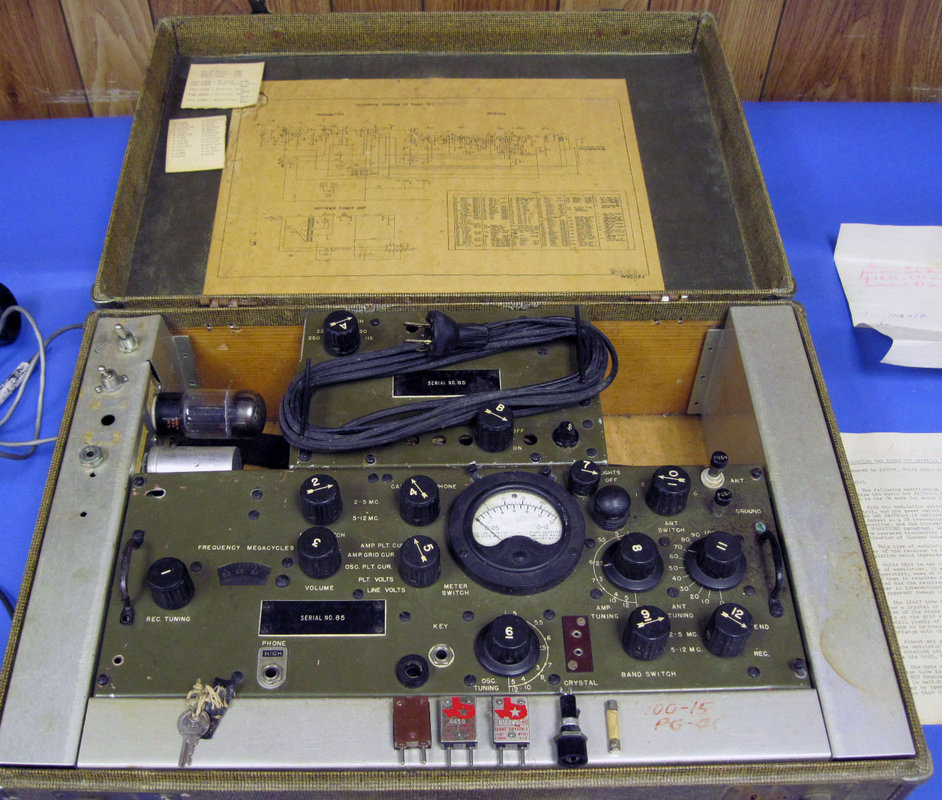
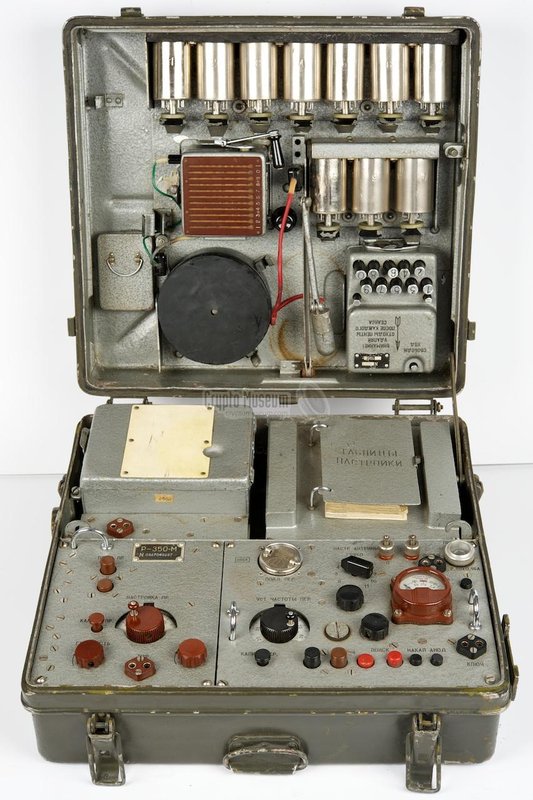
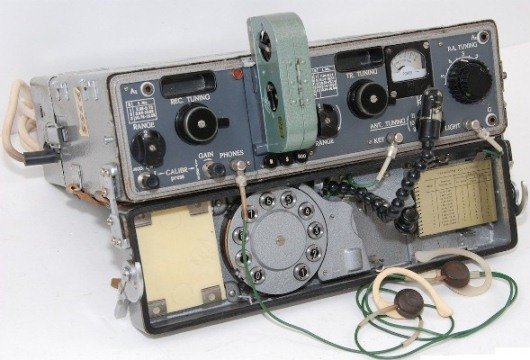
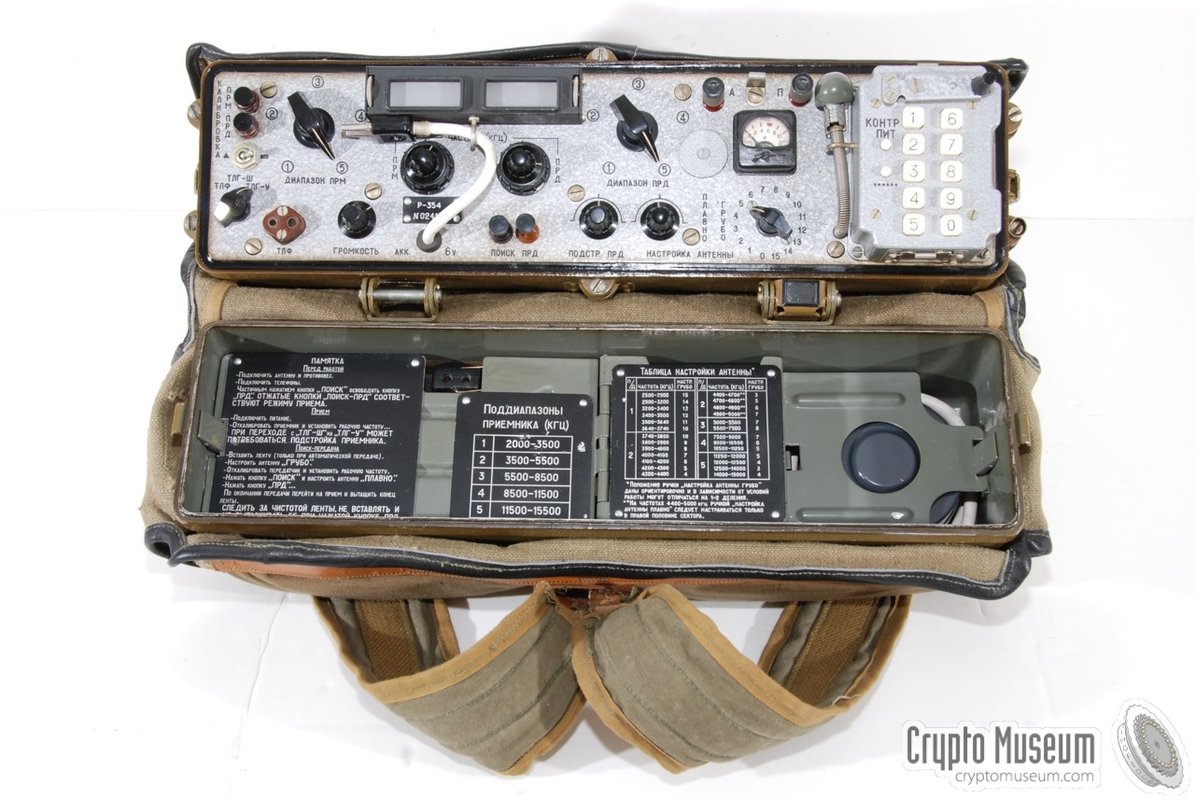
SFC Steven Harvey. I gather that signals people are no longer trained to cobble up a bare bones low power CW transmitter and/or receiver from whatever spare parts might be picked up discretely from the indigenous population and/or scavenged from other high frequency equipment? What are you guys gonna do when the big EMP hits . . . and the only thing left are valves/tubes? Do signals guys still know how to operate anything like a simple suitcase mechanical burst radio? Do you even know what to so with BFO, PLATE, and LOADING? Warmest Regards, Sandy
CMDCM Gene Treants LTC Stephen C.
CMDCM Gene Treants LTC Stephen C.
SPC(P) (Join to see)
Basically old school radio. Equipment is great but why mess with that when you've got so many programs/ platforms to work with that can emulate all the old equipment via digital format?
(0)
(0)
SPC(P) (Join to see)
@ 1LT Sandy Annala are you a HAM operator? I'm studying for my operator test. I got in to Amateur radio via my Father In Law, a Vietnam Vet / I'm a 25N JNN Operator and I love seeing how the old school radio network (copper lines / repeaters/ transmitters/ MARS) can utilize modern internet capabilities it is fascinating the possibilities are endless.
(0)
(0)
2
2
0

SSG Harvey, I would agree that this varies from unit to unit. I would also argue that the shortcomings you speak of are due to a lack of leadership. I am not saying that these leaders are not capable of being quality leaders in many other areas, but taking readiness and the ability to perform assigned task lightly is a recipe for failure. We are also in a down-sizing Army with an increased mission, so cross training is always important. I have always put large time and effort in ensuring everyone could do all of their assigned task and additional contingency tasks that I and others could think of. We then spent any extra training time on cross training. First priority is ensuring all know their job, and this is crucial before they can teach someone else. In the Signal world you have to be efficient and you have to know how to troubleshoot, and I cannot afford to rely on 1 or 2 people who know it all while the rest do not. The basic skills like grounding, generator ops etc. are all part of the overall training plan
(2)
(0)
2
2
0

My unit has made a soecific effort to get back/keep these tyoe of training and working mentalities! Someone made the comment that they have pulled so much from our sphere and I completely agree. Personally I think it is just another cancer of the contractor warfare mindset of Afghanistan.
When my Guard unit returned we immediatly started working our crew drills etc and it was tortuous. I can definately see how units can completely lose their compentancies.
When my Guard unit returned we immediatly started working our crew drills etc and it was tortuous. I can definately see how units can completely lose their compentancies.
(2)
(0)
2
2
0

This is simple to answer really its like everything else I loved in the Arny that is slowly being taken away, like smoking soldiers, remeidal pt, even swearing really. The army used to be some very exceptional people once we allowed to many politicians to make decisions, and officers in to NCO business, we lost our hold, and now everything has to be softer, gentler and more politically correct, this is the military as a whole now really. I am a signal ncoic, the soldiers I have straight out of school are being told they will learn it all at their units, when they get to me I don't have equipment to train them on as we do not have funding to get it, and even more so its not on our MTOW so we aren't even allowed to have it. The next big killer is budget cuts, we used to have field training that's gone done to just sgts time training. I can only teach so much powerpoint, with out the hands on they will never learn. As a common ncoic I am lost how am I supposed to train soldiers on equipment they haven't seen and won't see until they are down range?
(2)
(0)
2
2
0
The ARTEP was replaced by the STP.
Here's mine, for example: https://armypubs.us.army.mil/doctrine/DR_pubs/dr_b/pdf/stp11_25u14.pdf
Here's mine, for example: https://armypubs.us.army.mil/doctrine/DR_pubs/dr_b/pdf/stp11_25u14.pdf
(2)
(0)
2
2
0

SFC Steven Harvey :
I don't know if this is relevant. I'm a medic, and never worked with Signal.
However, the situation you're describing was rampant in previous units. My first unit, I almost can't blame the leaders, even. With a 1 year turnover, It's hard to get soldiers trained right and reap the benefits of that training. I extended a year, so I could help pass on the knowledge (extended to be a flight-medic. Didn't happen. Long irrelevant story) As soon as a soldier knew what they were doing (if they learned at all), they were out-processing. My latest unit was a guard unit, and I don't know what the solution there would be either, because we only had solid training two days out of the month. Both units were full of great and not so great leaders, so I can't be sure if that's even the problem. The only thing that saved me from these symptoms (if it did at all) was my love fro cross-training. If you need someone to get vehicles ready or take inventory properly or set up their freakin' OE-254 (skills I assumed everyone needed to know), they could always grab me or one of the 10 year SGTs.
Anyway, i'm not familiar with all the same acronyms, but am I way off-base here? Is this even a judgement a SPC can fairly make? Don't judge my units. Just a thought.
I don't know if this is relevant. I'm a medic, and never worked with Signal.
However, the situation you're describing was rampant in previous units. My first unit, I almost can't blame the leaders, even. With a 1 year turnover, It's hard to get soldiers trained right and reap the benefits of that training. I extended a year, so I could help pass on the knowledge (extended to be a flight-medic. Didn't happen. Long irrelevant story) As soon as a soldier knew what they were doing (if they learned at all), they were out-processing. My latest unit was a guard unit, and I don't know what the solution there would be either, because we only had solid training two days out of the month. Both units were full of great and not so great leaders, so I can't be sure if that's even the problem. The only thing that saved me from these symptoms (if it did at all) was my love fro cross-training. If you need someone to get vehicles ready or take inventory properly or set up their freakin' OE-254 (skills I assumed everyone needed to know), they could always grab me or one of the 10 year SGTs.
Anyway, i'm not familiar with all the same acronyms, but am I way off-base here? Is this even a judgement a SPC can fairly make? Don't judge my units. Just a thought.
(2)
(0)
2
2
0

Wow. Still decoding and taking that in. Wow.
Probably a good thing I got out a while back. I would have a lot of trouble holding my tongue.
Probably a good thing I got out a while back. I would have a lot of trouble holding my tongue.
(2)
(0)
SFC Peter Cyprian
LOL....we've come a long way since the smoke signals, flags, and messenger pigeons! :-)
(1)
(0)
1
1
0
I personally think the Army has failed itself. When I would go to a promotion board the focus was of questions were things that I could easily Google; questions like, "What are the pillars of ACS, what are the MOP levels, or what is the effective range of an M16?". None of these questions pertained to my MOS nor would they help me develop future soldiers. I think the Army needs to adapt and become like the other services where a soldier needs to learn their job in order to get promoted. The high tempo of the war has brought up a generation of leaders that aren't technical experts, but general experts which has corroded the "expert" branches. I had an NCOIC of a Commo Shop that was a 15 year E-6 who had never stepped foot outside of a training room or supply shop. The Army had failed him as a leader and me as a soldier.
(1)
(0)
Read This Next


 Continue with Facebook
 Continue with Google