
Posted on Sep 3, 2015

What is the difference between a Specialist and a Corporal in the Army? Inquiring Marine minds want to know.

252K
994
500
51
51
0
 CPL
CPL SPC
SPC Rank
Rank
Responses: 252
6
6
0

6
6
0

1LT (Join to see)
CPL was great for me. Freed me of soldier tasks completely and allowed me to run my section.
(1)
(0)
6
6
0

Simple CPL in the Army is a junior NCO usually in an E5 SGT slot like I was in my last assignment. A SPC is a senior Enlisted with time in Service; just not the duties of an NCO.
(6)
(0)
CPL Richard Flagg
SSG (Join to see) - When I got my E4P I started running some patrols in training; however Real World patrols had an NCO running them. This whole SPC/CPL thing wasn't even permitted by my last CSM in Panama, he didn't like or allow CPL's in the BN.
(1)
(0)
5
5
0

As I have worn corporal stripes in the usmc specialist and corporal in the army. The biggest difference being leadership and the treatment of an NCO. Marine Corps a NCO is a NCO treated as such your expected to lead and make decisions. Army as a specialist you are treated as junior enlisted and all grouped together about the same as a lance corporal that's been around for a while it's a shame. I believe the specialist rank should go away and corporal should be earned more self esteem and respect for earned rank and position then given. It would boost morale and overall leadership ability
(5)
(0)
5
5
0

As someone that held both ranks I will say this. CPL is horrible; you are treated as an NCO for the worst duties with no respect from any one because they really think you are just a SPC that gets to be in charge of other SPC. SPC is a confusing rank you know a lot but very little is expect of you until you voice your knowledge and want to get promoted. The coolest thing that happened to me as a CPL was I was in the ALOC when the TOC was attack at a training exercise and I was the highest rank person in it. I didn't know when that happens the power shifts to the ALO and I was apparently the Battalion Commander for about a half hour. They started calling me "Lieutenant Corporal".
(5)
(0)
1LT William Clardy
That's a great story, SSG Richard Reilly. I wonder what insignia would be most appropriate for a Lieutenant Corporal. For some reason, I keep picturing a pair of chevrons with a bar of butter impaled on the point....
(0)
(0)

1LT William Clardy
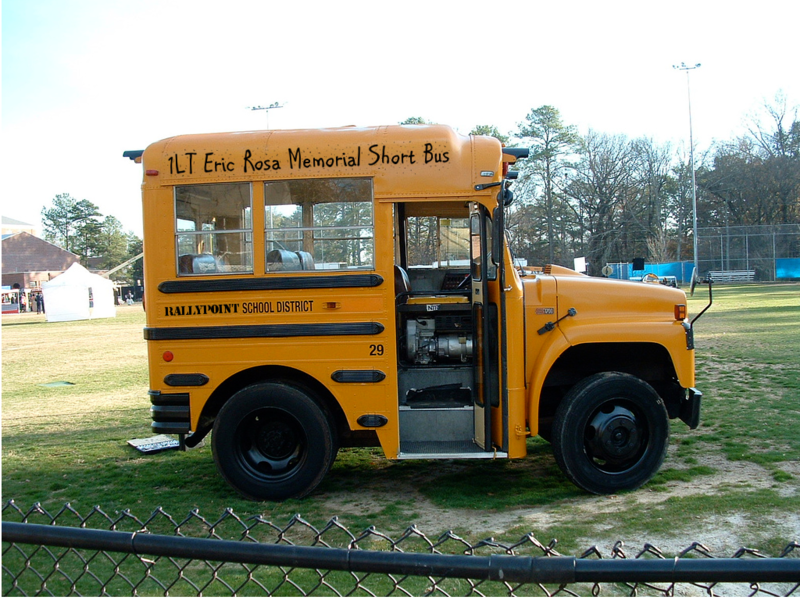
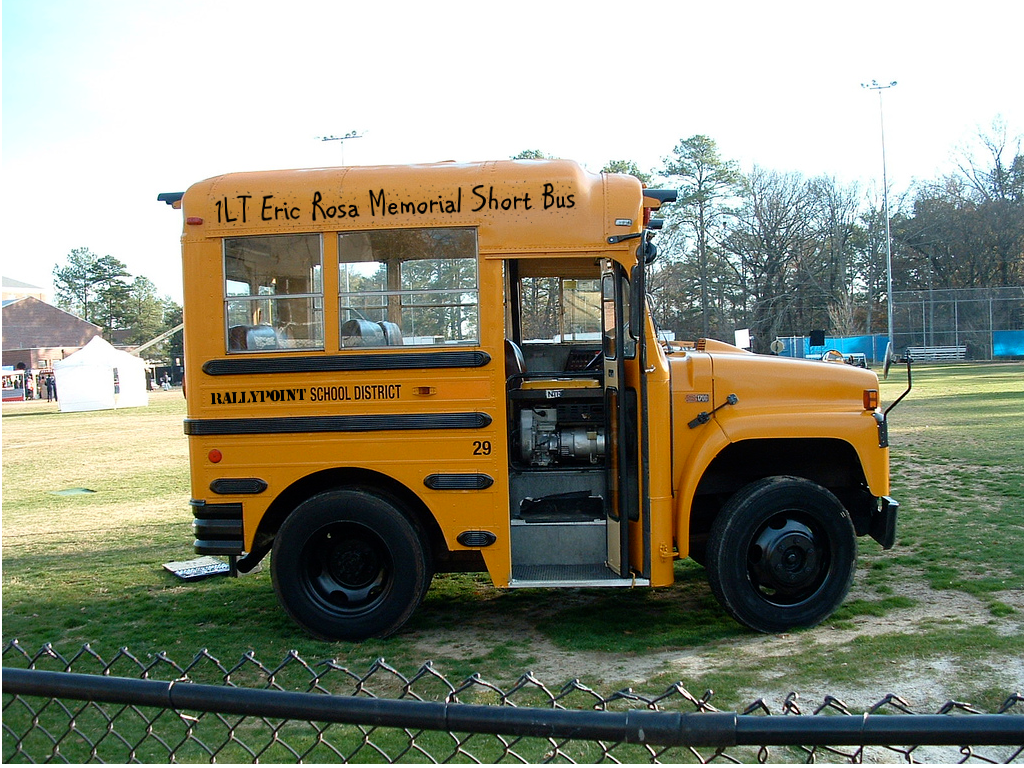
Sgt Aaron Kennedy, MS, those are for a *Lance* Corporal, not a *Lieutenant* Corporal.
Surely the rank of Lieutenant Corporal deserves its own special insignia, something which would reflect the authority of this Commander's Vehicle...
Surely the rank of Lieutenant Corporal deserves its own special insignia, something which would reflect the authority of this Commander's Vehicle...
(2)
(0)
Sgt Aaron Kennedy, MS
1LT William Clardy - just replace the rifles with something more "becoming" of the level of authority, like mops or Lt bars, or a compasd thats SE
(3)
(0)
4
4
0
There are some really good responses here. I was a Specialist and a Corporal, and there is a tremendous difference. I held an E5 and E6 slot (SGT and SSG or SGT and SSGT) as a Corporal, and I was responsible for a lot of junior Soldiers. I helped with planning training and gave Physical Training sessions. I wrote counseling statements and maintained a Leader's Book (critical component of human and equipment resource management). I also maintained over $250,000 in equipment. So, in my experience, a Corporal is not a Senior Lance Corporal, contrary to what may be perceived. A Corporal is a Corporal - the backbone of the NCO Corps. Just my 2 cents...
(4)
(0)
4
4
0
Corporal push more papers and have more responsabilities, is just like an NCO
(4)
(0)
3
3
0

Well, 1SG/1stSgt Jim..let me enlighten you...GRIN.
Unlike the Corps, where L/CPL and above are considered Non-Commissioned Officers, the Army, in it's infinite wisdom and according to prevailing political winds has changed enlisted rank structure several times.
The basic difference is that a Specialist is not considered to be an NCO, but a Corporal is considered an NCO, though both are grade E-4. (The Air Force has/had similar with E-4 Senior Airman/SGT).
In WWII and Korea, the Army had Technical ranks... these were basically NCO stripes with a "T" in the area between chevrons and rockers, where our diamonds go. These soldiers were in combat support (CS) or combat service support (CSS) positions as opposed to combat arms MOS (ie. military occupational specialty - 11B = 0311, Infantry.) and usually not in leadership positions.
Those technical ranks later became "specialist" ranks, again for CS/CSS areas such as finance, personnel, etc., and some genius got the bright idea that all E-4s couldn't be Corporals cuz there weren't that many leadership slots (and how many Corporals did one need in a maintenance, finance, supply, personnel, or other admin/logistics pogue position?) (CPL in the Army would usually hold a Team Leader/E-5 slot, or equivalent in Armor, Engineer, Artillery, ADA, or SF combat MOS.) So, the Specialist rank was created, and covered grades E-4 - E-7 (SP4, SP5, SP6, SP7). In he 80's, following a hue and cry from senior specialists, who didn't like being told that a combat arms E-4 could order a CS/CSS E-7, because the E-4 was an NCO and the E-7 was not, (I actually did this, directing several SP5-SP7 as an E-4, in a replacement detachment, because none of the seemed capable of detailing folks to grab mops, buckets etc....) the Army did away with SP5-SP7, keeping the E-4 rank, and changing the designation from SP4 to simply SPC. All E-3 were promoted to SPC, and a SPC could hold an E-5 slot, but the regs then required minimum 6 months successful tenure in a leadership position, to be laterally appointed to CPL, unlike E-8/9 lateral positions (MSG/1SG; SGM/CSM) which were based solely on duty position (and lateral orders).
Much of this comes from differences in the duties and responsibilities of various positions, much like that of 1stSgt in the Corps being primarily an administrative billet vs. a !SG being more hands on with regard to all aspects of training, in garrison and field, and the Gunny was kind of the "Field First", while Army E-7s could hold either admin (Sergeant First Class/SFC slots or Platoon Sergeant/PSG) slots. Around the early to mid 80s, for much the same reasons as with the SP ranks, the Army did away with the PSG designation, and SFC were (Combat Arms) Platoon Sergeants, but could assume 1SG responsibilities as required.
So, the difference is, basically, that a SPC is an overpaid Private First Class, unless slotted in an E-5 slot, while a CPL is considered an NCO by virtue of rank and without regard to duty position, and expected/required to uphold the standards of a Non-Commissioned Officer. I hope adequately answers your question and/or clears up any confusion.
BTW, my dad was a Marine, during the Korean Conflict, so don't take offense when I say Semper Fi, 1stSgt.
Unlike the Corps, where L/CPL and above are considered Non-Commissioned Officers, the Army, in it's infinite wisdom and according to prevailing political winds has changed enlisted rank structure several times.
The basic difference is that a Specialist is not considered to be an NCO, but a Corporal is considered an NCO, though both are grade E-4. (The Air Force has/had similar with E-4 Senior Airman/SGT).
In WWII and Korea, the Army had Technical ranks... these were basically NCO stripes with a "T" in the area between chevrons and rockers, where our diamonds go. These soldiers were in combat support (CS) or combat service support (CSS) positions as opposed to combat arms MOS (ie. military occupational specialty - 11B = 0311, Infantry.) and usually not in leadership positions.
Those technical ranks later became "specialist" ranks, again for CS/CSS areas such as finance, personnel, etc., and some genius got the bright idea that all E-4s couldn't be Corporals cuz there weren't that many leadership slots (and how many Corporals did one need in a maintenance, finance, supply, personnel, or other admin/logistics pogue position?) (CPL in the Army would usually hold a Team Leader/E-5 slot, or equivalent in Armor, Engineer, Artillery, ADA, or SF combat MOS.) So, the Specialist rank was created, and covered grades E-4 - E-7 (SP4, SP5, SP6, SP7). In he 80's, following a hue and cry from senior specialists, who didn't like being told that a combat arms E-4 could order a CS/CSS E-7, because the E-4 was an NCO and the E-7 was not, (I actually did this, directing several SP5-SP7 as an E-4, in a replacement detachment, because none of the seemed capable of detailing folks to grab mops, buckets etc....) the Army did away with SP5-SP7, keeping the E-4 rank, and changing the designation from SP4 to simply SPC. All E-3 were promoted to SPC, and a SPC could hold an E-5 slot, but the regs then required minimum 6 months successful tenure in a leadership position, to be laterally appointed to CPL, unlike E-8/9 lateral positions (MSG/1SG; SGM/CSM) which were based solely on duty position (and lateral orders).
Much of this comes from differences in the duties and responsibilities of various positions, much like that of 1stSgt in the Corps being primarily an administrative billet vs. a !SG being more hands on with regard to all aspects of training, in garrison and field, and the Gunny was kind of the "Field First", while Army E-7s could hold either admin (Sergeant First Class/SFC slots or Platoon Sergeant/PSG) slots. Around the early to mid 80s, for much the same reasons as with the SP ranks, the Army did away with the PSG designation, and SFC were (Combat Arms) Platoon Sergeants, but could assume 1SG responsibilities as required.
So, the difference is, basically, that a SPC is an overpaid Private First Class, unless slotted in an E-5 slot, while a CPL is considered an NCO by virtue of rank and without regard to duty position, and expected/required to uphold the standards of a Non-Commissioned Officer. I hope adequately answers your question and/or clears up any confusion.
BTW, my dad was a Marine, during the Korean Conflict, so don't take offense when I say Semper Fi, 1stSgt.
(3)
(0)
Sgt Dan Catlin
Good, detailed description. Cleared up some of the confusion, but just a few comments and questions:
Unless they've changed things, a L/Cpl E-3 is still a non-rate. Cpl's were fire team leaders, which brings up the first question- I keep reading about Sgt team leaders, but never a Cpl team leader unless he is filling a Sgt's billet. Our Sgt's would be squad leaders or Guide. Exactly how is an Army platoon organized?
And what about support units which are presumably all specialists? Do they assign NCO's to supervise the Spec's? Or as has been said just grab a good one , give him stripes and say "They're all yours!" Presumably a bench chief, section chief, shop chief etc who is a spec would still be in charge of the lower ranking Cpl when he is actually working in the shop?
You Army guys did this just to confuse the Marines would be my guess! Still, it's interesting to hear how the other folks live.
Unless they've changed things, a L/Cpl E-3 is still a non-rate. Cpl's were fire team leaders, which brings up the first question- I keep reading about Sgt team leaders, but never a Cpl team leader unless he is filling a Sgt's billet. Our Sgt's would be squad leaders or Guide. Exactly how is an Army platoon organized?
And what about support units which are presumably all specialists? Do they assign NCO's to supervise the Spec's? Or as has been said just grab a good one , give him stripes and say "They're all yours!" Presumably a bench chief, section chief, shop chief etc who is a spec would still be in charge of the lower ranking Cpl when he is actually working in the shop?
You Army guys did this just to confuse the Marines would be my guess! Still, it's interesting to hear how the other folks live.
(1)
(0)
3
3
0

In the "old" Army (I enlisted in August, 1966), an E4 "Corporal" was the first step in the Command chain, Infantry for example, and could direct squads and platoons if directed to do so. An E4 "Specialist" was an individual specializing in a field ie: a helicopter mechanic or Company supply person. Both received the same pay, but one was "Command" and the other was "Admin, so to speak." Somewhat general in description but still accurate, I believe. There's a lot of water boiling on this issue of "Corporal" vs "Specialist." Simple answer, it all depends on what each individual wants to do with their career. Some are happy with administration and others excel at command...to each his/her own. A person's "TITLE" is not a prerequisite for promotion. Education and Experience (sometimes Testing as well) are required. Yes, Army Aviation is in fact a "Combat Arm."
(3)
(0)
3
3
0

A Army Specialist (E-4) holds no supervisor function. He is a senior E-3. The Army does use the Corporal(E-4) rank also, but it is usually only seen in Infantry units. To understand the Specialist rank, you need to understand the history of it, at one time the Army had the Specialist 4 through Specialist 7 (E-4 to E-7) ranks. It was a way for a soldier to promote but without any leadership function.
(3)
(0)
Read This Next


 Continue with Facebook
 Continue with Google