


243
243
0
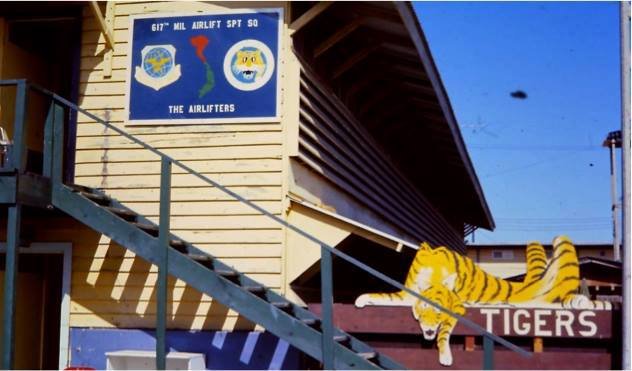
By this time in 1972, the war in Vietnam had been going on for over ten years. Tens of thousands had been killed, even more wounded and a few thousand POWs and unaccounted for MIAs.
Looking back on this time of year, specifically December 18, 1972, most of us know where we were. Most of you younger troops were not yet the twinkle in your Daddy’s eyes.
For me, I was on my second remote/isolated tour in Southeast Asia. In March of 1971, I was assigned to the 307th FMS (Field Maintenance Squadron) Aero Repair or A/R shop at U-Tapao AB, Thailand. We carried the same AFSC or MOS if you will as those who were the primary crew chief on the heavy jets. Those being the C-141A, C-5A, KC-135 and variants and the Queen of the Air, the Mighty B-52. I mention this because the A/R shop caught all the jobs that no one else wanted or would do. We all know sh*t runs downhill. Well, we were the bottom of the hill. But I digress.
During my year we worked 12/12/6 and 7, meaning 12 hours on, off 12 and 6 and often 7 days a week. It was hot, dirty, sweaty work but we did what we had to do. We did it in spite of many not wanting to be there. We launched planes about every 90 minutes around the clock 24/7/365 except when the head shed slowed things down or even ceased flying for the holidays.
After my year at U-Tapao I asked for and received a COT – consecutive overseas tour. This time headed for Vietnam. In March 1972, I headed for DaNang. My tour there was to be short-lived. In September, my unit closed up shop. Those with over 180 days in country on the close date would go home while the rest of us would be reassigned. I was one of the lucky ones, I got to stay…well sort of lucky. After about 60 days, in November 1972 I was selected to go TDY to of all places, Clark AB, Philippines. That story is fodder for another time.
After returning from Clark, I was like a new man. Even though working 12/12/5 I returned relaxed and rejuvenated. The guys in the squadron never let me live that down either. The morning of December 19th is what will always remain, The Morning After the Night Before. It wasn’t because the town got painted red or any such frivolity but we walked into the maintenance shack to discover that the entire B-52 fleet in both Thailand and Guam went downtown to pay “Chuck” a visit. At first we were in disbelief, thinking that Radio Lone Star was jerking our chains with some kind of holiday gag. It turned out to be true. We were ecstatic. All of us were now filled with a new sense of resolve and purpose. This was the beginning of Operation Linebacker II.
While those of us in Vietnam were cheering, our brothers in Thailand and Guam were busting some serious hump. The next 11 days would prove to be a turning point in the war on so many levels.
First off, we lost more B-52s in those 11 days of Christmas* than we had lost in the entire war. We lost many good men on those missions. We had many more end up in the hands of “Chuck” and his accommodations at the Hanoi Hilton. Then after 11 days the deluge of BUFFS stopped. We shut down for Christmas. It wasn’t until years later we learned that had we just kept up the bombing for 2 more days, the North would have surrendered. We all know now how that turned out.
I have a number of friends who were aircrew participants in Linebacker II. I have the greatest admiration and respect for what they did in spite of the head shed screwing the pooch.
Never will I forget where I was in 1972 during “The Eleven Days of Christmas.” With that, I wish you all a Merry Christmas and a Happy New Year!
* ‘The Eleven Days of Christmas’ is a book written by Marshall Michel
Looking back on this time of year, specifically December 18, 1972, most of us know where we were. Most of you younger troops were not yet the twinkle in your Daddy’s eyes.
For me, I was on my second remote/isolated tour in Southeast Asia. In March of 1971, I was assigned to the 307th FMS (Field Maintenance Squadron) Aero Repair or A/R shop at U-Tapao AB, Thailand. We carried the same AFSC or MOS if you will as those who were the primary crew chief on the heavy jets. Those being the C-141A, C-5A, KC-135 and variants and the Queen of the Air, the Mighty B-52. I mention this because the A/R shop caught all the jobs that no one else wanted or would do. We all know sh*t runs downhill. Well, we were the bottom of the hill. But I digress.
During my year we worked 12/12/6 and 7, meaning 12 hours on, off 12 and 6 and often 7 days a week. It was hot, dirty, sweaty work but we did what we had to do. We did it in spite of many not wanting to be there. We launched planes about every 90 minutes around the clock 24/7/365 except when the head shed slowed things down or even ceased flying for the holidays.
After my year at U-Tapao I asked for and received a COT – consecutive overseas tour. This time headed for Vietnam. In March 1972, I headed for DaNang. My tour there was to be short-lived. In September, my unit closed up shop. Those with over 180 days in country on the close date would go home while the rest of us would be reassigned. I was one of the lucky ones, I got to stay…well sort of lucky. After about 60 days, in November 1972 I was selected to go TDY to of all places, Clark AB, Philippines. That story is fodder for another time.
After returning from Clark, I was like a new man. Even though working 12/12/5 I returned relaxed and rejuvenated. The guys in the squadron never let me live that down either. The morning of December 19th is what will always remain, The Morning After the Night Before. It wasn’t because the town got painted red or any such frivolity but we walked into the maintenance shack to discover that the entire B-52 fleet in both Thailand and Guam went downtown to pay “Chuck” a visit. At first we were in disbelief, thinking that Radio Lone Star was jerking our chains with some kind of holiday gag. It turned out to be true. We were ecstatic. All of us were now filled with a new sense of resolve and purpose. This was the beginning of Operation Linebacker II.
While those of us in Vietnam were cheering, our brothers in Thailand and Guam were busting some serious hump. The next 11 days would prove to be a turning point in the war on so many levels.
First off, we lost more B-52s in those 11 days of Christmas* than we had lost in the entire war. We lost many good men on those missions. We had many more end up in the hands of “Chuck” and his accommodations at the Hanoi Hilton. Then after 11 days the deluge of BUFFS stopped. We shut down for Christmas. It wasn’t until years later we learned that had we just kept up the bombing for 2 more days, the North would have surrendered. We all know now how that turned out.
I have a number of friends who were aircrew participants in Linebacker II. I have the greatest admiration and respect for what they did in spite of the head shed screwing the pooch.
Never will I forget where I was in 1972 during “The Eleven Days of Christmas.” With that, I wish you all a Merry Christmas and a Happy New Year!
* ‘The Eleven Days of Christmas’ is a book written by Marshall Michel
 Command Post
 Vietnam War
 JBSA - Joint Base San Antonio
 Military History
Posted 8 y ago
Responses: 270

5
5
0
I was TDY from Offutt to Guam in support of Linebacker II. What a mess. 12 on for 6 days. One day off. 10,000 Airmen at Anderson AFB meant to support about a quarter of that number. Met some great folks during that 6 month tour. We all did our job, like it or not.
(5)
(0)
5
5
0

5
5
0

Crawling and stumbling around the floor most likely, a temper tantrum here or there just prior to nap time.
(5)
(0)
CW5 Edward "Tate" Jones Jr.
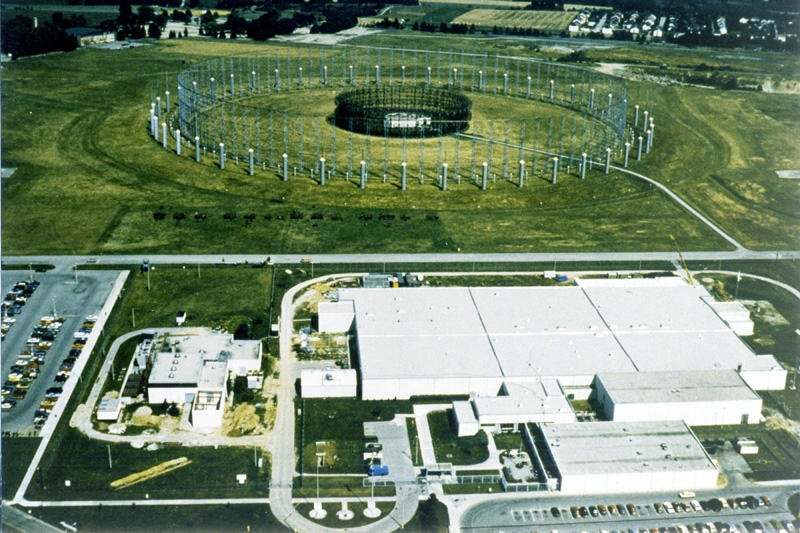
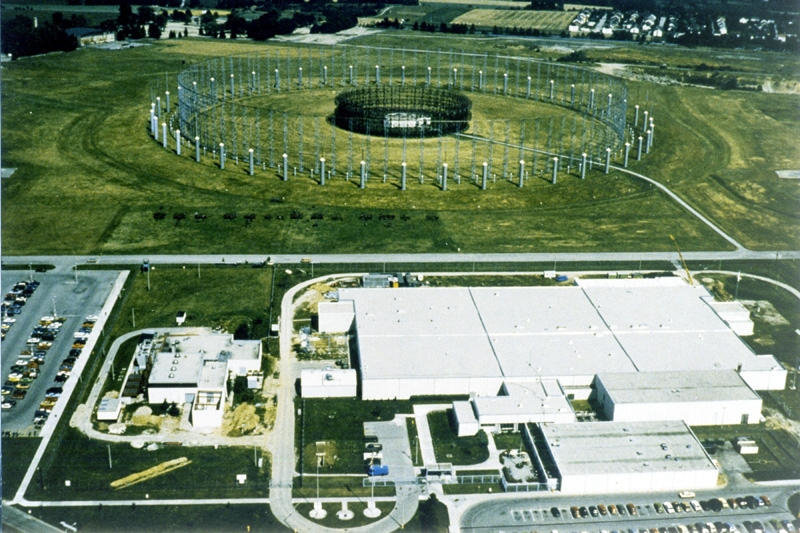
US Army Security Agency Strategic Field Station, Augsburg, Germany. Specialist 6 Jones
(2)
(0)
SFC Greg Bruorton
CW5 Edward "Tate" Jones Jr. - I didn't go ASA until October 1976 when I was assigned as the Special Security Officer for the 82nd Airborne Division--the peak of my career.
(4)
(0)
4
4
0

In 72, I was in the 10th grade and left straight out of high school (8 hours) in 74 for Army boot camp at Fort Knox.
(4)
(0)
4
4
0
At that time I was at RAF Ringstead, a site based out of High Wycomb air base England. As a generator (diesel powered) operator.
(4)
(0)
4
4
0
I was in UK, on a remote site as a generator operator. Read listed in September. Came back to Langley in December, went tdy in January 73 to become a computer operator.
(4)
(0)
4
4
0

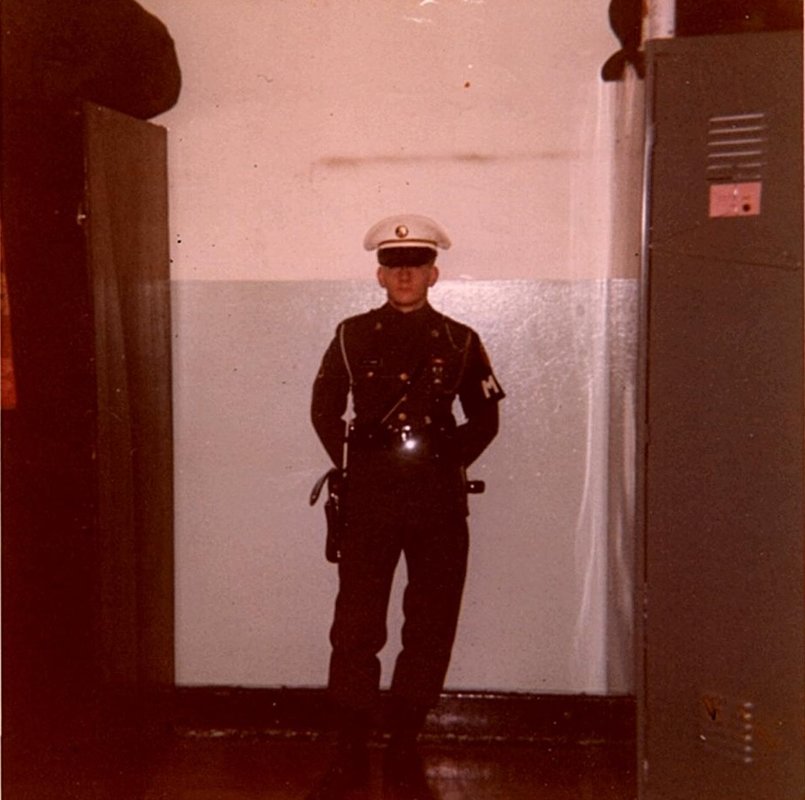
I was all over the place in 1972.
Started off in Tacoma, Washington where I joined the Army. From there it was up to Seattle for the night before flying out to Kentucky. First stop, Ft Campbell for basic training. Then Ft Knox for two AIT's, M-60 Patton tank and M-551 Sheridan assault vehicle.
Next was Kaiserslautern, Germany for MP OJT training at 15th MP Bde HQ and then my 1st assignment with 385th MP Bn in Stuttgart. Ended the year TDY in Neu Ulm on riot duty.
Started off in Tacoma, Washington where I joined the Army. From there it was up to Seattle for the night before flying out to Kentucky. First stop, Ft Campbell for basic training. Then Ft Knox for two AIT's, M-60 Patton tank and M-551 Sheridan assault vehicle.
Next was Kaiserslautern, Germany for MP OJT training at 15th MP Bde HQ and then my 1st assignment with 385th MP Bn in Stuttgart. Ended the year TDY in Neu Ulm on riot duty.
(4)
(0)
PO1 Robert Ryan
no doubt what spur MOS was brother 95B. From December 1971 December - 1972 I was op my 3rd tour of duty in Vietnam. . Was assigned tp B/716th MP's in Saigon where I earned secondary MOS 95B. My first 2 tours was in my primary MOS 11B.
(1)
(0)
PFC David Gettman
PO1 Robert Ryan - Welcome home! My primary MOS was 11E20R8, Sheridan crewman, with a secondary MOS 95B. I ended up back in armor in 1974 with 2d Armored Cavalry Regiment on the Czechoslovakian border.
(1)
(0)
4
4
0

1972? I'd been out for a year. Nightmares on a regular basis, medicating with Jim Beam and Stroh's beer. Fortunately got a handle on it before it became a bigger problem.
(4)
(0)
4
4
0

4
4
0

This is a bit long, but the memories poured in.
Having survived a 1 yr combat tour on the rivers in late’71, I was assigned as a department head on USS ALAMO and deployed to WestPac to arrive just before the North’s 1972 Easter Offensive. As Hue was once again being pressured, we were part of an amphibious feint with an amphibious readiness group, US Marines and Vietnamese troops.
As we were the primary control ship, we were about 5000 yards off the beach when a 3 plane Arc Light made a pre-H Hour strike with 500 lb bombs laid along the beach. Never saw the BUFFs, but heard “bombs away” and waited for the first to hit after falling 35,000 ft. Everything rumbled even at sea as the fiery orange and yellow bursts formed a continuous long line along the coastline. Then we made the run in, dropped off the amtraks about 2000 yards off the beach and guided them to the beach where they turned away just outside the surf zone as designed. Intel reported that the combined effort worked.
During that same year, the heavens opened for 40 days and more of continuous rain over Luzon. The Alamo participated as coordinator of relief supplies for Dagupan at the south end of the Linguyan Gulf. The task group received the Philippine Presidential Unit Citation.
Toward the end of our 9+ month deployment we dropped off our contingent of 300 Marines along with their tanks etc. in Okinawa. Typhoon Rita, which at the time became the longest running typhoon in history, was barreling down on us from the East as we struggled to offload to a sheltered beach. I had said to the CO that she was not acting according to forecasts, and I had a suspicion she would not veer north as expected. As we departed the area to the South then heading West to the Philippines, she curled South and met us head on. The Alamo grosses out at 12,000 tons, and we ballasted down since we were empty and plowed though very heavy seas which would often break against the bridge. As the only not- seriously seasick qualified deck officer, I was assigned the watch until we started to clear the storm. Thank God the Marines had not been aboard. Think of 300 men cooped up in berthing spaces being tossed around—a recipe for a disaster—all it takes is one guy tossing cookies to start rapid firing amongst others.
Another aspect of 1972, was the rampant social unrest (and race riots) on Navy ships and the danger of being alone on Subic Naval Station. In fact, a Navy Oiler was “thrown out of port” by the base commander. (In October of 1971, I had attended a meeting and heard the Pacific Fleet Admiral tell the dozens of assembled senior ship’s company officers that his Navy did not have drug, racial or morale problems. We in attendance just looked at each other, and ’72 proved him wrong.)
We completed our 1972 deployment in fine fashion when we pulled into our homeport, Long Beach, as our ship’s entertainment blasted out the 1812 Overture.
Having survived a 1 yr combat tour on the rivers in late’71, I was assigned as a department head on USS ALAMO and deployed to WestPac to arrive just before the North’s 1972 Easter Offensive. As Hue was once again being pressured, we were part of an amphibious feint with an amphibious readiness group, US Marines and Vietnamese troops.
As we were the primary control ship, we were about 5000 yards off the beach when a 3 plane Arc Light made a pre-H Hour strike with 500 lb bombs laid along the beach. Never saw the BUFFs, but heard “bombs away” and waited for the first to hit after falling 35,000 ft. Everything rumbled even at sea as the fiery orange and yellow bursts formed a continuous long line along the coastline. Then we made the run in, dropped off the amtraks about 2000 yards off the beach and guided them to the beach where they turned away just outside the surf zone as designed. Intel reported that the combined effort worked.
During that same year, the heavens opened for 40 days and more of continuous rain over Luzon. The Alamo participated as coordinator of relief supplies for Dagupan at the south end of the Linguyan Gulf. The task group received the Philippine Presidential Unit Citation.
Toward the end of our 9+ month deployment we dropped off our contingent of 300 Marines along with their tanks etc. in Okinawa. Typhoon Rita, which at the time became the longest running typhoon in history, was barreling down on us from the East as we struggled to offload to a sheltered beach. I had said to the CO that she was not acting according to forecasts, and I had a suspicion she would not veer north as expected. As we departed the area to the South then heading West to the Philippines, she curled South and met us head on. The Alamo grosses out at 12,000 tons, and we ballasted down since we were empty and plowed though very heavy seas which would often break against the bridge. As the only not- seriously seasick qualified deck officer, I was assigned the watch until we started to clear the storm. Thank God the Marines had not been aboard. Think of 300 men cooped up in berthing spaces being tossed around—a recipe for a disaster—all it takes is one guy tossing cookies to start rapid firing amongst others.
Another aspect of 1972, was the rampant social unrest (and race riots) on Navy ships and the danger of being alone on Subic Naval Station. In fact, a Navy Oiler was “thrown out of port” by the base commander. (In October of 1971, I had attended a meeting and heard the Pacific Fleet Admiral tell the dozens of assembled senior ship’s company officers that his Navy did not have drug, racial or morale problems. We in attendance just looked at each other, and ’72 proved him wrong.)
We completed our 1972 deployment in fine fashion when we pulled into our homeport, Long Beach, as our ship’s entertainment blasted out the 1812 Overture.
(4)
(0)
Read This Next


 Continue with Facebook
 Continue with Google