


243
243
0
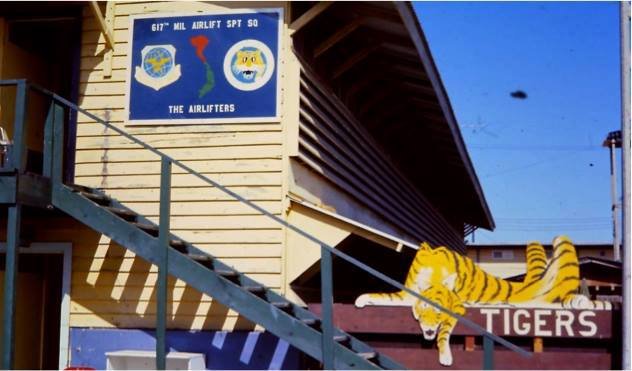
By this time in 1972, the war in Vietnam had been going on for over ten years. Tens of thousands had been killed, even more wounded and a few thousand POWs and unaccounted for MIAs.
Looking back on this time of year, specifically December 18, 1972, most of us know where we were. Most of you younger troops were not yet the twinkle in your Daddy’s eyes.
For me, I was on my second remote/isolated tour in Southeast Asia. In March of 1971, I was assigned to the 307th FMS (Field Maintenance Squadron) Aero Repair or A/R shop at U-Tapao AB, Thailand. We carried the same AFSC or MOS if you will as those who were the primary crew chief on the heavy jets. Those being the C-141A, C-5A, KC-135 and variants and the Queen of the Air, the Mighty B-52. I mention this because the A/R shop caught all the jobs that no one else wanted or would do. We all know sh*t runs downhill. Well, we were the bottom of the hill. But I digress.
During my year we worked 12/12/6 and 7, meaning 12 hours on, off 12 and 6 and often 7 days a week. It was hot, dirty, sweaty work but we did what we had to do. We did it in spite of many not wanting to be there. We launched planes about every 90 minutes around the clock 24/7/365 except when the head shed slowed things down or even ceased flying for the holidays.
After my year at U-Tapao I asked for and received a COT – consecutive overseas tour. This time headed for Vietnam. In March 1972, I headed for DaNang. My tour there was to be short-lived. In September, my unit closed up shop. Those with over 180 days in country on the close date would go home while the rest of us would be reassigned. I was one of the lucky ones, I got to stay…well sort of lucky. After about 60 days, in November 1972 I was selected to go TDY to of all places, Clark AB, Philippines. That story is fodder for another time.
After returning from Clark, I was like a new man. Even though working 12/12/5 I returned relaxed and rejuvenated. The guys in the squadron never let me live that down either. The morning of December 19th is what will always remain, The Morning After the Night Before. It wasn’t because the town got painted red or any such frivolity but we walked into the maintenance shack to discover that the entire B-52 fleet in both Thailand and Guam went downtown to pay “Chuck” a visit. At first we were in disbelief, thinking that Radio Lone Star was jerking our chains with some kind of holiday gag. It turned out to be true. We were ecstatic. All of us were now filled with a new sense of resolve and purpose. This was the beginning of Operation Linebacker II.
While those of us in Vietnam were cheering, our brothers in Thailand and Guam were busting some serious hump. The next 11 days would prove to be a turning point in the war on so many levels.
First off, we lost more B-52s in those 11 days of Christmas* than we had lost in the entire war. We lost many good men on those missions. We had many more end up in the hands of “Chuck” and his accommodations at the Hanoi Hilton. Then after 11 days the deluge of BUFFS stopped. We shut down for Christmas. It wasn’t until years later we learned that had we just kept up the bombing for 2 more days, the North would have surrendered. We all know now how that turned out.
I have a number of friends who were aircrew participants in Linebacker II. I have the greatest admiration and respect for what they did in spite of the head shed screwing the pooch.
Never will I forget where I was in 1972 during “The Eleven Days of Christmas.” With that, I wish you all a Merry Christmas and a Happy New Year!
* ‘The Eleven Days of Christmas’ is a book written by Marshall Michel
Looking back on this time of year, specifically December 18, 1972, most of us know where we were. Most of you younger troops were not yet the twinkle in your Daddy’s eyes.
For me, I was on my second remote/isolated tour in Southeast Asia. In March of 1971, I was assigned to the 307th FMS (Field Maintenance Squadron) Aero Repair or A/R shop at U-Tapao AB, Thailand. We carried the same AFSC or MOS if you will as those who were the primary crew chief on the heavy jets. Those being the C-141A, C-5A, KC-135 and variants and the Queen of the Air, the Mighty B-52. I mention this because the A/R shop caught all the jobs that no one else wanted or would do. We all know sh*t runs downhill. Well, we were the bottom of the hill. But I digress.
During my year we worked 12/12/6 and 7, meaning 12 hours on, off 12 and 6 and often 7 days a week. It was hot, dirty, sweaty work but we did what we had to do. We did it in spite of many not wanting to be there. We launched planes about every 90 minutes around the clock 24/7/365 except when the head shed slowed things down or even ceased flying for the holidays.
After my year at U-Tapao I asked for and received a COT – consecutive overseas tour. This time headed for Vietnam. In March 1972, I headed for DaNang. My tour there was to be short-lived. In September, my unit closed up shop. Those with over 180 days in country on the close date would go home while the rest of us would be reassigned. I was one of the lucky ones, I got to stay…well sort of lucky. After about 60 days, in November 1972 I was selected to go TDY to of all places, Clark AB, Philippines. That story is fodder for another time.
After returning from Clark, I was like a new man. Even though working 12/12/5 I returned relaxed and rejuvenated. The guys in the squadron never let me live that down either. The morning of December 19th is what will always remain, The Morning After the Night Before. It wasn’t because the town got painted red or any such frivolity but we walked into the maintenance shack to discover that the entire B-52 fleet in both Thailand and Guam went downtown to pay “Chuck” a visit. At first we were in disbelief, thinking that Radio Lone Star was jerking our chains with some kind of holiday gag. It turned out to be true. We were ecstatic. All of us were now filled with a new sense of resolve and purpose. This was the beginning of Operation Linebacker II.
While those of us in Vietnam were cheering, our brothers in Thailand and Guam were busting some serious hump. The next 11 days would prove to be a turning point in the war on so many levels.
First off, we lost more B-52s in those 11 days of Christmas* than we had lost in the entire war. We lost many good men on those missions. We had many more end up in the hands of “Chuck” and his accommodations at the Hanoi Hilton. Then after 11 days the deluge of BUFFS stopped. We shut down for Christmas. It wasn’t until years later we learned that had we just kept up the bombing for 2 more days, the North would have surrendered. We all know now how that turned out.
I have a number of friends who were aircrew participants in Linebacker II. I have the greatest admiration and respect for what they did in spite of the head shed screwing the pooch.
Never will I forget where I was in 1972 during “The Eleven Days of Christmas.” With that, I wish you all a Merry Christmas and a Happy New Year!
* ‘The Eleven Days of Christmas’ is a book written by Marshall Michel
 Command Post
 Vietnam War
 JBSA - Joint Base San Antonio
 Military History
Posted 8 y ago
Responses: 270

4
4
0

4
4
0

I was in AIT at Ft Leonard Wood. About 1 month later I would be deployed to Japan
(4)
(0)
4
4
0

On the floor, mostly, during the flight back from Clark Field AFB to CONUS with a stop in Hawaii. I cried, threw up on the floor, threw a few tantrums and slept. My parents related it to me later in life.
(4)
(0)
4
4
0
Became a civilian in 1972. Worked as admin spec with the Office of Special Investigations (OSI) at Norton AFB, CA, until I decided to get out in March 1972, after almost eight years in service. I will always, always regret not staying in for at least 20 years. Was very proud of being a WAF.
(4)
(0)
4
4
0

IN '72 I was in second grade. My dad had retired 8 years before from active duty in WWII, Korea and 'Nam. I learned more about stealth, cover and concealment, Marksmanship and discipline from my dad than I ever did in the Corps.
(4)
(0)
4
4
0

4
4
0

I believe my Dad was there with the 82nd then, before trying college and then switching over to Navy. He graduated in 71 and joined right outta high school, so it stands to reason. Never got years and dates when I interviewed him for a journalism project in college, now that I think about it.
(4)
(0)
Abe Dean
Interesting follow up, after the fall of Saigon, he was working as a people/refugees-fleeing spotter in a Navy plane, I believe. Eagle eyes.
(2)
(0)
4
4
0

4
4
0

By 1972 I was a college student using the GI Bill and my Vietnam service was a memory of earlier days (18 years old when I enlisted). Being married and having an infant daughter, I was convinced by the owner of the gas station where I worked part time to join the Army National Guard. I could use the money. It took a while to adjust to the difference between active duty and the national guard. The national guard was a very different experience at that time and you would have to have experienced it to fully understand. Many of the soldiers had enlisted during the Vietnam era and short hair wigs were allowed and fairly commonplace. Missing unit drill assemblies could result in reduction to PV2 and involuntary active duty. The sole full time support person for our unit, called an AST back then - Admin, Supply and Training - asked me if I could type a Morning Report (DA Form 1). "Top," I replied (he was also our unit First Sergeant), "for the last year and a half of active duty, I was a Battery Clerk." Morning reports and duty rosters were nothing new to me.
After taking an entrance physical from a local physician who only did physical exams for the railroad and the National Guard, I was sworn in. The state paid him $15.00 for the procedure. He was the oldest doctor I had ever seen and it was no stretch of the imagination at all to picture him making house calls in a horse and buggy. He reminded me of Doc Adams on Gunsmoke. The only doctor in the area that I knew of who was older than him happened to be the County Coroner. Maybe they didn't trust him any longer with living patients.
I was sworn in by the Battalion Executive Officer. He owned a grocery store and came down to the Armory while still wearing his butcher's apron soaked in blood. I didn't know whether to laugh or cry at the sight.
During this era, the National Guard had very little money for any extra training. Almost all MOS training was done by OJT - On the Job Training. In 1972 a soldier could become MOS qualified by serving in the duty position for one full year of IDT (Inactive Duty Training) or 6 months of IDT and one Annual Training period. Among the few exceptions were Medic (91B) and Unit Clerk (75B) which required formal school training.
One of the few opportunities to perform extra duty (read that "make extra money") was to perform FTTD in support of recruiting activities (Full Time Training Duty). In order to do so, a soldier had to become qualified as a Reserve/National Guard Recruiter. This was accomplished by taking a 4 hour subcourse (correspondence course). Upon successful completion, you were awarded the ARNG Recruiter Badge and could perform extra duty supporting recruiting activities.
I remained in the Minnesota ARNG for 36 more years, becoming a full time technician in 1976, retiring in 2008 as a CW4. I saw a tremendous amount of change during that time most of which was for the good.
After taking an entrance physical from a local physician who only did physical exams for the railroad and the National Guard, I was sworn in. The state paid him $15.00 for the procedure. He was the oldest doctor I had ever seen and it was no stretch of the imagination at all to picture him making house calls in a horse and buggy. He reminded me of Doc Adams on Gunsmoke. The only doctor in the area that I knew of who was older than him happened to be the County Coroner. Maybe they didn't trust him any longer with living patients.
I was sworn in by the Battalion Executive Officer. He owned a grocery store and came down to the Armory while still wearing his butcher's apron soaked in blood. I didn't know whether to laugh or cry at the sight.
During this era, the National Guard had very little money for any extra training. Almost all MOS training was done by OJT - On the Job Training. In 1972 a soldier could become MOS qualified by serving in the duty position for one full year of IDT (Inactive Duty Training) or 6 months of IDT and one Annual Training period. Among the few exceptions were Medic (91B) and Unit Clerk (75B) which required formal school training.
One of the few opportunities to perform extra duty (read that "make extra money") was to perform FTTD in support of recruiting activities (Full Time Training Duty). In order to do so, a soldier had to become qualified as a Reserve/National Guard Recruiter. This was accomplished by taking a 4 hour subcourse (correspondence course). Upon successful completion, you were awarded the ARNG Recruiter Badge and could perform extra duty supporting recruiting activities.
I remained in the Minnesota ARNG for 36 more years, becoming a full time technician in 1976, retiring in 2008 as a CW4. I saw a tremendous amount of change during that time most of which was for the good.
(4)
(0)
4
4
0

Read This Next


 Continue with Facebook
 Continue with Google