
Posted on Jul 8, 2015

Should I consent to a search on a traffic stop if I have nothing to hide?

28.7K
301
78
28
28
0
Years ago when I was 16 years old (I am 38 now) I closed at a store I was working. I drove an older friend home that lived somewhere that took us on a dirt road. My friend was in his early 20's, he had long hair, tattoos, and he played in a rock band. A sheriff's deputy initiated a traffic stop on my vehicle past midnight. I do not recall making any traffic code infractions and my car was in total compliance of the law. The deputy did not state his probable cause, and I did not know any better to ask. My friend knew, but he didn't want to advise me as it might arise to further interaction with the deputy. The deputy requested to search my car. I felt compelled to answer yes for I feared I would go to jail, or I would be out there longer in the middle of nowhere. The deputy found nothing as there was nothing, and he released us. My friend told me the deputy thought we had drugs as he was guessing due to his long hair and tattoos.
My advice: DO NOT CONSENT TO SEARCH and after you refuse, ask the police officer politely for their probable cause.
Some of you might know already, I am an MP and I have conducted over a thousand traffic stops. I have treated people with the utmost respect, and I acted under the color of the law with every motorist. I want to share my experiences with fellow SMs and veterans.
If you do consent to a search, know your car. First, is it your car? During my experience, people who consented to a search or received a traffic stop from me did not know anything about the vehicle they were operating. Do you remember that camping trip from two weeks ago? Did you leave the knives for cutting fish under the seat? Remember, if you are operating, you are responsible for the registration, the insurance and any item in that vehicle.
As some of you already know, just because someone is a police officer, it does not mean they are a good person. Police have been known to plant evidence. Counties get money from court fees and fines so remember that. Consider recording your interactions with the police because they will record their interaction with you. There are other ways for a police officer to search you care without consent so if you want to know, just ask.
Do you have any experiences to share or questions to ask?
My advice: DO NOT CONSENT TO SEARCH and after you refuse, ask the police officer politely for their probable cause.
Some of you might know already, I am an MP and I have conducted over a thousand traffic stops. I have treated people with the utmost respect, and I acted under the color of the law with every motorist. I want to share my experiences with fellow SMs and veterans.
If you do consent to a search, know your car. First, is it your car? During my experience, people who consented to a search or received a traffic stop from me did not know anything about the vehicle they were operating. Do you remember that camping trip from two weeks ago? Did you leave the knives for cutting fish under the seat? Remember, if you are operating, you are responsible for the registration, the insurance and any item in that vehicle.
As some of you already know, just because someone is a police officer, it does not mean they are a good person. Police have been known to plant evidence. Counties get money from court fees and fines so remember that. Consider recording your interactions with the police because they will record their interaction with you. There are other ways for a police officer to search you care without consent so if you want to know, just ask.
Do you have any experiences to share or questions to ask?
Posted in these groups:  31B: Military Police
 Police
31B: Military Police Police
Edited >1 y ago
Posted >1 y ago
Responses: 37
19
19
0

Never consent to anything...It is similar to volunteering in the military, don't do it.
Once you consent, anything they find can be a cause for arrest/fine. Even if you didn't know it was in the car. My response would be, "no thanks, I will not consent". When they use the old "why do you have something to hide". I would say, "I have nothing to gain in you searching my vehicle".
Once you consent, anything they find can be a cause for arrest/fine. Even if you didn't know it was in the car. My response would be, "no thanks, I will not consent". When they use the old "why do you have something to hide". I would say, "I have nothing to gain in you searching my vehicle".
(19)
(0)
SSG (ret) William Martin
Cpl Jeff N., You are also can halt the search as well unless you are out of view of your car and you can't be heard.
(5)
(0)
(7)
(0)
15
15
0

As a licensed attorney, I would tell you NEVER consent to a search, NEVER give a statement, and NEVER waive your right to counsel. It doesn't matter if you have something to hide or not. There are numerous examples of people being implicated by things left behind by passengers or previous owners. And, law enforcement is NEVER your friend. So, you gain NOTHING by trying to cooperate to "clear" things up. I wouldn't ask the officer about probable cause or get into any sort of legal argument with them. Just politely tell them that you have friends who are attorneys and they've always told you that AS A GENERAL RULE you should never consent, but you're aware that they may not need your consent and you will respectfully comply with any orders/instructions they give. You might be surprised how often a simple statement like that results in an officer shrugging and saying, "Fair enough. Have a good day."
(15)
(0)
SMSgt Lawrence McCarter
I've always made it My policy as a Police Officer to start by telling someone I've pulled over for any infraction why i pulled them over before i even ask for license, Registration or anything. i fell that have a right to know and they shouldn't have to ask. There are circumstances under which even without consent You can make a limited search for weapons in the interest of protecting Yourself and others. That search would have to be limited to places they could actually reach from their current location. ii example that would not include the trunk if they were for example sitting in the drivers seat or interior car compartment. Other searches if made would have to start with a reasonable suspicion of a crime but the first contact wold have to be for a legitimate reason otherwise whatever evidence found may not be admitted in Court If at one point the case become poisoned with and illegal search then anything else found as a result of that would also be considered the Fruits of the poisoned tree and also not admitted as evidence. If however You were arrest of a legitimate offense and a Department has a police of an inventory of the contents of every car the Police themselves order towed then anything they find can be used against You. If the town wasn't police mandated and You had requested the town then that would not apply. If You make the mistake of giving consent to search of course the results may not be good if You do have something to hide and You just made it easy for the Police. Also you may want to read the Post by Sgt William Howell here, He also makes some good points and i don't want to repeat what He already said.
(4)
(0)
SGT Shannon Weaver Logan
Whenever I was on a traffice stop I would tell them my name and tell them why I stopped them. Then I would get their license, and insurance. If I ever needed to search a car I alsway called for my shift supervisor to come out. As far as I know they have to have a reason and they are suppose to tell you why they are searching your vehicle.
(1)
(0)
SPC Frank Beachel
I totally, totally agree. As a street cop for 23 years, I've tried to explain to people respectfully that they can NOT WIN THE ARGUMENT on the street. In fact, they are more likely to end up in jail then if they had just compiled and likely be sent on their way.
(0)
(0)
13
13
0
While I agree with you as far as not consenting to a search, I think you are a little off on your search and seizure. Lawyers have classes that they attend for an entire semester just on this and you really have to be up on this.
Was was an MP in the Guard, Active Duty and a full time police officer. I am a fully qualified interdiction officer and have seized almost a million dollars in illegal drugs and money.
So you actually have a seizure and a search lumped into one traffic stop.
A traffic stop is a seizure. You are not allowed to leave therefore your person has been seized. The courts have ruled that with traffic stop you do not need probable cause, just reasonable suspicion. Probable cause means more probable than not that a crime has been committed. Reasonable suspicion means that you can articulate that you think a crime may have occurred. There is a big difference in a court of law. So crossing the yellow line can be all you need to effect a traffic stop. You still have to have probable cause to write a ticket or make an arrest. Because you are not allowed to leave now Miranda comes into effect and you do not have to answer any questions the police officer may ask you, as he may use any statements you give as evidence of a crime. You do still have to provide licenses, registration, and proof of insurance. You must also exit the vehicle if the police officer ask you to. These are are things that are based off case law and are accepted in any court as the lawful request.
The search is where it gets tricky. So you are on a traffic stop, your person is still seized or in layman's terms, you can't leave. A police officer CAN'T and shouldn't ask you to search your car while you are still not free to leave. That is coercion or, in English, that the seized party feels like they must submit to the search because the police officer is holding them at the traffic stop. He must make it clear that you are free to leave. I always wrote a ticket or a warning then hand it to them and say, "You are free to leave." Now that they understand they are free to leave I would ask for consent to search the car. You now have the right to say, "No" or "Yes".
If you say no, then the officer has the right, by law, to seize your person again and call a dog out. Again, the police officer must have reasonable suspicion to seize you again and that a crime may have occurred and be able to articulate that in court. If a dog does come he can only sniff around the car, not in the car, but if he hits on the car that is probable cause and now they can search all they want.
If you say yes, then you can set the ground rules as to where he can search. You can say that he can't search the trunk and he must abide by those guidelines.
If you are pulled over and are asked to consent to search the first question I would ask is, "Am I free to leave?" If he says "yes". then tell him you don't consent and to have a nice day and drive off. If he says "no", then you still tell him you don't consent and let him do what ever he is gong to do. Any lawyer with a night school degree should be able to suppress anything found in the car. I can't emphasize this enough. Just because you believe the search is illegal you don't have the right to interfere with the police officer. Take it to court and if it is suppressed then you can seek a civil judgment in a lawsuit.
I could go on for days about searching movable property vs. residence, who can consent, plain sight, search incident to arrest, and so on. If you have any questions please feel free to ask.
Was was an MP in the Guard, Active Duty and a full time police officer. I am a fully qualified interdiction officer and have seized almost a million dollars in illegal drugs and money.
So you actually have a seizure and a search lumped into one traffic stop.
A traffic stop is a seizure. You are not allowed to leave therefore your person has been seized. The courts have ruled that with traffic stop you do not need probable cause, just reasonable suspicion. Probable cause means more probable than not that a crime has been committed. Reasonable suspicion means that you can articulate that you think a crime may have occurred. There is a big difference in a court of law. So crossing the yellow line can be all you need to effect a traffic stop. You still have to have probable cause to write a ticket or make an arrest. Because you are not allowed to leave now Miranda comes into effect and you do not have to answer any questions the police officer may ask you, as he may use any statements you give as evidence of a crime. You do still have to provide licenses, registration, and proof of insurance. You must also exit the vehicle if the police officer ask you to. These are are things that are based off case law and are accepted in any court as the lawful request.
The search is where it gets tricky. So you are on a traffic stop, your person is still seized or in layman's terms, you can't leave. A police officer CAN'T and shouldn't ask you to search your car while you are still not free to leave. That is coercion or, in English, that the seized party feels like they must submit to the search because the police officer is holding them at the traffic stop. He must make it clear that you are free to leave. I always wrote a ticket or a warning then hand it to them and say, "You are free to leave." Now that they understand they are free to leave I would ask for consent to search the car. You now have the right to say, "No" or "Yes".
If you say no, then the officer has the right, by law, to seize your person again and call a dog out. Again, the police officer must have reasonable suspicion to seize you again and that a crime may have occurred and be able to articulate that in court. If a dog does come he can only sniff around the car, not in the car, but if he hits on the car that is probable cause and now they can search all they want.
If you say yes, then you can set the ground rules as to where he can search. You can say that he can't search the trunk and he must abide by those guidelines.
If you are pulled over and are asked to consent to search the first question I would ask is, "Am I free to leave?" If he says "yes". then tell him you don't consent and to have a nice day and drive off. If he says "no", then you still tell him you don't consent and let him do what ever he is gong to do. Any lawyer with a night school degree should be able to suppress anything found in the car. I can't emphasize this enough. Just because you believe the search is illegal you don't have the right to interfere with the police officer. Take it to court and if it is suppressed then you can seek a civil judgment in a lawsuit.
I could go on for days about searching movable property vs. residence, who can consent, plain sight, search incident to arrest, and so on. If you have any questions please feel free to ask.
(13)
(0)
(1)
(0)
MSG (Join to see)
SGT William Howell - I think you and I are on the same page when it comes to reasonable suspicion and use of a K-9. However, the SCOTUS recently ruled that extending a traffic stop beyond the time it takes to complete your "traffic based inquiries" if unlawful. http://www.supremecourt.gov/opinions/14pdf/13-9972_p8k0.pdf
(3)
(0)
SGT William Howell
MSG (Join to see) Excellent post. I was not aware there is new case law on this. I see this as a bit of a setback in interdiction work. I think you could adjust and still use a dog. You just now have to get the dog there while you are writing the ticket. I see somebody using Terry as an argument in the future, but it looks for now that unless the driver consents there is not a lot that can be done if you don't have a K-9 in your back pocket.
(2)
(0)
10
10
0

My LEO buddies have a word for people that waive their rights, "chump"
Of course these guys also said something like "If you see someone with Vietnam Vet stickers, toss them because THEY always have something."
Of course these guys also said something like "If you see someone with Vietnam Vet stickers, toss them because THEY always have something."
(10)
(0)
Sgt David G Duchesneau
That's bull shit! Well, at least in my State is is. In my 20 years as a State Trooper, I stopped so many Veterans and including Vietnam Vets and I never said to myself that because they are Vietnam Vets that they must have something. Hell, I'm a Nam Vet and I never had anything on me. Actually, I went out of my way to treat all Veterans with respect. Have I received a consent to search a vehicle, of course I have. We even had a standard Form for "Consent to Search" but most of these Searches were done for minors in possession of alcohol. You stop a vehicle for a violation, whatever it is, crossing the center line, riding in the break down lane, speed, tail light out, whatever and once you have that vehicle stopped, you see an empty can or bottle of alcohol on the floor of the vehicle, I would always toss the vehicle and I would ask to see the inside of the trunk. I was never told that I can not search the vehicle or the trunk. As for the interior of the vehicle, the law states that a Police Officer can check all the areas that the driver has control over and that means anywhere the driver can reach.
(0)
(0)
10
10
0

I think this is double-edged sword.
First, I totally agree with SSG William H's recommendation that you know your car and what is in it. I have also seen situations where things were found in a vehicle that I am sure the driver had no clue was there. I used to have my car searched by K-9s periodically, just to ensure nobody planted anything in my vehicle without my knowledge.
Having said that, most police officers are honorable and simply intent on performing their duty. As such, I would have no qualms whatsoever in consenting to a search of my vehicle (assuming I had heeded the advice to know what is in my car). Not to do so will immediately subject you to suspicion and result in a much more thorough search, instead of a cursory one. While you may think it smart to ask for the probable cause, a smart police officer can always come up with one that will hold up in court. Bottom line is that, if he wants to search your vehicle, he will.
I find that it is always best to comply with police instructions and requests. If you think they were wrong, comply and complain later.
First, I totally agree with SSG William H's recommendation that you know your car and what is in it. I have also seen situations where things were found in a vehicle that I am sure the driver had no clue was there. I used to have my car searched by K-9s periodically, just to ensure nobody planted anything in my vehicle without my knowledge.
Having said that, most police officers are honorable and simply intent on performing their duty. As such, I would have no qualms whatsoever in consenting to a search of my vehicle (assuming I had heeded the advice to know what is in my car). Not to do so will immediately subject you to suspicion and result in a much more thorough search, instead of a cursory one. While you may think it smart to ask for the probable cause, a smart police officer can always come up with one that will hold up in court. Bottom line is that, if he wants to search your vehicle, he will.
I find that it is always best to comply with police instructions and requests. If you think they were wrong, comply and complain later.
(10)
(0)
SPC Frank Beachel
Couldn't agree more, Col. I can't count the number of people who THOUGHT THEY KNEW THE LAW AND THEIR RIGHTS but ended up in jail, not for what was found in their vehicle or their driving. It was from their arguing and actually putting their hands on the officers trying to prevent them from searching their vehicles and they ended up on the ground in handcuffs. 99% of street cops just want to do a good job and go home at the end of their shift.
(1)
(0)
6
6
0

Good topic. As K9, I can "find" a reason to search you're car if I really want to. Most people would never know the difference. We do teach against such practices an I personally would never do such a thing. I have hiwever, seen footage of a civilian police K9 indicate on a car which I personally found to be illegitimate. As originally stated, just because we all wear the same uniform doesn't mean we're all the same. Nothing wrong with envoking you're rights.
(6)
(0)
SSG (ret) William Martin
SFC (Join to see), About the presumptive test by the k9 where the handler walks him or her around the vehicle...I have heard "false positives" by the dog which is interpreted as PC.
(2)
(0)
SFC (Join to see)
A response is always PC. As for a false positive, that's why training records are evidence in court. What I was specifically refering to is what I perceived as a handler intentionally inducing a response for the purpose of creating PC. Again, this was my perception of dash cam footage based on my experience working g dogs.
(2)
(0)
SFC (Join to see)
Again, if I saw one of my handlers doing that, they'd have a bad day when they saw me again.
(3)
(0)
6
6
0

SSG (ret) William Martin I struggle with this. While I have nothing to hide, I believe that allowing a search is intrusive and opens up a potential "worst-case scenario" where the LEO plants something. Paranoid, perhaps. But I would prefer to be in as much control as possible, and consenting to a search puts me completely at the mercy of the LEO.
I would like to think that keeping my cool and being respectful would carry the day, but we have all had instances where you run into "that guy" that just seems to be having a bad day or an ax to grind. For me, I would prefer to exercise whatever rights I have.
I would like to think that keeping my cool and being respectful would carry the day, but we have all had instances where you run into "that guy" that just seems to be having a bad day or an ax to grind. For me, I would prefer to exercise whatever rights I have.
(6)
(0)
SSG (ret) William Martin
MSgt Jeff S., Good LEOs will avoid anything which might produce bad evidence aka, "poisonous fruit".
(1)
(0)
1stSgt Nelson Kerr
SSG (ret) William Martin - Are you willing to play Russian roulette with the chance that the officer performing the search is one of the bad ones?
(1)
(0)
4
4
0

I would ask for a probably cause and reason, if the reason is not valid, I would deny them their search.
(4)
(0)
3
3
0

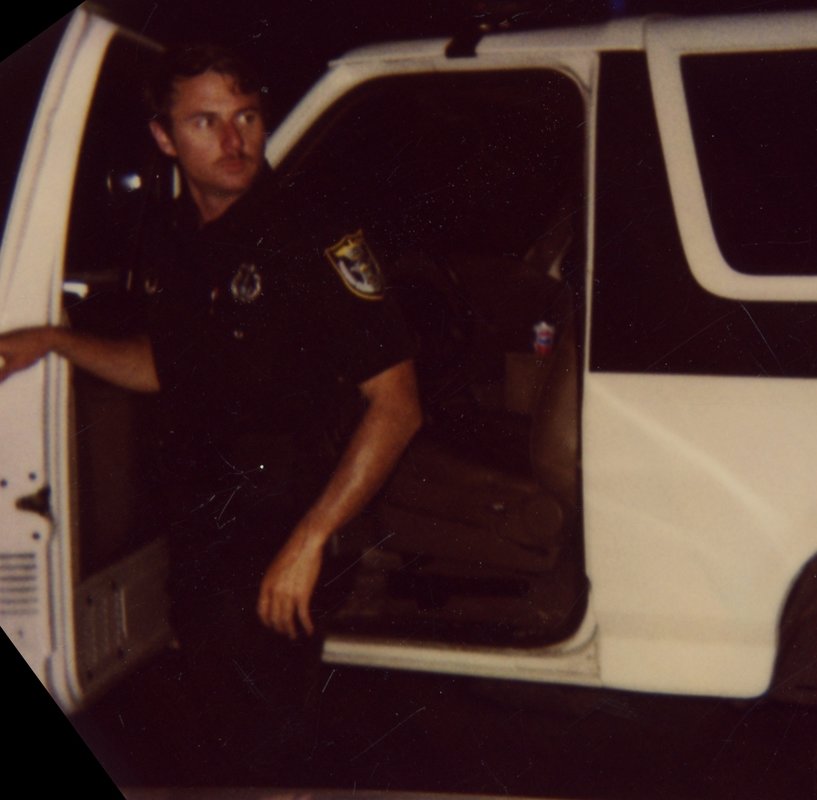
When I was a Deputy Sheriff, I was always amazed that folks voluntarily let me search their vehicle after I told them they were free to go. Then, I was even more amazed that they were astonished when I found a roach in the ashtray or a rock on the floor or something else.
Once you have our DL back, you're told that you're free to go, leave! Roll up all your windows and leave. If the Officer says "excuse me, but do have one other question" before you get your windows rolled up, tell them "sorry, I have to go", and then roll up your windows and leave.
Note that it's different on a government compound, such as a military facility. Someone else will need to clarify how the search rules are different on a place such as an Army Post or Navy Base.
Once you have our DL back, you're told that you're free to go, leave! Roll up all your windows and leave. If the Officer says "excuse me, but do have one other question" before you get your windows rolled up, tell them "sorry, I have to go", and then roll up your windows and leave.
Note that it's different on a government compound, such as a military facility. Someone else will need to clarify how the search rules are different on a place such as an Army Post or Navy Base.
(3)
(0)
3
3
0
I represent a lot of clients in criminal defense cases. I have a few basic rules I tell my clients:
1. Never consent to any search.
2. Always ask the law enforcment officer if you are free to leave
3. If you are free to leave, then leave.
1. Never consent to any search.
2. Always ask the law enforcment officer if you are free to leave
3. If you are free to leave, then leave.
(3)
(0)
Read This Next


 Continue with Facebook
 Continue with Google