
Posted on Oct 3, 2015

What Is The Greatest(Iconic/Legendary) Machine Gun In United States Military History?

22.4K
478
67
43
43
0


Browning M2 50 Cal Machine Gun
Larry and the crew team up with Ohio Ordnance Works to use their M2 50 CAL machine gun to dish out some 50 caliber destruction.
My choice is the .50 Cal. Machine Gun also known as the Ma-Deuce. It is the second longest weapon used in the U.S. inventory preceded by the M911 .45 CAL Colt Pistol. It has various types of ammunition from armor piercing, ball, to tracer and more. Its history is second to none from WWI to Afghanistan. It did its job and has the record to prove it.
I trained on this weapon as an Air Defender and Motor Transport Operator for over 24 years. It is a power weapon. You can use it on just about any piece of equipment e.g, airplanes, helicopters, tanks, armor, vehicles and so on.
The .50 cal. machine gun was developed by John M. Browning at the request of the U.S. Army. Experience in France in 1917 showed the need for a heavy machine gun that could act against aircraft (fixed wing and balloons), tanks, and other armored vehicles that were then first appearing on the battlefield. Starting in July 1917, the Browning .30-06 machine gun was scaled up and reinforced to handle a .50 cal. cartridge, in experimental development from ideas used in a French 11mm machine gun. The first .50 cal. prototype was assembled by Browning at the Winchester plant on 12 November 1918 and Winchester went on to produce a total of six models for testing. However, Infantry tests were unsatisfactory, finding that the bullet lacked range and penetration while the gun was unstable in automatic firing.
The technical problems of the new .50 cal. machine gun were overcome when a captured German 13.2mm anti-tank rifle and its ammunition gave the Winchester engineers the ideas needed to complete the .50 cal. cartridge development with performance satisfactory to the Army. The completed Winchester-designed cartridge was taken to Frankford Arsenal (Philadelphia, PA) in 1918 for production. The prototype .50 cal. machine gun was altered and upgraded to work properly with the new .50 caliber round, resulting in the standardized .50 cal. United States Machine Gun M1921, adopted for use on aircraft in 1923. After a series of .50 cal. water-cooled, aircraft and tank models were tested in the 1920s, an improved version of the M1921 was adopted in 1933 as the air-cooled Browning Machinegun, Caliber .50 HB, M2.
Subsequent models of the M2 .50 cal., using the same receiver, were adopted by the various services in both air-cooled and water-cooled versions for use by infantry, aircraft, tanks, and otehr applications. During World War II, nearly two million M2 machine guns of all variations were produced.
The M2 .50 cal. Machine Gun went out of production in the 1970s, and by the early 1990s the capability to manufacture the M2 barrel had virtually disappeared from the U.S. industrial base. An Army inventory of 13,000 "unserviceable" M2s were stockpiled, although they required some level of repair or maintenance before they could be used. With combat operations in Iraq and Afghanistan, the Army identified a requirement for an additional 8,000 M2s for fielding in FY2005. During the summer of 2004, Anniston Army Depot began to repair M2s at the rate of 100 per month, with a ramp up to 700 per month by early 2005, once new barrels and other parts were procured.
https://www.youtube.com/watch?v=yuZ5VrLQ1ek
https://en.wikipedia.org/wiki/M2_Browning
I trained on this weapon as an Air Defender and Motor Transport Operator for over 24 years. It is a power weapon. You can use it on just about any piece of equipment e.g, airplanes, helicopters, tanks, armor, vehicles and so on.
The .50 cal. machine gun was developed by John M. Browning at the request of the U.S. Army. Experience in France in 1917 showed the need for a heavy machine gun that could act against aircraft (fixed wing and balloons), tanks, and other armored vehicles that were then first appearing on the battlefield. Starting in July 1917, the Browning .30-06 machine gun was scaled up and reinforced to handle a .50 cal. cartridge, in experimental development from ideas used in a French 11mm machine gun. The first .50 cal. prototype was assembled by Browning at the Winchester plant on 12 November 1918 and Winchester went on to produce a total of six models for testing. However, Infantry tests were unsatisfactory, finding that the bullet lacked range and penetration while the gun was unstable in automatic firing.
The technical problems of the new .50 cal. machine gun were overcome when a captured German 13.2mm anti-tank rifle and its ammunition gave the Winchester engineers the ideas needed to complete the .50 cal. cartridge development with performance satisfactory to the Army. The completed Winchester-designed cartridge was taken to Frankford Arsenal (Philadelphia, PA) in 1918 for production. The prototype .50 cal. machine gun was altered and upgraded to work properly with the new .50 caliber round, resulting in the standardized .50 cal. United States Machine Gun M1921, adopted for use on aircraft in 1923. After a series of .50 cal. water-cooled, aircraft and tank models were tested in the 1920s, an improved version of the M1921 was adopted in 1933 as the air-cooled Browning Machinegun, Caliber .50 HB, M2.
Subsequent models of the M2 .50 cal., using the same receiver, were adopted by the various services in both air-cooled and water-cooled versions for use by infantry, aircraft, tanks, and otehr applications. During World War II, nearly two million M2 machine guns of all variations were produced.
The M2 .50 cal. Machine Gun went out of production in the 1970s, and by the early 1990s the capability to manufacture the M2 barrel had virtually disappeared from the U.S. industrial base. An Army inventory of 13,000 "unserviceable" M2s were stockpiled, although they required some level of repair or maintenance before they could be used. With combat operations in Iraq and Afghanistan, the Army identified a requirement for an additional 8,000 M2s for fielding in FY2005. During the summer of 2004, Anniston Army Depot began to repair M2s at the rate of 100 per month, with a ramp up to 700 per month by early 2005, once new barrels and other parts were procured.
https://www.youtube.com/watch?v=yuZ5VrLQ1ek
https://en.wikipedia.org/wiki/M2_Browning
 Machine Gunner
 Weapons
 Infantry
Edited >1 y ago
Posted 10 y ago
Responses: 30
5
5
0
personally, I would have to say that the M60 comes in right behind the M2.
(5)
(0)
(14)
(0)
1SG James A. "Bud" Parker
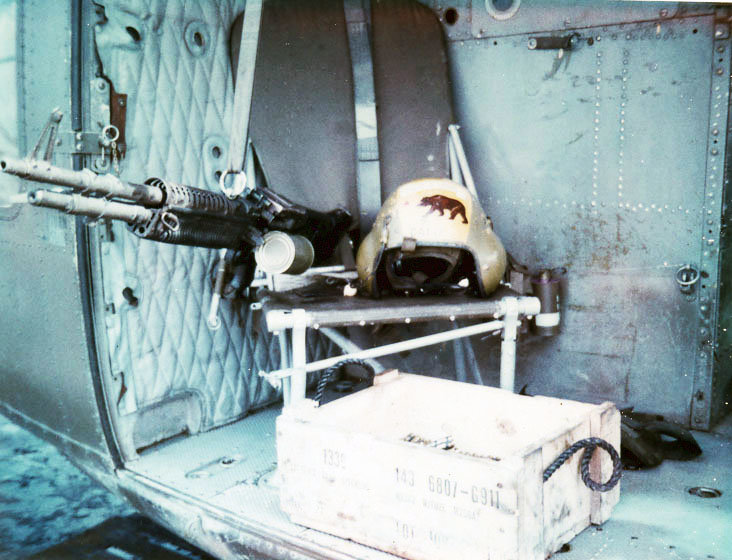
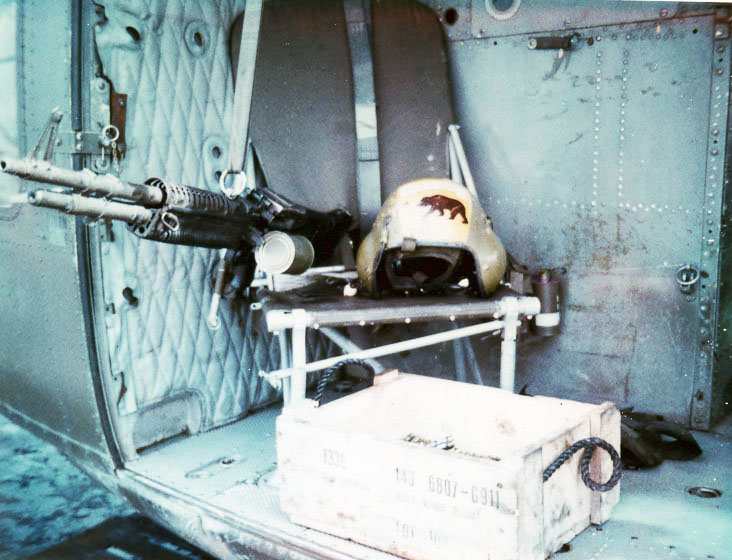
Ahh, yes. The M60. Here is a photo of my "Office" in Vietnam. An M60 hanging from a strap attached to multiple strands of safety wire across the overhang. Usually I had an Ammo Can with belted 7.62 nearly overflowing from the top.
(2)
(0)
5
5
0

Weapon Systems come and go...Tanks, Air Craft, Artillery.....considering life span, effectiveness, dependability, the M2 50 Cal, has outlived them all.
(5)
(0)
SFC Joe S. Davis Jr., MSM, DSL
1SG (Join to see) thanks for your response, well said and articulately expressed. Its been around almost 100 years in the inventory. Just amazing that is has not been really altered.
(10)
(0)
5
5
0

SFC Joe S. Davis Jr., MSM, DSL I was going to name a specific one but then I got to thinking about it. I like them all. I look at them and I guess it's kind of like how some guys look at a car's engine, with admiration.
(5)
(0)
5
5
0

M134 Mini-Gun. That thing is Awesome! A close second is the electronic .50 cal on the Avenger. 1200 rounds per minute!
(5)
(0)
SFC Joe S. Davis Jr., MSM, DSL
SSG (Join to see) thanks for the assist, roger that! That is one bad to the bone machine gun!!
(13)
(0)
5
5
0
Too easy. Enjoy 3 minutes of great music and military hardware. I give you the M 134. Commonly 'not used' by helicopters that weren't there.'
http://www.bing.com/videos/search?q=minigun+fun&FORM=VIRE5#view=detail&mid=4A4D366C6A19438618AA4A4D366C6A19438618AA
http://www.bing.com/videos/search?q=minigun+fun&FORM=VIRE5#view=detail&mid=4A4D366C6A19438618AA4A4D366C6A19438618AA
(5)
(0)
SFC Joe S. Davis Jr., MSM, DSL
GEORGE THOROGOOD "Bad To The Bone"
George Thorogood & The Destroyers play "Bad To The Bone" LIVE in Clarksdale, Mississippi at the Juke Joint Jam. Visit George Thorogood & The Destroyers @ www...
SFC Mark Merino I am speechless, never heard of that, THAT IS ONE BAD TO THE BONE machine gun brother. Wow..... this is for you and the M-134
https://www.youtube.com/watch?v=_7VsoxT_FUY
1SG (Join to see) CPT L S SSgt (Join to see) TSgt Hunter Logan SSG James J. Palmer IV aka "JP4" LTC Stephen F. COL Mikel J. Burroughs CPT (Join to see) SFC William Swartz Jr PO2 Brian Rhodes SSG Warren Swan SMSgt Minister Gerald A. Thomas Sgt Kelli Mays SP5 Michael Rathbun SGM Mikel Dawson CW5 (Join to see) GySgt William Hardy GySgt Bryan A. McGown "Gunny" MSgt (Join to see)
https://www.youtube.com/watch?v=_7VsoxT_FUY
1SG (Join to see) CPT L S SSgt (Join to see) TSgt Hunter Logan SSG James J. Palmer IV aka "JP4" LTC Stephen F. COL Mikel J. Burroughs CPT (Join to see) SFC William Swartz Jr PO2 Brian Rhodes SSG Warren Swan SMSgt Minister Gerald A. Thomas Sgt Kelli Mays SP5 Michael Rathbun SGM Mikel Dawson CW5 (Join to see) GySgt William Hardy GySgt Bryan A. McGown "Gunny" MSgt (Join to see)
(14)
(0)
LTC Stephen F.
SFC Joe S. Davis Jr., MSM, DSL I am very familiar with George Thorogood and the Delaware Destroyers and I owned all of their LP'S. I especially enjoyed One Bourbon, one Scotch and One Beer back in the day.
(3)
(0)
SFC Joe S. Davis Jr., MSM, DSL
LTC Stephen F. thanks he is a favorite of mine, I am listing to it as I type--Sweet!
(11)
(0)
5
5
0

SFC Joe S. Davis Jr., MSM, DSL
MAJ Javier Rivera thanks for the response (MA-DEUCE) is legendary and iconic.
(9)
(0)

M2 Browning .50 Cal
Rate of fire 485–635 rounds/min (M2HB) 750–850 rounds/min (AN/M2) 1,200 rounds/min (AN/M3)
Muzzle velocity 2,910 ft/s (890 m/s) for M33 ball
Effective firing range 1,800 m (2,000 yd)
Maximum firing range 6,800 m (7,400 yd)
M204B FN MAG 7.62mm
Rate of fire 750–950 rounds/min
Muzzle velocity 2,800 ft/s (853
Effective firing range
Bipod: 800 m (880 yd)
Tripod: 1,100 m (1,202 yd)
Maximum firing range 4,074 yd (3,725 m)
M60 7.62 mm General-purpose machine gun
Rate of fire 500–650 rounds/min
Muzzle velocity 2,800 ft/s (853 m/s)
Effective firing range 1,200 yd (1,100 m)
Rate of fire 485–635 rounds/min (M2HB) 750–850 rounds/min (AN/M2) 1,200 rounds/min (AN/M3)
Muzzle velocity 2,910 ft/s (890 m/s) for M33 ball
Effective firing range 1,800 m (2,000 yd)
Maximum firing range 6,800 m (7,400 yd)
M204B FN MAG 7.62mm
Rate of fire 750–950 rounds/min
Muzzle velocity 2,800 ft/s (853
Effective firing range
Bipod: 800 m (880 yd)
Tripod: 1,100 m (1,202 yd)
Maximum firing range 4,074 yd (3,725 m)
M60 7.62 mm General-purpose machine gun
Rate of fire 500–650 rounds/min
Muzzle velocity 2,800 ft/s (853 m/s)
Effective firing range 1,200 yd (1,100 m)
(5)
(0)
5
5
0

Capt Walter Miller
As some other people have pointed out, Ma Deuce has been around for almost 100 years. How often do you see that?
Well, broadswords.
Walt
Well, broadswords.
Walt
(3)
(0)
4
4
0

As an 0311 Rifleman I only got to fam fire machine guns a few times. The M-2 is an excellent piece of equipment with great longevity.
(4)
(0)
SFC Joe S. Davis Jr., MSM, DSL
SSgt William Parker well said and profoundly expressed. That is one tough weapon since WWI.
(12)
(0)
4
4
0

Read This Next


 Continue with Facebook
 Continue with Google