


71
71
0

"Most people do not listen with the intent to understand. They listen with the intent to reply," said someone on some cheesy Facebook post.
How true is that statement?
A command sergeant major once told me to pass the word about a class he would be teaching on communication. My first thought: “You interrupt every single person you speak to and you’re going to teach others how to communicate?!”
The Army tends to over-train on the simplest tasks. I believe the reason some of this training doesn't sink in is because of the average human's attention span.
Learning the necessary basics of “communicating effectively” doesn’t need to be an hour-long PowerPoint presentation. Here's what I have learned from a combination of a couple freshman-level psychology classes and what my MOS calls "public affairsing".
1. Stop interrupting! By virtue of rank, I see leaders doing this the most with their subordinates. How is it possible for you to fully understand what your super troop is saying if you incessantly cut them off? Some people are talkers, I get that, however most soldiers can't say two complete sentences without being cut off.
2. Take a breath in between the time the other person stops talking and you begin. It sends the message that you actually absorbed what they said rather than just rebutted.
3. Avoid your personal agenda. Leaders, if you just want to be heard, then make that clear up front, otherwise, shh. Don’t toy with your soldiers’ emotions and ask them questions if you have no intention on actually hearing them.
4. If someone has headphones in, there's a good chance they don't want to be bothered. I know paralegals and public affairs troops can relate to this! You’re sitting there trying to transcribe an interview and someone stops you to ask if you know what the chow hall is serving for lunch. Unless it's something that's necessary to say, take the hint.
5. Stop interrupting. It's not your turn to talk.
6. Stop interrupting. You don't know what the other person is going to say so don’t try to finish their sentence.
7. Stop interrupting. It's downright rude!
8. Stop interrupting. For peers: Your message isn't more important than the person speaking. For subordinates: Yes, sometimes a leader’s message is more important than yours.
9. Stop interrupting. It makes leaders look self-absorbed to the point their troops may feel like there's no point in even being there, because you could have the entire discussion by yourself.
I emphasize "stop interrupting" because it is by far the primary culprit for misunderstandings which lead to arguments. Arguments lead to broken relationships, which lead to violence and hatred, which then leads to more people walking around angry at the world. People who are angry at the world cause horrific and unnecessary wars.
How true is that statement?
A command sergeant major once told me to pass the word about a class he would be teaching on communication. My first thought: “You interrupt every single person you speak to and you’re going to teach others how to communicate?!”
The Army tends to over-train on the simplest tasks. I believe the reason some of this training doesn't sink in is because of the average human's attention span.
Learning the necessary basics of “communicating effectively” doesn’t need to be an hour-long PowerPoint presentation. Here's what I have learned from a combination of a couple freshman-level psychology classes and what my MOS calls "public affairsing".
1. Stop interrupting! By virtue of rank, I see leaders doing this the most with their subordinates. How is it possible for you to fully understand what your super troop is saying if you incessantly cut them off? Some people are talkers, I get that, however most soldiers can't say two complete sentences without being cut off.
2. Take a breath in between the time the other person stops talking and you begin. It sends the message that you actually absorbed what they said rather than just rebutted.
3. Avoid your personal agenda. Leaders, if you just want to be heard, then make that clear up front, otherwise, shh. Don’t toy with your soldiers’ emotions and ask them questions if you have no intention on actually hearing them.
4. If someone has headphones in, there's a good chance they don't want to be bothered. I know paralegals and public affairs troops can relate to this! You’re sitting there trying to transcribe an interview and someone stops you to ask if you know what the chow hall is serving for lunch. Unless it's something that's necessary to say, take the hint.
5. Stop interrupting. It's not your turn to talk.
6. Stop interrupting. You don't know what the other person is going to say so don’t try to finish their sentence.
7. Stop interrupting. It's downright rude!
8. Stop interrupting. For peers: Your message isn't more important than the person speaking. For subordinates: Yes, sometimes a leader’s message is more important than yours.
9. Stop interrupting. It makes leaders look self-absorbed to the point their troops may feel like there's no point in even being there, because you could have the entire discussion by yourself.
I emphasize "stop interrupting" because it is by far the primary culprit for misunderstandings which lead to arguments. Arguments lead to broken relationships, which lead to violence and hatred, which then leads to more people walking around angry at the world. People who are angry at the world cause horrific and unnecessary wars.
Posted in these groups: Communication Command Post
Command Post
Posted >1 y ago
Responses: 57

22
22
0

Sgt W Hibshman
I agree with what was written but have bad news folks. That trait is just as prevalent in corporate America so don't expect things to improve when you transition back to civilian occupations.
(2)
(0)
16
16
0

Cpl (Join to see)
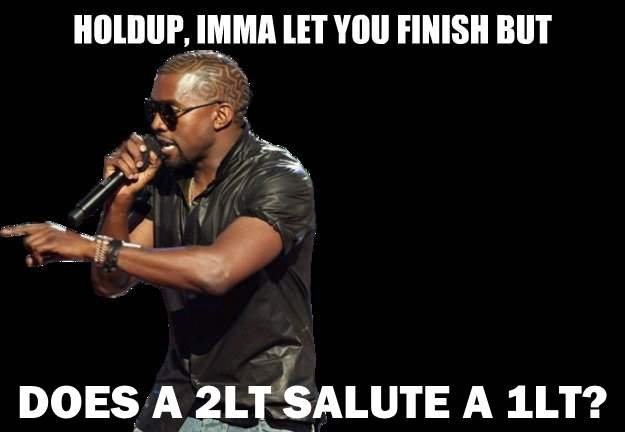
HA! You forgot the hand of authority on the shoulder while that statement is being said.
(2)
(0)
SSgt (Join to see)
COL Vincent Stoneking - Some things just beg for a smart reply.. lol, good work!!!
(2)
(0)
SCPO (Join to see)
Easy there LTC Kanye hahaha!!!! And I mean that with absolutely no disrespect, even though it may be thought of when being referred to as that individual.
(0)
(0)
(1)
(0)
12
12
0

Also "I know you think you heard what I said but I'm not sure you understand what I meant". Kinda' goes along with #1-9!
(12)
(0)


CPT (Join to see)
SrA Ben Barton I remember seeing a comedy skit there Little John, a pretty incoherent rapper, was actually very intelligent and only spoke like that to put on a show. I really think some of them out there are just doing it for show and make money off of it.
(0)
(0)
SGT Patrick McCullough
LT Rosa, Kanye is not one of those putting on an act. He has all the signs of aspergers.
(0)
(0)
11
11
0
SSG V. Michelle Woods I was just trying to think of something to post and thought of "listening" glad you beat me to the punch as you did a better job than I would have. One technique I would add has been mentioned-that of "active listening." Here is an exercise to try to hone this skill: Person A speaks, Person B is looking them in the eyes and taking in the words, tone, and body language then says, "what I heard you say ---and repeat back in their own words what they thought they heard." And then stop. Person A is then given the chance to confirm or correct. Then Person B gets to respond. Then switch roles. It keeps you from thinking "what am I gonna say?" while the other person is speaking and missing their entire message.
(11)
(0)
10
10
0
Just remember we have 2 ears and 1 mouth for a reason... to listen more and talk less...
Though there are times I wish I had neither... my mouth (I have been accused of being opinionated) has gotten me into trouble, and then my ears hurt from the reprimand...
Though there are times I wish I had neither... my mouth (I have been accused of being opinionated) has gotten me into trouble, and then my ears hurt from the reprimand...
(10)
(0)
TSgt Nancy OBrien
I have always had a goal to never say anything I would have to apologize form later. This applies to my spouse and my children! I am 20 years retired and wish I would have had this 'dawning' while on active duty, but better late than never! Thank you for a good discussion!
(1)
(0)
9
9
0

I can relate to this. I was standing in front of my 1st Sgt and Company Commander as a GySgt brought me up on charges of disrespect and tried getting me NJP'd. Well I remained silent except when I was asked to talk, and this GySgt kept interrupting and calling me a liar when I was speaking. Well the charges changed from me being the culprit to him because he would not shut his mouth. It is not often an E3 gets let off when an E7 brings accusations against him. Thankfully I remained quiet and listened while he did the opposite.
(9)
(0)
SSG V. Michelle Woods
That's awesome! As for me, the Bible taught me to be slow to speak and swift to listen and the mouthy people would destroy themselves.
The Bible was right lol.
The Bible was right lol.
(8)
(0)
(2)
(0)
9
9
0

Very well written SSG V. Michelle Woods . I only hope that others who read this will absorb it.
(9)
(0)
MSG(P) Michael Warrick
SSG V. Michelle Woods - excellent post and I love the point that we do need to stop interrupting people when we should be listening. God gave us two ears and one tongue so we should do twice as much listening and half the speaking.
(3)
(0)

8
8
0
SSG V. Michelle Woods, great post and so very true. Too many times we as leaders tend to interrupt in order to get information or our point across. We all must be willing to step back and listen, truly listen, to others.
(8)
(0)
Read This Next


 Continue with Facebook
 Continue with Google