


243
243
0
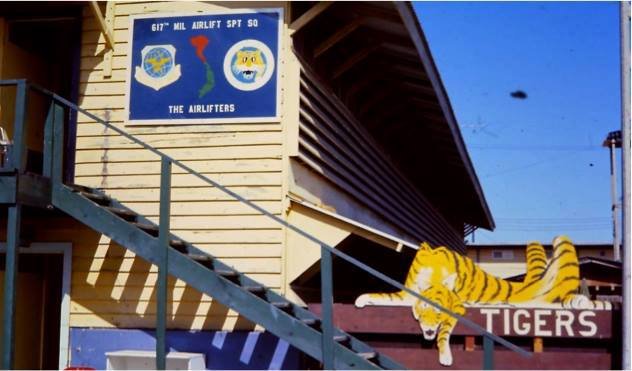
By this time in 1972, the war in Vietnam had been going on for over ten years. Tens of thousands had been killed, even more wounded and a few thousand POWs and unaccounted for MIAs.
Looking back on this time of year, specifically December 18, 1972, most of us know where we were. Most of you younger troops were not yet the twinkle in your Daddy’s eyes.
For me, I was on my second remote/isolated tour in Southeast Asia. In March of 1971, I was assigned to the 307th FMS (Field Maintenance Squadron) Aero Repair or A/R shop at U-Tapao AB, Thailand. We carried the same AFSC or MOS if you will as those who were the primary crew chief on the heavy jets. Those being the C-141A, C-5A, KC-135 and variants and the Queen of the Air, the Mighty B-52. I mention this because the A/R shop caught all the jobs that no one else wanted or would do. We all know sh*t runs downhill. Well, we were the bottom of the hill. But I digress.
During my year we worked 12/12/6 and 7, meaning 12 hours on, off 12 and 6 and often 7 days a week. It was hot, dirty, sweaty work but we did what we had to do. We did it in spite of many not wanting to be there. We launched planes about every 90 minutes around the clock 24/7/365 except when the head shed slowed things down or even ceased flying for the holidays.
After my year at U-Tapao I asked for and received a COT – consecutive overseas tour. This time headed for Vietnam. In March 1972, I headed for DaNang. My tour there was to be short-lived. In September, my unit closed up shop. Those with over 180 days in country on the close date would go home while the rest of us would be reassigned. I was one of the lucky ones, I got to stay…well sort of lucky. After about 60 days, in November 1972 I was selected to go TDY to of all places, Clark AB, Philippines. That story is fodder for another time.
After returning from Clark, I was like a new man. Even though working 12/12/5 I returned relaxed and rejuvenated. The guys in the squadron never let me live that down either. The morning of December 19th is what will always remain, The Morning After the Night Before. It wasn’t because the town got painted red or any such frivolity but we walked into the maintenance shack to discover that the entire B-52 fleet in both Thailand and Guam went downtown to pay “Chuck” a visit. At first we were in disbelief, thinking that Radio Lone Star was jerking our chains with some kind of holiday gag. It turned out to be true. We were ecstatic. All of us were now filled with a new sense of resolve and purpose. This was the beginning of Operation Linebacker II.
While those of us in Vietnam were cheering, our brothers in Thailand and Guam were busting some serious hump. The next 11 days would prove to be a turning point in the war on so many levels.
First off, we lost more B-52s in those 11 days of Christmas* than we had lost in the entire war. We lost many good men on those missions. We had many more end up in the hands of “Chuck” and his accommodations at the Hanoi Hilton. Then after 11 days the deluge of BUFFS stopped. We shut down for Christmas. It wasn’t until years later we learned that had we just kept up the bombing for 2 more days, the North would have surrendered. We all know now how that turned out.
I have a number of friends who were aircrew participants in Linebacker II. I have the greatest admiration and respect for what they did in spite of the head shed screwing the pooch.
Never will I forget where I was in 1972 during “The Eleven Days of Christmas.” With that, I wish you all a Merry Christmas and a Happy New Year!
* ‘The Eleven Days of Christmas’ is a book written by Marshall Michel
Looking back on this time of year, specifically December 18, 1972, most of us know where we were. Most of you younger troops were not yet the twinkle in your Daddy’s eyes.
For me, I was on my second remote/isolated tour in Southeast Asia. In March of 1971, I was assigned to the 307th FMS (Field Maintenance Squadron) Aero Repair or A/R shop at U-Tapao AB, Thailand. We carried the same AFSC or MOS if you will as those who were the primary crew chief on the heavy jets. Those being the C-141A, C-5A, KC-135 and variants and the Queen of the Air, the Mighty B-52. I mention this because the A/R shop caught all the jobs that no one else wanted or would do. We all know sh*t runs downhill. Well, we were the bottom of the hill. But I digress.
During my year we worked 12/12/6 and 7, meaning 12 hours on, off 12 and 6 and often 7 days a week. It was hot, dirty, sweaty work but we did what we had to do. We did it in spite of many not wanting to be there. We launched planes about every 90 minutes around the clock 24/7/365 except when the head shed slowed things down or even ceased flying for the holidays.
After my year at U-Tapao I asked for and received a COT – consecutive overseas tour. This time headed for Vietnam. In March 1972, I headed for DaNang. My tour there was to be short-lived. In September, my unit closed up shop. Those with over 180 days in country on the close date would go home while the rest of us would be reassigned. I was one of the lucky ones, I got to stay…well sort of lucky. After about 60 days, in November 1972 I was selected to go TDY to of all places, Clark AB, Philippines. That story is fodder for another time.
After returning from Clark, I was like a new man. Even though working 12/12/5 I returned relaxed and rejuvenated. The guys in the squadron never let me live that down either. The morning of December 19th is what will always remain, The Morning After the Night Before. It wasn’t because the town got painted red or any such frivolity but we walked into the maintenance shack to discover that the entire B-52 fleet in both Thailand and Guam went downtown to pay “Chuck” a visit. At first we were in disbelief, thinking that Radio Lone Star was jerking our chains with some kind of holiday gag. It turned out to be true. We were ecstatic. All of us were now filled with a new sense of resolve and purpose. This was the beginning of Operation Linebacker II.
While those of us in Vietnam were cheering, our brothers in Thailand and Guam were busting some serious hump. The next 11 days would prove to be a turning point in the war on so many levels.
First off, we lost more B-52s in those 11 days of Christmas* than we had lost in the entire war. We lost many good men on those missions. We had many more end up in the hands of “Chuck” and his accommodations at the Hanoi Hilton. Then after 11 days the deluge of BUFFS stopped. We shut down for Christmas. It wasn’t until years later we learned that had we just kept up the bombing for 2 more days, the North would have surrendered. We all know now how that turned out.
I have a number of friends who were aircrew participants in Linebacker II. I have the greatest admiration and respect for what they did in spite of the head shed screwing the pooch.
Never will I forget where I was in 1972 during “The Eleven Days of Christmas.” With that, I wish you all a Merry Christmas and a Happy New Year!
* ‘The Eleven Days of Christmas’ is a book written by Marshall Michel
 Command Post
 Vietnam War
 JBSA - Joint Base San Antonio
 Military History
Posted 8 y ago
Responses: 270

32
32
0

Thankfully I had left "the land of the little people" (sorry I'm not PC yet) back in 1967 ,physically that is,the mental part seems to be taking a bit longer.
(32)
(0)
1SG(P) Dean Mcbride (MPER) (SPHR)


In 1972, I was deployed from the 1st Special Forces Group in Okinawa and attached to Project 404 in Laos. I worked with the Hmong military unit under Major General Vang Pao in Long Tieng Laos. Before that, I served three tours in Viet Nam from 1965 to 1970. My last tour was with the 5th Special Forces Group MACVSOG CCS in Ban Mi Thuot Vietnam where I worked with Montagnard soldiers. It was soldiers SGT Philip Roncari refers to as Little People that saved my little ass on many occasions! I am short and never thought of them as Little People - just Damn Good Soldiers that served with me!
In the attached photo, I am second from the right. The other three are Montgnayards and "Damn Good Soldiers!"
In the attached photo, I am second from the right. The other three are Montgnayards and "Damn Good Soldiers!"
(1)
(0)
SGT Philip Roncari
1SG Dean McBride-I am sorry for any miscommunication on this post concerning the use of the the term “Little People “ at NO time was it describing the Montagnard people or soldiers who aided our Country during the war,my unit (4th Inf.Div ) in fact had relocated Montagnard villages on different occasions,finally the use of the term “Little People” was our term for the VC and NVA forces we fought against from Tuy Hoa to the Central Highlands, Welcome Home Brother.
(0)
(0)
1SG(P) Dean Mcbride (MPER) (SPHR)
SGT Philip Roncari - I know Tuy Hoa from my second tour in 66/67 with the 196th Light Infantry Brigade. Glad to know you made it home! No offense taken on the Little People comment.
(1)
(0)
SGT Philip Roncari
1SG Dean McBride-Appreciate your response and again my apologies for any misunderstandings,our unit 3/8 Inf 4th Div.actually operated in the Ban Mi Thuot AO in early 1967.
(0)
(0)

SPC Robin Price-Dirks
I was a kid in middle school praying both my brothers came back safely and wondering why I couldn't go at the age of 12?
(3)
(0)
SSgt David M.
Hi All My Fellow Veterans. I was in my Senior year at Ava High School, Ava, Missouri. I had signed up 'Delayed Entry' in October 1972 to go active duty in July 1973. I graduated in May of 1973 and was in Basic Training June 22, 1973. They asked for Volunteers for Viet-Nam and I was one of the first to put my hand up. My late Dad had served a year in Chu Chi in 1965-1966. He worked out of a tractor trailer processing payroll for all the Soldiers in the 25th Infantry. He was in the 32nd CPU, AKA 'Pink Asses' as that is the locator insignia painted on all their transport containers. Needless to say we waited a week to hear that the US Army was no longer sending troops to Viet Nam. I felt as if I had been slapped in the face and deigned my shot at winning the war for the USA! There is something to say about being young and dumb after all! I completed Basic and moved on to my AIT at Fort Dix, NJ. After a eight week training on how to do repairs to Military vehicles I was on my way to Ludwigsburg, Germany. I was assigned to A Company 34th Signal BN which was part of the 7th Corps. If only I had not failed first grade I think I might have gone to Viet Nam to do my part. Lord was watching over me for many years to make sure I did not have to go. The worst part is I ETS'd in June 1981 right before my unit, 2nd of the 31st Inf BN, went to Panama for the short 'War' there. I missed my 2nd shot of being at war! GOD had his reasons and I think I now understand what my part was just a few years later. I worked as a Purchasing Agent at the Sacramento Army Depot. We supported all the US Embassies around the world, all the Army radio stations around the world, all the communications stations around the world. One of the purchases that I made was for 'Broadcast quality VCR tapes in water proof containers'. It turns out these were used to tape the US Air Force bombing of Libya. And who did the video taping? It was the US Navy Seal Unit! They came ashore prior to the F-111 Aircraft that did the bombing. In that video it caught the downing of one F-111. It was one of the Aircraft that I worked on while assigned to the 406 CLSS at McClellan AFB, California! The Flight commander was in our work area every weekend that we had drill and kept asking what the status of his 'Bird' was. He was a very nice LT. He was KIA along with his co-pilot and had their naked bodies dragged though the streets. To this day I have not heard if either one of these two Officers were ever returned to the USA for a proper burial. I SALUTE These two brave Officers for their service. I also pray that their bodies were recovered and returned to the USA. GOD Bless all who served and may those who gave their all REST in Peace! GOD Bless them and their families!!!
(0)
(0)
Sgt Mervyn Russell
You are funny! My youngest is eleven years older than you. He turns fifty years old in August.
(0)
(0)
SGT Barry Wilson
Dec72 I was a Patrolman on the Fairbanks (Alaska) Police Department, walking foot patrol in -40 temperatures. My Nam time had been Jun67 to Nov70 with the 95th MP Bn at Long Binh Post.
(0)
(0)
24
24
0

I was in Germany dealing with Baeder-Meinhoff. Would have rather been in Nam at least there people were supposed to be trying to kill you.
(24)
(0)
SGT David Petree
I was in Frankfurt, West Germany when Baeder - Meinhoff blow the front doors off the 5th Corp HQ . Killing 2 MPs & a Med Col. at the offers club.
(3)
(0)
SSgt David M.
Yes the Baader-Meinhof Gang was still going strong in 1973 in the Stuttgart-Ludwigsburg area of West Germany. When I arrived in October on 1973 we were warned that these terrorists were everywhere and not to trust anyone. Funny thing was the German People had large posters up all over the place and every time one of the gang members were killed they would use a large black magic marker and put a large X across their picture. Many of the German Guesthouses would give everyone a free beer. It was a scary time but eventually they were all taken down or they just gave up their way. I SALUTE ALL My Fellow Veterans!!! GOD Bless America!!!
(0)
(0)
16
16
0

I was out on Guam where I was a CWO2 serving as the Officer in Charge of the Naval Tele-Communications Center at NAS Agana, Guam. I had reported there earlier that year after completing a two year tour as a W1 on the USS Enterprise as the Assistant EMO for Communications and Radar and being deployed on Yankee Station. I had done a previous tour in-country Vietnam as an enlisted Radioman in a Communications Van located at Dong Ha on the DMZ from 1977-1978 and left there shortly after TET of 1968.
(16)
(0)
14
14
0
I have been reading first hand accounts of what the BUFF crews endured during Linebacker II. I spoke with my friend, James Pigg, a former BUFF driver and co-pilot during the 11 Days of Christmas. Below is his account. It's a bit long but riveting. I hope the admins don't mind this post.
The story below is how I spent 20 Dec 1972 - James Pigg
In December 1972, the Linebacker II BUFF missions over North Vietnam were flown from both UT and Andersen, but Linebacker II included pretty much every USAF and Navy aircraft in the Vietnam Theater of Operations. Linebacker II lasted from December 18 through December 29, 1972 with a stand-down on Christmas Day creating a time span of eleven days – hence, the 11-Day War. During that time, B-52s flew 729 sorties, dropped 15,000 tons of bombs, and were shot at by 1,240 SAMs. Fifteen B-52s were lost to combat.
In August 1972 our Loring crew, E-13, arrived as KC-135 passengers at Andersen AFB on a 179 day TDY to fly combat missions over Vietnam in the B-52G. The EW and I (co-pilot) had finished a D-model Arc Light tour to U-Tapao in February flying about 52 missions each, and we had flown about 45 more on this tour – so we were both approaching our 100th combat mission. Our crew flew four times during Linebacker II, three over North Vietnam in Route Pack 6 on 20, 27, and 29 December, and once on December 23rd to the south when SAC was fearful of losing more B-52Gs.
We watched the huge launch of 87 B-52s from Andersen on the 18th of December. It was an impressive sight. That night three B-52s were shot down and two were damaged. We knew when we were scheduled to fly on the third night that we would be in a high threat environment facing SAMs. The 20th of December 1972 (Day 3 of the 11-Day War), was the scariest mission of my life. I did not keep a written record of our cell color name, but our target on the 20th was the Thai Nguyen Thermal Power Plant north of Hanoi.
While still over the ocean on our way to Vietnam, we could see cells of B-52s at a higher flight level exiting the country. The pilot and I counted the BUFFs and not all cells contained three aircraft. Several cells appeared to only have two BUFFs in them rather than three. As we “coasted-in” over Vietnam, we heard an excited “May Day” call over Guard. It sounded like a fighter to us, and the Navy did lose an A-6 on day three. So we were incredibly psyched-up and more than a little scared. A little later we also heard emergency locator beacons on Guard, which meant that someone had punched out of an aircraft and their parachute had opened automatically pulling a plug from the emergency radio in the chute and starting a “squawking” sound.
As we proceeded, the intercom became dead quiet as we all concentrated on flying the mission as precisely as possible. Somewhere in the jumbled radio traffic, we started hearing calls of SAMs being launched with a bearing off of Bullseye, which was Hanoi. Most of the calls were useless because “SAM launch vicinity Hanoi,” was not informative and just drove your adrenalin level up. We were number two in the cell, and the spacing for these high threat missions was only ½ mile nose to tail. I flew the throttles, and the AC flew position. When we were exactly ½ mile from lead, we could just make out the small blue flame or glowing dots in the tail cones of Number One’s engines. We held position visually using these glowing dots. Before we started the bomb run, the AC and I both saw a huge explosion in the night sky quite some distance away.
We saw a huge fireball, and then two separate groups of flaming debris falling slowly from the sky. One piece was large and fell pretty much straight down, and the other was sort of flat and spun in slow, unbalanced turns like it could have been a single burning aircraft wing. In one video interview, a pilot described it as if someone poured burning gasoline out of a cup in the dark. That description is very accurate, and one I can picture very clearly to this day. Looking at the records for this date, I believe that we saw Orange 3 get shot down. The EW started picking up electronic signals from the SAM sites shortly after this. He would call SAM, and SAM uplink, which meant a SAM site had our aircraft locked in and was trying to guide a missile towards us. Most of the uplink calls were very brief as if the SAM site would bring the radar up and quickly shut it down to avoid the SAM support we had from the Wild Weasels.
About this time, the AC and I had started to see SAM launches. There was a layer of clouds quite some distance below us, and when a SAM ignited there would be a flash of diffuse light similar to the flash on the old pinball machines. When the SAM cleared the undercast, it would have a long flame (silver or blue, not yellow or red) shooting out behind it. You could see the flame, but not the body of the missile. The flame would hunt or seek and move quickly in tiny, jerky movements like a snake’s head but constantly leaving the flame trailing behind it. The AC and I would call out “SAM” on the intercom and give the clock position so the NAV could make a mark on the map for debriefing.
Prior to the IP, I saw a SAM at our three o’clock low and called it over the intercom. As I watched it, it remained in the same position on my wind screen. That meant it was on a collision course with our aircraft. The EW called uplink. These were good indicators that it was intended for us. The AC put the aircraft in a very steep bank turning towards the SAM, eventually reaching about 90 degrees of bank although 45 degrees was the maximum authorized, and I pulled the throttles to idle. We quickly lost altitude and accelerated only a small amount. After we lost about 1000 feet, the AC smoothly rolled the aircraft out of the bank and pulled up to regain the altitude as I jammed the throttles forward. The SAM passed above us, and we did not see the SAM explode. The EW called the uplink was lost. We ended up pretty much right behind Number One where we had started. We eased back into ½ mile spacing and started the bomb run once we reached the IP. From the IP through the bomb run, we flew straight and level following the PDI until bomb release. We noticed quite a few SAM launches during the course of the mission, and had stopped calling out SAM locations after we had counted over 25 launches. We could also see fires burning through the clouds below from secondary explosions from the earlier bomb runs. Most of the SAMs we saw exploded above our altitude.
After the bomb release, we made a hard left Post Target Turn (PTT) at 45 degrees of bank into a 100 knot headwind and again leveled our wings just about exactly ½ mile behind lead. Number three fell significantly behind when he rolled out of his PTT, and our gunner called three to verify his positon behind us, to ensure they were not an enemy aircraft. During our approach and bomb run, there were quite a few “Bogey” radio calls about Migs but no Bandit calls in our area of flight. We tightened up formation, and as we exited Vietnam, cell lead called “Feet Wet with three.” Meaning our cell was out of danger, and had not lost any aircraft. We climbed to 41,000, 41,500, and 42,000 feet, and returned without incident to Guam.
We lost six BUFFs that night. The single worst loss of the entire 11-Day War: four G-models and two D-models, plus the Navy A-6 mentioned earlier. The other two missions we flew in North Vietnam on the 27th and 29th were farther north and just west of the Chinese border with significantly fewer SAM launches.
The story below is how I spent 20 Dec 1972 - James Pigg
In December 1972, the Linebacker II BUFF missions over North Vietnam were flown from both UT and Andersen, but Linebacker II included pretty much every USAF and Navy aircraft in the Vietnam Theater of Operations. Linebacker II lasted from December 18 through December 29, 1972 with a stand-down on Christmas Day creating a time span of eleven days – hence, the 11-Day War. During that time, B-52s flew 729 sorties, dropped 15,000 tons of bombs, and were shot at by 1,240 SAMs. Fifteen B-52s were lost to combat.
In August 1972 our Loring crew, E-13, arrived as KC-135 passengers at Andersen AFB on a 179 day TDY to fly combat missions over Vietnam in the B-52G. The EW and I (co-pilot) had finished a D-model Arc Light tour to U-Tapao in February flying about 52 missions each, and we had flown about 45 more on this tour – so we were both approaching our 100th combat mission. Our crew flew four times during Linebacker II, three over North Vietnam in Route Pack 6 on 20, 27, and 29 December, and once on December 23rd to the south when SAC was fearful of losing more B-52Gs.
We watched the huge launch of 87 B-52s from Andersen on the 18th of December. It was an impressive sight. That night three B-52s were shot down and two were damaged. We knew when we were scheduled to fly on the third night that we would be in a high threat environment facing SAMs. The 20th of December 1972 (Day 3 of the 11-Day War), was the scariest mission of my life. I did not keep a written record of our cell color name, but our target on the 20th was the Thai Nguyen Thermal Power Plant north of Hanoi.
While still over the ocean on our way to Vietnam, we could see cells of B-52s at a higher flight level exiting the country. The pilot and I counted the BUFFs and not all cells contained three aircraft. Several cells appeared to only have two BUFFs in them rather than three. As we “coasted-in” over Vietnam, we heard an excited “May Day” call over Guard. It sounded like a fighter to us, and the Navy did lose an A-6 on day three. So we were incredibly psyched-up and more than a little scared. A little later we also heard emergency locator beacons on Guard, which meant that someone had punched out of an aircraft and their parachute had opened automatically pulling a plug from the emergency radio in the chute and starting a “squawking” sound.
As we proceeded, the intercom became dead quiet as we all concentrated on flying the mission as precisely as possible. Somewhere in the jumbled radio traffic, we started hearing calls of SAMs being launched with a bearing off of Bullseye, which was Hanoi. Most of the calls were useless because “SAM launch vicinity Hanoi,” was not informative and just drove your adrenalin level up. We were number two in the cell, and the spacing for these high threat missions was only ½ mile nose to tail. I flew the throttles, and the AC flew position. When we were exactly ½ mile from lead, we could just make out the small blue flame or glowing dots in the tail cones of Number One’s engines. We held position visually using these glowing dots. Before we started the bomb run, the AC and I both saw a huge explosion in the night sky quite some distance away.
We saw a huge fireball, and then two separate groups of flaming debris falling slowly from the sky. One piece was large and fell pretty much straight down, and the other was sort of flat and spun in slow, unbalanced turns like it could have been a single burning aircraft wing. In one video interview, a pilot described it as if someone poured burning gasoline out of a cup in the dark. That description is very accurate, and one I can picture very clearly to this day. Looking at the records for this date, I believe that we saw Orange 3 get shot down. The EW started picking up electronic signals from the SAM sites shortly after this. He would call SAM, and SAM uplink, which meant a SAM site had our aircraft locked in and was trying to guide a missile towards us. Most of the uplink calls were very brief as if the SAM site would bring the radar up and quickly shut it down to avoid the SAM support we had from the Wild Weasels.
About this time, the AC and I had started to see SAM launches. There was a layer of clouds quite some distance below us, and when a SAM ignited there would be a flash of diffuse light similar to the flash on the old pinball machines. When the SAM cleared the undercast, it would have a long flame (silver or blue, not yellow or red) shooting out behind it. You could see the flame, but not the body of the missile. The flame would hunt or seek and move quickly in tiny, jerky movements like a snake’s head but constantly leaving the flame trailing behind it. The AC and I would call out “SAM” on the intercom and give the clock position so the NAV could make a mark on the map for debriefing.
Prior to the IP, I saw a SAM at our three o’clock low and called it over the intercom. As I watched it, it remained in the same position on my wind screen. That meant it was on a collision course with our aircraft. The EW called uplink. These were good indicators that it was intended for us. The AC put the aircraft in a very steep bank turning towards the SAM, eventually reaching about 90 degrees of bank although 45 degrees was the maximum authorized, and I pulled the throttles to idle. We quickly lost altitude and accelerated only a small amount. After we lost about 1000 feet, the AC smoothly rolled the aircraft out of the bank and pulled up to regain the altitude as I jammed the throttles forward. The SAM passed above us, and we did not see the SAM explode. The EW called the uplink was lost. We ended up pretty much right behind Number One where we had started. We eased back into ½ mile spacing and started the bomb run once we reached the IP. From the IP through the bomb run, we flew straight and level following the PDI until bomb release. We noticed quite a few SAM launches during the course of the mission, and had stopped calling out SAM locations after we had counted over 25 launches. We could also see fires burning through the clouds below from secondary explosions from the earlier bomb runs. Most of the SAMs we saw exploded above our altitude.
After the bomb release, we made a hard left Post Target Turn (PTT) at 45 degrees of bank into a 100 knot headwind and again leveled our wings just about exactly ½ mile behind lead. Number three fell significantly behind when he rolled out of his PTT, and our gunner called three to verify his positon behind us, to ensure they were not an enemy aircraft. During our approach and bomb run, there were quite a few “Bogey” radio calls about Migs but no Bandit calls in our area of flight. We tightened up formation, and as we exited Vietnam, cell lead called “Feet Wet with three.” Meaning our cell was out of danger, and had not lost any aircraft. We climbed to 41,000, 41,500, and 42,000 feet, and returned without incident to Guam.
We lost six BUFFs that night. The single worst loss of the entire 11-Day War: four G-models and two D-models, plus the Navy A-6 mentioned earlier. The other two missions we flew in North Vietnam on the 27th and 29th were farther north and just west of the Chinese border with significantly fewer SAM launches.
(14)
(0)
PO1 Kevin Dougherty
Wow thanks. I just read an article recently somewhere in which a former Vietnamese General was quoted as saying that both Linebacker operations had brought them within days of breaking. I didn't know where to be mad or cry when I read that and thought of the lives lost.
(3)
(0)
Cpl Gabriel F.
Impressive information. Grunts never received the word on such heavy loss of " BUFF" air crew.
(2)
(0)
11
11
0

After flying AH-1s out of Can Tho (IV Corps) and Hue Phu Bai (I Corps) South Vietnam (age 20/21), I was assigned to Ft Carson in May '71 flying UH-1s and OH-58s out of DIVARTY section, Butts AAF. I turned 22 in Feb '72, and at that young age, one of my biggest concerns was the start of the RIFs (Reduction in Force) that had begun as a "complete surprise" (with 90 day "notices") in late '71 and steamrolled into '72 and beyond.
The first RIFs were "qualitative" based on personnel files and OERs. Everyone began "scrambling" to get their records up-to-date, and OERs cleaned up where possible. OER scores began to get hugely inflated as raters began realizing the implications of less-than-stellar ratings. As flying slots went away, RLOs scrambled to fill non-flying slots on Post wherever they could. A few "RIF-ted" senior Warrants reverted to their former enlisted ranks - usually just to make it to "retirement". A "mediocre" (re: "average") OER from the past - usually from an "unknown" rater could spell the end of your career. Lots of folks were making great effort to get "acquainted or re-acquainted" with their raters. Turns out, upon records check, I discovered that I had once been given an "average" OER (by a Captain I didn't even know) in my own records. I had to "sweat things out" for several years as a result..... The word was, DA was even "ranking" people based on their Awards and Decorations.....
The "qualitative" RIFs gave way to "quantitative" cuts based more along the lines of "throwing a dart" at lists of names to come up with the required levels. I lost a lot of colleagues that I thought were better Officers and pilots than I was. Although I did not yet consider myself a "Lifer" during this time, I was enjoying my assignment at Ft Carson. Scrambling to improve my records "footprint", I volunteered to fly for the local MAST (Military Assistance to Safety and Traffic) unit for a few months in late '71 early '72.
After that assignment and for the rest of '72 into '73, I became an Instrument Instructor (a local appointment - not "Rucker trained" - probably similar to the more modern "unit trainer"). Sometime earlier, the Army decided to do away with the TAC (Instrument) Ticket and require ALL pilots to have a STANDARD (Instrument) Ticket. There were perhaps a hundred Aviators scattered throughout the post who were in mostly "non-aviator" slots (lots of CPTs) that still needed upgrading, but Ft Carson (and I assume Ft Rucker and elsewhere) did not have enough instrument aircraft, flight simulators, or "school-trained" instructors (or funding) for the task. Ft Carson had a UH-1 simulator built during this period. We were tasked to develop a comprehensive instrument training program at Ft Carson using OH-58s (using NDB "faux" navigation routes, charts, frequencies, NDB approaches at area airports, simulated radar, GCA, and flight-following, etc to do the "lion's share of training for these pilots in order to get them the required ground training and flight time to pass an instrument check ride. We used a large, rather empty "training area" located east of Ft Carson, south of Colorado Springs all the way down to Pueblo, CO. The training was somewhat similar to the instrument training many of us received at Ft Rucker using the TH-13 Sioux "Instrument trainer", with made-up routes, intersections, names,etc. back in the day.
We "unit trainers" at first were initially allowed to log IP (Instructor) time, but at some point in the middle of the program, that privilege was revoked and we had to start logging our time as CP (Co-Pilot), even though WE were doing the instructing (and everything else such as communications with the "real world"; flight-following, simulated communications, watching out for other traffic, etc, etc. - while the pilot receiving the training (under the "hood") was logging P (Pilot) time. Logging UT (unit trainer) time had not yet come into existence. That way, it turned out that my flight records for the time show only a couple hundred hours of instrument IP time and a much larger number of CP hours. As I recall, AC (aircraft commander) time had been done away with (or we couldn't use it) by then.
The "TAC to STANDARD" program wound down, and I saw an opportunity to go into Safety when the Army decided to make Aviation Safety a career track instead of "extra duty". I went to a two-week ASO course at Ft Rucker became the Detachment Safety Officer.
The first RIFs were "qualitative" based on personnel files and OERs. Everyone began "scrambling" to get their records up-to-date, and OERs cleaned up where possible. OER scores began to get hugely inflated as raters began realizing the implications of less-than-stellar ratings. As flying slots went away, RLOs scrambled to fill non-flying slots on Post wherever they could. A few "RIF-ted" senior Warrants reverted to their former enlisted ranks - usually just to make it to "retirement". A "mediocre" (re: "average") OER from the past - usually from an "unknown" rater could spell the end of your career. Lots of folks were making great effort to get "acquainted or re-acquainted" with their raters. Turns out, upon records check, I discovered that I had once been given an "average" OER (by a Captain I didn't even know) in my own records. I had to "sweat things out" for several years as a result..... The word was, DA was even "ranking" people based on their Awards and Decorations.....
The "qualitative" RIFs gave way to "quantitative" cuts based more along the lines of "throwing a dart" at lists of names to come up with the required levels. I lost a lot of colleagues that I thought were better Officers and pilots than I was. Although I did not yet consider myself a "Lifer" during this time, I was enjoying my assignment at Ft Carson. Scrambling to improve my records "footprint", I volunteered to fly for the local MAST (Military Assistance to Safety and Traffic) unit for a few months in late '71 early '72.
After that assignment and for the rest of '72 into '73, I became an Instrument Instructor (a local appointment - not "Rucker trained" - probably similar to the more modern "unit trainer"). Sometime earlier, the Army decided to do away with the TAC (Instrument) Ticket and require ALL pilots to have a STANDARD (Instrument) Ticket. There were perhaps a hundred Aviators scattered throughout the post who were in mostly "non-aviator" slots (lots of CPTs) that still needed upgrading, but Ft Carson (and I assume Ft Rucker and elsewhere) did not have enough instrument aircraft, flight simulators, or "school-trained" instructors (or funding) for the task. Ft Carson had a UH-1 simulator built during this period. We were tasked to develop a comprehensive instrument training program at Ft Carson using OH-58s (using NDB "faux" navigation routes, charts, frequencies, NDB approaches at area airports, simulated radar, GCA, and flight-following, etc to do the "lion's share of training for these pilots in order to get them the required ground training and flight time to pass an instrument check ride. We used a large, rather empty "training area" located east of Ft Carson, south of Colorado Springs all the way down to Pueblo, CO. The training was somewhat similar to the instrument training many of us received at Ft Rucker using the TH-13 Sioux "Instrument trainer", with made-up routes, intersections, names,etc. back in the day.
We "unit trainers" at first were initially allowed to log IP (Instructor) time, but at some point in the middle of the program, that privilege was revoked and we had to start logging our time as CP (Co-Pilot), even though WE were doing the instructing (and everything else such as communications with the "real world"; flight-following, simulated communications, watching out for other traffic, etc, etc. - while the pilot receiving the training (under the "hood") was logging P (Pilot) time. Logging UT (unit trainer) time had not yet come into existence. That way, it turned out that my flight records for the time show only a couple hundred hours of instrument IP time and a much larger number of CP hours. As I recall, AC (aircraft commander) time had been done away with (or we couldn't use it) by then.
The "TAC to STANDARD" program wound down, and I saw an opportunity to go into Safety when the Army decided to make Aviation Safety a career track instead of "extra duty". I went to a two-week ASO course at Ft Rucker became the Detachment Safety Officer.
(11)
(0)
11
11
0

In 1972 I had recently ETS'd and was taking it up as a civilian in Phoenix.
Merry Christmas to you and yours!
Merry Christmas to you and yours!
(11)
(0)
11
11
0

Went in during the summer of '72. In Basic at Ft. Dix, they were running us through training on booby traps in V'Nam villages while at the same time telling us, "You guys ain't going to 'Nam, but they ain't changed the training yet, so, we gotta do this!"
(11)
(0)
11
11
0

10
10
0


I was a Cold Warrior. In 1972 I was assigned to the 36th Tactical Airlift Squadron (C-130E) flying copilot. I was working on my upgrade to Aircraft Commander, but that wouldn't come until the next year. The Squadron rotated (called deployed now-days) to RAF Mildenhall, UK, for 3 months. We flew missions supporting USAREUR and USAFE (photo is offloading cargo in Turkey). When in CONUS we supported exercises at Ft Bragg/Pope AFB, NC, Nellis AFB, NV, and Cannon AFB, NM. I was promoted to Captain at 3 years of service in June 1972. My third child, Jennifer, was born.
(10)
(0)
Lt Col Jim Coe
I can explain the picture a little more. We had a pallet of household goods, but it was too heavy for the only working forklift at the off-load site. We shoved the pallet to the bottom on the ramp and broke it up into large crates the forklift could handle. From left to right the people in the photo are an Airman stationed at the offload site, forklift operator (Turkish), Aircraft Commander (Major?), another aircrew member (Flight Engineer?), Turkish Official is suit & tie, Loadmaster SSgt Barnes (hands on hips), and three other civilians (Turkish). We eventually got all four crates of cargo safely off the aircraft and to the side of the parking ramp.
(2)
(0)
Read This Next


 Continue with Facebook
 Continue with Google