

19
19
0
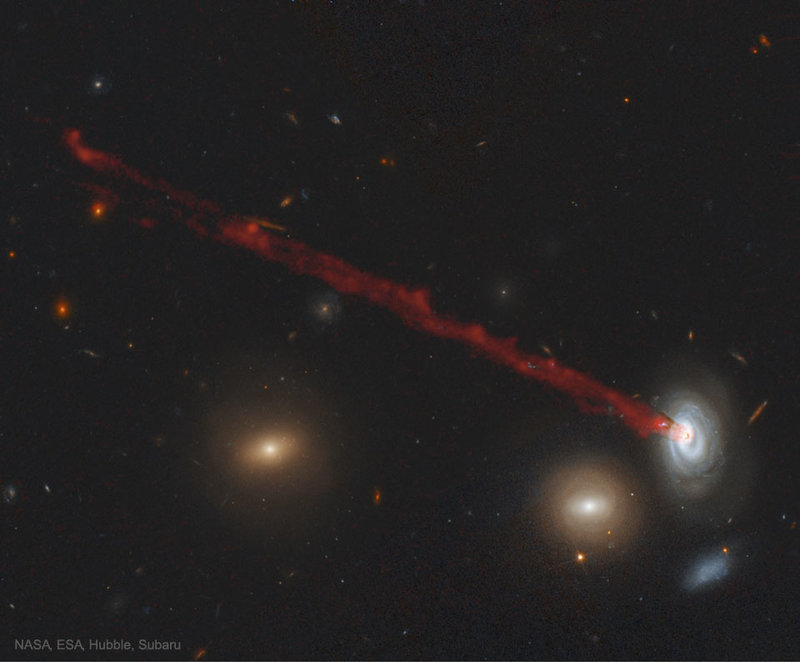
Good morning RP. Today's image is called "The Long Gas Tail of Spiral Galaxy D100."
Astronomy Picture of the Day
Posted from apod.nasa.gov NASA
NASA Space
Space Science
 Photography
 Astronomy
Posted 7 y ago
Responses: 8

10
10
0
Very cool- will forward these to my grand daughter. She and my son love this stuff.
LTC Stephen F. SP5 Mark Kuzinski COL Mikel J. Burroughs SMSgt Lawrence McCarter Maj William W. 'Bill' PriceCPL Dave Hoover SSG William Jones Sgt Vance Bonds SGT (Join to see) Cpl (Join to see) Sgt Randy Wilber SGT Rick Colburn SPC Margaret Higgins SSgt Donald Libby PO1 H Gene Lawrence Maj Robert Thornton PO3 Bob McCord SPC Douglas Bolton CWO3 Dennis M. Lt Col Charlie Brown
LTC Stephen F. SP5 Mark Kuzinski COL Mikel J. Burroughs SMSgt Lawrence McCarter Maj William W. 'Bill' PriceCPL Dave Hoover SSG William Jones Sgt Vance Bonds SGT (Join to see) Cpl (Join to see) Sgt Randy Wilber SGT Rick Colburn SPC Margaret Higgins SSgt Donald Libby PO1 H Gene Lawrence Maj Robert Thornton PO3 Bob McCord SPC Douglas Bolton CWO3 Dennis M. Lt Col Charlie Brown
(10)
(0)
6
6
0

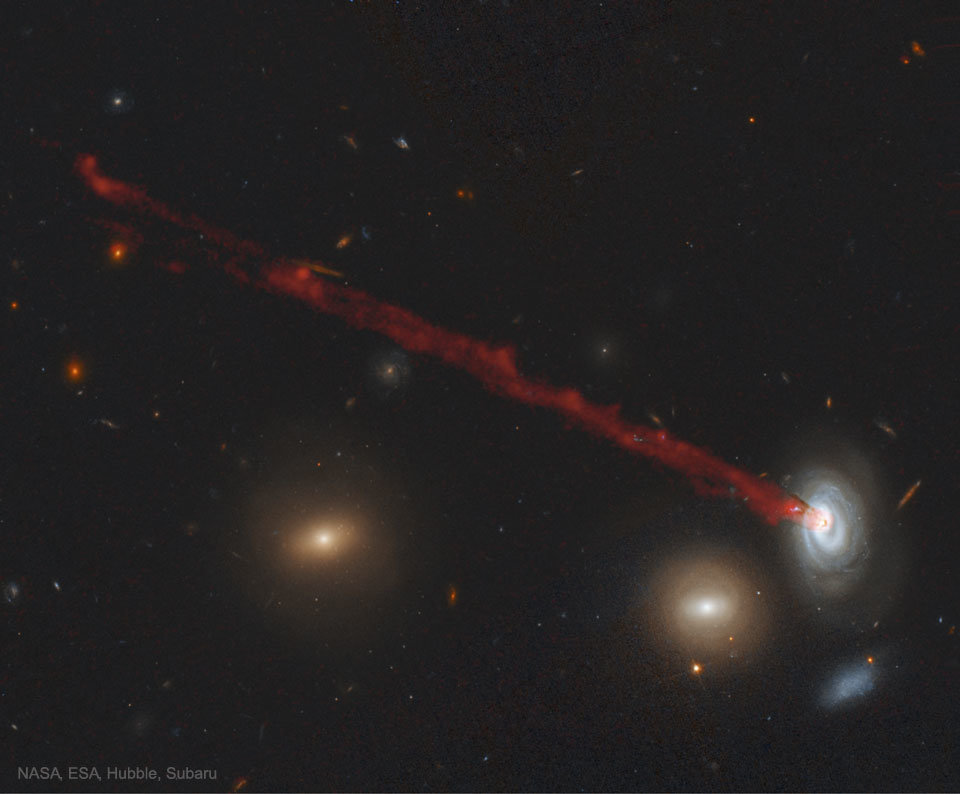
Thank you, my friend Maj William W. 'Bill' Price for posting the link to the Astronomy picture of the day from NASA's website focused on the image of "The Long Gas Tail of Spiral Galaxy D100."
Background from the linked site:
"Explanation: Why is there long red streak attached to this galaxy? The streak is made mostly of glowing hydrogen that has been systematically stripped away as the galaxy moved through the ambient hot gas in a cluster of galaxies. Specifically, the galaxy is spiral galaxy D100, and cluster is the Coma Cluster of galaxies. The red path connects to the center of D100 because the outer gas, gravitationally held less strongly, has already been stripped away by ram pressure. The extended gas tail is about 200,000 light-years long, contains about 400,000 times the mass of our Sun, and stars are forming within it. Galaxy D99, visible to D100's lower left, appears red because it glows primarily from the light of old red stars -- young blue stars can no longer form because D99 has been stripped of its star-forming gas. The featured false-color picture is a digitally enhanced composite of images from Earth-orbiting Hubble and the ground-based Subaru telescope. Studying remarkable systems like this bolsters our understanding of how galaxies evolve in clusters."
Thank you for mentioning me, my friend Maj Marty Hogan
FYI SSgt (Join to see) SPC Mark Huddleston Sgt Deborah Cornatzer MSG (Join to see) LTC (Join to see) Robert Collet Rhonda Hanson SSG Jeffrey Leake SSG Jose M. Hernandezsanchez Sgt David G Duchesneau SFC James Shanks SPC Jordan Sutich SGT Mike Moschkin SGM Bill Frazer
Background from the linked site:
"Explanation: Why is there long red streak attached to this galaxy? The streak is made mostly of glowing hydrogen that has been systematically stripped away as the galaxy moved through the ambient hot gas in a cluster of galaxies. Specifically, the galaxy is spiral galaxy D100, and cluster is the Coma Cluster of galaxies. The red path connects to the center of D100 because the outer gas, gravitationally held less strongly, has already been stripped away by ram pressure. The extended gas tail is about 200,000 light-years long, contains about 400,000 times the mass of our Sun, and stars are forming within it. Galaxy D99, visible to D100's lower left, appears red because it glows primarily from the light of old red stars -- young blue stars can no longer form because D99 has been stripped of its star-forming gas. The featured false-color picture is a digitally enhanced composite of images from Earth-orbiting Hubble and the ground-based Subaru telescope. Studying remarkable systems like this bolsters our understanding of how galaxies evolve in clusters."
Thank you for mentioning me, my friend Maj Marty Hogan
FYI SSgt (Join to see) SPC Mark Huddleston Sgt Deborah Cornatzer MSG (Join to see) LTC (Join to see) Robert Collet Rhonda Hanson SSG Jeffrey Leake SSG Jose M. Hernandezsanchez Sgt David G Duchesneau SFC James Shanks SPC Jordan Sutich SGT Mike Moschkin SGM Bill Frazer
(6)
(0)
4
4
0

Amazing, Bill! Thank You! Maj William W. 'Bill' Price And, before I forget: Good Morning to You!
(4)
(0)
Read This Next


 Continue with Facebook
 Continue with Google