

18
18
0
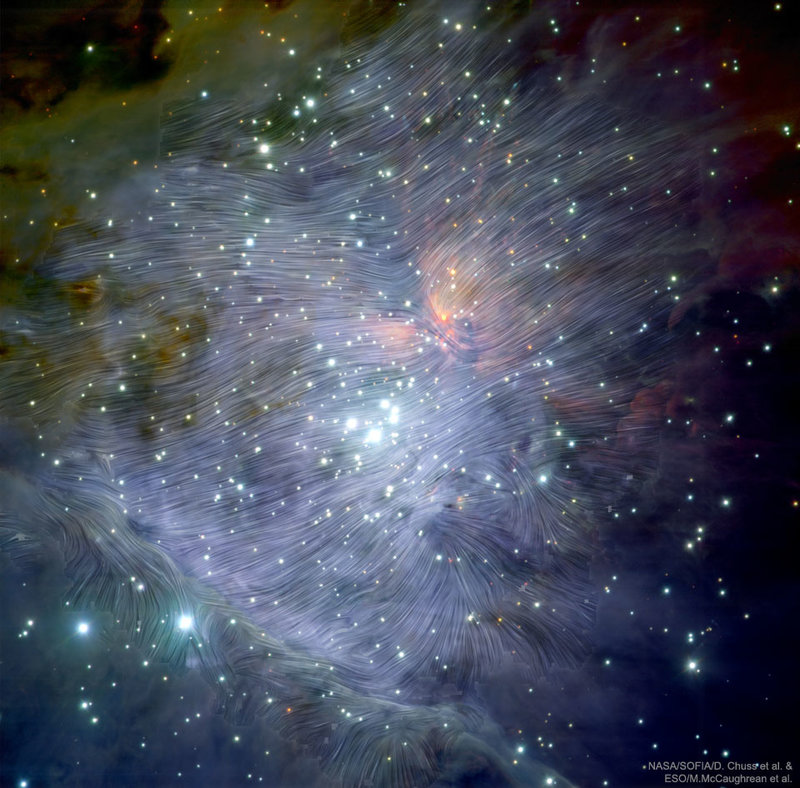
Good morning, RP. Today's picture attempts to visualize the effect of magnetic fields on star formation. The image is called "Magnetic Orion."
Astronomy Picture of the Day
Posted from apod.nasa.gov NASA
NASA Space
Space Science
 Photography
 Astronomy
Posted 7 y ago
Responses: 9

5
5
0

Good afternoon, my friend Maj William W. 'Bill' Price and thank you for posting the daily astronomy share from NASA for February 27
Thank you for mentioning me, my friends TSgt Joe C. and Maj Marty Hogan
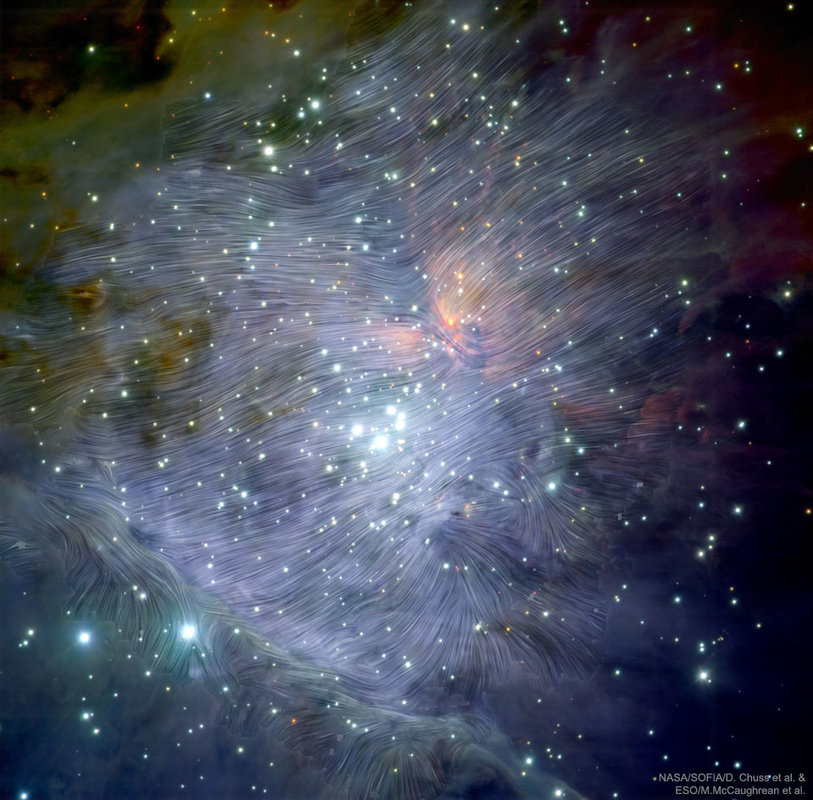
Image: 2019-02-27 Magnetic Orion_EsoSofia_960.
Background from NASA: "Explanation: Can magnetism affect how stars form? Recent analysis of Orion data from the HAWC+ instrument on the airborne SOFIA observatory indicate that, at times, it can. HAWC+ is able to measure the polarization of far-infrared light which can reveal the alignment of dust grains by expansive ambient magnetic fields. In the featured image, these magnetic fields are shown as curvy lines superposed on an infrared image of the Orion Nebula taken by a Very Large Telescope in Chile. Orion's Kleinmann-Low Nebula is visible slightly to the upper right of the image center, while bright stars of the Trapezium cluster are visible just to the lower left of center. The Orion Nebula at about l300 light years distant is the nearest major star formation region to the Sun."
FYI SSgt (Join to see) SPC Mark Huddleston Sgt Deborah Cornatzer MSG (Join to see) Robert Collet Rhonda Hanson SSG Jeffrey Leake SSG Jose M. Hernandezsanchez Sgt David G Duchesneau SFC James Shanks SPC Jordan Sutich SGT Mike Moschkin PO3 William Hetrick PO3 Lynn Spalding TSgt Chuck Mankin
Thank you for mentioning me, my friends TSgt Joe C. and Maj Marty Hogan
Image: 2019-02-27 Magnetic Orion_EsoSofia_960.
Background from NASA: "Explanation: Can magnetism affect how stars form? Recent analysis of Orion data from the HAWC+ instrument on the airborne SOFIA observatory indicate that, at times, it can. HAWC+ is able to measure the polarization of far-infrared light which can reveal the alignment of dust grains by expansive ambient magnetic fields. In the featured image, these magnetic fields are shown as curvy lines superposed on an infrared image of the Orion Nebula taken by a Very Large Telescope in Chile. Orion's Kleinmann-Low Nebula is visible slightly to the upper right of the image center, while bright stars of the Trapezium cluster are visible just to the lower left of center. The Orion Nebula at about l300 light years distant is the nearest major star formation region to the Sun."
FYI SSgt (Join to see) SPC Mark Huddleston Sgt Deborah Cornatzer MSG (Join to see) Robert Collet Rhonda Hanson SSG Jeffrey Leake SSG Jose M. Hernandezsanchez Sgt David G Duchesneau SFC James Shanks SPC Jordan Sutich SGT Mike Moschkin PO3 William Hetrick PO3 Lynn Spalding TSgt Chuck Mankin
(5)
(0)
2
2
0

Very cool astronomy share Maj William W. 'Bill' Price!
COL Mikel J. Burroughs Maj Marty Hogan SGT John " Mac " McConnell LTC Stephen F. Sgt Randy Wilber CW5 Jack Cardwell TSgt David L. Cpl (Join to see) Maj William W. 'Bill' Price CPL Dave Hoover SPC Douglas Bolton LTC Greg Henning Maj Bill Smith, Ph.D. Alan K. PO1 William "Chip" Nagel Lt Col Charlie Brown SFC Joe S. Davis Jr., MSM, DSL PO3 Phyllis Maynard PO2 Kevin Parker SP5 Mark Kuzinski
COL Mikel J. Burroughs Maj Marty Hogan SGT John " Mac " McConnell LTC Stephen F. Sgt Randy Wilber CW5 Jack Cardwell TSgt David L. Cpl (Join to see) Maj William W. 'Bill' Price CPL Dave Hoover SPC Douglas Bolton LTC Greg Henning Maj Bill Smith, Ph.D. Alan K. PO1 William "Chip" Nagel Lt Col Charlie Brown SFC Joe S. Davis Jr., MSM, DSL PO3 Phyllis Maynard PO2 Kevin Parker SP5 Mark Kuzinski
(2)
(0)
2
2
0

Read This Next


 Continue with Facebook
 Continue with Google