

16
16
0
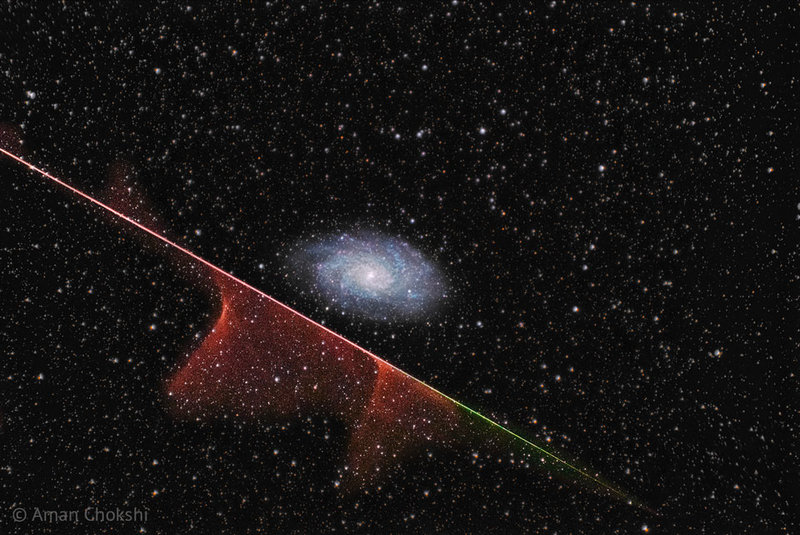
Good morning, RP. Today's image is titled "Meteor Misses Galaxy." I agree with the write-up that accompanies the picture: the astrophotographer was indeed lucky to capture both a meteor and a galaxy in a single exposure.
Astronomy Picture of the Day
Posted from apod.nasa.gov NASA
NASA Space
Space Science
 Photography
 Astronomy
Posted 7 y ago
Responses: 10

4
4
0

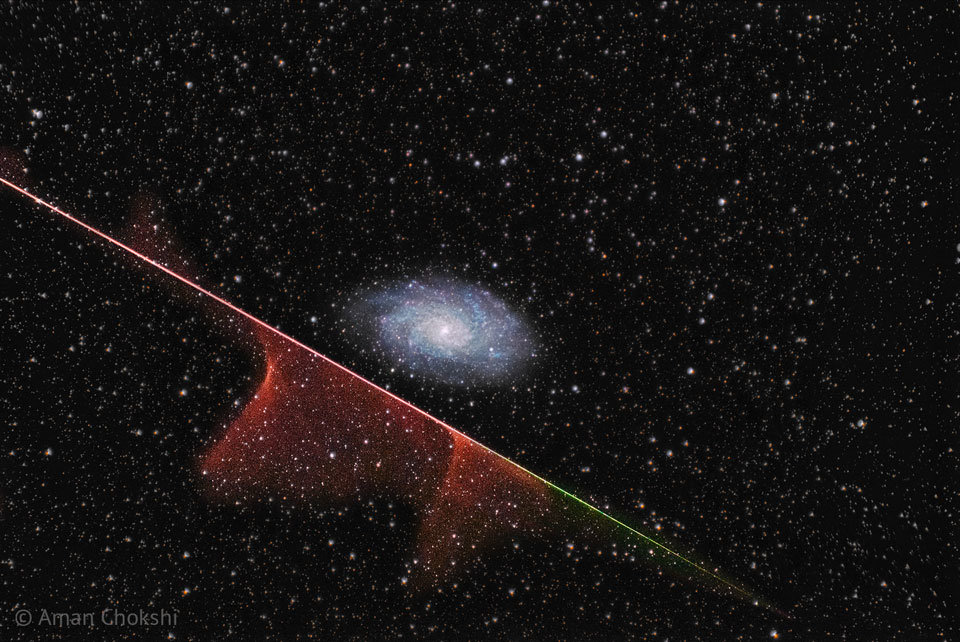
Thank you, my friend Maj William W. 'Bill' Price for posting the NASA picture of the day for April 30, 2019 entitled "Meteor Misses Galaxy." That is a humorous title IMHO. :-)
The image itself is spectacular.
Image: Meteor Misses Galaxy - Image Credit - Aman Chokshi
"Explanation: The galaxy was never in danger. For one thing, the Triangulum galaxy (M33), pictured, is much bigger than the tiny grain of rock at the head of the meteor. For another, the galaxy is much farther away -- in this instance 3 million light years as opposed to only about 0.0003 light seconds. Even so, the meteor's path took it angularly below the galaxy. Also the wind high in Earth's atmosphere blew the meteor's glowing evaporative molecule train away from the galaxy, in angular projection. Still, the astrophotographer was quite lucky to capture both a meteor and a galaxy in a single exposure -- which was subsequently added to two other images of M33 to bring up the spiral galaxy's colors. At the end, the meteor was gone in a second, but the galaxy will last billions of years."
FYI LTC Stephen C. LTC (Join to see) Lt Col John (Jack) Christensen Lt Col Charlie Brown Maj Bill Smith, Ph.D.Maj Marty Hogan SCPO Morris Ramsey SFC William Farrell SGT Mark Halmrast Sgt Randy Wilber Sgt John H. SGT Gregory Lawritson CPL Dave Hoover SPC Margaret Higgins SSgt Brian Brakke 1stSgt Eugene Harless SSG William Jones SSG Diane R.
The image itself is spectacular.
Image: Meteor Misses Galaxy - Image Credit - Aman Chokshi
"Explanation: The galaxy was never in danger. For one thing, the Triangulum galaxy (M33), pictured, is much bigger than the tiny grain of rock at the head of the meteor. For another, the galaxy is much farther away -- in this instance 3 million light years as opposed to only about 0.0003 light seconds. Even so, the meteor's path took it angularly below the galaxy. Also the wind high in Earth's atmosphere blew the meteor's glowing evaporative molecule train away from the galaxy, in angular projection. Still, the astrophotographer was quite lucky to capture both a meteor and a galaxy in a single exposure -- which was subsequently added to two other images of M33 to bring up the spiral galaxy's colors. At the end, the meteor was gone in a second, but the galaxy will last billions of years."
FYI LTC Stephen C. LTC (Join to see) Lt Col John (Jack) Christensen Lt Col Charlie Brown Maj Bill Smith, Ph.D.Maj Marty Hogan SCPO Morris Ramsey SFC William Farrell SGT Mark Halmrast Sgt Randy Wilber Sgt John H. SGT Gregory Lawritson CPL Dave Hoover SPC Margaret Higgins SSgt Brian Brakke 1stSgt Eugene Harless SSG William Jones SSG Diane R.
(4)
(0)
4
4
0

4
4
0

Read This Next


 Continue with Facebook
 Continue with Google