

19
19
0
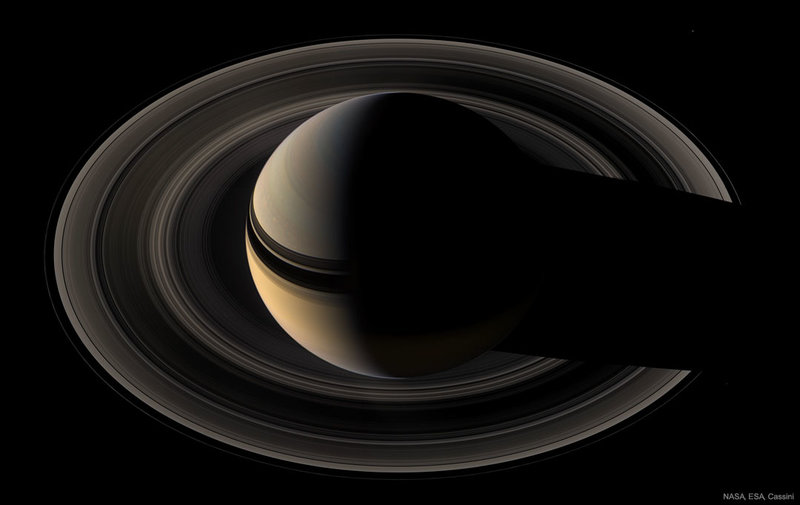
Good morning RP. Today's Astronomy Picture of the Day (APOD) is titled "Crescent Saturn." This image in natural color was taken by the robotic Cassini spacecraft in 2007. It captures Saturn's rings from the side of the ring plane opposite the Sun -- the unilluminated side -- another vista not visible from Earth. Notice the subtle colors of cloud bands, the complex shadows of the rings on the planet, and the shadow of the planet on the rings. If you zoom in on the image, you'll find the moons Mimas (2 o'clock), Janus (4 o'clock), and Pandora (8 o'clock; hint: Pandora is a shepherd moon for the outer ring). Saturn is now nearly opposite from the Sun in the Earth's sky and so can be seen in the evening starting just after sunset for the rest of the night.
Astronomy Picture of the Day
Posted from apod.nasa.gov NASA
NASA Space
Space Science
 Photography
 Astronomy
Posted >1 y ago
Responses: 6

9
9
0
Morning Maj William W. 'Bill' Price very cool and will have to look for this when I have time.
LTC Stephen F. SP5 Mark Kuzinski COL Mikel J. Burroughs SMSgt Lawrence McCarter Maj William W. 'Bill' PriceCPL Dave Hoover SSG William Jones Sgt Vance Bonds Cpl (Join to see) PO1 H Gene Lawrence Maj Robert Thornton PO3 Bob McCord SPC Douglas Bolton Lt Col Charlie Brown TSgt Joe C. PO3 Craig Phillips CW5 Jack Cardwell SFC Joe S. Davis Jr., MSM, DSL SGT Mark Anderson SPC Margaret Higgins
LTC Stephen F. SP5 Mark Kuzinski COL Mikel J. Burroughs SMSgt Lawrence McCarter Maj William W. 'Bill' PriceCPL Dave Hoover SSG William Jones Sgt Vance Bonds Cpl (Join to see) PO1 H Gene Lawrence Maj Robert Thornton PO3 Bob McCord SPC Douglas Bolton Lt Col Charlie Brown TSgt Joe C. PO3 Craig Phillips CW5 Jack Cardwell SFC Joe S. Davis Jr., MSM, DSL SGT Mark Anderson SPC Margaret Higgins
(9)
(0)
7
7
0

Will look for it in the sky IF we actually get an evening without clouds...
(7)
(0)
Maj William W. 'Bill' Price

Lt Col Charlie Brown You'll see it in the constellation Sagittarius.
http://www.nakedeyeplanets.com/saturn.htm
http://www.nakedeyeplanets.com/saturn.htm
The Position of Saturn in the Night Sky: 2014 to 2022
Star chart showing the path of Saturn through the constellations of the Southern zodiac from 2014 to 2022
(2)
(0)
4
4
0

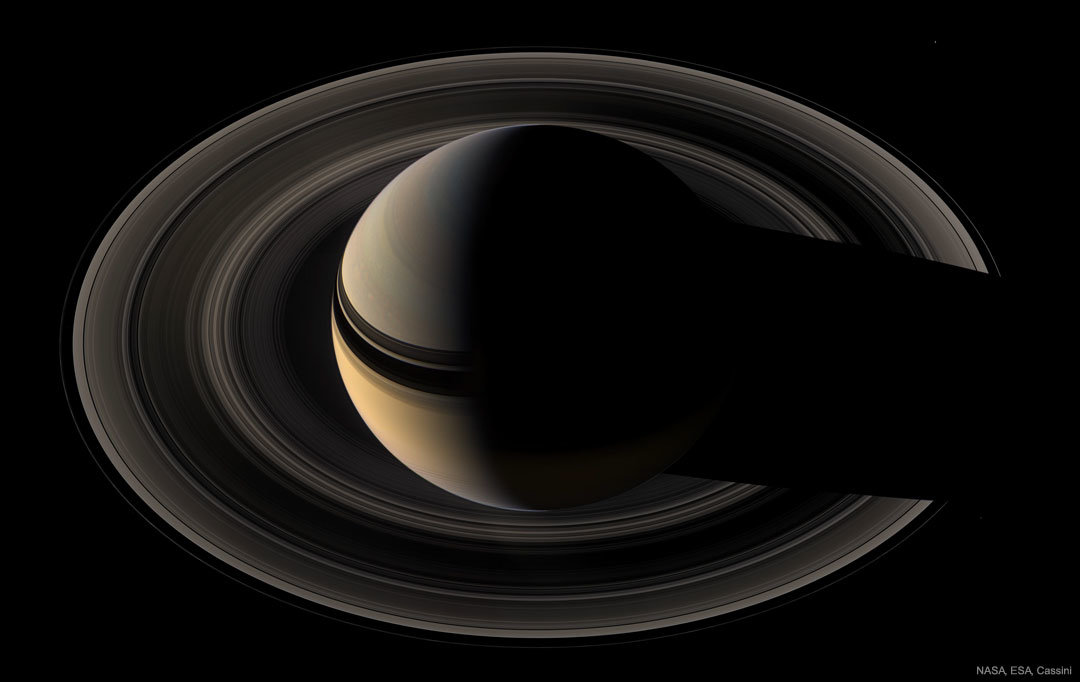
Thank you, my friend Maj William W. 'Bill' Price for posting the Astronomy Picture of the Day (APOD) for Sunday July 7, 2019 entitled "Crescent Saturn."
Image: Crescent Saturn - Image Credit - NASA, ESA, SSI, Cassini Imaging Team
"Explanation: Saturn never shows a crescent phase -- from Earth. But when viewed from beyond, the majestic giant planet can show an unfamiliar diminutive sliver. This image of crescent Saturn in natural color was taken by the robotic Cassini spacecraft in 2007. The featured image captures Saturn's majestic rings from the side of the ring plane opposite the Sun -- the unilluminated side -- another vista not visible from Earth. Pictured are many of Saturn's photogenic wonders, including the subtle colors of cloud bands, the complex shadows of the rings on the planet, and the shadow of the planet on the rings. A careful eye will find the moons Mimas (2 o'clock) and Janus (4 o'clock), but the real challenge is to find Pandora (8 o'clock). Saturn is now nearly opposite from the Sun in the Earth's sky and so can be seen in the evening starting just after sunset for the rest of the night."
Thank you, my friend Maj Marty Hogan for mentioning me.
FYI Sgt (Join to see) LTC Jeff Shearer LTC Greg Henning LTC (Join to see) LTC Wayne Brandon COL Charles Williams COL (Join to see) Col Carl Whicker SSG Donald H "Don" Bates SP5 Jeannie Carle
Image: Crescent Saturn - Image Credit - NASA, ESA, SSI, Cassini Imaging Team
"Explanation: Saturn never shows a crescent phase -- from Earth. But when viewed from beyond, the majestic giant planet can show an unfamiliar diminutive sliver. This image of crescent Saturn in natural color was taken by the robotic Cassini spacecraft in 2007. The featured image captures Saturn's majestic rings from the side of the ring plane opposite the Sun -- the unilluminated side -- another vista not visible from Earth. Pictured are many of Saturn's photogenic wonders, including the subtle colors of cloud bands, the complex shadows of the rings on the planet, and the shadow of the planet on the rings. A careful eye will find the moons Mimas (2 o'clock) and Janus (4 o'clock), but the real challenge is to find Pandora (8 o'clock). Saturn is now nearly opposite from the Sun in the Earth's sky and so can be seen in the evening starting just after sunset for the rest of the night."
Thank you, my friend Maj Marty Hogan for mentioning me.
FYI Sgt (Join to see) LTC Jeff Shearer LTC Greg Henning LTC (Join to see) LTC Wayne Brandon COL Charles Williams COL (Join to see) Col Carl Whicker SSG Donald H "Don" Bates SP5 Jeannie Carle
(4)
(0)
Read This Next


 Continue with Facebook
 Continue with Google