

16
16
0
On July 11, 1940, Marshall Henri Petain, French hero of World War One, became head of the collaborative Vichy government of France. Sentenced to death, his sentence was commuted to life. From the article:
"Henri-Philippe Pétain
Henri-Philippe Pétain (1856-1951) was a World War I French general who was later imprisoned for treason. A 58-year-old colonel at the start of battle in 1914, Pétain earned acclaim for stopping the Germans at the Battle of Verdun and assumed command of the French forces in 1917. He held a series of top military posts in subsequent years, becoming chief of state after Germany’s invasion in 1940. In his pursuit of a “National Revival,” Pétain collaborated with the Nazi regime and adopted repressive measures against Jews. Tried for his actions at the end of World War II, Pétain was sentenced to death before his sentence was commuted to life imprisonment.
Marshal Henri-Philippe Pétain endeared himself to the French nation during World War I. Beginning the war as an obscure fifty-eight-year-old colonel in command of an infantry brigade, he rose quickly in rank, assuming command of the Sixth Division in September 1914, the Thirty-third Corps in October, and the Second Army in June 1915. From the start, he distinguished himself by his meticulous attention to detail, his careful preparation, and his reliance on artillery. His talents became most apparent when his Second Army played a large role in the September 1915 offensive in Champagne. Though the French failed to break through German defensive lines, Pétain’s after-action report identified shortcomings in French methods and provided important ideas about future operations.
In February 1916, Pétain became commander of French forces at Verdun. In the terrible destruction of what the French soldiers called the “furnace,” he finally succeeded in halting the Germans. Though the French suffered huge losses, Pétain’s careful husbanding of his troops avoided even greater bloodshed. Among his innovations, he introduced the “noria” system, which rotated divisions in and out of the trenches without permitting them to become ineffective in combat. (The noria system was named after a device used to raise water from a well, which consisted of a revolving chain of buckets that filled at the bottom of the well and emptied at the top.) Despite Pétain’s success and his concern for his soldiers, General Robert Nivelle was chosen to replace General Marshal Joseph Joffre as commander of French forces; he then brought France to the edge of disaster with his ruinous offensive in April 1917. With much of the army in mutiny, Pétain replaced Nivelle in May.
In subsequent months, Pétain revived the French army by meting out a combination of rewards and punishments, including about fifty-five executions (not the hundreds that some critics have alleged). He also insisted on limited offensives in which massive amounts of artillery prepared the way for the infantry. In October Pétain launched an attack on the fortress of La Malmaison in the Chemin des Dames, near where Nivelle’s offensive had failed, and successfully seized this dominating piece of terrain. His success and his careful methods convinced French soldiers that he would not needlessly waste their lives. For the remainder of the war, Pétain remained in command of French forces, though General Ferdinand Foch leaped over him to become supreme commander of Allied forces. Other French leaders, including Foch, frequently criticized Pétain for his pessimism and caution, but he nevertheless established a particularly strong relationship with the American commander, General John J. Pershing.
Pétain had a significant influence over French forces in the interwar period, but his role has sometimes been exaggerated. Others made greater contributions in structuring and preparing French forces for the next war. Nevertheless, he played an important part in the design and placement of the Maginot line; he himself chose the best sites for its major fortresses. Later, during the mid-1930s, he served as minister of war for a brief period. As France fell before the German attack in May-June 1940 (see World War II), Pétain became premier a week before the capitulation. Subsequently naming himself the head of state in Vichy France, he headed a curious government that adopted “Work, Family, Country” as its slogan and sought a “National Revival.” In April 1942, at the age of eighty-five, he passed real power to Pierre Laval, who pursued an openly collaborationist policy with the Germans.
Though Pétain later claimed that he had been playing a “double game,” the harshest evidence of his having accepted German influence is his government’s anti-Jewish measures. Vichy provided limited protection to native French Jews, but it adopted repressive measures on its own from 1940 to 1942, including property confiscation, dismissals from government service, and exclusions from professions and higher education. Though Jews had a better life in France than they experienced in other Nazi-occupied or Nazi-controlled countries, the Vichy government interned thousands of foreign Jews under primitive conditions, and as many as three thousand Jews may have died in camps under French control. The Vichy regime also rounded up foreign Jews in the unoccupied zone and handed them over to the Germans. The “savior of Verdun” cannot escape blame for these actions.
Tried in France after the war, Pétain was found guilty and condemned to death. After Charles de Gaulle commuted the sentence to life imprisonment, he was confined on the [Icirc]le d’Yeu, where he died on July 23, 1951, at the age of ninety-six. Despite his wish to be buried among the fallen of Verdun, he remains buried on the small island off the coast of Brittany. His many contributions in World War I remain overshadowed by his actions in World War II.
The Reader’s Companion to Military History. Edited by Robert Cowley and Geoffrey Parker. Copyright © 1996 by Houghton Mifflin Harcourt Publishing Company. All rights reserved."
"Henri-Philippe Pétain
Henri-Philippe Pétain (1856-1951) was a World War I French general who was later imprisoned for treason. A 58-year-old colonel at the start of battle in 1914, Pétain earned acclaim for stopping the Germans at the Battle of Verdun and assumed command of the French forces in 1917. He held a series of top military posts in subsequent years, becoming chief of state after Germany’s invasion in 1940. In his pursuit of a “National Revival,” Pétain collaborated with the Nazi regime and adopted repressive measures against Jews. Tried for his actions at the end of World War II, Pétain was sentenced to death before his sentence was commuted to life imprisonment.
Marshal Henri-Philippe Pétain endeared himself to the French nation during World War I. Beginning the war as an obscure fifty-eight-year-old colonel in command of an infantry brigade, he rose quickly in rank, assuming command of the Sixth Division in September 1914, the Thirty-third Corps in October, and the Second Army in June 1915. From the start, he distinguished himself by his meticulous attention to detail, his careful preparation, and his reliance on artillery. His talents became most apparent when his Second Army played a large role in the September 1915 offensive in Champagne. Though the French failed to break through German defensive lines, Pétain’s after-action report identified shortcomings in French methods and provided important ideas about future operations.
In February 1916, Pétain became commander of French forces at Verdun. In the terrible destruction of what the French soldiers called the “furnace,” he finally succeeded in halting the Germans. Though the French suffered huge losses, Pétain’s careful husbanding of his troops avoided even greater bloodshed. Among his innovations, he introduced the “noria” system, which rotated divisions in and out of the trenches without permitting them to become ineffective in combat. (The noria system was named after a device used to raise water from a well, which consisted of a revolving chain of buckets that filled at the bottom of the well and emptied at the top.) Despite Pétain’s success and his concern for his soldiers, General Robert Nivelle was chosen to replace General Marshal Joseph Joffre as commander of French forces; he then brought France to the edge of disaster with his ruinous offensive in April 1917. With much of the army in mutiny, Pétain replaced Nivelle in May.
In subsequent months, Pétain revived the French army by meting out a combination of rewards and punishments, including about fifty-five executions (not the hundreds that some critics have alleged). He also insisted on limited offensives in which massive amounts of artillery prepared the way for the infantry. In October Pétain launched an attack on the fortress of La Malmaison in the Chemin des Dames, near where Nivelle’s offensive had failed, and successfully seized this dominating piece of terrain. His success and his careful methods convinced French soldiers that he would not needlessly waste their lives. For the remainder of the war, Pétain remained in command of French forces, though General Ferdinand Foch leaped over him to become supreme commander of Allied forces. Other French leaders, including Foch, frequently criticized Pétain for his pessimism and caution, but he nevertheless established a particularly strong relationship with the American commander, General John J. Pershing.
Pétain had a significant influence over French forces in the interwar period, but his role has sometimes been exaggerated. Others made greater contributions in structuring and preparing French forces for the next war. Nevertheless, he played an important part in the design and placement of the Maginot line; he himself chose the best sites for its major fortresses. Later, during the mid-1930s, he served as minister of war for a brief period. As France fell before the German attack in May-June 1940 (see World War II), Pétain became premier a week before the capitulation. Subsequently naming himself the head of state in Vichy France, he headed a curious government that adopted “Work, Family, Country” as its slogan and sought a “National Revival.” In April 1942, at the age of eighty-five, he passed real power to Pierre Laval, who pursued an openly collaborationist policy with the Germans.
Though Pétain later claimed that he had been playing a “double game,” the harshest evidence of his having accepted German influence is his government’s anti-Jewish measures. Vichy provided limited protection to native French Jews, but it adopted repressive measures on its own from 1940 to 1942, including property confiscation, dismissals from government service, and exclusions from professions and higher education. Though Jews had a better life in France than they experienced in other Nazi-occupied or Nazi-controlled countries, the Vichy government interned thousands of foreign Jews under primitive conditions, and as many as three thousand Jews may have died in camps under French control. The Vichy regime also rounded up foreign Jews in the unoccupied zone and handed them over to the Germans. The “savior of Verdun” cannot escape blame for these actions.
Tried in France after the war, Pétain was found guilty and condemned to death. After Charles de Gaulle commuted the sentence to life imprisonment, he was confined on the [Icirc]le d’Yeu, where he died on July 23, 1951, at the age of ninety-six. Despite his wish to be buried among the fallen of Verdun, he remains buried on the small island off the coast of Brittany. His many contributions in World War I remain overshadowed by his actions in World War II.
The Reader’s Companion to Military History. Edited by Robert Cowley and Geoffrey Parker. Copyright © 1996 by Houghton Mifflin Harcourt Publishing Company. All rights reserved."
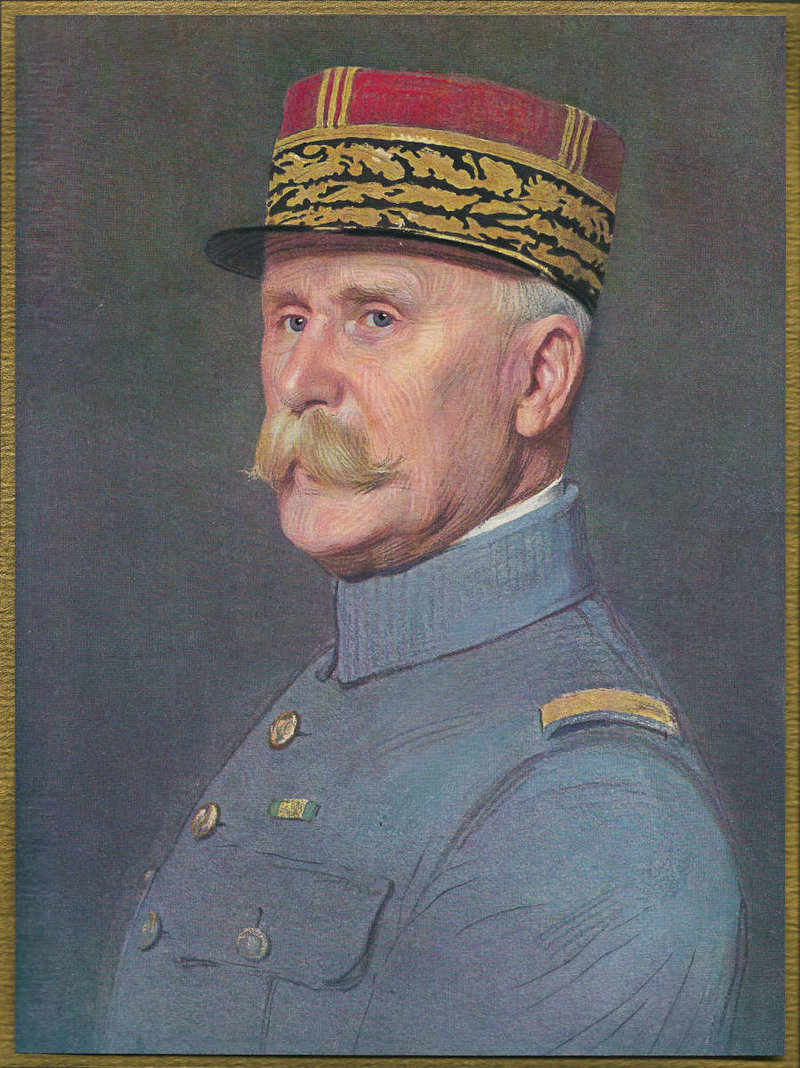
Henri-Philippe Pétain
Posted from history.com WWI
WWI WWII World War Two
 World History
 Military History
 Treason
Posted >1 y ago
Responses: 7

4
4
0


Petain: The Pessimistic Patriot
Prof John Derry talks about Philippe Pétain, the French general who is widely acknowledged as having saved the French Army in 1917. Petain was sidelined in 1...
Thank you, my friend SGT (Join to see) for reminding us that on July 11, 1940, Marshall Philippe Henri Petain became head of the collaborative Vichy government of France.
Petain: The Pessimistic Patriot
"Prof John Derry talks about Philippe Pétain, the French general who is widely acknowledged as having saved the French Army in 1917. Petain was sidelined in 1918, and in 1940 surrendered to the Nazis. Is his reputation deserved or was he a 'pessimistic patriot'?"
https://www.youtube.com/watch?v=uIUiTkrJI68
Images
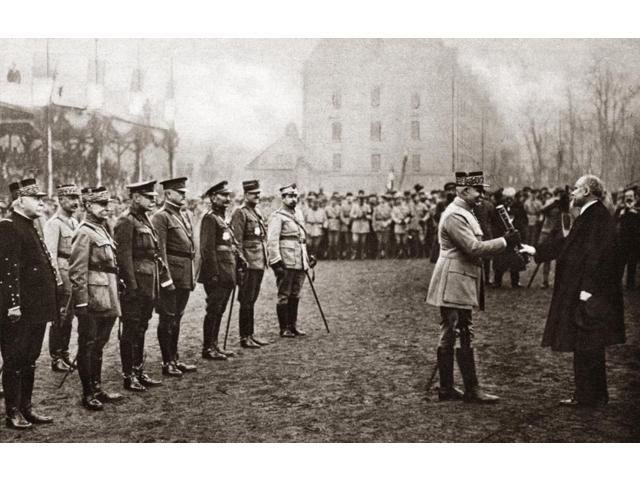
1. 1918 General Henri Petain being presented with the Marshal's Baton.
2. October 24th 1940 at Montoire, Leader of Vichy France, Marshal Philippe Henri Pétain meeting German leader Adolf Hitler.
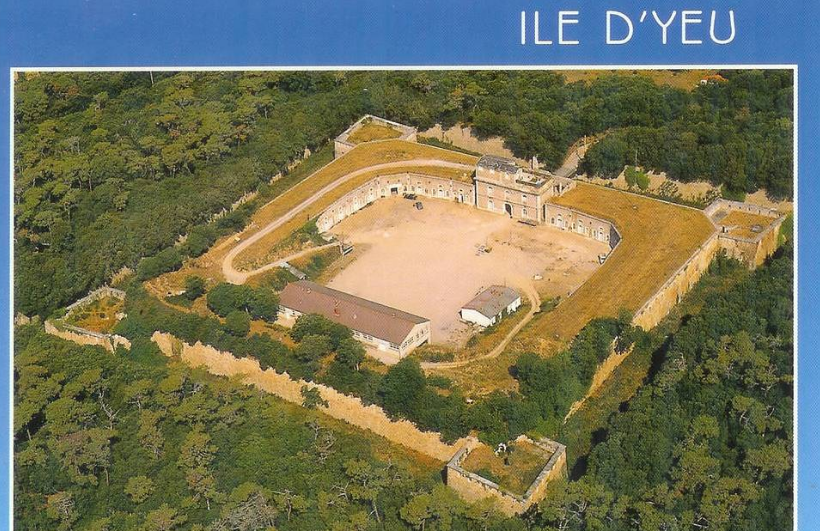
3. Le Fort de Pierre-Levée holding celebrated prisoner Marshall Philippe Henri Petain (Yoann Roignant).
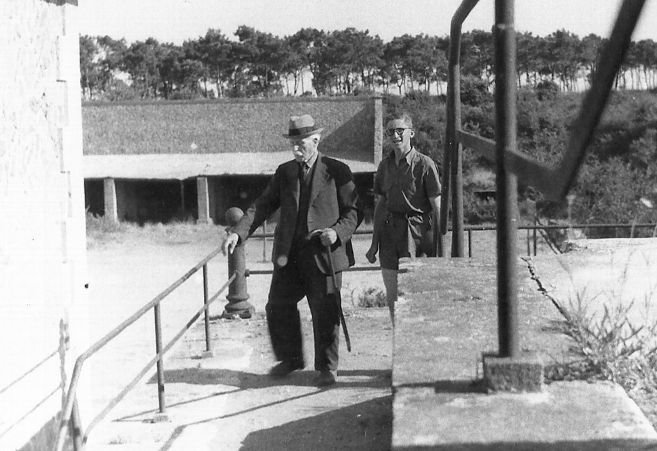
4. 1949 Marshall Philippe Henri Petain accompanied by his doctor Albert Massonie Fort de Pierre Levée, on the Île d'Yeu.jpg
Background from
Three sources:
[1] & [2] spartacus-educational.com/FWWpetain.htm
[3] bbc.co.uk/history/historic_figures/petain_philippe.shtml
[4] thebiography.us/en/petain-henri-philippe-benomi-omer
"Henri-Philippe Petain was born in Cauch-a-la-Tour in 1856. He was born in Couchy-à-la-Tour in 1856, into a family of peasants." [4]
He completed primary studies [and] choose the military career and enters the Military Academy.
"He joined the French Army in 1876 and attending the St Cyr Military School and spent many years as an infantry officer and an army instructor. After studying the Russo-Japanese War (1904-05)
Petain became convinced that the increased fire-power of modern weapons strongly favoured the defensive. Others in the French Army, for example, Ferdinand Foch, believed the opposite to be true.
On the outbreak of the First World War Petain was due to retire from the army. Instead he was promoted to brigadier and took part in the Artois Offensive. In 1915 Joseph Joffre sent Petain to command the French troops at Verdun. Afterwards Petain was praised for his artillery-based defensive operations and his organisation of manpower resources.
After the disastrous Nivelle Offensive in the spring of 1917, the French Army suffered widespread mutinies on the Western Front. Petain replaced Robert Nivelle as Commander-in-Chief. This was a popular choice as Petain, unlike Nivelle, had a reputation for having a deep concern for the lives of his soldiers. By improving the living conditions of the soldiers at the front and restricting the French Army to defensive operations, Petain gradually improved the morale of his troops." [1]
"After a number of World War One commands, in 1916, Pétain was ordered to stop the massive German attack on the city of Verdun. He reorganised the front lines and transport systems and was able to inspire his troops, turning a near-hopeless situation into a successful defence. He became a popular hero and replaced General Robert Nivelle as commander-in-chief of the French army. Pétain then successfully re-established discipline after a series of mutinies by explaining his intentions to the soldiers personally and improving their living conditions. In November 1918, he was made a marshal of France.
In 1934, Pétain was appointed minister of war, and then secretary of state in the following year. In 1939, he was appointed French ambassador to Spain. In May 1940, with France under attack from Germany, Pétain was appointed vice premier. In June he asked for an armistice, upon which he was appointed 'chief of state', enjoying almost absolute powers. The armistice gave the Germans control over the north and west of France, including Paris, but left the remainder as a separate regime under Pétain, with its capital at Vichy. Officially neutral, in practice the regime collaborated closely with Germany, and brought in its own anti-Semitic legislation."
In December 1940, Pétain dismissed his vice-premier, Pierre Laval, for his policy of close Franco-German collaboration. But Laval's successors were unacceptable to the Germans and Laval was restored. In November 1942, in response to allied landings in North Africa, the Germans invaded the unoccupied zone of France. Vichy France remained nominally in existence, but Pétain became nothing more than a figurehead. In the summer of 1944, after the allied landings in France, Pétain was taken to Germany." [3]
Henri-Philippe Petain was tried and sentenced to death for collaborating with Germany on August 15, 1945, with the loss of all civil rights and confiscation of their property. However, the Court itself, given his advanced age, proposed to replace him the death penalty by the imprisonment.
General De Gaulle, head of the provisional Government, accepted the proposal that his death sentence to be commuted to life imprisonment and Pétain was transferred to the fortress of Portalet, located in the Pyrenees, to serve his sentence. Later, he was taken to Fort de Pierre Levée, on the Île d'Yeu off the Atlantic coast where Henri-Philippe Petain died on 23 July 1951.
[2] Background on meeting between Marshall Henri-Philippe Petain, General Weygand and Winston Churchill
"Paul Reynaud received us, firm and courteous despite the strain. We soon got down to discussion across the dining-room table; Petain, Reynaud, Weygand facing Churchill, Dill and me, with interpreters. General Georges joined us later. We talked for almost three hours, the discussion hardly advancing matters. The speakers were polite and correct, but although at that time the Maginot Line had not been attacked, it was soon evident that our French hosts had no hope.
Early in our talks, Weygand described the military situation, explaining how he had attempted to block a number of gaps in the line. He believed he had succeeded and, for the moment, the line held, but he had no more reserves. Somebody asked what would happen if another breach were made. 'No further military action will then be possible,' Weygand replied. Reynaud at once intervened sharply: 'That would be a political decision, Monsieur Ie General.' Weygand bowed and said: 'Certainly.' Georges told us that the French had altogether only some one hundred and ninety-five fighter aircraft left on the northern front.
Despite all the difficulties, our dinner, though simple, was admirably cooked and served. Reynaud presided, with Churchill on his right, Weygand sat opposite and I on his right. As we were taking our places, a tall and somewhat angular figure in uniform walked by on my side of the table. This was General Charles de Gaulle, Under-Secretary for Defence, whom I had met only once before. Weygand invited him pleasantly to take a place on his left. De Gaulle replied, curtly as I thought, that he had instructions to sit next to the British Prime Minister. Weygand flushed up, but made no comment, and so the meal began.
I had Marshal Petain on my other side. Conversation was not easy. His refrain was the destruction of France and the daily devastation of her cities, of which he mentioned several by name. I was sympathetic, but added that there were even worse fates than the destruction of cities. Petain rejoined that it was all very well for Britain to say that, we did not have the war in our country. When I said that we might have, I received an incredulous grunt in reply.
With General Weygand my talk was perfectly friendly and consisted mainly of a discussion about our available forces in Britain and what we were doing to speed their training. I had little cheer to give him. Weygand was something of an enigma. He had a famous reputation, crowned by his victory with Pilsudski over the Bolshevik forces in 1920. I had met him on several occasions, most recently early that year in the Middle East, and always found him friendly, quick and receptive, a modest man carrying his fame without affectation or conceit. He worked well with General Wavell, for the two men understood each other. I was glad when I heard that he had been called back to France to take over the supreme command. He achieved little, but probably no man could. At this stage, though always correct and courteous, he gave the impression of resigned fatalism. He was certainly not a man to fight the last desperate comer."
FYI COL Mikel J. Burroughs LTC Greg Henning MSgt Robert C Aldi CMSgt (Join to see) PVT Mark Zehner Lt Col Charlie Brown] SGT John " Mac " McConnell SP5 Mark Kuzinski PO1 H Gene Lawrence PO2 Kevin Parker PO3 Bob McCord LTC Jeff Shearer SGT Philip Roncari PO3 Phyllis Maynard CWO3 Dennis M. SFC William Farrell TSgt Joe C. SGT Carl Blas
Petain: The Pessimistic Patriot
"Prof John Derry talks about Philippe Pétain, the French general who is widely acknowledged as having saved the French Army in 1917. Petain was sidelined in 1918, and in 1940 surrendered to the Nazis. Is his reputation deserved or was he a 'pessimistic patriot'?"
https://www.youtube.com/watch?v=uIUiTkrJI68
Images
1. 1918 General Henri Petain being presented with the Marshal's Baton.
2. October 24th 1940 at Montoire, Leader of Vichy France, Marshal Philippe Henri Pétain meeting German leader Adolf Hitler.
3. Le Fort de Pierre-Levée holding celebrated prisoner Marshall Philippe Henri Petain (Yoann Roignant).
4. 1949 Marshall Philippe Henri Petain accompanied by his doctor Albert Massonie Fort de Pierre Levée, on the Île d'Yeu.jpg
Background from
Three sources:
[1] & [2] spartacus-educational.com/FWWpetain.htm
[3] bbc.co.uk/history/historic_figures/petain_philippe.shtml
[4] thebiography.us/en/petain-henri-philippe-benomi-omer
"Henri-Philippe Petain was born in Cauch-a-la-Tour in 1856. He was born in Couchy-à-la-Tour in 1856, into a family of peasants." [4]
He completed primary studies [and] choose the military career and enters the Military Academy.
"He joined the French Army in 1876 and attending the St Cyr Military School and spent many years as an infantry officer and an army instructor. After studying the Russo-Japanese War (1904-05)
Petain became convinced that the increased fire-power of modern weapons strongly favoured the defensive. Others in the French Army, for example, Ferdinand Foch, believed the opposite to be true.
On the outbreak of the First World War Petain was due to retire from the army. Instead he was promoted to brigadier and took part in the Artois Offensive. In 1915 Joseph Joffre sent Petain to command the French troops at Verdun. Afterwards Petain was praised for his artillery-based defensive operations and his organisation of manpower resources.
After the disastrous Nivelle Offensive in the spring of 1917, the French Army suffered widespread mutinies on the Western Front. Petain replaced Robert Nivelle as Commander-in-Chief. This was a popular choice as Petain, unlike Nivelle, had a reputation for having a deep concern for the lives of his soldiers. By improving the living conditions of the soldiers at the front and restricting the French Army to defensive operations, Petain gradually improved the morale of his troops." [1]
"After a number of World War One commands, in 1916, Pétain was ordered to stop the massive German attack on the city of Verdun. He reorganised the front lines and transport systems and was able to inspire his troops, turning a near-hopeless situation into a successful defence. He became a popular hero and replaced General Robert Nivelle as commander-in-chief of the French army. Pétain then successfully re-established discipline after a series of mutinies by explaining his intentions to the soldiers personally and improving their living conditions. In November 1918, he was made a marshal of France.
In 1934, Pétain was appointed minister of war, and then secretary of state in the following year. In 1939, he was appointed French ambassador to Spain. In May 1940, with France under attack from Germany, Pétain was appointed vice premier. In June he asked for an armistice, upon which he was appointed 'chief of state', enjoying almost absolute powers. The armistice gave the Germans control over the north and west of France, including Paris, but left the remainder as a separate regime under Pétain, with its capital at Vichy. Officially neutral, in practice the regime collaborated closely with Germany, and brought in its own anti-Semitic legislation."
In December 1940, Pétain dismissed his vice-premier, Pierre Laval, for his policy of close Franco-German collaboration. But Laval's successors were unacceptable to the Germans and Laval was restored. In November 1942, in response to allied landings in North Africa, the Germans invaded the unoccupied zone of France. Vichy France remained nominally in existence, but Pétain became nothing more than a figurehead. In the summer of 1944, after the allied landings in France, Pétain was taken to Germany." [3]
Henri-Philippe Petain was tried and sentenced to death for collaborating with Germany on August 15, 1945, with the loss of all civil rights and confiscation of their property. However, the Court itself, given his advanced age, proposed to replace him the death penalty by the imprisonment.
General De Gaulle, head of the provisional Government, accepted the proposal that his death sentence to be commuted to life imprisonment and Pétain was transferred to the fortress of Portalet, located in the Pyrenees, to serve his sentence. Later, he was taken to Fort de Pierre Levée, on the Île d'Yeu off the Atlantic coast where Henri-Philippe Petain died on 23 July 1951.
[2] Background on meeting between Marshall Henri-Philippe Petain, General Weygand and Winston Churchill
"Paul Reynaud received us, firm and courteous despite the strain. We soon got down to discussion across the dining-room table; Petain, Reynaud, Weygand facing Churchill, Dill and me, with interpreters. General Georges joined us later. We talked for almost three hours, the discussion hardly advancing matters. The speakers were polite and correct, but although at that time the Maginot Line had not been attacked, it was soon evident that our French hosts had no hope.
Early in our talks, Weygand described the military situation, explaining how he had attempted to block a number of gaps in the line. He believed he had succeeded and, for the moment, the line held, but he had no more reserves. Somebody asked what would happen if another breach were made. 'No further military action will then be possible,' Weygand replied. Reynaud at once intervened sharply: 'That would be a political decision, Monsieur Ie General.' Weygand bowed and said: 'Certainly.' Georges told us that the French had altogether only some one hundred and ninety-five fighter aircraft left on the northern front.
Despite all the difficulties, our dinner, though simple, was admirably cooked and served. Reynaud presided, with Churchill on his right, Weygand sat opposite and I on his right. As we were taking our places, a tall and somewhat angular figure in uniform walked by on my side of the table. This was General Charles de Gaulle, Under-Secretary for Defence, whom I had met only once before. Weygand invited him pleasantly to take a place on his left. De Gaulle replied, curtly as I thought, that he had instructions to sit next to the British Prime Minister. Weygand flushed up, but made no comment, and so the meal began.
I had Marshal Petain on my other side. Conversation was not easy. His refrain was the destruction of France and the daily devastation of her cities, of which he mentioned several by name. I was sympathetic, but added that there were even worse fates than the destruction of cities. Petain rejoined that it was all very well for Britain to say that, we did not have the war in our country. When I said that we might have, I received an incredulous grunt in reply.
With General Weygand my talk was perfectly friendly and consisted mainly of a discussion about our available forces in Britain and what we were doing to speed their training. I had little cheer to give him. Weygand was something of an enigma. He had a famous reputation, crowned by his victory with Pilsudski over the Bolshevik forces in 1920. I had met him on several occasions, most recently early that year in the Middle East, and always found him friendly, quick and receptive, a modest man carrying his fame without affectation or conceit. He worked well with General Wavell, for the two men understood each other. I was glad when I heard that he had been called back to France to take over the supreme command. He achieved little, but probably no man could. At this stage, though always correct and courteous, he gave the impression of resigned fatalism. He was certainly not a man to fight the last desperate comer."
FYI COL Mikel J. Burroughs LTC Greg Henning MSgt Robert C Aldi CMSgt (Join to see) PVT Mark Zehner Lt Col Charlie Brown] SGT John " Mac " McConnell SP5 Mark Kuzinski PO1 H Gene Lawrence PO2 Kevin Parker PO3 Bob McCord LTC Jeff Shearer SGT Philip Roncari PO3 Phyllis Maynard CWO3 Dennis M. SFC William Farrell TSgt Joe C. SGT Carl Blas
(4)
(0)
LTC Stephen F.
FYI LTC Wayne Brandon LTC (Join to see) Lt Col John (Jack) Christensen Maj Bill Smith, Ph.D. Maj Robert Thornton CPT Scott Sharon SSG William Jones SSG Donald H "Don" Bates PO3 William Hetrick PO3 Lynn Spalding SPC Mark Huddleston SGT Rick Colburn CPL Dave Hoover SPC Margaret Higgins SSgt Brian Brakke SP5 Jeannie Carle Maj Marty Hogan SCPO Morris Ramsey Sgt Albert Castro
(2)
(0)
3
3
0


Read This Next


 Continue with Facebook
 Continue with Google