


12
12
0
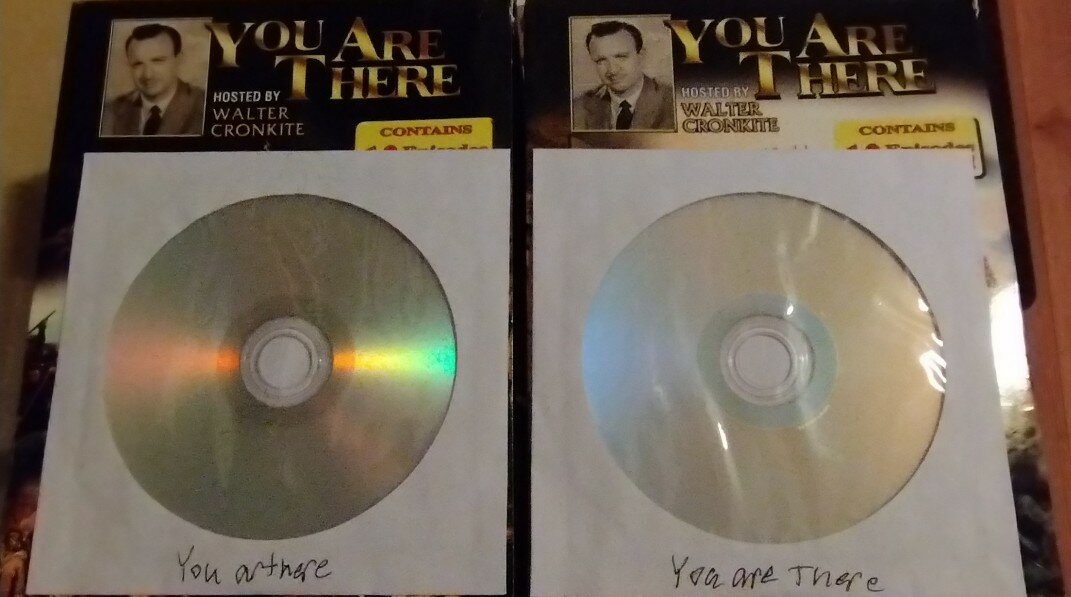
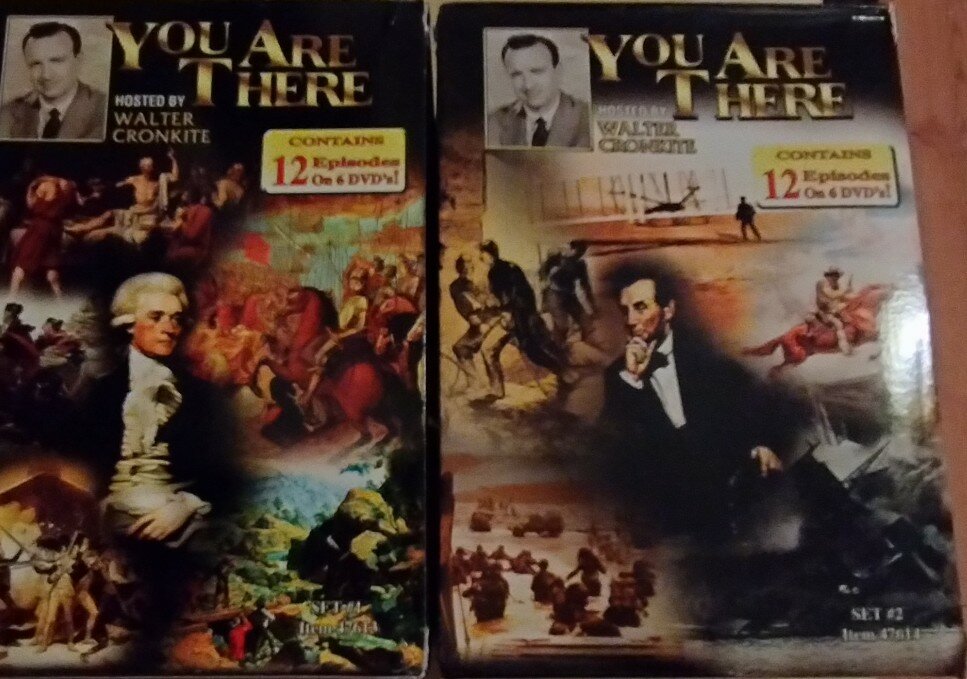
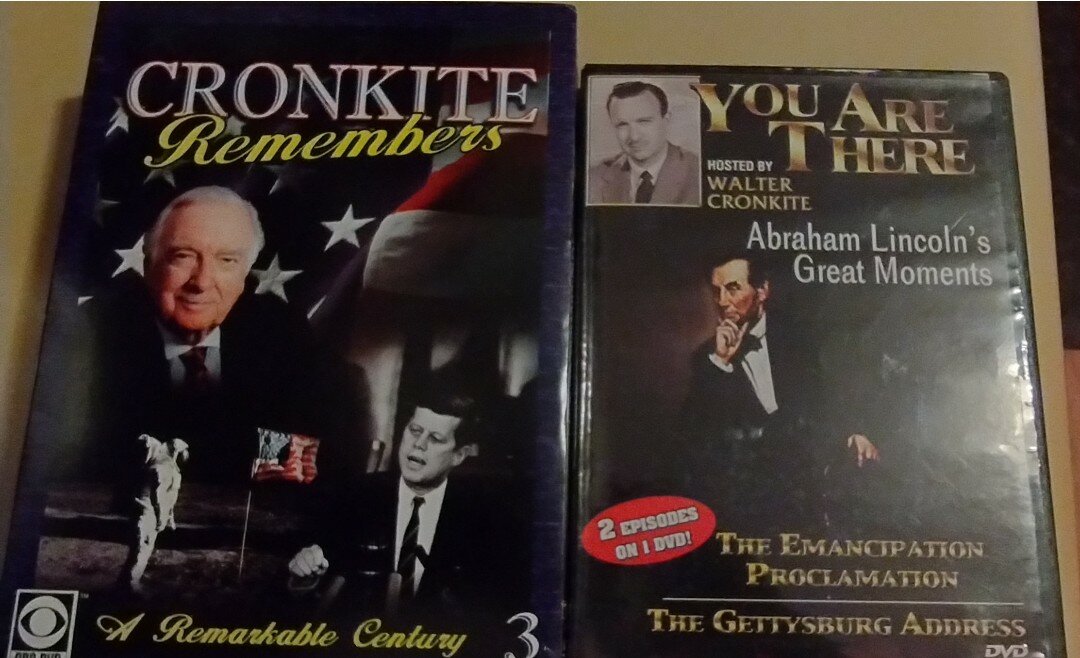
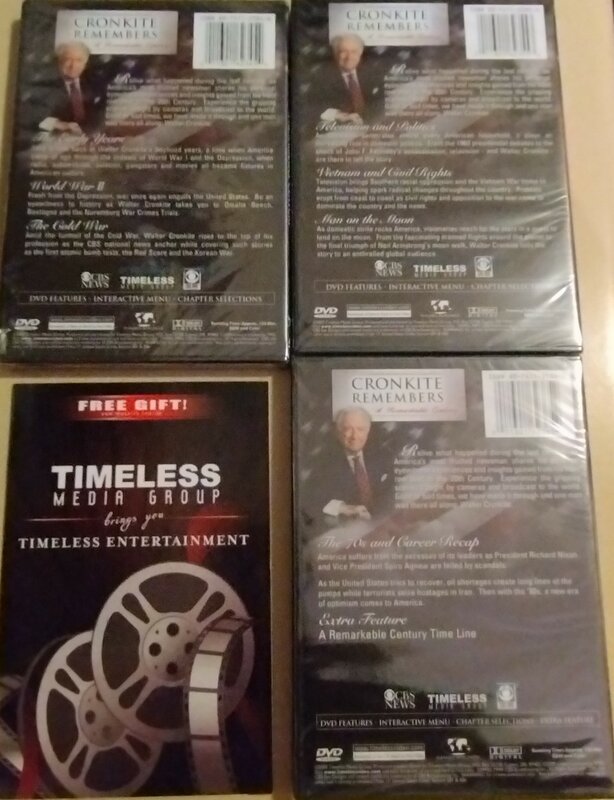
@sgt kevin Hughes I made a post about Walter Cronkite's television series "You Are There". It was difficult to find them on DVD. Finally, I found Sets 1 and 2. Each DVD has 2 episodes, so I have 24 DVD episodes. With further research, I found an MP3 DVD version with 84 episodes. Because they were so difficult to find, I suspect I have treasures of American History produced by A Son of America. In addition, I found "Walter Cronkite Remembers". He discusses his career journalism during some of America's most important events.
 American History
 United States
Posted 1 d ago
Responses: 5

6
6
0

I lost respect for Walter Cronkite, and I'll explain why. His trip occurred after the initial phase and major surprise attacks of the Tet Offensive, but while some fighting from it was still ongoing (particularly in places like Hue, where battles continued into March). The Tet Offensive began on January 30, 1968 (Tet lunar new year truce ), with coordinated attacks across South Vietnam, shocking U.S. officials and the public despite eventual military setbacks for the communists.
Vietnam War analyses describe this as a "TWO-WEEK fact-finding trip" (or sometimes phrased as "over two weeks") to assess the situation on the ground. Cronkite's visit took place in mid-to-late February 1968, prompted by the offensive's impact—he reportedly reacted strongly to early reports and went to see for himself, interviewing officials, soldiers, and observing sites like Hue, Khe Sanh, and Saigon.
He returned in time to prepare and air his special CBS News report, "Report from Vietnam: Who, What, When, Where, Why?" on February 27, 1968, where he delivered the famous editorial concluding the U.S. was "mired in stalemate" and should negotiate an exit. The public took it to mean we were losing the war, and North Vietnam used his statements in propaganda.
The timing is key: The offensive's opening assaults were in late January/early February, but its effects (devastation, ongoing combat in some areas, and the psychological blow) were still fresh and visible during Cronkite's time there.
What was never mentioned or followed up with additional reporting by Cronkite.
The USA offensive resulting from the surprise Tet attack put the communists "on their heels" militarily, with many historians agreeing that Tet was a tactical defeat for Hanoi, as it failed to spark widespread uprisings or ARVN defections. NVA leaders later wrote that they didn't understand why the USA did not continue their advantage, as the NVA understood they lost the war.
However, the U.S. did not capitalize on this momentum to "finish the fight" and pursue a decisive victory for several interconnected reasons, primarily political and strategic rather than purely military.
Graphic media coverage, including images of urban combat and executions, fueled anti-war sentiment, leading to a sharp decline in support for escalation. Walter Cronkite's famous February 27, 1968, broadcast, where he declared the war a "stalemate" and called for negotiations, exemplified this shift and reportedly influenced President Lyndon B. Johnson to reassess.
In hindsight, some argue that the U.S. could have "won" by exploiting the aftermath of Tet through invasion or sustained pressure, but geopolitical realities and waning national will made this improbable. Instead, the war dragged on under Nixon's "Vietnamization" policy, with U.S. withdrawal by 1973, leading to Saigon's fall in 1975.
Tet thus represented a turning point where military success was overshadowed by political defeat.
People like Walter Cronkite, Jane Fonda (Hanoi Jane), and John Kerry were instrumental in assisting the NVA in their successful propaganda war. - I have zero respect for these people.
PO3 Phyllis Maynard Lt Col Charlie Brown LTC Trent Klug SMSgt Lawrence McCarter CPL Douglas Chrysler Cpl Vic Burk SGT Kevin Hughes
Vietnam War analyses describe this as a "TWO-WEEK fact-finding trip" (or sometimes phrased as "over two weeks") to assess the situation on the ground. Cronkite's visit took place in mid-to-late February 1968, prompted by the offensive's impact—he reportedly reacted strongly to early reports and went to see for himself, interviewing officials, soldiers, and observing sites like Hue, Khe Sanh, and Saigon.
He returned in time to prepare and air his special CBS News report, "Report from Vietnam: Who, What, When, Where, Why?" on February 27, 1968, where he delivered the famous editorial concluding the U.S. was "mired in stalemate" and should negotiate an exit. The public took it to mean we were losing the war, and North Vietnam used his statements in propaganda.
The timing is key: The offensive's opening assaults were in late January/early February, but its effects (devastation, ongoing combat in some areas, and the psychological blow) were still fresh and visible during Cronkite's time there.
What was never mentioned or followed up with additional reporting by Cronkite.
The USA offensive resulting from the surprise Tet attack put the communists "on their heels" militarily, with many historians agreeing that Tet was a tactical defeat for Hanoi, as it failed to spark widespread uprisings or ARVN defections. NVA leaders later wrote that they didn't understand why the USA did not continue their advantage, as the NVA understood they lost the war.
However, the U.S. did not capitalize on this momentum to "finish the fight" and pursue a decisive victory for several interconnected reasons, primarily political and strategic rather than purely military.
Graphic media coverage, including images of urban combat and executions, fueled anti-war sentiment, leading to a sharp decline in support for escalation. Walter Cronkite's famous February 27, 1968, broadcast, where he declared the war a "stalemate" and called for negotiations, exemplified this shift and reportedly influenced President Lyndon B. Johnson to reassess.
In hindsight, some argue that the U.S. could have "won" by exploiting the aftermath of Tet through invasion or sustained pressure, but geopolitical realities and waning national will made this improbable. Instead, the war dragged on under Nixon's "Vietnamization" policy, with U.S. withdrawal by 1973, leading to Saigon's fall in 1975.
Tet thus represented a turning point where military success was overshadowed by political defeat.
People like Walter Cronkite, Jane Fonda (Hanoi Jane), and John Kerry were instrumental in assisting the NVA in their successful propaganda war. - I have zero respect for these people.
PO3 Phyllis Maynard Lt Col Charlie Brown LTC Trent Klug SMSgt Lawrence McCarter CPL Douglas Chrysler Cpl Vic Burk SGT Kevin Hughes
(6)
(0)
SPC Jeff Daley, PhD
SGT Kevin Hughes - The repetative offensives that took place at the cost of our warriors were driven from the top. While the specific orders to charge up a hill were given by field commanders (like Lt. Col. Weldon Honeycutt at Hamburger Hill), they were operating within a strategic framework built by McNamara and the Joint Chiefs. This framework prioritized attrition over pacification, meaning lives were spent to "verify" enemy presence and lethality rather than to secure the safety of the South Vietnamese population.
Robert McNamara, as Secretary of Defense (1961–1968), was the primary architect of the "technocratic" approach to the war. While he did not issue specific tactical orders to "take Hill X," he was deeply complicit in the systemic failures that led to those orders:
The "Whiz Kid" Metrics: McNamara applied corporate statistical analysis to the battlefield. He demanded "quantitative measurements" of progress, which solidified the body count as the primary gauge of success. This forced commanders in the field to seek out high-casualty engagements (like hill battles) to satisfy the data requirements of the Pentagon.
The Strategy of Escalation: McNamara pushed for the "Flexible Response" and the massive troop buildup that placed hundreds of thousands of draftees into these attritional environments.
Private Doubt vs. Public Certainty: Historical records and the Pentagon Papers reveal that McNamara began to believe the war was unwinnable as early as 1965-1966. Despite this, he continued to support the strategy publicly and oversaw the escalation of the conflict for two more years, a period during which thousands of Americans died in battles for terrain that he privately suspected had no long-term value.
The "McNamara Line": He also ordered the construction of a high-tech electronic barrier (sensors and mines) across the DMZ. This failed to stop infiltration and required troops to defend static positions, leading to further meat-grinder engagements like the siege of Khe Sanh.
In his 1995 memoir, In Retrospect, McNamara eventually admitted that the administration was "wrong, terribly wrong" and had failed to grasp the political nature of the conflict, treating it instead as a mathematical problem to be solved with firepower and statistics.
McNamara was the nucleus for severe losses of US warriors. An example of one of his stupid ROEs was that our pilots could not take out anti-air rockets until they were fired on. The "Wild Weasels"—the pilots tasked with hunting SAM sites—were forced to use themselves as bait because of these ROEs. They had to wait for the North Vietnamese "Fan Song" radar to lock onto them before they were legally allowed to fire their anti-radiation missiles (Shrikes). This "duel" was inherently tilted in favor of the ground sites, leading to high casualty rates among the most elite electronic warfare officers.
As Admiral James Stockdale (a POW for seven years) later noted, when President Nixon finally removed these restrictions in 1972 during Operation Linebacker, the North Vietnamese air defense system was neutralized in a matter of days—proving that the earlier "gradualism" and restrictions had indeed cost thousands of lives and hundreds of POWs for no strategic gain.
Our armchair warrior (McNamara) was the ultimate "technocratic micromanager." He believed that his superior intellect and statistical tools allowed him to manage a complex war better than the men who were actually fighting it. This led to the tragic irony of his career: he was perhaps the most "efficient" manager in government history, yet he presided over one of its greatest strategic failures because he tried to manage a war of human will as if it were a manufacturing process.
Robert McNamara’s predecessor, Thomas S. Gates Jr., had a leadership style that was far more harmonious and respectful of the professional military than McNamara's. It was collaborative management versus dictatorship that took advantage of decades of experience. However, his leadership was extremely damaging.
It can be argued that NVA propaganda did not just "hinder" leadership; it dictated the boundaries of the war. Fearing domestic political fallout and international condemnation, the Johnson administration (guided by McNamara’s metrics) often fought with one hand tied behind its back. They prioritized "signaling" restraint to the public and the Soviets over achieving decisive military objectives, a hesitation that the NVA exploited to sustain a protracted conflict that eventually exhausted American will.
LTC Trent Klug
Robert McNamara, as Secretary of Defense (1961–1968), was the primary architect of the "technocratic" approach to the war. While he did not issue specific tactical orders to "take Hill X," he was deeply complicit in the systemic failures that led to those orders:
The "Whiz Kid" Metrics: McNamara applied corporate statistical analysis to the battlefield. He demanded "quantitative measurements" of progress, which solidified the body count as the primary gauge of success. This forced commanders in the field to seek out high-casualty engagements (like hill battles) to satisfy the data requirements of the Pentagon.
The Strategy of Escalation: McNamara pushed for the "Flexible Response" and the massive troop buildup that placed hundreds of thousands of draftees into these attritional environments.
Private Doubt vs. Public Certainty: Historical records and the Pentagon Papers reveal that McNamara began to believe the war was unwinnable as early as 1965-1966. Despite this, he continued to support the strategy publicly and oversaw the escalation of the conflict for two more years, a period during which thousands of Americans died in battles for terrain that he privately suspected had no long-term value.
The "McNamara Line": He also ordered the construction of a high-tech electronic barrier (sensors and mines) across the DMZ. This failed to stop infiltration and required troops to defend static positions, leading to further meat-grinder engagements like the siege of Khe Sanh.
In his 1995 memoir, In Retrospect, McNamara eventually admitted that the administration was "wrong, terribly wrong" and had failed to grasp the political nature of the conflict, treating it instead as a mathematical problem to be solved with firepower and statistics.
McNamara was the nucleus for severe losses of US warriors. An example of one of his stupid ROEs was that our pilots could not take out anti-air rockets until they were fired on. The "Wild Weasels"—the pilots tasked with hunting SAM sites—were forced to use themselves as bait because of these ROEs. They had to wait for the North Vietnamese "Fan Song" radar to lock onto them before they were legally allowed to fire their anti-radiation missiles (Shrikes). This "duel" was inherently tilted in favor of the ground sites, leading to high casualty rates among the most elite electronic warfare officers.
As Admiral James Stockdale (a POW for seven years) later noted, when President Nixon finally removed these restrictions in 1972 during Operation Linebacker, the North Vietnamese air defense system was neutralized in a matter of days—proving that the earlier "gradualism" and restrictions had indeed cost thousands of lives and hundreds of POWs for no strategic gain.
Our armchair warrior (McNamara) was the ultimate "technocratic micromanager." He believed that his superior intellect and statistical tools allowed him to manage a complex war better than the men who were actually fighting it. This led to the tragic irony of his career: he was perhaps the most "efficient" manager in government history, yet he presided over one of its greatest strategic failures because he tried to manage a war of human will as if it were a manufacturing process.
Robert McNamara’s predecessor, Thomas S. Gates Jr., had a leadership style that was far more harmonious and respectful of the professional military than McNamara's. It was collaborative management versus dictatorship that took advantage of decades of experience. However, his leadership was extremely damaging.
It can be argued that NVA propaganda did not just "hinder" leadership; it dictated the boundaries of the war. Fearing domestic political fallout and international condemnation, the Johnson administration (guided by McNamara’s metrics) often fought with one hand tied behind its back. They prioritized "signaling" restraint to the public and the Soviets over achieving decisive military objectives, a hesitation that the NVA exploited to sustain a protracted conflict that eventually exhausted American will.
LTC Trent Klug
(4)
(0)
SGT Kevin Hughes
SPC Jeff Daley, PhD - That was well stated. And you are not alone in your opinion of McNamara's role in the War. Wrong tool, wrong machine. If it were up to me (and I am no braniac, strategical wizard, or tactical genius like the Pattons and Rommels, of the world) I would simply force the Entire State Department to, and the Executive Branch to he housed in the Theater of War until it is over. Let their lives be on the line every morning until the Conflict is settled either by Victory or Diplomacy. And no fancy hotels either...they live like the troops with the troops, and if it hits the fan, they die like the troops. I think things would change.
(4)
(0)
PO3 Phyllis Maynard
SPC Jeff Daley, PhD I witnessed reactions from Vietnam Veterans about Jane Fonda. All I have ever known about Fonda and Cronkite is how I grew up seeing them in the public eye, as a youngster. However, as an adult I searched out vintage information on Jane Fonda, as she relates to Vietnam. Being unaware of the period in her young life, I keep seeing her interviews and articles written about her revealing an idealistic, flower child, who did not grasp the evil of war. But let me acknowledge, I am considerably younger than many RPers, so I am not qualified to have an intelligent understanding of how the nations active duty, families, and veterans felt, at that time. However, I respect those feelings.
(2)
(0)
SPC Jeff Daley, PhD
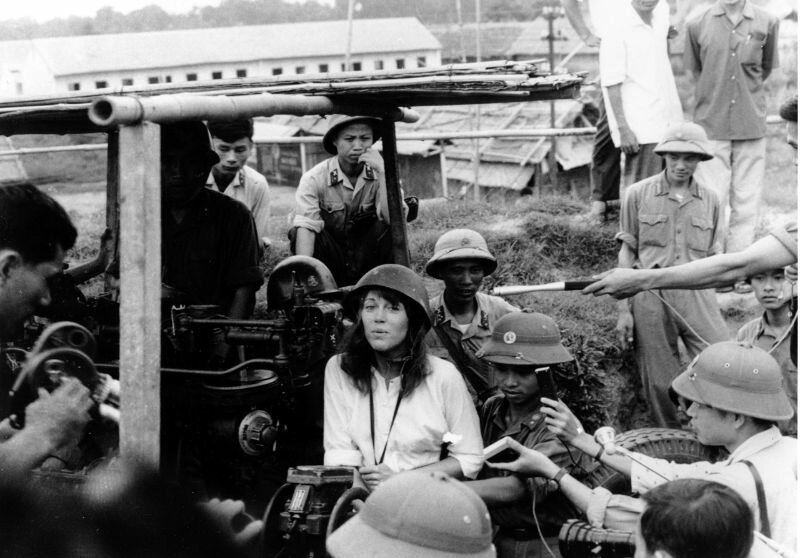
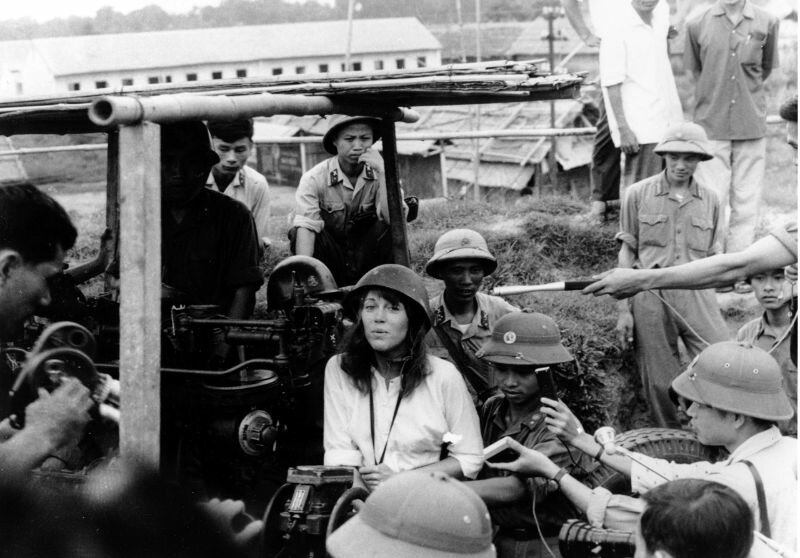
Jane Fonda (a.k.a. Hanoi Jane) met with a small group of American POWs — about seven men — in what was a carefully controlled setting arranged by the North Vietnamese. The POWs were selected by their captors, and the meetings were clearly propagandistic in nature. Fonda later said she believed the men seemed okay and weren't being mistreated, a characterization that many POWs strongly disputed, saying they were coerced into the meetings and that conditions were far worse than she portrayed. The broken bones of POWs told the real story of treatment.
She also made radio broadcasts over Radio Hanoi directed at American servicemen in the region. In these broadcasts, she urged U.S. pilots to stop bombing North Vietnam, called the war a crime, and made statements that many veterans and military personnel viewed as deeply demoralizing and treasonous. She appealed to troops to refuse to fly bombing missions and questioned the morality of the war effort.
For many, Vietnam Veterans' her actions — particularly the Radio Hanoi broadcasts and her dismissive early statements about POW mistreatment — are unforgivable. Some POWs claim that information she received from them during those staged meetings was passed to North Vietnamese guards, resulting in punishment.
What she did not do was make any goodwill visit to U.S. troops in South Vietnam or speak to American servicemen in a supportive capacity — her communications were entirely framed around opposing the war and aligned with North Vietnamese propaganda goals.
While some have forgiven her, I can not. This is a summary of Hanoi Jane's activities during the Vietnam War. Perhaps it will give you some understanding of why she is unpopular with many Vietnam Veterans.
SGT Kevin Hughes PO3 Phyllis Maynard
She also made radio broadcasts over Radio Hanoi directed at American servicemen in the region. In these broadcasts, she urged U.S. pilots to stop bombing North Vietnam, called the war a crime, and made statements that many veterans and military personnel viewed as deeply demoralizing and treasonous. She appealed to troops to refuse to fly bombing missions and questioned the morality of the war effort.
For many, Vietnam Veterans' her actions — particularly the Radio Hanoi broadcasts and her dismissive early statements about POW mistreatment — are unforgivable. Some POWs claim that information she received from them during those staged meetings was passed to North Vietnamese guards, resulting in punishment.
What she did not do was make any goodwill visit to U.S. troops in South Vietnam or speak to American servicemen in a supportive capacity — her communications were entirely framed around opposing the war and aligned with North Vietnamese propaganda goals.
While some have forgiven her, I can not. This is a summary of Hanoi Jane's activities during the Vietnam War. Perhaps it will give you some understanding of why she is unpopular with many Vietnam Veterans.
SGT Kevin Hughes PO3 Phyllis Maynard
(0)
(0)
6
6
0

I remember that show. He would stop the action and sort of interview the main people.
(6)
(0)
PO3 Phyllis Maynard
CPL Douglas Chrysler I am excited about digging in and going back to when I was 10 years old. I loved that show.
CPT Jack Durish MAJ Dale E. Wilson, Ph.D. Sgt David G Duchesneau Maj Robert Thornton LTC (Join to see) Sgt Albert Castro SGT (Join to see) SPC Joshua Blotzer SGT Carl Blas
CPT Jack Durish MAJ Dale E. Wilson, Ph.D. Sgt David G Duchesneau Maj Robert Thornton LTC (Join to see) Sgt Albert Castro SGT (Join to see) SPC Joshua Blotzer SGT Carl Blas
(3)
(0)
4
4
0
Read This Next


 Continue with Facebook
 Continue with Google