
Posted on Aug 19, 2020

The ‘God Damn’ Tree That Nearly Brought America and North Korea to War

1.43K
64
12
17
17
0
On August 18, 1976, in the Korean axe murder incident, two soldiers tasked with cutting down a poplar tree blocking the view of observers were killed by North Koreans claiming it was planted by Kim Il-sung in the Korean Demilitarized Zone. From the article:
"PANMUNJOM, South Korea—Meters from where the leaders of North and South Korea recently planted a pine tree to memorialize their blossoming bid for peace, North Korean soldiers once crushed the skulls of two U.S. soldiers with the blunt end of their axe heads. The attack came after the Americans tried to trim a poplar tree. The men’s disfigured bodies were left beside the tree.
In May, just days after the spectacular inter-Korean summit had occurred there, I visited the truce village of Panmunjom, also known as the Joint Security Area, on the border between North and South Korea. The atmosphere was like that of a church the morning after a wedding where, but for some stray flowers and a forgotten shawl, there is no sign of the previous evening’s festivities—just an austere sanctuary. The pine tree of peace, at one end of a row of blue and silver conference buildings for negotiators, was propped up by what appeared to be wooden support rods, a rather too on-the-nose metaphor for the shaky state of diplomacy with North Korea. Flanked by a trio of stone-faced South Korean guards staring into North Korea, flies buzzed about the cracked concrete slab that Kim Jong Un had crossed to become the first North Korean leader to step into the South.
North Korea had shut off its propaganda loudspeaker around the time of the summit, which made the place “considerably less surreal,” Matt Farmer, the commander of the United Nations Command Security Battalion, which represents the U.S. and South Korea in the Joint Security Area, told me at the site of the axe murders. But, he said, “we’ll always be steady and we’ll always be ready … in case something changes.” Being there, I had the gnawing feeling that something might—that I was still standing at the last front of the Cold War, not the new frontier for a peaceful and denuclearized Korean peninsula. Not yet.
“When you get [to the Joint Security Area], you’ll see how easy it is for something small to flare up into something bigger if you allow it to spread,” Farmer had warned me before I made the hour’s drive from the headquarters of U.S. Forces Korea in Seoul to the Demilitarized Zone, past countless guard posts, rings of barbed wire, and aspirational highway signs for “Pyongyang.” John Burzynski, the deputy secretary and international-relations adviser at the United Nations Command Military Armistice Commission, which supervises the 1953 ceasefire that halted the Korean War, had offered another tip. The Korean peninsula, he counseled, is “a spontaneous place.”
* * *
When the axe attack occurred, in 1976, Kim Jong Un hadn’t yet been born. The New York Times was, at the time, describing Donald Trump as a rising, Robert Redford–esque real-estate promoter with “flair” and “dazzling white teeth.” As for Moon Jae-in, the current president of South Korea, he was serving as a corporal in a special-forces brigade that would later help avenge the murders by carrying out the most elaborate and dangerous tree-cutting operation in history—an act that brought the United States and North Korea closer to all-out conflict than they have been at any other time since the end of the Korean War. Moon “experienced what being on the brink of a war was actually like,” the South Korean president’s office told me. Moon, who went on high alert but didn’t directly participate in the operation, has said that his patriotism and convictions about how to ensure South Korea’s security were forged at this very moment.
The long arm of this long-forgotten episode doesn’t stop at South Korea’s president, who has steered Trump and Kim from nuclear brinkmanship to nuclear talks in Singapore. Kang Myong Do, a North Korean defector and son-in-law of a former North Korean premier, once traced the roots of the decision by Kim Jong Un’s grandfather and father to develop nuclear weapons to the “apprehension [of] the ruling class,” which “started with the ... 1976 tree-cutting incident at the Demilitarized Zone” when “they were on the verge of war.” At the time, according to this theory, Kim Il Sung and Kim Jong Il feared defeat at the hands of a neighbor armed with American nuclear weapons. (While this is just one of many origin stories for the North’s pursuit of nuclear weapons, Kim Il Sung did start gathering nuclear technologies in the 1970s and ’80s.)
The incident is also a reminder that whiplash—the sudden lurching from dialogue to belligerence and back again—is a defining feature of the Korean conflict that long predates the Trump-Kim era. The events of 1976 were among dozens of moments over the years in which “we were a razor’s edge from one misperception or one bad judgment” plunging the peninsula into hostilities, the Korea scholar Van Jackson told me. And it captures the conundrum of how to deal with North Korean provocations, which has tormented everyone from Henry Kissinger—who oversaw the U.S. response to the axe murders and still occasionally advises Trump on North Korea—to Trump himself. “One always assumes the unlimited willingness of opponents to take risks,” Kissinger observed as he plotted retaliation in 1976. “The purpose of this exercise is to overawe them.”
Ultimately, that exercise “forced the North Koreans to lose face,” recalled Bill Ferguson, one of the U.S. soldiers who executed it. “You have to be strong. If there’s any sign of weakness, [the North Koreans] won’t respect” you. But the military operation was not what the troops at the Joint Security Area wanted, he told me. “We wanted blood.”
* * *
In the fall of 1975, a fresh-faced, 17-year-old Bill Ferguson reported to duty in a tinderbox. Today, the Military Demarcation Line that runs along the border between the two Koreas separates their respective security forces in the Joint Security Area as well. But back then there was no such arrangement in the jointly guarded zone: North Korean troops awkwardly intermingled with U.S. and South Korean forces in an 800 meter-wide bubble, which was fashioned out of the 1953 armistice as a venue for future meetings between the warring parties and their mediators.
Ferguson found the place strangely exhilarating. It was understood that “if anything serious happened we probably wouldn’t live, so go ahead and enjoy each day as much as we could,” he said. He remembered snapping pictures of his enemies as they spat on him; elbowing and stomping the feet of North Korean soldiers as they all crowded around the windows of conference buildings while talks took place; giggling as he and other members of his platoon woke up snoring North Korean guards by banging on their checkpoint with axe handles.
When he was stationed at a guardhouse that was surrounded by North Korean positions and just barely outside North Korea—and therefore referred to as “the loneliest checkpoint in the world”—he and the other guards used to taunt the North Koreans. They would play hopscotch on the adjacent Bridge of No Return, where prisoners were exchanged after the war and U.S. sailors held captive by the North walked to freedom in 1968. The North Koreans would “send one of their guard trucks roaring towards the bridge as fast as they could so they could try to hit one of us,” he said. “It was a big game between all of us.”
But Ferguson’s commander, Captain Arthur Bonifas, wasn’t one to play games. Bonifas, who was in his early 30s, was “strict” and a “real good father-type figure” who made “sure you followed the rules,” Ferguson recalled. And the rules of engagement for American soldiers in the Joint Security Area were themselves strict: Ferguson was told that he could only fire his .45 pistol if he was being directly shot at and his life was in danger, or if firing would save someone else’s life. If his comrade had already been killed, it was too late to engage the assailant. “Our job [was to] turn our backs on [the North Koreans] to show we didn’t fear them ... while trusting our buddies to watch our back for us,” Ferguson noted.
Bonifas had arrived at the Joint Security Area a couple months after an incident that showed how the “big game” could go awry. An American officer named William Henderson had swatted at a North Korean soldier outside of a conference building after the soldier messed with his hair, and Henderson came away from the fight with severe damage to his larynx. The clash was top of mind as Bonifas settled into his job. “Our mission here is to take the verbal abuse, kicking, and shoving, but to not let it go any further,” he wrote to his wife Marcia. “Major Henderson lost his cool and blew it. It’s a natural reaction but he should have known better.”
That code of conduct faced a mortal test on August 18, 1976. That morning, Bonifas and his deputy, First Lieutenant Mark Barrett, headed toward the Bridge of No Return with a team of security guards and South Korean laborers to trim a 40-foot poplar tree. In its full summer bloom, the tree was obstructing the view from a United Nations Command observation post atop a hill down to the “loneliest checkpoint in the world” by the bridge—and thus creating a blind spot that the North Koreans could exploit. A previous attempt to cut down the tree had been aborted after North Korean guards objected to the operation, and even Bonifas’s more limited effort met with resistance. Soon after the pruning began, Pak Chul, a notoriously pugnacious North Korean lieutenant, showed up with some of his men, monitored the work, and then abruptly demanded that it cease. “The branches that are cut will be of no use, just as you will be after you die,” he declared at one point. When Bonifas ignored the threats, the likes of which he’d heard before, Pak sent for reinforcements. Nearly 30 North Korean soldiers soon appeared at the tree. Bonifas, who stood an intimidating six foot three inches tall, turned his back on them and got on with the job. Then the North Koreans pounced.
Bonifas “did not see Lieutenant Pak remove his watch, wrap it in a handkerchief, and stick it into the pocket of his trousers,” John Singlaub, then the chief of staff of U.S. Forces Korea, later wrote. “Nor did he see the other North Korean officer rolling up the sleeves of his jacket. An American [non-commissioned officer] strode forward to warn Captain Bonifas. At that moment Lieutenant Pak screamed … ‘Kill!’” The North Koreans attacked, wielding crowbars, pipes, clubs, and axes wrested from the South Korean laborers. They beat Bonifas to death on the road beside the tree, and did the same to Barrett after chasing him over a retaining wall. “The U.N. soldiers depended on their officers to order the use of weapons, but the officers were killed in the first seconds of the attack,” Singlaub noted. Barrett, 25, had only been in Korea for a month. Bonifas was just three days away from returning home to his wife and three young children. Theirs were the first fatalities in Panmunjom since the end of the Korean War.
“Everybody knows the story,” said Farmer, the security-battalion commander, referring to the American and South Korean soldiers currently serving in the Joint Security Area. (Their military post there is named Camp Bonifas.) And “the thing we usually say about this is: Both Barrett and Bonifas died with their pistols still in their holsters. … Obviously they had the right to self-defense. But I just think back to the letter that [Bonifas] wrote to his wife about the Henderson incident. … He had been part of these violent outbreaks before and his experience had probably been” that containing the violence would be the best outcome for the unit.
This “spirit of de-escalation,” Farmer explained, “isn’t about not defending yourself. It’s about making the right tactical decision for the big picture.” And that spirit still animates the unit today, he added, noting how his men hadn’t fired back at the North Korean soldiers who shot a defector as he escaped across the Joint Security Area last fall. A tit-for-tat may feel appropriate in the midst of a confrontation, he reasoned, but it’s not what makes political leaders feel “safe enough to come [here] and conduct negotiations.”
“Bonifas died to keep this place open for dialogue,” Farmer said. For some years now—as North Korea didn’t communicate with South Korea and the United States and tensions mounted with each advance in the North Korean nuclear program—Bonifas’s successors kept the place open for dialogue even though it didn’t really exist. But all of a sudden, in the weeks after I spoke with Farmer, dialogue became a near-daily occurrence. Moon Jae-in and Kim Jong Un returned to the Joint Security Area for a second summit, followed by American and North Korean negotiating teams, to salvage the upcoming summit between Kim and Trump.
* * *
Seven thousand miles from the Bridge of No Return, in Washington, D.C., officials in the Gerald Ford administration were considerably less sympathetic to the restraint displayed by Bonifas and Barrett. “I can’t understand how they could have let the Koreans get that close to them and get themselves clobbered and chopped up,” Bill Clements, the deputy defense secretary, lamented. Within hours of the attack, Secretary of State Henry Kissinger was asking whether there were North Korean fishing boats that the United States could “shoot-up or capture.”
Kissinger had served as Richard Nixon’s national-security adviser at the end of the 1960s, when the two Koreas and the United States engaged in a series of low-level provocations that the military historian Daniel Bolger later dubbed an “unfinished war.” He still regretted how little the Nixon administration had done in response to the deadliest episode of this period: North Korea’s downing of an American reconnaissance plane, which killed all 31 Americans on board, in 1969. The dilemma in responding to North Korea’s hostile acts, Kissinger noted, in an observation that the Trump administration would likely identify with, was that the military options “that seemed safe were inadequate to the provocation, while those that seemed equal to the challenge appeared too risky.” His predecessor as secretary of state, William Rogers, had argued that “the weak can be rash” while “the powerful must be more restrained,” but Nixon eventually acknowledged that he’d made a mistake. The North Koreans “got away with it this time, but they’ll never get away with it again,” he told Kissinger.
The tree-trimming incident occurred just as Ford was struggling to secure his party’s nomination for president at the Republican National Convention in Kansas City, during a campaign in which the Democratic candidate, Jimmy Carter, had proposed withdrawing U.S. troops from South Korea—a live issue again today. Back at the White House, Kissinger chaired a meeting of his crisis committee, the Washington Special Actions Group, in the Situation Room. A briefer explained that North Korea might have deliberately planned the murders during a presidential campaign to stoke American opposition to the U.S. troop presence in Korea. (North Korea’s motivations have never become clear, though some speculate that the attack was ordered by Kim Il Sung’s successor-in-waiting, Kim Jong Il.) “It will be useful for us to generate enough activity so that the North Koreans begin to wonder what those crazy American bastards are doing or are capable of doing in this election year,” Kissinger proposed, in a rejection of the logic that had inhibited Nixon in 1969.
As for the poplar tree, “I … think we should cut the God damn thing down,” Clements declared. The participants resolved to bring down the tree with a show of military force and to raise defense-readiness levels to DEFCON 3, or somewhere between normal preparedness and imminent war, which the United States hadn’t done in response to developments on the peninsula since the 1953 armistice.
By the next day, everyone had grown skittish about the plan. Clements was spooked by the idea of sending in a squad of soldiers to fell the tree. “One guy with explosives ... could do the job. He could go in on a bicycle. Why risk a bunch of people for a tree?” Clements asked. On the other end of the spectrum, Kissinger was starting to think that simply cutting down a tree might look pathetic. He proposed that the U.S. strike the barracks of the suspected North Korean perpetrators. Clements pointed to the high risk of North Korea reacting violently. “The purpose of doing something is to show that we are ready to take risks,” Kissinger retorted. “If we do nothing [the North Koreans] will think of us as the paper tigers of Saigon.”
In grappling with how to respond to the axe murders, U.S. officials were operating in “a different headspace” than they traditionally had with regard to North Korea, Jackson said. After the American military withdrawal from Vietnam in 1973, “there was a larger sentiment in the U.S., especially among conservatives, that America was ducking and running from its commitments in Asia. The fall of Vietnam felt like the beginning of the end of American predominance in Asia. That backdrop led the Ford administration to take this attitude of ... ‘We’re not going to be fucked with.’”
After thinking things over for a day, however, Ford decided to approve the tree-cutting but refrain from bombing the barracks. The idea was that if the North Koreans “want to retaliate against a show of force, then we’ll light them up. But otherwise let’s keep in mind a sense of proportionality,” Jackson explained. He thinks that Ford’s decision prevented the standoff from spiraling into war, since North Korea has a long track record of retaliating forcefully to an adversary’s use of force.
Ferguson, for his part, wasn’t especially conflicted about what he wanted to do to the North Koreans. He’d found out about the attack while he was on a day off and swigging a bottle of Chivas Regal, at which point he “started sobering up real fast.” (The tree-trimming operation, which he’d initially been slated to participate in, had been rescheduled for the 18th on account of rain.) As U.S. officials huddled in the Situation Room and consulted with Ford while the president campaigned in Kansas City and then vacationed in Vail, Ferguson fumed. Going about his routines in the Joint Security Area, he came across sneering North Korea soldiers. “We just wanted nothing more than revenge—to beat them to a bloody pulp no matter what the consequences were,” he said. “But we respected our officers … and they told us constantly to control ourselves.”
The action Ford ultimately authorized, named Operation Paul Bunyan after the mythical American lumberjack, constituted the greatest demonstration of military power that the United States has ever made on the peninsula since the Korean War. As the United States dispatched an aircraft carrier to Korean waters and moved nuclear and conventional artillery and missiles to concrete bunkers, North Korea shifted to “full combat readiness,” conducted civilian air-raid exercises, and evacuated top North Korean officials in Pyongyang to fortified tunnels.
Three days after the axe murders, at 7 o’clock sharp on an electric Saturday morning, dozens of American and South Korean soldiers returned to the site of the attack to cut down the poplar tree. Hundreds of locked-and-loaded troops assumed positions nearby with support from attack helicopters and nuclear-capable aircraft. The moment the operation began, B-52 bombers moved in the direction of North Korea’s capital and combat planes took off from the U.S. aircraft carrier.
“It was my estimate, shared by many of the staff, that the operation stood a fifty-fifty chance of starting a war,” Singlaub later wrote. “In less than an hour, several hundred thousand men might very well be fighting and dying in those steep, blood-soaked mountains. If the murderous North Korean assault on our forces had been part of an elaborate plot to trigger an American military response, which in turn would provoke a North Korean invasion, we might be teetering on the brink of a holocaust. If North Korea unleashed a massive armored assault against Seoul, we would have no choice but to request authorization for the first use of nuclear weapons since World War II. But there was no backing down now.”
Ferguson’s platoon was assigned to the Bridge of No Return, where he’d once played hopscotch, to stop the North Koreans from crossing it and interfering with the operation. He wore combat gear but was otherwise as lightly armed as usual. “None of us really thought we’d ever have a truck ride back” to the base, he said. “Everyone was expecting major hostilities. … We all knew we had all kinds of artillery pieces aimed in our direction.” He remembered South Korean marines goading the North Korean soldiers who gathered en masse at the site by brandishing heavy weapons they weren’t supposed to have in the area and slapping the wheels of the truck that his platoon had backed onto the bridge, so that the vehicle shook menacingly.
“Then [the commander of the operation] Colonel Vierra got on the radio and sent a signal ... and the helicopters rose up over the horizon so the North Koreans could see ’em,” Ferguson recalled. “I’m just standing there with my axe handle and .45, like the rest of us in our platoon, watching [the North Koreans] set up all these machine-gun positions. We’re like, ‘OK. This isn’t going to last very long.’”
But then came the big surprise: The North Koreans stood down as American engineers “burned through I forget how many chainsaws and finally cut the three main branches of the tree off. We cheered as each one fell,” Ferguson told me. They left behind a stump with three stubby branches; if you squint at pictures of the stump from that time, it looks like the torso of a man raising his arms in triumph.
The whole operation took roughly 40 minutes. Within hours, Kim Il Sung conveyed regret for the killing of Bonifas and Barrett—not exactly an apology, but an unusually conciliatory message from the North Koreans nonetheless. Within days and weeks, after several rounds of talks, North Korea removed its guard posts from the southern side of the Joint Security Area, and all parties consented to having the Military Demarcation Line run through the zone to separate North Korean forces from their South Korean and American counterparts. (Hence why Kim Jong Un entered South Korea in April by stepping over a concrete slab—a dividing line instituted as a result of the axe murders.) “Dialogue continued despite what had happened,” Burzynski said.
The Joint Security Area “wasn’t anywhere near as fun and exciting after the [Military Demarcation] Line was poured,” noted Ferguson. He left the area in the fall of 1976 but later came back for a second tour. “Things still had the potential to explode,” he told me. But it was “like riding the huge roller-coaster at your favorite amusement park,” only to return and learn that the “ride is closed and you get stuck with the little kid roller-coaster.”
Many Ford administration officials, encouraged by the fact that the United States had forced the North Koreans to back down for the first time without firing a shot, considered Operation Paul Bunyan a success. The operation worked because the goals were modest and because North Korea, aware that the United States usually acted with restraint and rarely made empty threats, was convinced that war might actually be imminent, Jackson said.
But Kissinger, who for some time after the tree-cutting operation continued to second-guess the decision not to hit the North Korean barracks (“I am positive they would not have hit back”) and to explore the feasibility of attacking North Korea’s harbor, was left deeply unfulfilled.
The U.S. government should conduct “a study of how many Americans [the North Koreans] have to kill before we have deforested them and changed their climate,” Kissinger suggested sarcastically immediately after Operation Paul Bunyan. The North Koreans “were scared out of their minds,” he said, and the Soviets and Chinese probably “thought we would do something drastic. Now they see us just chopping down a tree—which looks ridiculous.”
* * *
Today, a small monument to Bonifas and Barrett stands where the “damn tree” once loomed. When I visited the site this spring, the monument was surrounded by dead, browned grass left over from the winter and what appeared to be cherry, plum, and pear trees in full bloom. The greenery looked beautiful, until I remembered that it was precisely this natural beauty that plunged the Joint Security Area into the depths of human ugliness in 1976. The world’s loneliest checkpoint, with its peeling blue paint and red traditional Korean hanok roof, was abandoned. A sign in front of the Bridge of No Return, which is also no longer in use and was shrouded in foliage, featured human skulls on either side of the word DANGER. “North Korean mines on bridge,” the sign advised. “No unauthorized personnel beyond this point.”
The Joint Security Area “is such a paradox from a military perspective because it’s theoretically in a very dangerous place, yet you bring tourists here and you bring presidents here to do negotiations,” Farmer, the security-battalion commander, told me as we stood by the memorial. “But it’s always been like that. When they were negotiating here during the war, there was fighting going on at [DMZ Observation Post] Ouellette, like a kilometer away.”
Farmer said that when he assumed his role two years ago, “there was just considerably more tension,” including an operation in 2016 in which the North Koreans installed hundreds of wooden-box mines and anti-personnel mines near the Bridge of No Return. (Hence the skull-adorned sign.) That “was my introduction to the JSA,” he said. Now he was finishing up his tour with North Korea’s loudspeaker—which used to broadcast strident speeches, opera, and patriotic music at all hours of the day—dismantled as part of the thaw in inter-Korean relations. He compared the North Korean propaganda to the banshee in the movie Darby O’Gill and the Little People in that it gave off a “howling in the distance—it [was] just creepy.” We had been chatting at the site of the axe murders for four minutes, the same time it took Lieutenant Pak and his henchmen to kill Bonifas and Barrett and nearly change the course of history.
“You can hear the birds here now,” Farmer marveled. “So many times I’ve been down here and you can’t hear that. You can just hear the propaganda.” He turned to the soldier who was accompanying him. “What do you think? Does it feel weird?” Farmer asked.
“Yeah, it’s just different sir. I’m not used to it yet,” the soldier responded. “I could get used to it.”"
"PANMUNJOM, South Korea—Meters from where the leaders of North and South Korea recently planted a pine tree to memorialize their blossoming bid for peace, North Korean soldiers once crushed the skulls of two U.S. soldiers with the blunt end of their axe heads. The attack came after the Americans tried to trim a poplar tree. The men’s disfigured bodies were left beside the tree.
In May, just days after the spectacular inter-Korean summit had occurred there, I visited the truce village of Panmunjom, also known as the Joint Security Area, on the border between North and South Korea. The atmosphere was like that of a church the morning after a wedding where, but for some stray flowers and a forgotten shawl, there is no sign of the previous evening’s festivities—just an austere sanctuary. The pine tree of peace, at one end of a row of blue and silver conference buildings for negotiators, was propped up by what appeared to be wooden support rods, a rather too on-the-nose metaphor for the shaky state of diplomacy with North Korea. Flanked by a trio of stone-faced South Korean guards staring into North Korea, flies buzzed about the cracked concrete slab that Kim Jong Un had crossed to become the first North Korean leader to step into the South.
North Korea had shut off its propaganda loudspeaker around the time of the summit, which made the place “considerably less surreal,” Matt Farmer, the commander of the United Nations Command Security Battalion, which represents the U.S. and South Korea in the Joint Security Area, told me at the site of the axe murders. But, he said, “we’ll always be steady and we’ll always be ready … in case something changes.” Being there, I had the gnawing feeling that something might—that I was still standing at the last front of the Cold War, not the new frontier for a peaceful and denuclearized Korean peninsula. Not yet.
“When you get [to the Joint Security Area], you’ll see how easy it is for something small to flare up into something bigger if you allow it to spread,” Farmer had warned me before I made the hour’s drive from the headquarters of U.S. Forces Korea in Seoul to the Demilitarized Zone, past countless guard posts, rings of barbed wire, and aspirational highway signs for “Pyongyang.” John Burzynski, the deputy secretary and international-relations adviser at the United Nations Command Military Armistice Commission, which supervises the 1953 ceasefire that halted the Korean War, had offered another tip. The Korean peninsula, he counseled, is “a spontaneous place.”
* * *
When the axe attack occurred, in 1976, Kim Jong Un hadn’t yet been born. The New York Times was, at the time, describing Donald Trump as a rising, Robert Redford–esque real-estate promoter with “flair” and “dazzling white teeth.” As for Moon Jae-in, the current president of South Korea, he was serving as a corporal in a special-forces brigade that would later help avenge the murders by carrying out the most elaborate and dangerous tree-cutting operation in history—an act that brought the United States and North Korea closer to all-out conflict than they have been at any other time since the end of the Korean War. Moon “experienced what being on the brink of a war was actually like,” the South Korean president’s office told me. Moon, who went on high alert but didn’t directly participate in the operation, has said that his patriotism and convictions about how to ensure South Korea’s security were forged at this very moment.
The long arm of this long-forgotten episode doesn’t stop at South Korea’s president, who has steered Trump and Kim from nuclear brinkmanship to nuclear talks in Singapore. Kang Myong Do, a North Korean defector and son-in-law of a former North Korean premier, once traced the roots of the decision by Kim Jong Un’s grandfather and father to develop nuclear weapons to the “apprehension [of] the ruling class,” which “started with the ... 1976 tree-cutting incident at the Demilitarized Zone” when “they were on the verge of war.” At the time, according to this theory, Kim Il Sung and Kim Jong Il feared defeat at the hands of a neighbor armed with American nuclear weapons. (While this is just one of many origin stories for the North’s pursuit of nuclear weapons, Kim Il Sung did start gathering nuclear technologies in the 1970s and ’80s.)
The incident is also a reminder that whiplash—the sudden lurching from dialogue to belligerence and back again—is a defining feature of the Korean conflict that long predates the Trump-Kim era. The events of 1976 were among dozens of moments over the years in which “we were a razor’s edge from one misperception or one bad judgment” plunging the peninsula into hostilities, the Korea scholar Van Jackson told me. And it captures the conundrum of how to deal with North Korean provocations, which has tormented everyone from Henry Kissinger—who oversaw the U.S. response to the axe murders and still occasionally advises Trump on North Korea—to Trump himself. “One always assumes the unlimited willingness of opponents to take risks,” Kissinger observed as he plotted retaliation in 1976. “The purpose of this exercise is to overawe them.”
Ultimately, that exercise “forced the North Koreans to lose face,” recalled Bill Ferguson, one of the U.S. soldiers who executed it. “You have to be strong. If there’s any sign of weakness, [the North Koreans] won’t respect” you. But the military operation was not what the troops at the Joint Security Area wanted, he told me. “We wanted blood.”
* * *
In the fall of 1975, a fresh-faced, 17-year-old Bill Ferguson reported to duty in a tinderbox. Today, the Military Demarcation Line that runs along the border between the two Koreas separates their respective security forces in the Joint Security Area as well. But back then there was no such arrangement in the jointly guarded zone: North Korean troops awkwardly intermingled with U.S. and South Korean forces in an 800 meter-wide bubble, which was fashioned out of the 1953 armistice as a venue for future meetings between the warring parties and their mediators.
Ferguson found the place strangely exhilarating. It was understood that “if anything serious happened we probably wouldn’t live, so go ahead and enjoy each day as much as we could,” he said. He remembered snapping pictures of his enemies as they spat on him; elbowing and stomping the feet of North Korean soldiers as they all crowded around the windows of conference buildings while talks took place; giggling as he and other members of his platoon woke up snoring North Korean guards by banging on their checkpoint with axe handles.
When he was stationed at a guardhouse that was surrounded by North Korean positions and just barely outside North Korea—and therefore referred to as “the loneliest checkpoint in the world”—he and the other guards used to taunt the North Koreans. They would play hopscotch on the adjacent Bridge of No Return, where prisoners were exchanged after the war and U.S. sailors held captive by the North walked to freedom in 1968. The North Koreans would “send one of their guard trucks roaring towards the bridge as fast as they could so they could try to hit one of us,” he said. “It was a big game between all of us.”
But Ferguson’s commander, Captain Arthur Bonifas, wasn’t one to play games. Bonifas, who was in his early 30s, was “strict” and a “real good father-type figure” who made “sure you followed the rules,” Ferguson recalled. And the rules of engagement for American soldiers in the Joint Security Area were themselves strict: Ferguson was told that he could only fire his .45 pistol if he was being directly shot at and his life was in danger, or if firing would save someone else’s life. If his comrade had already been killed, it was too late to engage the assailant. “Our job [was to] turn our backs on [the North Koreans] to show we didn’t fear them ... while trusting our buddies to watch our back for us,” Ferguson noted.
Bonifas had arrived at the Joint Security Area a couple months after an incident that showed how the “big game” could go awry. An American officer named William Henderson had swatted at a North Korean soldier outside of a conference building after the soldier messed with his hair, and Henderson came away from the fight with severe damage to his larynx. The clash was top of mind as Bonifas settled into his job. “Our mission here is to take the verbal abuse, kicking, and shoving, but to not let it go any further,” he wrote to his wife Marcia. “Major Henderson lost his cool and blew it. It’s a natural reaction but he should have known better.”
That code of conduct faced a mortal test on August 18, 1976. That morning, Bonifas and his deputy, First Lieutenant Mark Barrett, headed toward the Bridge of No Return with a team of security guards and South Korean laborers to trim a 40-foot poplar tree. In its full summer bloom, the tree was obstructing the view from a United Nations Command observation post atop a hill down to the “loneliest checkpoint in the world” by the bridge—and thus creating a blind spot that the North Koreans could exploit. A previous attempt to cut down the tree had been aborted after North Korean guards objected to the operation, and even Bonifas’s more limited effort met with resistance. Soon after the pruning began, Pak Chul, a notoriously pugnacious North Korean lieutenant, showed up with some of his men, monitored the work, and then abruptly demanded that it cease. “The branches that are cut will be of no use, just as you will be after you die,” he declared at one point. When Bonifas ignored the threats, the likes of which he’d heard before, Pak sent for reinforcements. Nearly 30 North Korean soldiers soon appeared at the tree. Bonifas, who stood an intimidating six foot three inches tall, turned his back on them and got on with the job. Then the North Koreans pounced.
Bonifas “did not see Lieutenant Pak remove his watch, wrap it in a handkerchief, and stick it into the pocket of his trousers,” John Singlaub, then the chief of staff of U.S. Forces Korea, later wrote. “Nor did he see the other North Korean officer rolling up the sleeves of his jacket. An American [non-commissioned officer] strode forward to warn Captain Bonifas. At that moment Lieutenant Pak screamed … ‘Kill!’” The North Koreans attacked, wielding crowbars, pipes, clubs, and axes wrested from the South Korean laborers. They beat Bonifas to death on the road beside the tree, and did the same to Barrett after chasing him over a retaining wall. “The U.N. soldiers depended on their officers to order the use of weapons, but the officers were killed in the first seconds of the attack,” Singlaub noted. Barrett, 25, had only been in Korea for a month. Bonifas was just three days away from returning home to his wife and three young children. Theirs were the first fatalities in Panmunjom since the end of the Korean War.
“Everybody knows the story,” said Farmer, the security-battalion commander, referring to the American and South Korean soldiers currently serving in the Joint Security Area. (Their military post there is named Camp Bonifas.) And “the thing we usually say about this is: Both Barrett and Bonifas died with their pistols still in their holsters. … Obviously they had the right to self-defense. But I just think back to the letter that [Bonifas] wrote to his wife about the Henderson incident. … He had been part of these violent outbreaks before and his experience had probably been” that containing the violence would be the best outcome for the unit.
This “spirit of de-escalation,” Farmer explained, “isn’t about not defending yourself. It’s about making the right tactical decision for the big picture.” And that spirit still animates the unit today, he added, noting how his men hadn’t fired back at the North Korean soldiers who shot a defector as he escaped across the Joint Security Area last fall. A tit-for-tat may feel appropriate in the midst of a confrontation, he reasoned, but it’s not what makes political leaders feel “safe enough to come [here] and conduct negotiations.”
“Bonifas died to keep this place open for dialogue,” Farmer said. For some years now—as North Korea didn’t communicate with South Korea and the United States and tensions mounted with each advance in the North Korean nuclear program—Bonifas’s successors kept the place open for dialogue even though it didn’t really exist. But all of a sudden, in the weeks after I spoke with Farmer, dialogue became a near-daily occurrence. Moon Jae-in and Kim Jong Un returned to the Joint Security Area for a second summit, followed by American and North Korean negotiating teams, to salvage the upcoming summit between Kim and Trump.
* * *
Seven thousand miles from the Bridge of No Return, in Washington, D.C., officials in the Gerald Ford administration were considerably less sympathetic to the restraint displayed by Bonifas and Barrett. “I can’t understand how they could have let the Koreans get that close to them and get themselves clobbered and chopped up,” Bill Clements, the deputy defense secretary, lamented. Within hours of the attack, Secretary of State Henry Kissinger was asking whether there were North Korean fishing boats that the United States could “shoot-up or capture.”
Kissinger had served as Richard Nixon’s national-security adviser at the end of the 1960s, when the two Koreas and the United States engaged in a series of low-level provocations that the military historian Daniel Bolger later dubbed an “unfinished war.” He still regretted how little the Nixon administration had done in response to the deadliest episode of this period: North Korea’s downing of an American reconnaissance plane, which killed all 31 Americans on board, in 1969. The dilemma in responding to North Korea’s hostile acts, Kissinger noted, in an observation that the Trump administration would likely identify with, was that the military options “that seemed safe were inadequate to the provocation, while those that seemed equal to the challenge appeared too risky.” His predecessor as secretary of state, William Rogers, had argued that “the weak can be rash” while “the powerful must be more restrained,” but Nixon eventually acknowledged that he’d made a mistake. The North Koreans “got away with it this time, but they’ll never get away with it again,” he told Kissinger.
The tree-trimming incident occurred just as Ford was struggling to secure his party’s nomination for president at the Republican National Convention in Kansas City, during a campaign in which the Democratic candidate, Jimmy Carter, had proposed withdrawing U.S. troops from South Korea—a live issue again today. Back at the White House, Kissinger chaired a meeting of his crisis committee, the Washington Special Actions Group, in the Situation Room. A briefer explained that North Korea might have deliberately planned the murders during a presidential campaign to stoke American opposition to the U.S. troop presence in Korea. (North Korea’s motivations have never become clear, though some speculate that the attack was ordered by Kim Il Sung’s successor-in-waiting, Kim Jong Il.) “It will be useful for us to generate enough activity so that the North Koreans begin to wonder what those crazy American bastards are doing or are capable of doing in this election year,” Kissinger proposed, in a rejection of the logic that had inhibited Nixon in 1969.
As for the poplar tree, “I … think we should cut the God damn thing down,” Clements declared. The participants resolved to bring down the tree with a show of military force and to raise defense-readiness levels to DEFCON 3, or somewhere between normal preparedness and imminent war, which the United States hadn’t done in response to developments on the peninsula since the 1953 armistice.
By the next day, everyone had grown skittish about the plan. Clements was spooked by the idea of sending in a squad of soldiers to fell the tree. “One guy with explosives ... could do the job. He could go in on a bicycle. Why risk a bunch of people for a tree?” Clements asked. On the other end of the spectrum, Kissinger was starting to think that simply cutting down a tree might look pathetic. He proposed that the U.S. strike the barracks of the suspected North Korean perpetrators. Clements pointed to the high risk of North Korea reacting violently. “The purpose of doing something is to show that we are ready to take risks,” Kissinger retorted. “If we do nothing [the North Koreans] will think of us as the paper tigers of Saigon.”
In grappling with how to respond to the axe murders, U.S. officials were operating in “a different headspace” than they traditionally had with regard to North Korea, Jackson said. After the American military withdrawal from Vietnam in 1973, “there was a larger sentiment in the U.S., especially among conservatives, that America was ducking and running from its commitments in Asia. The fall of Vietnam felt like the beginning of the end of American predominance in Asia. That backdrop led the Ford administration to take this attitude of ... ‘We’re not going to be fucked with.’”
After thinking things over for a day, however, Ford decided to approve the tree-cutting but refrain from bombing the barracks. The idea was that if the North Koreans “want to retaliate against a show of force, then we’ll light them up. But otherwise let’s keep in mind a sense of proportionality,” Jackson explained. He thinks that Ford’s decision prevented the standoff from spiraling into war, since North Korea has a long track record of retaliating forcefully to an adversary’s use of force.
Ferguson, for his part, wasn’t especially conflicted about what he wanted to do to the North Koreans. He’d found out about the attack while he was on a day off and swigging a bottle of Chivas Regal, at which point he “started sobering up real fast.” (The tree-trimming operation, which he’d initially been slated to participate in, had been rescheduled for the 18th on account of rain.) As U.S. officials huddled in the Situation Room and consulted with Ford while the president campaigned in Kansas City and then vacationed in Vail, Ferguson fumed. Going about his routines in the Joint Security Area, he came across sneering North Korea soldiers. “We just wanted nothing more than revenge—to beat them to a bloody pulp no matter what the consequences were,” he said. “But we respected our officers … and they told us constantly to control ourselves.”
The action Ford ultimately authorized, named Operation Paul Bunyan after the mythical American lumberjack, constituted the greatest demonstration of military power that the United States has ever made on the peninsula since the Korean War. As the United States dispatched an aircraft carrier to Korean waters and moved nuclear and conventional artillery and missiles to concrete bunkers, North Korea shifted to “full combat readiness,” conducted civilian air-raid exercises, and evacuated top North Korean officials in Pyongyang to fortified tunnels.
Three days after the axe murders, at 7 o’clock sharp on an electric Saturday morning, dozens of American and South Korean soldiers returned to the site of the attack to cut down the poplar tree. Hundreds of locked-and-loaded troops assumed positions nearby with support from attack helicopters and nuclear-capable aircraft. The moment the operation began, B-52 bombers moved in the direction of North Korea’s capital and combat planes took off from the U.S. aircraft carrier.
“It was my estimate, shared by many of the staff, that the operation stood a fifty-fifty chance of starting a war,” Singlaub later wrote. “In less than an hour, several hundred thousand men might very well be fighting and dying in those steep, blood-soaked mountains. If the murderous North Korean assault on our forces had been part of an elaborate plot to trigger an American military response, which in turn would provoke a North Korean invasion, we might be teetering on the brink of a holocaust. If North Korea unleashed a massive armored assault against Seoul, we would have no choice but to request authorization for the first use of nuclear weapons since World War II. But there was no backing down now.”
Ferguson’s platoon was assigned to the Bridge of No Return, where he’d once played hopscotch, to stop the North Koreans from crossing it and interfering with the operation. He wore combat gear but was otherwise as lightly armed as usual. “None of us really thought we’d ever have a truck ride back” to the base, he said. “Everyone was expecting major hostilities. … We all knew we had all kinds of artillery pieces aimed in our direction.” He remembered South Korean marines goading the North Korean soldiers who gathered en masse at the site by brandishing heavy weapons they weren’t supposed to have in the area and slapping the wheels of the truck that his platoon had backed onto the bridge, so that the vehicle shook menacingly.
“Then [the commander of the operation] Colonel Vierra got on the radio and sent a signal ... and the helicopters rose up over the horizon so the North Koreans could see ’em,” Ferguson recalled. “I’m just standing there with my axe handle and .45, like the rest of us in our platoon, watching [the North Koreans] set up all these machine-gun positions. We’re like, ‘OK. This isn’t going to last very long.’”
But then came the big surprise: The North Koreans stood down as American engineers “burned through I forget how many chainsaws and finally cut the three main branches of the tree off. We cheered as each one fell,” Ferguson told me. They left behind a stump with three stubby branches; if you squint at pictures of the stump from that time, it looks like the torso of a man raising his arms in triumph.
The whole operation took roughly 40 minutes. Within hours, Kim Il Sung conveyed regret for the killing of Bonifas and Barrett—not exactly an apology, but an unusually conciliatory message from the North Koreans nonetheless. Within days and weeks, after several rounds of talks, North Korea removed its guard posts from the southern side of the Joint Security Area, and all parties consented to having the Military Demarcation Line run through the zone to separate North Korean forces from their South Korean and American counterparts. (Hence why Kim Jong Un entered South Korea in April by stepping over a concrete slab—a dividing line instituted as a result of the axe murders.) “Dialogue continued despite what had happened,” Burzynski said.
The Joint Security Area “wasn’t anywhere near as fun and exciting after the [Military Demarcation] Line was poured,” noted Ferguson. He left the area in the fall of 1976 but later came back for a second tour. “Things still had the potential to explode,” he told me. But it was “like riding the huge roller-coaster at your favorite amusement park,” only to return and learn that the “ride is closed and you get stuck with the little kid roller-coaster.”
Many Ford administration officials, encouraged by the fact that the United States had forced the North Koreans to back down for the first time without firing a shot, considered Operation Paul Bunyan a success. The operation worked because the goals were modest and because North Korea, aware that the United States usually acted with restraint and rarely made empty threats, was convinced that war might actually be imminent, Jackson said.
But Kissinger, who for some time after the tree-cutting operation continued to second-guess the decision not to hit the North Korean barracks (“I am positive they would not have hit back”) and to explore the feasibility of attacking North Korea’s harbor, was left deeply unfulfilled.
The U.S. government should conduct “a study of how many Americans [the North Koreans] have to kill before we have deforested them and changed their climate,” Kissinger suggested sarcastically immediately after Operation Paul Bunyan. The North Koreans “were scared out of their minds,” he said, and the Soviets and Chinese probably “thought we would do something drastic. Now they see us just chopping down a tree—which looks ridiculous.”
* * *
Today, a small monument to Bonifas and Barrett stands where the “damn tree” once loomed. When I visited the site this spring, the monument was surrounded by dead, browned grass left over from the winter and what appeared to be cherry, plum, and pear trees in full bloom. The greenery looked beautiful, until I remembered that it was precisely this natural beauty that plunged the Joint Security Area into the depths of human ugliness in 1976. The world’s loneliest checkpoint, with its peeling blue paint and red traditional Korean hanok roof, was abandoned. A sign in front of the Bridge of No Return, which is also no longer in use and was shrouded in foliage, featured human skulls on either side of the word DANGER. “North Korean mines on bridge,” the sign advised. “No unauthorized personnel beyond this point.”
The Joint Security Area “is such a paradox from a military perspective because it’s theoretically in a very dangerous place, yet you bring tourists here and you bring presidents here to do negotiations,” Farmer, the security-battalion commander, told me as we stood by the memorial. “But it’s always been like that. When they were negotiating here during the war, there was fighting going on at [DMZ Observation Post] Ouellette, like a kilometer away.”
Farmer said that when he assumed his role two years ago, “there was just considerably more tension,” including an operation in 2016 in which the North Koreans installed hundreds of wooden-box mines and anti-personnel mines near the Bridge of No Return. (Hence the skull-adorned sign.) That “was my introduction to the JSA,” he said. Now he was finishing up his tour with North Korea’s loudspeaker—which used to broadcast strident speeches, opera, and patriotic music at all hours of the day—dismantled as part of the thaw in inter-Korean relations. He compared the North Korean propaganda to the banshee in the movie Darby O’Gill and the Little People in that it gave off a “howling in the distance—it [was] just creepy.” We had been chatting at the site of the axe murders for four minutes, the same time it took Lieutenant Pak and his henchmen to kill Bonifas and Barrett and nearly change the course of history.
“You can hear the birds here now,” Farmer marveled. “So many times I’ve been down here and you can’t hear that. You can just hear the propaganda.” He turned to the soldier who was accompanying him. “What do you think? Does it feel weird?” Farmer asked.
“Yeah, it’s just different sir. I’m not used to it yet,” the soldier responded. “I could get used to it.”"

The ‘God Damn’ Tree That Nearly Brought America and North Korea to War
Posted from theatlantic.com Korea
Korea World History
 American History
 Military History
 Violence
Posted >1 y ago
Responses: 11
8
8
0

I was assigned to Co B, 2nd Engr Bn, in the late 1980s, one of 2 units that actually cut down the tree. The unit at that time still had a couple of branch pieces in the orderly room.
(8)
(0)
6
6
0

Somehow I missed this at the time. Thanks for the share. Hard to believe it has been 40 plus years
(6)
(0)
5
5
0

Panmunjom Korea JSA North South Korea United Nations Incident August 18 1976 NO SOUND
This is official (silent) film footage from the United Nations Command and part of the American Forces Korea Network (AFKN) video library (at least in the 19...
Thank you my friend SGT (Join to see) for reminding us of the despicable act by North Korea on August 18, 1976.
I well remember this despicable act as a USMA cadet in 1976. Captain Arthur George Bonifas was a Department of Mathematics, United States Military Academy West Point (Staff) teacher from 1972-1975. He was USMA graduate with the class of 1966 a Vietnam War veteran with 4th Infantry Division 1968-1969. Bronze Star Medal. After his brutal member he was posthumously awarded the Bronze Star Medal with Valor device and Purple Heart. His widow Marcia Bonifas and three children survived him.
Panmunjom Korea JSA North South Korea United Nations Incident August 18 1976 NO SOUND
This is official (silent) film footage from the United Nations Command and part of the American Forces Korea Network (AFKN) video library (at least in the 1990s) of an incident that occurred on August 18, 1976 near Panmumjom, when a United Nations contingent attempted to cut down a poplar tree in the Joint Security Area of the Demilitarized Zone separating North and South Korea. Among those as part of the contingent were U.S. Army Officers CPT Arthur Bonifas and 1LT Mark Barrett, who died in the resulting attack. "The U.S. Army officers had been part of a work party cutting down a poplar tree in the JSA that partially blocked the view of United Nations (U.N.) observers when they were assaulted and killed by the North Koreans, who claimed that the tree had been planted by Kim Il-Sung. Three days later, American and South Korean forces launched Operation Paul Bunyan, an operation that cut down the tree with a show of force to intimidate North Korea into backing down, which it did. North Korea then accepted responsibility for the earlier killings. The incident is also known alternatively as the hatchet incident, the poplar tree incident, and the tree trimming incident. One of the South Korean soldiers who participated in Operation Paul Bunyan, Moon Jae-in, was elected President of South Korea in 2017."
The first part of the film is at full speed, the second part of the film is repeated and slowed down.
https://www.youtube.com/watch?v=rSbT0ovfuZA
Image:
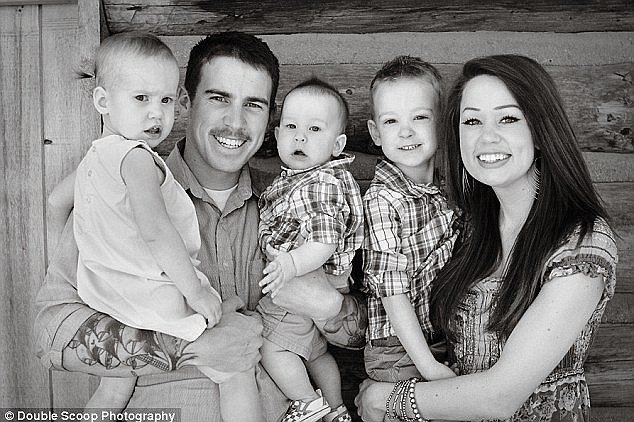
1. CPT Andrew Bonifas and his wife Marcia Bonifas with their three children Beth born at Fort Benning, Brian, at the Artillery Advanced Course; and Megan, at West Point.
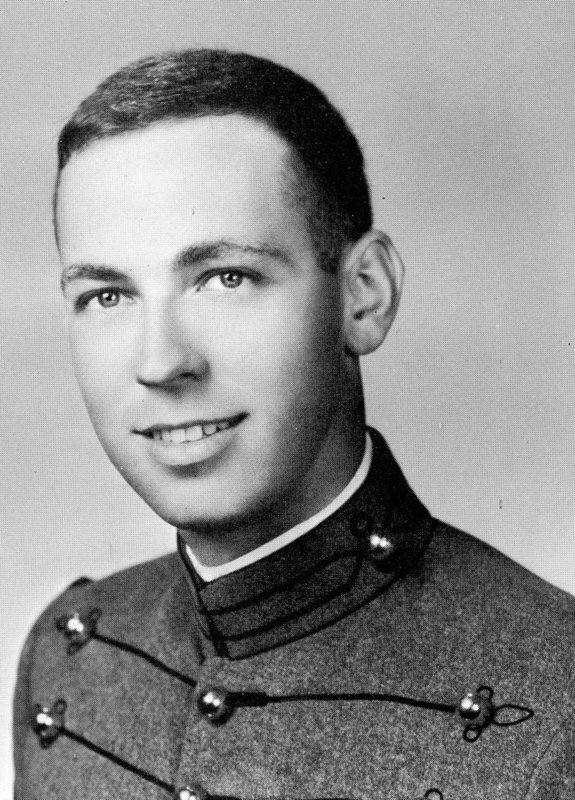
2. USMA cadet Andrew George Bonifas, class of 1966
Thankfully, Three days after the axe murders, at 7 o’clock sharp on an electric Saturday morning, dozens of American and South Korean soldiers returned to the site of the attack to cut down the poplar tree. Hundreds of locked-and-loaded troops assumed positions nearby with support from attack helicopters and nuclear-capable aircraft. The moment the operation began, B-52 bombers moved in the direction of North Korea’s capital and combat planes took off from the U.S. aircraft carrier.
“It was my estimate, shared by many of the staff, that the operation stood a fifty-fifty chance of starting a war,” Singlaub later wrote. “In less than an hour, several hundred thousand men might very well be fighting and dying in those steep, blood-soaked mountains. If the murderous North Korean assault on our forces had been part of an elaborate plot to trigger an American military response, which in turn would provoke a North Korean invasion, we might be teetering on the brink of a holocaust. If North Korea unleashed a massive armored assault against Seoul, we would have no choice but to request authorization for the first use of nuclear weapons since World War II. But there was no backing down now.”
Ferguson’s platoon was assigned to the Bridge of No Return, where he’d once played hopscotch, to stop the North Koreans from crossing it and interfering with the operation. He wore combat gear but was otherwise as lightly armed as usual. “None of us really thought we’d ever have a truck ride back” to the base, he said. “Everyone was expecting major hostilities. … We all knew we had all kinds of artillery pieces aimed in our direction.” He remembered South Korean marines goading the North Korean soldiers who gathered en masse at the site by brandishing heavy weapons they weren’t supposed to have in the area and slapping the wheels of the truck that his platoon had backed onto the bridge, so that the vehicle shook menacingly.
“Then [the commander of the operation] Colonel Vierra got on the radio and sent a signal ... and the helicopters rose up over the horizon so the North Koreans could see ’em,” Ferguson recalled. “I’m just standing there with my axe handle and .45, like the rest of us in our platoon, watching [the North Koreans] set up all these machine-gun positions. We’re like, ‘OK. This isn’t going to last very long.’”
But then came the big surprise: The North Koreans stood down as American engineers “burned through I forget how many chainsaws and finally cut the three main branches of the tree off. We cheered as each one fell,” Ferguson told me. They left behind a stump with three stubby branches; if you squint at pictures of the stump from that time, it looks like the torso of a man raising his arms in triumph.
The whole operation took roughly 40 minutes. Within hours, Kim Il Sung conveyed regret for the killing of Bonifas and Barrett—not exactly an apology, but an unusually conciliatory message from the North Koreans nonetheless. Within days and weeks, after several rounds of talks, North Korea removed its guard posts from the southern side of the Joint Security Area, and all parties consented to having the Military Demarcation Line run through the zone to separate North Korean forces from their South Korean and American counterparts. (Hence why Kim Jong Un entered South Korea in April by stepping over a concrete slab—a dividing line instituted as a result of the axe murders.) “Dialogue continued despite what had happened,” Burzynski said.
FYI SFC William Farrell 1SG (Join to see) 1SG Steven Imerman MSG Felipe De Leon Brown PO2 (Join to see) SMSgt Lawrence McCarter COL Mikel J. Burroughs LTC (Join to see) LTC Stephen Conway MAJ Dale E. Wilson, Ph.D. Maj Bill Smith, Ph.D. COL Charles Williams COL (Join to see) GySgt Thomas Vick SP5 Mark Kuzinski MSG Felipe De Leon Brown SSG Robert Mark Odom MAJ Ken Landgren
I well remember this despicable act as a USMA cadet in 1976. Captain Arthur George Bonifas was a Department of Mathematics, United States Military Academy West Point (Staff) teacher from 1972-1975. He was USMA graduate with the class of 1966 a Vietnam War veteran with 4th Infantry Division 1968-1969. Bronze Star Medal. After his brutal member he was posthumously awarded the Bronze Star Medal with Valor device and Purple Heart. His widow Marcia Bonifas and three children survived him.
Panmunjom Korea JSA North South Korea United Nations Incident August 18 1976 NO SOUND
This is official (silent) film footage from the United Nations Command and part of the American Forces Korea Network (AFKN) video library (at least in the 1990s) of an incident that occurred on August 18, 1976 near Panmumjom, when a United Nations contingent attempted to cut down a poplar tree in the Joint Security Area of the Demilitarized Zone separating North and South Korea. Among those as part of the contingent were U.S. Army Officers CPT Arthur Bonifas and 1LT Mark Barrett, who died in the resulting attack. "The U.S. Army officers had been part of a work party cutting down a poplar tree in the JSA that partially blocked the view of United Nations (U.N.) observers when they were assaulted and killed by the North Koreans, who claimed that the tree had been planted by Kim Il-Sung. Three days later, American and South Korean forces launched Operation Paul Bunyan, an operation that cut down the tree with a show of force to intimidate North Korea into backing down, which it did. North Korea then accepted responsibility for the earlier killings. The incident is also known alternatively as the hatchet incident, the poplar tree incident, and the tree trimming incident. One of the South Korean soldiers who participated in Operation Paul Bunyan, Moon Jae-in, was elected President of South Korea in 2017."
The first part of the film is at full speed, the second part of the film is repeated and slowed down.
https://www.youtube.com/watch?v=rSbT0ovfuZA
Image:
1. CPT Andrew Bonifas and his wife Marcia Bonifas with their three children Beth born at Fort Benning, Brian, at the Artillery Advanced Course; and Megan, at West Point.
2. USMA cadet Andrew George Bonifas, class of 1966
Thankfully, Three days after the axe murders, at 7 o’clock sharp on an electric Saturday morning, dozens of American and South Korean soldiers returned to the site of the attack to cut down the poplar tree. Hundreds of locked-and-loaded troops assumed positions nearby with support from attack helicopters and nuclear-capable aircraft. The moment the operation began, B-52 bombers moved in the direction of North Korea’s capital and combat planes took off from the U.S. aircraft carrier.
“It was my estimate, shared by many of the staff, that the operation stood a fifty-fifty chance of starting a war,” Singlaub later wrote. “In less than an hour, several hundred thousand men might very well be fighting and dying in those steep, blood-soaked mountains. If the murderous North Korean assault on our forces had been part of an elaborate plot to trigger an American military response, which in turn would provoke a North Korean invasion, we might be teetering on the brink of a holocaust. If North Korea unleashed a massive armored assault against Seoul, we would have no choice but to request authorization for the first use of nuclear weapons since World War II. But there was no backing down now.”
Ferguson’s platoon was assigned to the Bridge of No Return, where he’d once played hopscotch, to stop the North Koreans from crossing it and interfering with the operation. He wore combat gear but was otherwise as lightly armed as usual. “None of us really thought we’d ever have a truck ride back” to the base, he said. “Everyone was expecting major hostilities. … We all knew we had all kinds of artillery pieces aimed in our direction.” He remembered South Korean marines goading the North Korean soldiers who gathered en masse at the site by brandishing heavy weapons they weren’t supposed to have in the area and slapping the wheels of the truck that his platoon had backed onto the bridge, so that the vehicle shook menacingly.
“Then [the commander of the operation] Colonel Vierra got on the radio and sent a signal ... and the helicopters rose up over the horizon so the North Koreans could see ’em,” Ferguson recalled. “I’m just standing there with my axe handle and .45, like the rest of us in our platoon, watching [the North Koreans] set up all these machine-gun positions. We’re like, ‘OK. This isn’t going to last very long.’”
But then came the big surprise: The North Koreans stood down as American engineers “burned through I forget how many chainsaws and finally cut the three main branches of the tree off. We cheered as each one fell,” Ferguson told me. They left behind a stump with three stubby branches; if you squint at pictures of the stump from that time, it looks like the torso of a man raising his arms in triumph.
The whole operation took roughly 40 minutes. Within hours, Kim Il Sung conveyed regret for the killing of Bonifas and Barrett—not exactly an apology, but an unusually conciliatory message from the North Koreans nonetheless. Within days and weeks, after several rounds of talks, North Korea removed its guard posts from the southern side of the Joint Security Area, and all parties consented to having the Military Demarcation Line run through the zone to separate North Korean forces from their South Korean and American counterparts. (Hence why Kim Jong Un entered South Korea in April by stepping over a concrete slab—a dividing line instituted as a result of the axe murders.) “Dialogue continued despite what had happened,” Burzynski said.
FYI SFC William Farrell 1SG (Join to see) 1SG Steven Imerman MSG Felipe De Leon Brown PO2 (Join to see) SMSgt Lawrence McCarter COL Mikel J. Burroughs LTC (Join to see) LTC Stephen Conway MAJ Dale E. Wilson, Ph.D. Maj Bill Smith, Ph.D. COL Charles Williams COL (Join to see) GySgt Thomas Vick SP5 Mark Kuzinski MSG Felipe De Leon Brown SSG Robert Mark Odom MAJ Ken Landgren
(5)
(0)
Read This Next


 Continue with Facebook
 Continue with Google