

What are the best resources for Veterans & Service Members?

 Military Career
 Communications
 Mentorship
 Resources

SPREAD THE WORD! Family Subsistence Supplemental Allowance (FSSA) Program information courtesy of SGM Matthew Quick in another thread.
Family Subsistence Supplemental Allowance (FSSA) program is a voluntary financial benefits program for military families, intended to increase a service member's income in order to remove their household from eligibility for SNAP benefits (formerly the food stamp program). This application is designed to assist you in making a determination if you are eligible for the Family Subsistence Supplemental Allowance.
The FSSA website is only accessible to Active Duty service members, National Guard, and Reserve component members on active duty status. FSSA instructions, policy, and guidance for eligibility can be found on the Resources Tab.
The discussion can be found here: https://www.rallypoint.com/answers/spread-the-word-family-subsistence-supplemental-allowance-fssa-program
The link to the program here: https://www.dmdc.osd.mil/fssa/
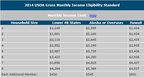
SPREAD THE WORD! Family Subsistence Supplemental Allowance (FSSA) Program | RallyPoint
Who's heard about this program? If you are charge of servicemembers with larger families, this will help them out (without having to go on 'food stamps'). The FSSA program is a voluntary financial benefits program for military families intended to increase a service member's income in order to remove their household from eligibility for Supplemental Nutrition Allowance Program (SNAP) benefits (formerly the food stamp program). The purpose of...


Talentnow Connect | Recruiting via Social Networks
Openingsfor regional, home weekly-- .37-.44 cpm! Over the roadpositions, 10-14 days out -- .41 .47cpm! Dedicated jobs may beavailable as well! Assigned Trucks, Full Benefitpackage! Rider program! Here'swho we are looking Weare looking for Class A drivers with at least 4 months of experienceOTR (overnights in truck, log books, crossing state lines, etc.) inthe last 3 years ...can't make any exceptions to this at thistime. ***Good work history,...
We are looking for Class A drivers with at least 4 months of experience OTR (overnights in truck, log books, crossing state lines, etc.) in the last 3 years ...can't make any exceptions to this at this time.
Who We Are?
GIJOEJOBS.COM is a diversity candidate supplier and can help employers meet their diversity supplier goals –
All of our staff members are former veterans that have also transitioned successfully to civilian jobs. Many of them are former Military Human Resource Managers and Recruiters. We are connected (very connected) to military transition centers. Our established relationships allow us to benefit from maximum exposure to Service Members and their families.
GIJOEJOBS.COM is a subsidiary of Dickson Training Consortium, LLC
Finance planning is a dry subject and most avoid it with a passion, but keeping a handle on how your money is being spent is important. Having the knowledge and the tools to stay on top of that money can sometimes be critical. Here are some different choices for gaining that knowledge in our fast paced world.
For most people, the word “budget” conjures up thoughts of penny-pinching and the unpleasant task of crunching numbers. This couldn’t be further from the truth.
http://financialplan.about.com/od/budgetingyourmoney/a/BudgetBasics.htm

The Easy Way to Create a Budget
A budget is nothing more than a breakdown and plan of how much money you have coming in and where it goes. Could you imagine a business becoming successful if it didn’t keep track of its income and expenses? The same holds true when it comes to your personal finances. If you don’t know how much money you have coming in and where it goes, your road to financial success will be a difficult one.
https://www.rallypoint.com/command-post/financial-success-living-on-a-budget-pt-2
http://www.militaryonesource.mil/pfm
We are all different. We all have different family situations, different jobs, different strengths, and different weaknesses. Despite all these differences, there are a number of very common emotional stages that people with a head injury go through. This is based upon my own experience treating patients, but many investigators note similar findings.
http://www.tbiguide.com/emotionalstages.html
Clinical neuropsychologist Dr. Glen Johnson's Traumatic Brain Injury Survival Guide was written to explain head injuries in clear, easy to understand language for patients of head injuries. The goal of this online book is to better prepare the head injured person and family for the long road of recovery ahead.
http://www.realwarriors.net/active/treatment/tbirecovery.php

Traumatic Brain Injury: Treatment and Recovery
What is Traumatic Brain Injury? Photo by Senior Airman Julianne Showalter

The Recovery Process For Traumatic Brain Injury
HOME TBI FACTSHEETS UNDERSTANDING TBI THE RECOVERY PROCESS FOR TRAUMATIC BRAIN INJURY

What Happens During Injury And In Early Stages Of Recovery
HOME TBI FACTSHEETS UNDERSTANDING TBI WHAT HAPPENS DURING INJURY AND IN EARLY STAGES OF RECOVERY
The discussion can be found here: https://www.rallypoint.com/command-post/traumatic-brain-injuries-in-the-military
Oftentimes when searching for a job we forget about the big picture because we're concentrating on the end game & securing 'the perfect job'. A great discussion on the command post here at RP has suggestions and helpful info to pause and think. Courtesy of SMSgt Al Schilling here is the link to this good info .... https://www.rallypoint.com/command-post/stop-window-shopping-and-smell-the-roses?urlhash=211462#211462
Stop Window Shopping and Smell the Roses! | RallyPoint
Did you make it to the top or close to the top of your military career? Did you lead and supervise subordinates either in the office or into battle? Are you able to manage and make key decisions in stressful situations? If yes, then stop window shopping at career fairs and start talking to all the employers there. You have the skills we are looking for, whether you know it or not, and they may not be in the last career or job that you did!...
At Haven Staffing, we take a unique approach to recruiting. Our recruiting staff portrays a passion for what we do and who we do it for — our clients and the associates we place out to work. Our extensive recruiting, screening, reference checking and thorough preparation of each candidate are all part of our comprehensive staffing solutions.
Culled from another RP discussion SCPO Chip Hawkins has some pointers & advice for resume construction. The discussion location can be found here: https://www.rallypoint.com/answers/resume-advice

Resume advice: representing your accomplishments in bullet points | RallyPoint
Dear Veterans, please be sure to quantify your resume with accomplishments that describe key factors, put numbers that reference a basis as opposed to bragging in 3 or 4 paragraphs. Be specific on what the challenge was, and the result/solution you brought to the table. To often we see resumes that are pure fluff, multiple job descriptions that have little meaning. Tell your story, however keep it to 2 pages as a readers digest version. If you...
5 Ways Your Resume Makes You Look Out Of Touch - http://career-services.monster.com/yahooarticle/resume-makes-you-look-out-of-touch#WT.mc_n=yta_fpt_article_out_of_touch_resume
A discussion started by MAJ George Hamilton in another section is a good resource and starting point. The entire discussion can be found here: https://www.rallypoint.com/command-post/the-holistic-transition
The topic itself is copied below:
As a Veteran transitions out of the service and starts on the path to finding a new career, there is no shortage of things that must be considered, planned and prepared for. The most important in most cases is finding employment upon leaving the service.
Since this is quite possibly the most important thing a Veteran does during the transition, why does it seem that it’s the one thing that most Veterans are most ill-equipped to do? As I have spent the last year since leaving the active Army working as a Program Manager for Veteran Hiring Initiatives, I have noticed some trends in how Veterans approach post military employment.
Here are my observations:
1. Paycheck – The entire reason that we work is so we can earn money and take care of our families and ourselves. In the course of dealing with Veterans looking for jobs, I have noticed two trends that bother me a great deal. The first is the salary/pay expectation of the average Veteran, which seems to be well above their market value. Just because you were a high level manager in the military, does not mean you will get the comparable job in the civilian sector – anymore than the Army would take a corporate executive and immediately make him/her a Battalion Commander if he/she decided to suddenly join the Army. Think about it – you are starting over, and you need to take the opportunities that are presented, even if the salary is not up to your perceived worth. Secondly, and this is the point of this post, pay is only one part of the equation, and I have watched many Veterans throw away opportunities because the salary was 10K lower than they wanted, when everything else was exactly what they wanted/needed for themselves and their families.
2. Location – Are you open to moving to where the opportunities are? One of the most common issues I run into is an unwillingness from Veterans to move to the places where opportunities are the most plentiful. Just because you move to an area of the country that isn’t ideal for you, doesn’t mean you have to live there for the rest of your life, but it may be the best place to get your career rolling in the right direction. The short of it – be open to location.
3. Culture – Does the company that you are attempting to go to work for fit you as a person? Culture is one of the most important considerations that you must think about when starting out on a new career. Do the values of the organization fit with yours? What kind of business goals does the company have, and do they compliment your career aspirations? No matter how good the paycheck is, if you are not a good fit on the team, you will be miserable and much more likely to be unsuccessful in the position.
4. Ask yourself the right questions – When you look at a position as you leave the service, are you really looking at what you want to do for a living? Are you finding a corporate culture that compliments your own values and aspirations? Are you pigeonholing yourself by only wanting to move to a specific city/state? Does the paycheck get in the ballpark of your expectations?
You must look at a career search holistically. Amidst all the noise about resumes, interviewing, and preparing to make yourself attractive to civilian employers, remember to take time to make sure you are developing a situation that is going to be of all around benefit to you and your family if you have one. Flexibility is key, and once you land the position, you can then proceed to show your new employer why hiring a Veteran is one of the best business decisions they can make.

The Holistic Transition | RallyPoint
As a Veteran transitions out of the service and starts on the path to finding a new career, there is no shortage of things that must be considered, planned and prepared for. The most important in most cases is finding employment upon leaving the service. Since this is quite possibly the most important thing a Veteran does during the transition, why does it seem that it’s the one thing that most Veterans are most ill-equipped to do? As I have...

Career Opportunities - Get Sams Now
Join the SAMS team! SAMS’ goal is to exceed expectations with people who make a difference. We provide clients with quality service coupled with a high level of professionalism and expertise. Our people are encouraged to be proactive and realize their full potential as valued members of the company. We …Read More


 Continue with Facebook
 Continue with Google