
Posted on Jun 6, 2020

This 21-Year-Old College Student Designed the Vietnam Veterans Memorial

7.29K
172
24
38
38
0
On June 6, 1981, 21 year old Maya Yang Lin won the competition to design the Vietnam War Memorial. From the article:
"This 21-Year-Old College Student Designed the Vietnam Veterans Memorial
Maya Lin won a design competition—and sparked a national controversy.
You’ve probably seen it: the simple black walls that emerge from the peaceful Constitution Gardens in Washington, D.C., the more than 58,000 half-inch-high names inscribed on the granite. It’s the Vietnam Veterans Memorial, and since 1982, it has commemorated military personnel who died or were declared missing in action during their Vietnam War service.
The moment plans for the memorial were unveiled, it was clear the structure would be immediately recognizable—and controversial. It was all the more astonishing because of its creator, an unknown, 21-year-old student with no professional experience.
Maya Lin was still an undergraduate at Yale University when she beat out over 1,400 competitors in a competition to design the memorial. A Chinese-American, Lin was born in Ohio, where her parents were professors. They escaped mainland China as young adults when it became clear that their families might be threatened by Maoist revolutionaries.
Though she majored in architecture, Lin was far from an architect. She also had little personal connection to the Vietnam. She did experience its effects, though: During the 1970s, the war indelibly impacted American life and popular culture. Television news brought the war into peoples’ living rooms in unprecedented—and graphic—detail. Young adults lived in fear of the draft, and the father of one of Lin’s high school friends was killed in combat.
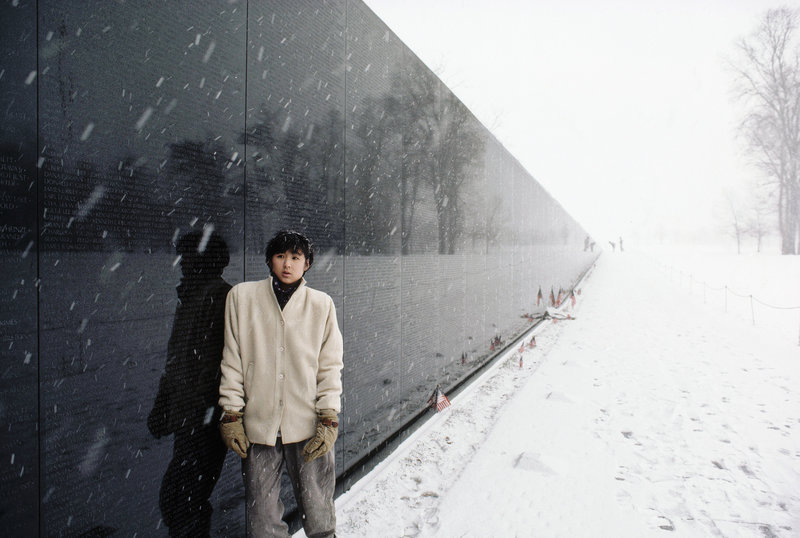
The Vietnam Veterans Memorial in Washington DC. (Credit: In Pictures Ltd./Corbis via Getty Images)
The Vietnam Veterans Memorial in Washington DC. (Credit: In Pictures Ltd./Corbis via Getty Images)
For veterans, the toll was even greater. The war had profound psychological effects, and even 40 years later veterans suffer from PTSD, exposure to chemicals like Agent Orange and wounds they received in the war. Over 300,000 Americans were wounded during the war.
Lin was aware of those costs, and she wanted to commemorate them with a fiercely modern design. She created it as part of a college architecture class that challenged students to make an entry for the national design competition for the planned memorial.
Instead of something heroic or celebratory, Lin imagined two stark black walls that began inside the earth, then grew and grew in height until they met—like a “wound that is closed and healing.” The V-shaped wall, designed to point toward the Lincoln and Washington Memorials, would be inscribed with the names of the dead in chronological order. It would exist inside a park, as inextricable from the landscape as it was from the minds of Americans.
“I just wanted to be honest with people,” Lin toldThe Washington Post. “I didn’t want to make something that said ‘They’ve gone away for a while.’ I wanted something that would just simply say ‘They can never come back. They should be remembered.’”
The jury, which judged the entries blind, agreed. (Meanwhile, Lin only got a B on her assignment; she ended up beating out her professor in the competition.) But Lin’s bleak concept didn’t sit well with many members of the public, who expected a more imposing, complex and grandiose monument with marble, columns and statues in the vein of other buildings on the Mall, like the Lincoln or Jefferson Memorials.
Jan C. Scruggs (L), President of the Vietnam Veteran's Memorial Fund, and Project Director Bob Doubek (R) display the final design for the memorial, designed by Yale architecture student Maya Ying Lin. (Credit: Bettmann/Getty Images)
Jan C. Scruggs (L), President of the Vietnam Veteran’s Memorial Fund, and Project Director Bob Doubek (R) display the final design for the memorial, designed by Yale architecture student Maya Ying Lin. (Credit: Bettmann/Getty Images)
A group of veterans protested the design, claiming that it was an ugly insult that portrayed the war as shameful, dishonorable and worth hiding. “For too long the veterans of that miserable conflict have borne the burden of the national ambivalence about the war,” wrote one critic. “To bury them now in a black stone sarcophagus, sunk into a hollow in the earth below eye level, is like spitting on their graves.”
Critics found an ally in then-radio host Patrick Buchanan and Congressman Henry Hyde. They launched a campaign to change the wall to a white color and add an eight-foot-high sculpture of soldiers to the site. The wall’s detractors used everything from Lin’s age to her ethnicity to her as reasons the design should be changed or abandoned altogether. Lin vehemently disagreed and accused Hyde of “drawing mustaches on other people’s portraits.”
The U.S. Commission of Fine Arts, which was in charge of the final design, finally brokered a compromise. They kept Lin’s design and added a sculpture that had won third place in the design competition, Frederick Elliot Hart’s “Three Soldiers,” nearby. A tribute to the 11,000 in uniform—the first to honor women’s military service in the nation’s capital—was added in 1993.
Lin did not attend the compromise meeting, and was so hurt by the controversy over her work that it took her years to discuss it publicly. In 2000, she published an essay about her design process. “It wasn’t so much of an artistic dispute as a political one,” she wrote. “It was extremely naïve of me to think that I could produce a neutral statement that would not become politically controversial simply because it chose not to take sides.” She had always intended the memorial to be apolitical, she wrote, but she regretted the ways she had become a weapon in the fight against a memorial intended to highlight veterans.
The critics may have been louder at the time, but many Americans were appreciative of Lin’s striking design. Spurred on by the activism of the wounded Vietnam veteran Jan C. Scruggs and sympathetic celebrities like Bob Hope, some 275,000 Americans, as well as businesses and veterans’ groups, donated $8.4 millon so the memorial could be built. While U.S Congress had allocated three acres on the National Mall for the Vietnam Veterans Memorial, funding for the project came from the private sector, not the government.
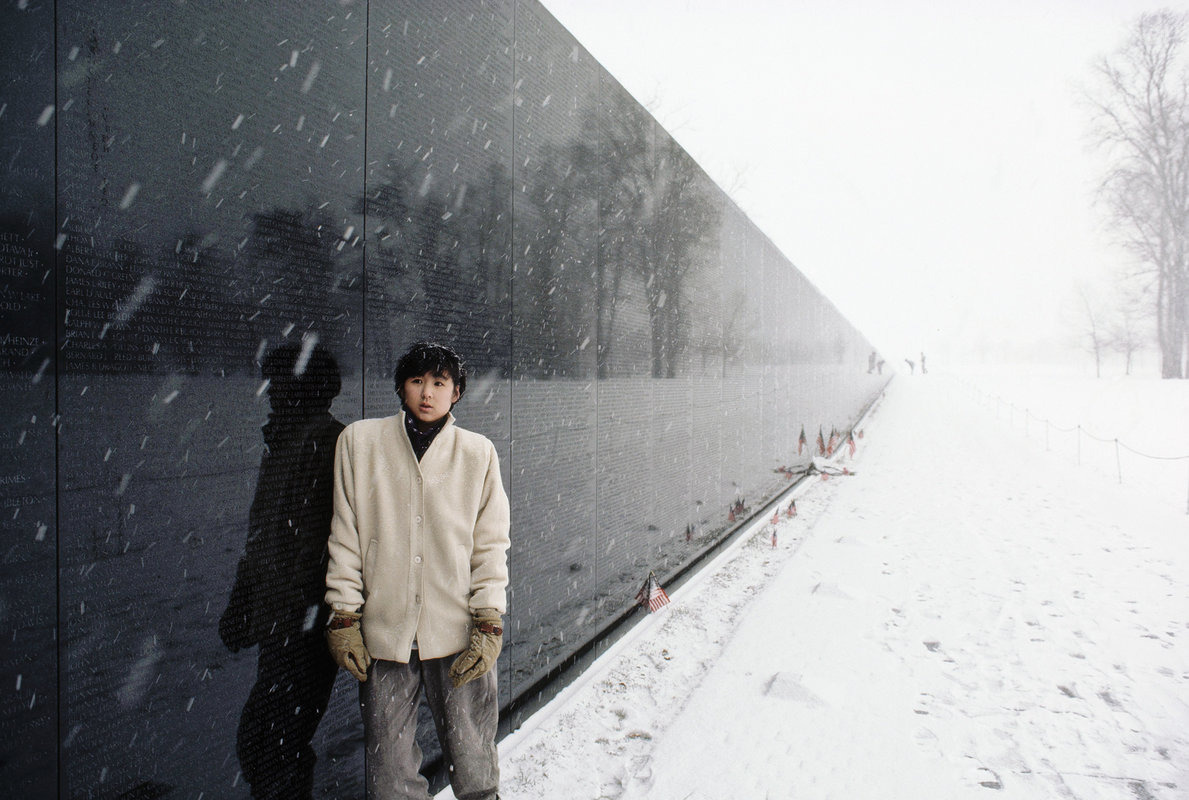
Vietnam Veterans Memorial Wall in Washington DC. (Credit: Rolf Adlercreutz/Alamy Stock Photo)
Vietnam Veterans Memorial Wall in Washington DC. (Credit: Rolf Adlercreutz/Alamy Stock Photo)
Today, the wall has become a destination for visitors to Washington D.C., even those who did not experience the war firsthand. People with friends or relatives who fought in the war search for their names and rub impressions of them onto paper. Offerings like letters, medals, photos and dog tags are left almost daily.
In 1999, Congress expanded its definition of both the length of the war and the areas it covered. As a result, the Department of Defense regularly learns of more service members who died during combat or whose service records have been re-evaluated and adds their names.
In 2010, a study even found that visiting the wall multiple times can help Vietnam veterans better cope with post-traumatic stress.
Now a world-respected artist and architect, Lin continues to design iconic structures like the Civil Rights Memorial, a fountain and sculpture in Montgomery, Alabama that is inscribed with the names of activists who died during the Civil Rights Movement. A member of the National Women’s Hall of Fame, she received the Presidential Medal of Freedom in 2016. But her most lasting legacy will likely be the wall she designed as a 21-year-old student—and how it honors the veterans it was meant to commemorate."
"This 21-Year-Old College Student Designed the Vietnam Veterans Memorial
Maya Lin won a design competition—and sparked a national controversy.
You’ve probably seen it: the simple black walls that emerge from the peaceful Constitution Gardens in Washington, D.C., the more than 58,000 half-inch-high names inscribed on the granite. It’s the Vietnam Veterans Memorial, and since 1982, it has commemorated military personnel who died or were declared missing in action during their Vietnam War service.
The moment plans for the memorial were unveiled, it was clear the structure would be immediately recognizable—and controversial. It was all the more astonishing because of its creator, an unknown, 21-year-old student with no professional experience.
Maya Lin was still an undergraduate at Yale University when she beat out over 1,400 competitors in a competition to design the memorial. A Chinese-American, Lin was born in Ohio, where her parents were professors. They escaped mainland China as young adults when it became clear that their families might be threatened by Maoist revolutionaries.
Though she majored in architecture, Lin was far from an architect. She also had little personal connection to the Vietnam. She did experience its effects, though: During the 1970s, the war indelibly impacted American life and popular culture. Television news brought the war into peoples’ living rooms in unprecedented—and graphic—detail. Young adults lived in fear of the draft, and the father of one of Lin’s high school friends was killed in combat.
The Vietnam Veterans Memorial in Washington DC. (Credit: In Pictures Ltd./Corbis via Getty Images)
The Vietnam Veterans Memorial in Washington DC. (Credit: In Pictures Ltd./Corbis via Getty Images)
For veterans, the toll was even greater. The war had profound psychological effects, and even 40 years later veterans suffer from PTSD, exposure to chemicals like Agent Orange and wounds they received in the war. Over 300,000 Americans were wounded during the war.
Lin was aware of those costs, and she wanted to commemorate them with a fiercely modern design. She created it as part of a college architecture class that challenged students to make an entry for the national design competition for the planned memorial.
Instead of something heroic or celebratory, Lin imagined two stark black walls that began inside the earth, then grew and grew in height until they met—like a “wound that is closed and healing.” The V-shaped wall, designed to point toward the Lincoln and Washington Memorials, would be inscribed with the names of the dead in chronological order. It would exist inside a park, as inextricable from the landscape as it was from the minds of Americans.
“I just wanted to be honest with people,” Lin toldThe Washington Post. “I didn’t want to make something that said ‘They’ve gone away for a while.’ I wanted something that would just simply say ‘They can never come back. They should be remembered.’”
The jury, which judged the entries blind, agreed. (Meanwhile, Lin only got a B on her assignment; she ended up beating out her professor in the competition.) But Lin’s bleak concept didn’t sit well with many members of the public, who expected a more imposing, complex and grandiose monument with marble, columns and statues in the vein of other buildings on the Mall, like the Lincoln or Jefferson Memorials.
Jan C. Scruggs (L), President of the Vietnam Veteran's Memorial Fund, and Project Director Bob Doubek (R) display the final design for the memorial, designed by Yale architecture student Maya Ying Lin. (Credit: Bettmann/Getty Images)
Jan C. Scruggs (L), President of the Vietnam Veteran’s Memorial Fund, and Project Director Bob Doubek (R) display the final design for the memorial, designed by Yale architecture student Maya Ying Lin. (Credit: Bettmann/Getty Images)
A group of veterans protested the design, claiming that it was an ugly insult that portrayed the war as shameful, dishonorable and worth hiding. “For too long the veterans of that miserable conflict have borne the burden of the national ambivalence about the war,” wrote one critic. “To bury them now in a black stone sarcophagus, sunk into a hollow in the earth below eye level, is like spitting on their graves.”
Critics found an ally in then-radio host Patrick Buchanan and Congressman Henry Hyde. They launched a campaign to change the wall to a white color and add an eight-foot-high sculpture of soldiers to the site. The wall’s detractors used everything from Lin’s age to her ethnicity to her as reasons the design should be changed or abandoned altogether. Lin vehemently disagreed and accused Hyde of “drawing mustaches on other people’s portraits.”
The U.S. Commission of Fine Arts, which was in charge of the final design, finally brokered a compromise. They kept Lin’s design and added a sculpture that had won third place in the design competition, Frederick Elliot Hart’s “Three Soldiers,” nearby. A tribute to the 11,000 in uniform—the first to honor women’s military service in the nation’s capital—was added in 1993.
Lin did not attend the compromise meeting, and was so hurt by the controversy over her work that it took her years to discuss it publicly. In 2000, she published an essay about her design process. “It wasn’t so much of an artistic dispute as a political one,” she wrote. “It was extremely naïve of me to think that I could produce a neutral statement that would not become politically controversial simply because it chose not to take sides.” She had always intended the memorial to be apolitical, she wrote, but she regretted the ways she had become a weapon in the fight against a memorial intended to highlight veterans.
The critics may have been louder at the time, but many Americans were appreciative of Lin’s striking design. Spurred on by the activism of the wounded Vietnam veteran Jan C. Scruggs and sympathetic celebrities like Bob Hope, some 275,000 Americans, as well as businesses and veterans’ groups, donated $8.4 millon so the memorial could be built. While U.S Congress had allocated three acres on the National Mall for the Vietnam Veterans Memorial, funding for the project came from the private sector, not the government.
Vietnam Veterans Memorial Wall in Washington DC. (Credit: Rolf Adlercreutz/Alamy Stock Photo)
Vietnam Veterans Memorial Wall in Washington DC. (Credit: Rolf Adlercreutz/Alamy Stock Photo)
Today, the wall has become a destination for visitors to Washington D.C., even those who did not experience the war firsthand. People with friends or relatives who fought in the war search for their names and rub impressions of them onto paper. Offerings like letters, medals, photos and dog tags are left almost daily.
In 1999, Congress expanded its definition of both the length of the war and the areas it covered. As a result, the Department of Defense regularly learns of more service members who died during combat or whose service records have been re-evaluated and adds their names.
In 2010, a study even found that visiting the wall multiple times can help Vietnam veterans better cope with post-traumatic stress.
Now a world-respected artist and architect, Lin continues to design iconic structures like the Civil Rights Memorial, a fountain and sculpture in Montgomery, Alabama that is inscribed with the names of activists who died during the Civil Rights Movement. A member of the National Women’s Hall of Fame, she received the Presidential Medal of Freedom in 2016. But her most lasting legacy will likely be the wall she designed as a 21-year-old student—and how it honors the veterans it was meant to commemorate."

This 21-Year-Old College Student Designed the Vietnam Veterans Memorial
Posted from history.com Vietnam War
 Memorial
 Architecture
 American History
 Military History
Posted >1 y ago
Responses: 18
15
15
0

14
14
0
Thank you for the great history share brother David, have a great D Day brother.
(14)
(0)
12
12
0

Maya Lin, Vietnam Veterans Memorial
Maya Lin, Vietnam Veterans Memorial, 1982, granite, 2 acres within Constitution Gardens, (National Mall, Washington, D.C.), speakers: Dr. Beth Harris and Dr....
Thank you my friend SGT (Join to see) for making us aware that on June 6, 1981 21-year-old Chinese-American architect old Maya Ying Lin won the competition to design the Vietnam War Memorial.
Kudos to Maya Ying Lin
Maya Lin, Vietnam Veterans Memorial
"Maya Lin, Vietnam Veterans Memorial, 1982, granite, 2 acres within Constitution Gardens, (National Mall, Washington, D.C.), speakers: Dr. Beth Harris and Dr. Steven Zucker."
https://www.youtube.com/watch?v=wuxjTxxQUTs
Images:
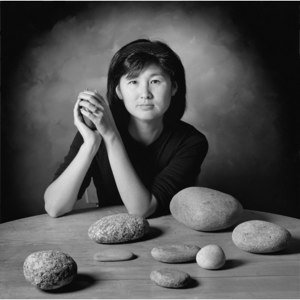
1. Maya Ying Lin seated behind table with stones in front of her
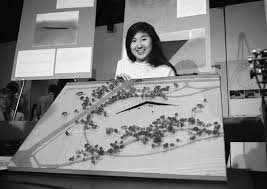
2. Maya Ying Lin, the Yale architecture student who submitted the winning design for the Vietnam Veterans' Memorial, holds a scale model of her design on May 6, 1981.
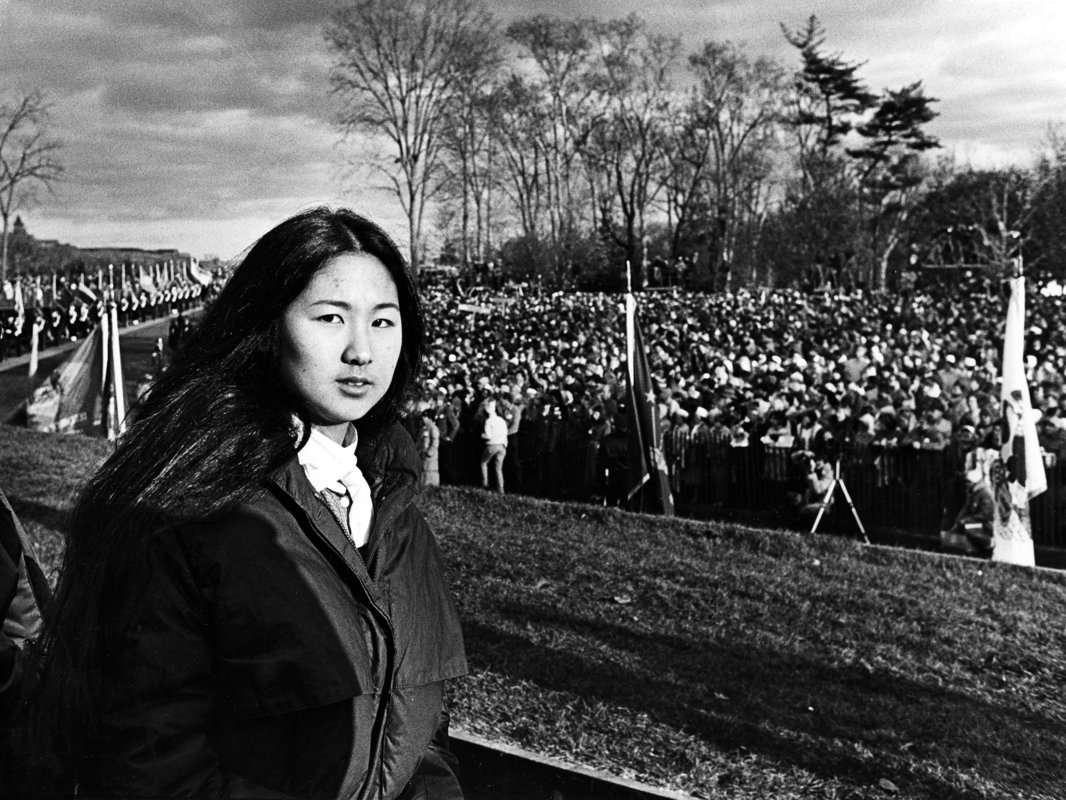
3. Maya Lin, architect of the Vietnam Veterans Memorial, stands during the dedication on November 13, 1982. A large crowd of friends and relatives of those who served attended the dedication. (Harry Naltchayan and Getty Images)
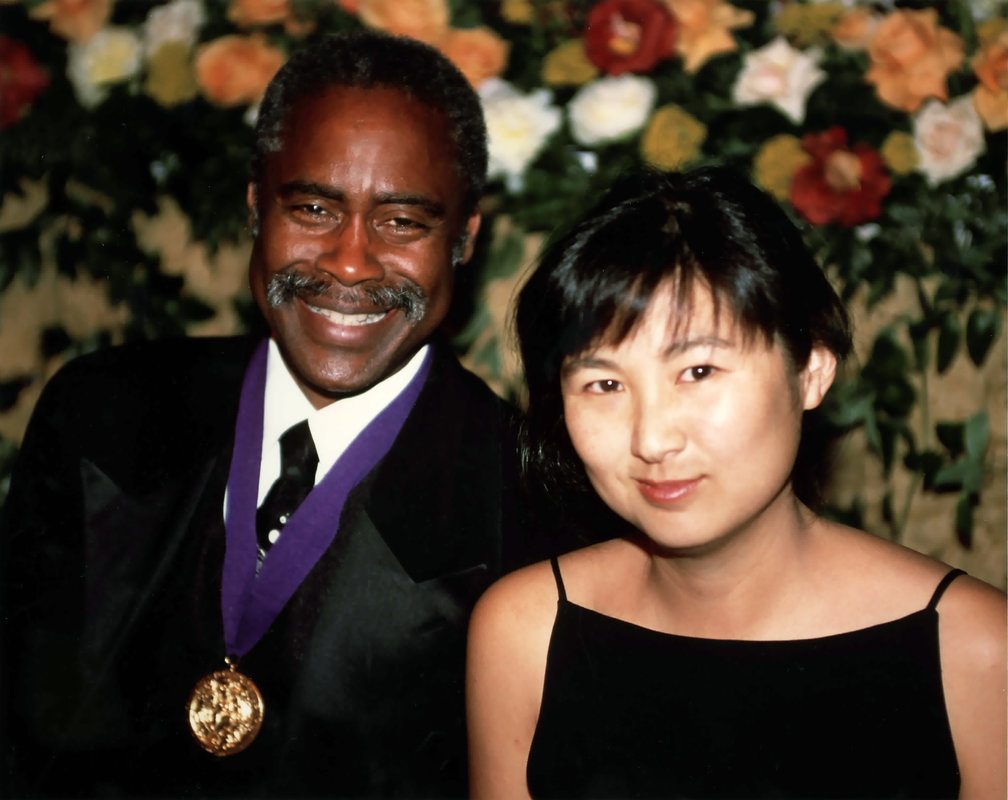
4. 2000: Maya Lin and Edward Lewis, Academy guest of honor and Co-Founder and Publisher of Essence magazine, during the American Academy of Achievement’s Banquet of the Golden Plate ceremonies in Scottsdale, Arizona.
Biographies:
1. theartstory.org/artist/lin-maya/life-and-legacy/#biography_header]
2. mentalfloss.com/article/26101/5-things-you-didnt-know-about-maya-lin
1. Background from [[https://www.theartstory.org/artist/lin-maya/life-and-legacy/#biography_header]}
Biography of Maya Lin
Childhood
Maya Lin was born to Chinese intellectuals who had fled China in 1948, just as the Communist takeover was occurring. Her hometown of Athens, Ohio, known for its manufacturing and agriculture, is also the home of Ohio University, an institution that played a major role in her youth. Her mother Julia Chang Lin, a poet, was a literature professor at the university and her father, Henry Huan Lin, was a ceramicist and also the Dean of the School of Fine Art. Lin was in her father's studio, "making art as long as she can remember." A precocious student, Lin was fascinated with the natural world and with science, and read constantly. She wanted to be a veterinarian or an animal behaviorist, and her parents allowed her to have a pet parakeet. As she was growing up through the seventies, environmentalism was on the rise and it remained an important part of her sensibility. In high school, Lin did not conform to the stereotype of the Midwestern teenage girl. She steered clear of the prom, football games, and make-up, and grew her hair down to her waist. While still in high school, she took art courses at university level and began experimenting with bronze casting at the foundry. In her spare time, she took walks in the woods, letting her imagination roam, or played chess with her older brother, to whom she looked up. Fueled by the traditional Chinese aesthetic of her childhood home and the surroundings of rural Ohio, Lin's sensibilities as an architect began to blossom. Elements of this background would return in her later work, especially in college.
Early Training
In 1977 Lin graduated as co-valedictorian of her high school and entered Yale University. She initially pursued an interest in zoology but soon changed her major to architecture. While traveling in Denmark with a group of students from Yale, she was mistaken for a Greenlander, a racial group against whom there is significant discrimination in Denmark. This experience was formative for Lin, causing her to look deeper into her Chinese heritage and address it more directly in her art. Racial and social justice became more central to her as a result of this negative experience.
Lin's final year at Yale was the beginning of the best-known part of her career. She entered the competition to design a new Vietnam Veterans Memorial for Washington D.C., and what began as a simple class assignment for a college senior became a life-changing moment. Amongst 1,400 anonymous entries in the nation-wide public competition for the memorial, Lin's design was chosen as the winning blueprint. It was a remarkable decision, virtually unheard of for an architect so young, and not everyone was happy with it. Some Vietnam veterans, civic leaders and officials in Washington who had not been part of the decision felt that the historic commission should not be entrusted to an architect with no established track record of realized works and no personal connection to the event. Others claimed that hiring an Asian designer would disgrace the soldiers who died at the hands of the Vietnamese, bringing to light blatantly racist elements in the controversy over the piece. The college senior was called to defend her project in front of the United States Congress, and despite her wishes, a bargain was struck with the opposition. Another statue, a traditional bronze representation of soldiers with the American flag, would be placed near the architect's minimalist work. During the installation, Lin began graduate school at Harvard, but was bussing down to Washington D.C. so often to testify on behalf of her design that she couldn't keep up with the rigors of Harvard life, and withdrew after one semester. She later returned to Yale and completed her Masters in 1986.
Mature Period
After concluding her studies Lin continued to design memorials across America, expanding her practice across public installations and memorials, but also inching her way into a studio practice focused on traditional sculptures. Her focus and work ethic paid off immensely during these years. She obtained solo and group exhibitions, various awards, teaching appointments, and artist residencies. She established her own studio in New York, and created many more.
After designing some widely recognized memorials, Lin decided she needed to prove to herself and others that she could do more. Her interest in the natural world began to blossom and she used the earth and landscape as subjects of her installation and sculptural works. In relation to her work a documentary, Maya Lin: A Strong Clear Vision (1995) won an Academy Award for Best Documentary.
In 1996 while finding refuge from an electrical storm in an abandoned horse trailer during a backpacking trip in Colorado, she met her future husband Daniel Wolf, an art collector and film producer who shared her passion for nature and art. They became engaged and still return to the horse trailer for vacations. They both collect rocks. Lin looks for river-washed pebbles while her husband likes quartz crystals. Wolf describes the pair as being individuals who complement each other's eccentricities. A year after their marriage, at the age of 38, Lin had her first child: a daughter named India. Throughout the beginning stages of motherhood Lin designed their family home, and learned to lessen her obsessive work ethic. As an artist she loved living in her own world, but once she began to have a family she realized that she had to begin to spread her focus. In 1999 their next daughter, Rachel, was born.
Lin continued to work, receive awards, and lecture. In the late 1990s she returned to two of her original passions: science and landscape, and began to formulate a specific style using high-tech sonar resonance scans and aerial and satellite mapping devices. Her architectural background began to evolve along with her artistry as she created many more and varied artworks.
Later Work
Lin continues to look at the environment as she progresses as an artist. She creates important installations that use elements of the natural world, always focusing on landscape. She often revisits interests developed in childhood, among them biology and zoology. While recognizing that her art will never be able to rival natural beauty, she consistently works in conjunction with the land, demonstrating a reverence and understanding of it. Her travels have taken her to some of the most beautiful regions of the earth. Her most recent memorial, What is Missing?, responds to the loss of habitat and biodiversity and the threatening reality of climate change. The piece strives to catalogue and preserve the land and animals of our planet before they go extinct. First unveiled on September 17, 2009, the memorial is an ongoing project, extending into physical and cyberspace. Lin continues to have her hand in multiple endeavors, designing architectural and sculptural works out of her studio in New York City.
The Legacy of Maya Lin
Early success allowed Lin to watch perceptions of her work evolve dramatically over the years. Initial resistance to her work gave way to widespread public admiration for pushing the boundaries of what a memorial is. Her impact on other artists has been widespread in all fields, but perhaps most especially in conceptual sculpture and public art. Jane Hammond's Fallen, a collection of autumn leaves, each inscribed with the name of an American soldier killed in Iraq (purchased by the Whitney in 2009), highlighted cumulative loss in a manner indebted to Lin. In its recitation of individual names Ai Weiwei's Backpack Project of 2008, an installation commemorating an earthquake in which unsafe school structures collapsed on Szechuan children, owes much to Lin's strategy. Lin's ongoing What is Missing? project, leverages her prowess as the most famous living designer of memorials to call attention to climate change, which she sees as the greatest challenge to the human species. The piece inspires cooperative artists to this day."
2. Background from [[https://www.mentalfloss.com/article/26101/5-things-you-didnt-know-about-maya-lin]}
"5 Things You Didn't Know About Maya Lin by ETHAN TREX
OCTOBER 15, 2010
Sculptor and architect Maya Lin is best known for her design of the Vietnam Veterans’ Memorial in Washington, D.C., but modern viewers may not know about her rise to prominence and the subsequent controversy. Let’s take a look at five interesting facts about the architect from Athens, Ohio.
1. She Had an Early Start
Lin’s design has become so celebrated that it’s easy to forget how young she was when she first proposed it. The national contest to design a Vietnam memorial drew 1,421 entries, including such oddball suggestions as a steel soldier’s helmet the size of a house, but in the end, Lin’s granite wall won the competition. She wasn’t a seasoned architect and sculptor, though; when Lin won she was still a 21-year-old senior at Yale.
Although the victory obviously kick-started Lin’s career, it also led to some awkward situations. Lin had originally designed the monument as a project for a class on funerary architecture with Professor Andrus Burr. Burr had submitted his own design in the memorial competition but lost out to Lin. It's often reported that Burr gave Lin's design a B+, but the professor claims she received an A (but she received a B+ for his course).
2. She Had Her Share of Critics
Lin had to weather harsh criticism from a variety of sources. The National Review denounced Lin’s project as “Orwellian glop.” Vietnam veterans decried it as a “black gash of shame.” And those were the nicer critiques. Tom Wolfe and Peter Schlafly witheringly dubbed it “a tribute to Jane Fonda.” While Lin had intended for the wall’s simplicity to prompt introspection and honor for the fallen soldiers, many critics just thought it was bleak or strange, particularly because the soldiers’ names were listed chronologically rather than alphabetically.
Ross Perot might have been Lin’s most visible opponent, though. The tycoon and future presidential candidate had put up $160,000 to help fund the design competition, but he dismissed the winning design as “something for New York intellectuals.” Lin later told The New Yorker that Perot even visited her office and asked, “Doncha just think they need a parade?” Lin responded, “Well, they really need more than a parade.”
3. But She Had One Very Polite Ally
As veterans’ groups and Perot were publicly agitating for Lin’s design to either be scrapped or heavily modified, Lin found an unlikely advocate: Miss Manners. Judith Martin, better known to the world as the etiquette columnist, took Lin under her wing during the architect’s tumultuous time in Washington as she tried to get the memorial built. Martin, along with Washington Post architecture critic Wolf von Eckardt, helped Lin get some positive publicity to sway attitudes in favor of her project.
4. Her Critics Ended Up Eating Crow
Although Lin’s design was controversial when it was in the planning stages, once it was built a number of her more outspoken critics changed their stances. Lin later told PBS that the critic who had penned the “Orwellian glop” insult wrote her a very nice letter to apologize. Lin recounted that the critic wrote, “I'm really sorry. I made a mistake."
In the end, Lin took all of the controversy in stride. In the same PBS interview she said the only people she ended up really thinking less of because of the whole fracas were Ross Perot and Secretary of the Interior James G. Watt, who held up the memorial’s building permits in an attempt to change the design.
5. The Wall Wasn’t Her Only Controversial Win
For a while, Lin seemingly couldn’t escape controversy no matter how hard she tried. In 1994, documentary filmmaker Freida Lee Mock won the Academy Award for Best Documentary Feature for her film Maya Lin: A Strong Clear Vision. Nice honor for Lin as the film’s subject, right? Not so much. Turns out that Lin was part of another award-winning project that drew considerable fire.
While most critics agreed that the film about Lin was a perfectly good documentary, they couldn’t understand why Hoop Dreams, which most viewers thought was a vastly superior film, couldn’t even garner a lousy nomination for the Oscar. After similarly praised docs like The Thin Blue Line and Roger & Me had suffered the same slight, many insiders began agitating for a new way to nominate documentaries. Since Mock had formerly chaired the Academy’s documentary committee, conspiracy theorists leveled charges of cronyism against the award.
The real problem, though, was that the criteria for garnering a nomination were a bit bizarre. Since the Academy only had 47 people on its documentary nomination committee – as opposed to 400-plus on its foreign film committee – it was incredibly difficult to screen every potential nominee. While most categories required that films be shown for at least a week in a theatrical run in Los Angeles, best doc nominees could only be drawn from a list of films that had appeared at a select handful of festivals. While this system helped cut the undermanned committee’s workload, it led to head-scratching omissions from the final lists of nominees.
The Lin documentary’s controversial win (and Hoop Dreams’ snub) ended up being the last straw for documentary filmmakers. Within a year the Academy added a second documentary review committee in New York and began requiring a weeklong theatrical run for eligibility in the category."
FYI COL Mikel J. Burroughs SPC Margaret Higgins SPC Randy Zimmerman SPC Nancy GreeneSSG Franklin Briant1stsgt Glenn BrackinSSG Stephen RogersonSSgt Corwin WhickerCPT Paul Whitmer1SG Steven ImermanSSG Samuel KermonSP5 Geoffrey VannersonSFC Richard WilliamsonSPC Richard (Rick) HenrySSG Pete FishLCDR Clark Paton1SG Joseph DarteyLT Ed Skiba
Maj Scott Kiger, M.A.S.
Kudos to Maya Ying Lin
Maya Lin, Vietnam Veterans Memorial
"Maya Lin, Vietnam Veterans Memorial, 1982, granite, 2 acres within Constitution Gardens, (National Mall, Washington, D.C.), speakers: Dr. Beth Harris and Dr. Steven Zucker."
https://www.youtube.com/watch?v=wuxjTxxQUTs
Images:
1. Maya Ying Lin seated behind table with stones in front of her
2. Maya Ying Lin, the Yale architecture student who submitted the winning design for the Vietnam Veterans' Memorial, holds a scale model of her design on May 6, 1981.
3. Maya Lin, architect of the Vietnam Veterans Memorial, stands during the dedication on November 13, 1982. A large crowd of friends and relatives of those who served attended the dedication. (Harry Naltchayan and Getty Images)
4. 2000: Maya Lin and Edward Lewis, Academy guest of honor and Co-Founder and Publisher of Essence magazine, during the American Academy of Achievement’s Banquet of the Golden Plate ceremonies in Scottsdale, Arizona.
Biographies:
1. theartstory.org/artist/lin-maya/life-and-legacy/#biography_header]
2. mentalfloss.com/article/26101/5-things-you-didnt-know-about-maya-lin
1. Background from [[https://www.theartstory.org/artist/lin-maya/life-and-legacy/#biography_header]}
Biography of Maya Lin
Childhood
Maya Lin was born to Chinese intellectuals who had fled China in 1948, just as the Communist takeover was occurring. Her hometown of Athens, Ohio, known for its manufacturing and agriculture, is also the home of Ohio University, an institution that played a major role in her youth. Her mother Julia Chang Lin, a poet, was a literature professor at the university and her father, Henry Huan Lin, was a ceramicist and also the Dean of the School of Fine Art. Lin was in her father's studio, "making art as long as she can remember." A precocious student, Lin was fascinated with the natural world and with science, and read constantly. She wanted to be a veterinarian or an animal behaviorist, and her parents allowed her to have a pet parakeet. As she was growing up through the seventies, environmentalism was on the rise and it remained an important part of her sensibility. In high school, Lin did not conform to the stereotype of the Midwestern teenage girl. She steered clear of the prom, football games, and make-up, and grew her hair down to her waist. While still in high school, she took art courses at university level and began experimenting with bronze casting at the foundry. In her spare time, she took walks in the woods, letting her imagination roam, or played chess with her older brother, to whom she looked up. Fueled by the traditional Chinese aesthetic of her childhood home and the surroundings of rural Ohio, Lin's sensibilities as an architect began to blossom. Elements of this background would return in her later work, especially in college.
Early Training
In 1977 Lin graduated as co-valedictorian of her high school and entered Yale University. She initially pursued an interest in zoology but soon changed her major to architecture. While traveling in Denmark with a group of students from Yale, she was mistaken for a Greenlander, a racial group against whom there is significant discrimination in Denmark. This experience was formative for Lin, causing her to look deeper into her Chinese heritage and address it more directly in her art. Racial and social justice became more central to her as a result of this negative experience.
Lin's final year at Yale was the beginning of the best-known part of her career. She entered the competition to design a new Vietnam Veterans Memorial for Washington D.C., and what began as a simple class assignment for a college senior became a life-changing moment. Amongst 1,400 anonymous entries in the nation-wide public competition for the memorial, Lin's design was chosen as the winning blueprint. It was a remarkable decision, virtually unheard of for an architect so young, and not everyone was happy with it. Some Vietnam veterans, civic leaders and officials in Washington who had not been part of the decision felt that the historic commission should not be entrusted to an architect with no established track record of realized works and no personal connection to the event. Others claimed that hiring an Asian designer would disgrace the soldiers who died at the hands of the Vietnamese, bringing to light blatantly racist elements in the controversy over the piece. The college senior was called to defend her project in front of the United States Congress, and despite her wishes, a bargain was struck with the opposition. Another statue, a traditional bronze representation of soldiers with the American flag, would be placed near the architect's minimalist work. During the installation, Lin began graduate school at Harvard, but was bussing down to Washington D.C. so often to testify on behalf of her design that she couldn't keep up with the rigors of Harvard life, and withdrew after one semester. She later returned to Yale and completed her Masters in 1986.
Mature Period
After concluding her studies Lin continued to design memorials across America, expanding her practice across public installations and memorials, but also inching her way into a studio practice focused on traditional sculptures. Her focus and work ethic paid off immensely during these years. She obtained solo and group exhibitions, various awards, teaching appointments, and artist residencies. She established her own studio in New York, and created many more.
After designing some widely recognized memorials, Lin decided she needed to prove to herself and others that she could do more. Her interest in the natural world began to blossom and she used the earth and landscape as subjects of her installation and sculptural works. In relation to her work a documentary, Maya Lin: A Strong Clear Vision (1995) won an Academy Award for Best Documentary.
In 1996 while finding refuge from an electrical storm in an abandoned horse trailer during a backpacking trip in Colorado, she met her future husband Daniel Wolf, an art collector and film producer who shared her passion for nature and art. They became engaged and still return to the horse trailer for vacations. They both collect rocks. Lin looks for river-washed pebbles while her husband likes quartz crystals. Wolf describes the pair as being individuals who complement each other's eccentricities. A year after their marriage, at the age of 38, Lin had her first child: a daughter named India. Throughout the beginning stages of motherhood Lin designed their family home, and learned to lessen her obsessive work ethic. As an artist she loved living in her own world, but once she began to have a family she realized that she had to begin to spread her focus. In 1999 their next daughter, Rachel, was born.
Lin continued to work, receive awards, and lecture. In the late 1990s she returned to two of her original passions: science and landscape, and began to formulate a specific style using high-tech sonar resonance scans and aerial and satellite mapping devices. Her architectural background began to evolve along with her artistry as she created many more and varied artworks.
Later Work
Lin continues to look at the environment as she progresses as an artist. She creates important installations that use elements of the natural world, always focusing on landscape. She often revisits interests developed in childhood, among them biology and zoology. While recognizing that her art will never be able to rival natural beauty, she consistently works in conjunction with the land, demonstrating a reverence and understanding of it. Her travels have taken her to some of the most beautiful regions of the earth. Her most recent memorial, What is Missing?, responds to the loss of habitat and biodiversity and the threatening reality of climate change. The piece strives to catalogue and preserve the land and animals of our planet before they go extinct. First unveiled on September 17, 2009, the memorial is an ongoing project, extending into physical and cyberspace. Lin continues to have her hand in multiple endeavors, designing architectural and sculptural works out of her studio in New York City.
The Legacy of Maya Lin
Early success allowed Lin to watch perceptions of her work evolve dramatically over the years. Initial resistance to her work gave way to widespread public admiration for pushing the boundaries of what a memorial is. Her impact on other artists has been widespread in all fields, but perhaps most especially in conceptual sculpture and public art. Jane Hammond's Fallen, a collection of autumn leaves, each inscribed with the name of an American soldier killed in Iraq (purchased by the Whitney in 2009), highlighted cumulative loss in a manner indebted to Lin. In its recitation of individual names Ai Weiwei's Backpack Project of 2008, an installation commemorating an earthquake in which unsafe school structures collapsed on Szechuan children, owes much to Lin's strategy. Lin's ongoing What is Missing? project, leverages her prowess as the most famous living designer of memorials to call attention to climate change, which she sees as the greatest challenge to the human species. The piece inspires cooperative artists to this day."
2. Background from [[https://www.mentalfloss.com/article/26101/5-things-you-didnt-know-about-maya-lin]}
"5 Things You Didn't Know About Maya Lin by ETHAN TREX
OCTOBER 15, 2010
Sculptor and architect Maya Lin is best known for her design of the Vietnam Veterans’ Memorial in Washington, D.C., but modern viewers may not know about her rise to prominence and the subsequent controversy. Let’s take a look at five interesting facts about the architect from Athens, Ohio.
1. She Had an Early Start
Lin’s design has become so celebrated that it’s easy to forget how young she was when she first proposed it. The national contest to design a Vietnam memorial drew 1,421 entries, including such oddball suggestions as a steel soldier’s helmet the size of a house, but in the end, Lin’s granite wall won the competition. She wasn’t a seasoned architect and sculptor, though; when Lin won she was still a 21-year-old senior at Yale.
Although the victory obviously kick-started Lin’s career, it also led to some awkward situations. Lin had originally designed the monument as a project for a class on funerary architecture with Professor Andrus Burr. Burr had submitted his own design in the memorial competition but lost out to Lin. It's often reported that Burr gave Lin's design a B+, but the professor claims she received an A (but she received a B+ for his course).
2. She Had Her Share of Critics
Lin had to weather harsh criticism from a variety of sources. The National Review denounced Lin’s project as “Orwellian glop.” Vietnam veterans decried it as a “black gash of shame.” And those were the nicer critiques. Tom Wolfe and Peter Schlafly witheringly dubbed it “a tribute to Jane Fonda.” While Lin had intended for the wall’s simplicity to prompt introspection and honor for the fallen soldiers, many critics just thought it was bleak or strange, particularly because the soldiers’ names were listed chronologically rather than alphabetically.
Ross Perot might have been Lin’s most visible opponent, though. The tycoon and future presidential candidate had put up $160,000 to help fund the design competition, but he dismissed the winning design as “something for New York intellectuals.” Lin later told The New Yorker that Perot even visited her office and asked, “Doncha just think they need a parade?” Lin responded, “Well, they really need more than a parade.”
3. But She Had One Very Polite Ally
As veterans’ groups and Perot were publicly agitating for Lin’s design to either be scrapped or heavily modified, Lin found an unlikely advocate: Miss Manners. Judith Martin, better known to the world as the etiquette columnist, took Lin under her wing during the architect’s tumultuous time in Washington as she tried to get the memorial built. Martin, along with Washington Post architecture critic Wolf von Eckardt, helped Lin get some positive publicity to sway attitudes in favor of her project.
4. Her Critics Ended Up Eating Crow
Although Lin’s design was controversial when it was in the planning stages, once it was built a number of her more outspoken critics changed their stances. Lin later told PBS that the critic who had penned the “Orwellian glop” insult wrote her a very nice letter to apologize. Lin recounted that the critic wrote, “I'm really sorry. I made a mistake."
In the end, Lin took all of the controversy in stride. In the same PBS interview she said the only people she ended up really thinking less of because of the whole fracas were Ross Perot and Secretary of the Interior James G. Watt, who held up the memorial’s building permits in an attempt to change the design.
5. The Wall Wasn’t Her Only Controversial Win
For a while, Lin seemingly couldn’t escape controversy no matter how hard she tried. In 1994, documentary filmmaker Freida Lee Mock won the Academy Award for Best Documentary Feature for her film Maya Lin: A Strong Clear Vision. Nice honor for Lin as the film’s subject, right? Not so much. Turns out that Lin was part of another award-winning project that drew considerable fire.
While most critics agreed that the film about Lin was a perfectly good documentary, they couldn’t understand why Hoop Dreams, which most viewers thought was a vastly superior film, couldn’t even garner a lousy nomination for the Oscar. After similarly praised docs like The Thin Blue Line and Roger & Me had suffered the same slight, many insiders began agitating for a new way to nominate documentaries. Since Mock had formerly chaired the Academy’s documentary committee, conspiracy theorists leveled charges of cronyism against the award.
The real problem, though, was that the criteria for garnering a nomination were a bit bizarre. Since the Academy only had 47 people on its documentary nomination committee – as opposed to 400-plus on its foreign film committee – it was incredibly difficult to screen every potential nominee. While most categories required that films be shown for at least a week in a theatrical run in Los Angeles, best doc nominees could only be drawn from a list of films that had appeared at a select handful of festivals. While this system helped cut the undermanned committee’s workload, it led to head-scratching omissions from the final lists of nominees.
The Lin documentary’s controversial win (and Hoop Dreams’ snub) ended up being the last straw for documentary filmmakers. Within a year the Academy added a second documentary review committee in New York and began requiring a weeklong theatrical run for eligibility in the category."
FYI COL Mikel J. Burroughs SPC Margaret Higgins SPC Randy Zimmerman SPC Nancy GreeneSSG Franklin Briant1stsgt Glenn BrackinSSG Stephen RogersonSSgt Corwin WhickerCPT Paul Whitmer1SG Steven ImermanSSG Samuel KermonSP5 Geoffrey VannersonSFC Richard WilliamsonSPC Richard (Rick) HenrySSG Pete FishLCDR Clark Paton1SG Joseph DarteyLT Ed Skiba
Maj Scott Kiger, M.A.S.
(12)
(0)
LTC Stephen F.
Maya Lin, Academy Class of 2000, Full Interview
www.achievement.org Copyright: American Academy of Achievement
Maya Lin, Academy Class of 2000, Full Interview
https://www.youtube.com/watch?v=ja1XtYoO9Ws
Images:
1. Portrait of Maya Ying Lin, who designed the Vietnam Veterans Memorial in Washington D.C., January 1985
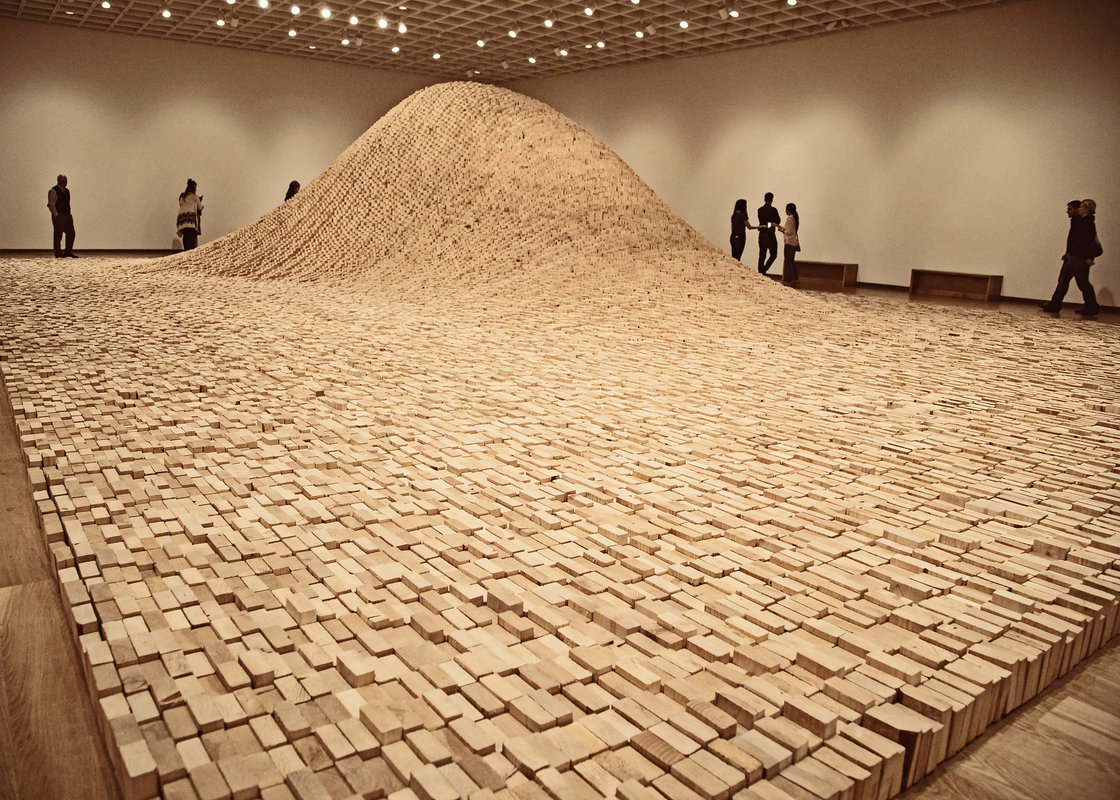
2. Maya Lin, 2×4 Landscape, 2006, SFI certified wood 2x4s, 10’ x 53’4” x 35’
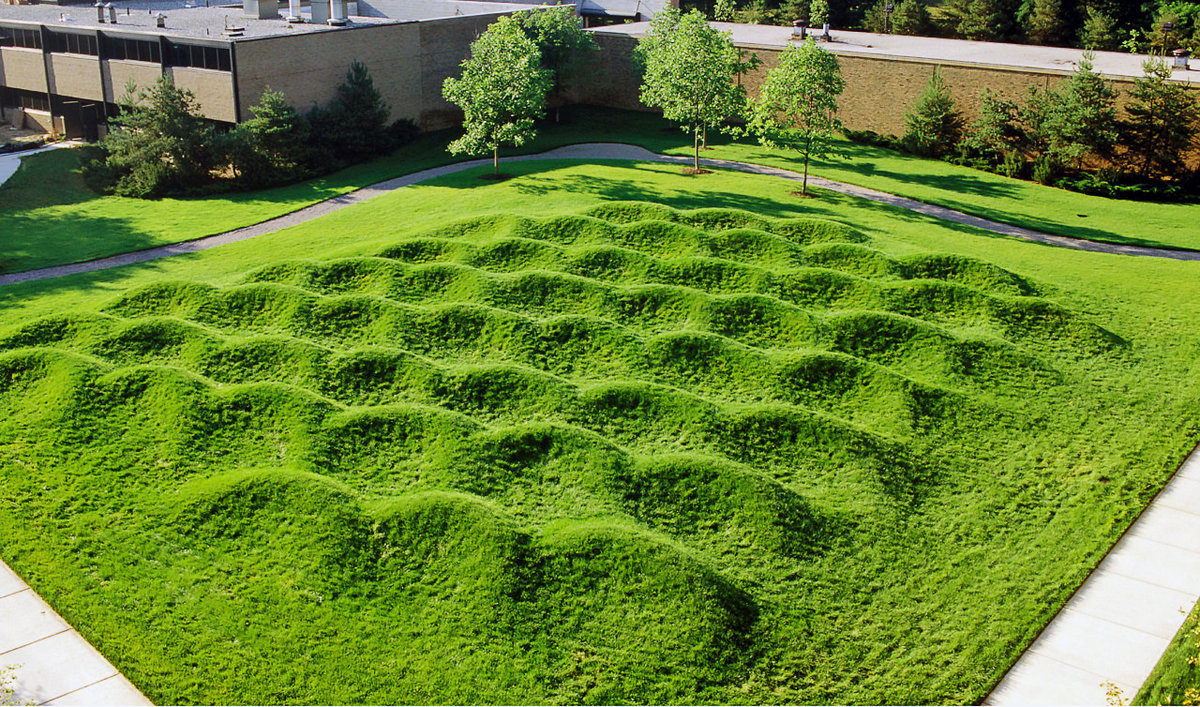
3. Wave Field, Maya Lin, University of Michigan, Ann Arbor, 1995. A pure earth sculpture occupying a square space of 90′ x 90′ and representing a naturally occurring wave pattern
FYI SGT James Bower1SG Walter CraigSSG Miguel Angel RivasGySgt Gary CordeiroPV2 J MCW2 James HughesCWO3 (Join to see) PO1 William "Chip" Nagel LTC (Join to see)SGT Jim Arnold SSgt Terry P. Maj Robert Thornton SFC (Join to see) SGT Steve McFarland Maj Bill Smith, Ph.D.
SMSgt Lawrence McCarter SFC Joe S. Davis Jr., MSM, DSL LTC Greg Henning SGT Gregory Lawritson SP5 Mark Kuzinski
https://www.youtube.com/watch?v=ja1XtYoO9Ws
Images:
1. Portrait of Maya Ying Lin, who designed the Vietnam Veterans Memorial in Washington D.C., January 1985
2. Maya Lin, 2×4 Landscape, 2006, SFI certified wood 2x4s, 10’ x 53’4” x 35’
3. Wave Field, Maya Lin, University of Michigan, Ann Arbor, 1995. A pure earth sculpture occupying a square space of 90′ x 90′ and representing a naturally occurring wave pattern
FYI SGT James Bower1SG Walter CraigSSG Miguel Angel RivasGySgt Gary CordeiroPV2 J MCW2 James HughesCWO3 (Join to see) PO1 William "Chip" Nagel LTC (Join to see)SGT Jim Arnold SSgt Terry P. Maj Robert Thornton SFC (Join to see) SGT Steve McFarland Maj Bill Smith, Ph.D.
SMSgt Lawrence McCarter SFC Joe S. Davis Jr., MSM, DSL LTC Greg Henning SGT Gregory Lawritson SP5 Mark Kuzinski
(7)
(0)
LTC Stephen F.
Rear Window - Maya Lin and the Vietnam Veterans Memorial
Art Historian, Anne Wagner tells us the history of the creation of The Vietnam Veterans Memorial. Designed and created by Maya Lin, we hear how the young, Ch...
Rear Window - Maya Lin and the Vietnam Veterans Memorial
Art Historian, Anne Wagner tells us the history of the creation of The Vietnam Veterans Memorial. Designed and created by Maya Lin, we hear how the young, Chinese-American artist overcame adversity to create one of the most famous memorials in Washington’s national park
https://www.youtube.com/watch?v=VqlykfcCDZ8
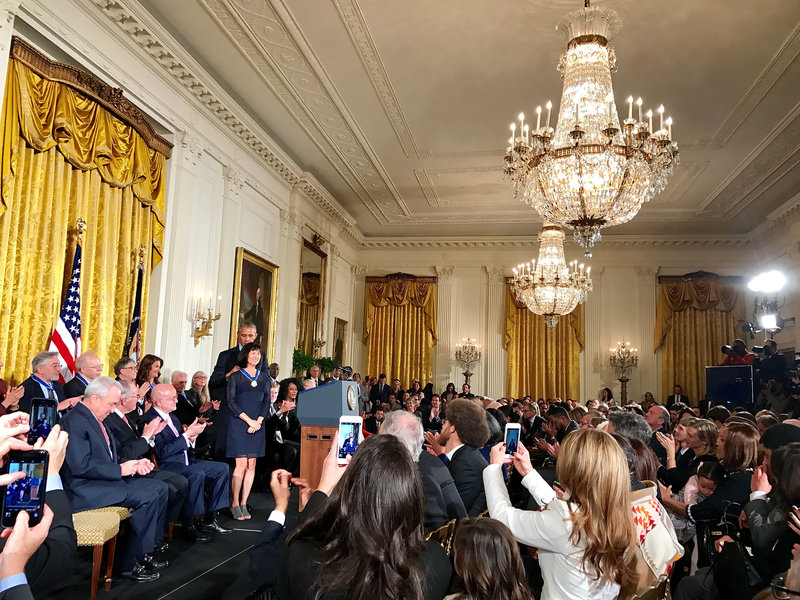
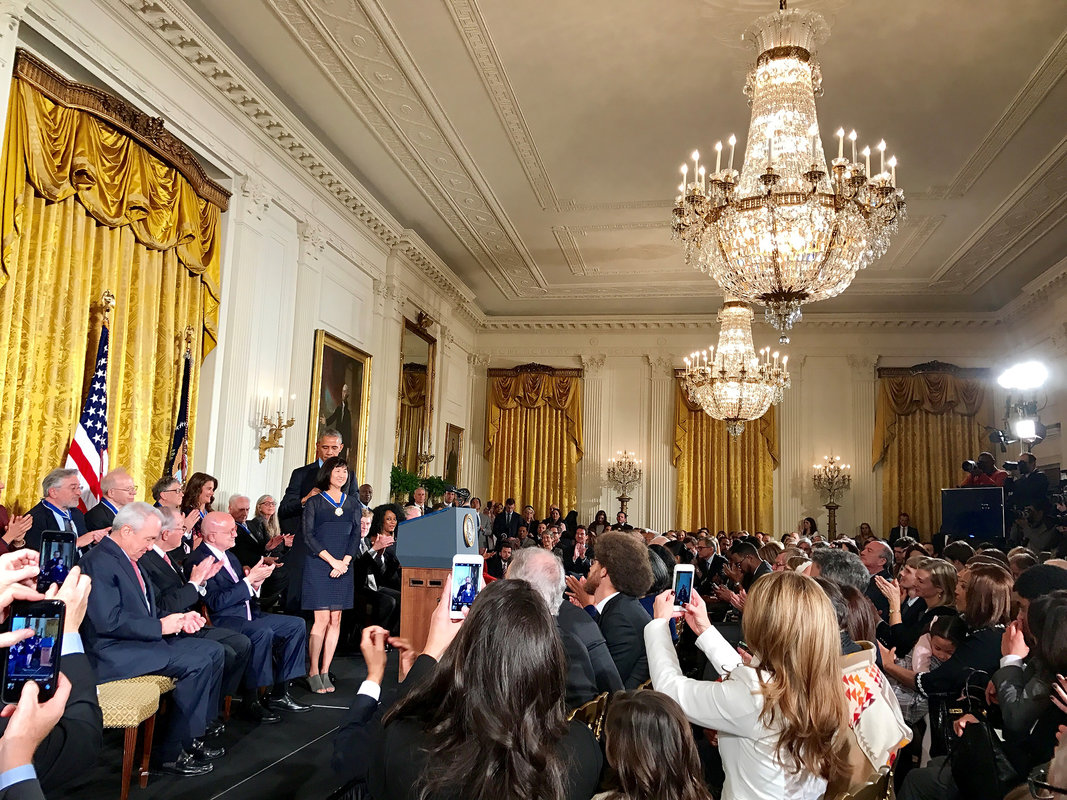
Image: November 22, 2016: President Barack Obama presents Maya Lin with the Presidential Medal of Freedom during a ceremony in the East Room of the White House in Washington, D.C. The presidential awards citation read, in part, “boldly challenging our understanding of the world, Maya Lin’s designs have brought people of all walks of life together in spirit of remembrance, introspection, and humility. Her pieces have changed the landscape of our country and influenced the dialogue of our society — never more profoundly than with her tribute to Americans who fell in Vietnam by cutting a wound into the Earth to create a sacred place of healing in our Nation’s capital.”
FYI Col Carl Whicker SPC Margaret HigginsSSG Robert Mark Odom SPC Chris Bayner-Cwik TSgt David L.PO1 Robert George Lt Col John (Jack) ChristensenSPC Nancy GreeneSSG Franklin Briant1stsgt Glenn Brackin Sgt Kelli Mays Lt Col Charlie BrownCWO3 Dennis M. SFC William Farrell Cynthia Croft
TSgt George Rodriguez] SPC Matthew Lamb PFC Richard Hughes SSG Chad Henning PO2 (Join to see)
Art Historian, Anne Wagner tells us the history of the creation of The Vietnam Veterans Memorial. Designed and created by Maya Lin, we hear how the young, Chinese-American artist overcame adversity to create one of the most famous memorials in Washington’s national park
https://www.youtube.com/watch?v=VqlykfcCDZ8
Image: November 22, 2016: President Barack Obama presents Maya Lin with the Presidential Medal of Freedom during a ceremony in the East Room of the White House in Washington, D.C. The presidential awards citation read, in part, “boldly challenging our understanding of the world, Maya Lin’s designs have brought people of all walks of life together in spirit of remembrance, introspection, and humility. Her pieces have changed the landscape of our country and influenced the dialogue of our society — never more profoundly than with her tribute to Americans who fell in Vietnam by cutting a wound into the Earth to create a sacred place of healing in our Nation’s capital.”
FYI Col Carl Whicker SPC Margaret HigginsSSG Robert Mark Odom SPC Chris Bayner-Cwik TSgt David L.PO1 Robert George Lt Col John (Jack) ChristensenSPC Nancy GreeneSSG Franklin Briant1stsgt Glenn Brackin Sgt Kelli Mays Lt Col Charlie BrownCWO3 Dennis M. SFC William Farrell Cynthia Croft
TSgt George Rodriguez] SPC Matthew Lamb PFC Richard Hughes SSG Chad Henning PO2 (Join to see)
(5)
(0)
Read This Next


 Continue with Facebook
 Continue with Google