

20
20
0
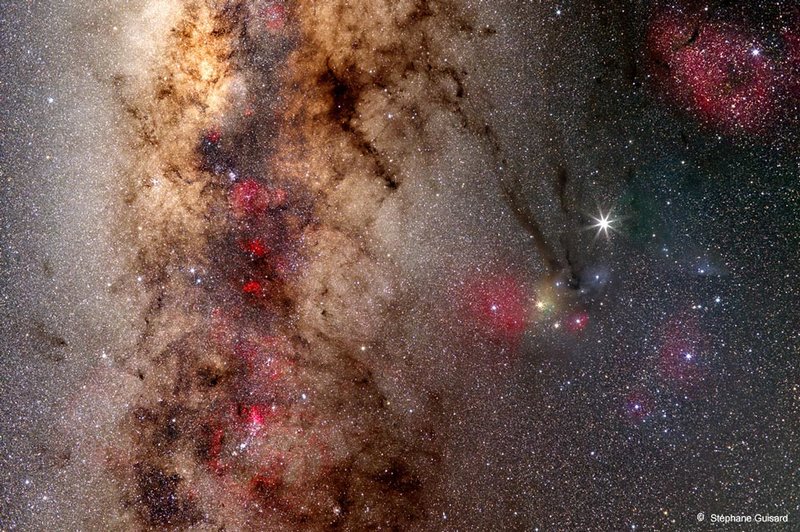
Good Sunday morning RP. Today's image is titled "A Scorpius Sky Spectacular." The detail here, in my opinion, is nothing short of spectacular.
Astronomy Picture of the Day
Posted from apod.nasa.gov NASA
NASA Space
Space Science
 Photography
 Astronomy
Posted 7 y ago
Responses: 10

4
4
0

Incredibly beautiful picture. And so much detail. The red stars, the dark spaces and the beauty of the constellation...just wow Maj William W. 'Bill' Price
SMSgt Lawrence McCarter LT Brad McInnis PO3 Bob McCord CW3 Dick McManus SGT John " Mac " McConnell CWO3 Dennis M. MSgt Stephen Council LTC Stephen Conway LTC Stephan PorterLTC Stephen C. LTC Greg Henning SGT Gregory Lawritson Maj Bill Smith, Ph.D. SGT Jim Arnold Maj Robert Thornton Lt Col John (Jack) Christensen SFC Francisco Rosario LTC (Join to see) PO3 Phyllis Maynard
SMSgt Lawrence McCarter LT Brad McInnis PO3 Bob McCord CW3 Dick McManus SGT John " Mac " McConnell CWO3 Dennis M. MSgt Stephen Council LTC Stephen Conway LTC Stephan PorterLTC Stephen C. LTC Greg Henning SGT Gregory Lawritson Maj Bill Smith, Ph.D. SGT Jim Arnold Maj Robert Thornton Lt Col John (Jack) Christensen SFC Francisco Rosario LTC (Join to see) PO3 Phyllis Maynard
(4)
(0)
3
3
0

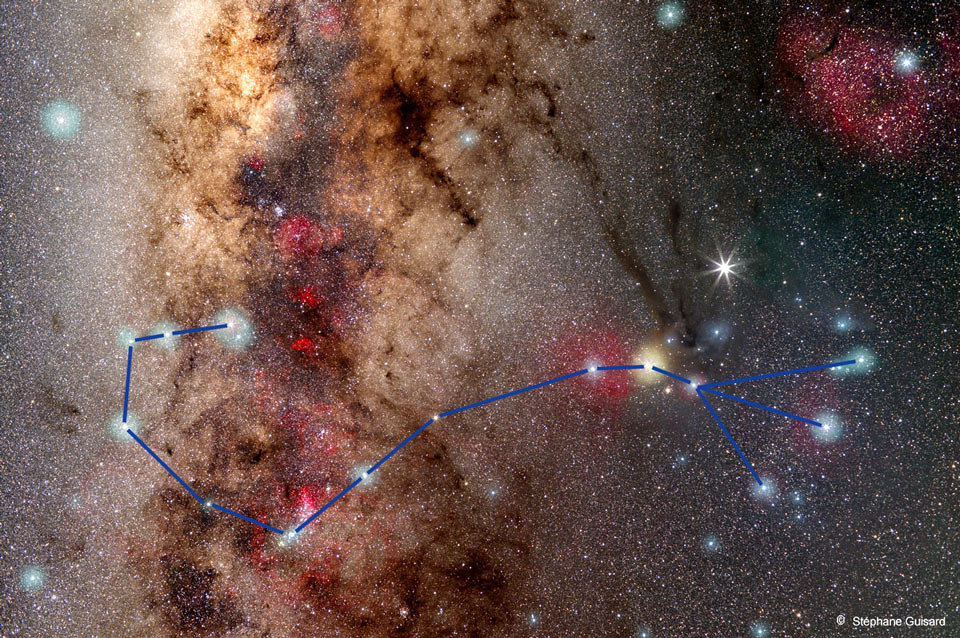
Thank you, my friend Maj William W. 'Bill' Price for posting the daily NASA picture for April 7, 2019 entitled "A Scorpius Sky Spectacular."
The views of the heavens are spectacular and have existed since God designed them and placed them in creation where they move in relationship to us - yet from their own perspective they are stationary and we are moving :-)
Image: A Scorpius Sky Spectacular - image credit & copyright - Stéphane Guisard, TWAN
"Explanation: If Scorpius looked this good to the unaided eye, humans might remember it better. Scorpius more typically appears as a few bright stars in a well-known but rarely pointed out zodiacal constellation. To get a spectacular image like this, though, one needs a good camera, color filters, and a digital image processor. To bring out detail, the featured image not only involved long duration exposures taken in several colors, but one exposure in a very specific red color emitted by hydrogen. The resulting image shows many breathtaking features. Vertically across the image left is part of the plane of our Milky Way Galaxy. Visible there are vast clouds of bright stars and long filaments of dark dust. Jutting out diagonally from the Milky Way in the image center are dark dust bands known as the Dark River. This river connects to several bright stars on the right that are part of Scorpius' head and claws, and include the bright star Antares. Above and right of Antares is an even brighter planet: Jupiter. Numerous red emission nebulas and blue reflection nebulas are visible throughout the image. Scorpius appears prominently in southern skies after sunset during the middle of the year."
Thank you, my friend TSgt Joe C. for mentioning me.
FYI LTC Wayne Brandon LTC (Join to see) MSgt Robert C Aldi CPT Scott Sharon CMSgt (Join to see) SMSgt Tom Burns SSG Donald H "Don" Bates SSG Jeffrey Leake Sgt (Join to see) SGT Randal Groover SGT Rick Colburn SPC Mike Lake PO3 William Hetrick PO3 Lynn Spalding SPC Mark Huddleston Rhonda Hanson SPC Jordan Sutich PO3 Craig Phillips
The views of the heavens are spectacular and have existed since God designed them and placed them in creation where they move in relationship to us - yet from their own perspective they are stationary and we are moving :-)
Image: A Scorpius Sky Spectacular - image credit & copyright - Stéphane Guisard, TWAN
"Explanation: If Scorpius looked this good to the unaided eye, humans might remember it better. Scorpius more typically appears as a few bright stars in a well-known but rarely pointed out zodiacal constellation. To get a spectacular image like this, though, one needs a good camera, color filters, and a digital image processor. To bring out detail, the featured image not only involved long duration exposures taken in several colors, but one exposure in a very specific red color emitted by hydrogen. The resulting image shows many breathtaking features. Vertically across the image left is part of the plane of our Milky Way Galaxy. Visible there are vast clouds of bright stars and long filaments of dark dust. Jutting out diagonally from the Milky Way in the image center are dark dust bands known as the Dark River. This river connects to several bright stars on the right that are part of Scorpius' head and claws, and include the bright star Antares. Above and right of Antares is an even brighter planet: Jupiter. Numerous red emission nebulas and blue reflection nebulas are visible throughout the image. Scorpius appears prominently in southern skies after sunset during the middle of the year."
Thank you, my friend TSgt Joe C. for mentioning me.
FYI LTC Wayne Brandon LTC (Join to see) MSgt Robert C Aldi CPT Scott Sharon CMSgt (Join to see) SMSgt Tom Burns SSG Donald H "Don" Bates SSG Jeffrey Leake Sgt (Join to see) SGT Randal Groover SGT Rick Colburn SPC Mike Lake PO3 William Hetrick PO3 Lynn Spalding SPC Mark Huddleston Rhonda Hanson SPC Jordan Sutich PO3 Craig Phillips
(3)
(0)
3
3
0

Excellent photo this afternoon Maj William W. 'Bill' Price!
COL Mikel J. Burroughs Maj Marty Hogan SGT John " Mac " McConnell LTC Stephen F. CW5 Jack Cardwell TSgt David L. Cpl (Join to see) Maj William W. 'Bill' Price CPL Dave Hoover SPC Douglas Bolton LTC Greg Henning Maj Bill Smith, Ph.D. Alan K. Lt Col Charlie Brown SFC Joe S. Davis Jr., MSM, DSL PO3 Phyllis Maynard PO2 Kevin Parker SP5 Mark Kuzinski PO1 John Johnson Sgt (Join to see)
COL Mikel J. Burroughs Maj Marty Hogan SGT John " Mac " McConnell LTC Stephen F. CW5 Jack Cardwell TSgt David L. Cpl (Join to see) Maj William W. 'Bill' Price CPL Dave Hoover SPC Douglas Bolton LTC Greg Henning Maj Bill Smith, Ph.D. Alan K. Lt Col Charlie Brown SFC Joe S. Davis Jr., MSM, DSL PO3 Phyllis Maynard PO2 Kevin Parker SP5 Mark Kuzinski PO1 John Johnson Sgt (Join to see)
(3)
(0)
Read This Next


 Continue with Facebook
 Continue with Google