

11
11
0
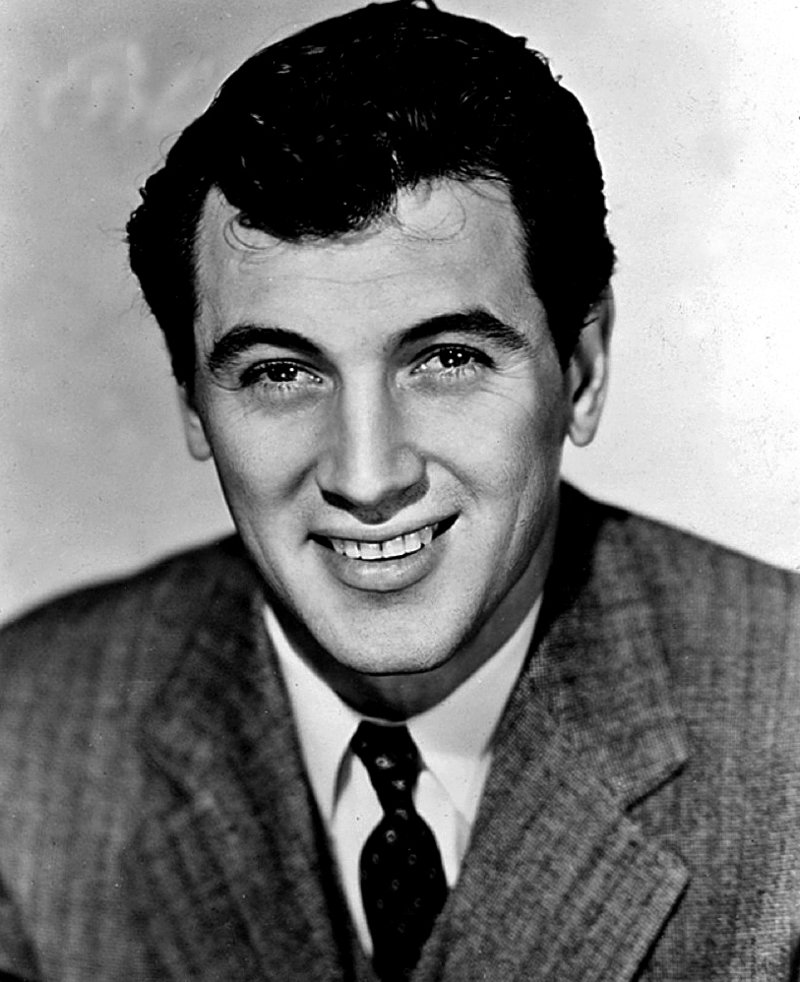
Rock Hudson (born Roy Harold Scherer Jr.; November 17, 1925 – October 2, 1985) was an American actor, who, according to TCM.com’s biography “epitomized Hollywood's classic matinee idol image...One of the most popular movie stars of his time, Hudson's screen career spanned five decades and was a shining example of Hollywood's classical "star system"-style career promotion ...”[1] A prominent heartthrob of the Hollywood Golden Age, he achieved stardom with his role in Magnificent Obsession (1954),[2] followed by All That Heaven Allows (1955), director Douglas Sirk’s self-described effort to re-create the success of Magnificent Obsession, and Giant (1956), for which he received a nomination for the Academy Award for Best Actor. Hudson also found continued success with a string of romantic comedies co-starring Doris Day: Pillow Talk (1959), Lover Come Back (1961), and Send Me No Flowers (1964). During the late 1960s, his films included Seconds (1966), Tobruk (1967), and Ice Station Zebra (1968). Unhappy with the film scripts he was offered,[3] Hudson turned to television and was a hit starring in the popular mystery series McMillan & Wife (1971-1977). His last role was as a guest star on the fifth season (1984-1985) of the primetime ABC soap opera Dynasty,[4] until the ravages of AIDS-related illness made it impossible for him to continue.[5]
Numerous film magazines declared Hudson Star of the Year, Favorite Leading Man, and similar titles. He appeared in nearly 70 films and starred in several television productions during a career that spanned more than four decades. He was discreet regarding his sexual orientation, but it was known by many in the film industry during his lifetime. His sexual orientation became public knowledge following his death from AIDS-related complications in 1985, making him the first major celebrity to die from an AIDS-related illness.[6]
He graduated from high school in 1943, and the following year enlisted in the United States Navy, during World War II.[7] After training at the Great Lakes Naval Training Station, he departed San Francisco aboard the troop transport SS Lew Wallace, with orders to report to Aviation Repair and Overhaul Unit 2, then located on Samar, Philippines, as an aircraft mechanic.[9][8] In 1946, he returned to San Francisco aboard an aircraft carrier,[10] and was discharged the same year.[7]
Numerous film magazines declared Hudson Star of the Year, Favorite Leading Man, and similar titles. He appeared in nearly 70 films and starred in several television productions during a career that spanned more than four decades. He was discreet regarding his sexual orientation, but it was known by many in the film industry during his lifetime. His sexual orientation became public knowledge following his death from AIDS-related complications in 1985, making him the first major celebrity to die from an AIDS-related illness.[6]
He graduated from high school in 1943, and the following year enlisted in the United States Navy, during World War II.[7] After training at the Great Lakes Naval Training Station, he departed San Francisco aboard the troop transport SS Lew Wallace, with orders to report to Aviation Repair and Overhaul Unit 2, then located on Samar, Philippines, as an aircraft mechanic.[9][8] In 1946, he returned to San Francisco aboard an aircraft carrier,[10] and was discharged the same year.[7]
Rock Hudson - Wikipedia
Posted from en.wikipedia.org Birthday
 American History
 Actor/Actress
 Movies
 WWII World War Two
Edited 6 y ago
Posted 6 y ago
Responses: 8

7
7
0

5
5
0


Thank you my friend Maj Marty Hogan for making us aware that November 17 is the anniversary of the birth of American actor Roy Fitzgerald who was renamed Rock Hudson by his first agent, generally known for his turns as a leading man during the 1950s and 1960s.
Viewed as a prominent 'heartthrob' of the Hollywood Golden Age Rock Hudson who was born Roy Harold Scherer Jr.
He shocked many when he came out of the closet so to say to announce he was homosexual and had AIDS.
"Roy Fitzgerald enlisted in the U.S. Navy in 1943 and was shipped on the S.S. Lew Wallace, a Kaiser Liberty ship, to Samar, a sandy island in the Philippines. He returned to California in 1946.
US Navy 1943-1946 (Aircraft Mechanic, Philippines)"
Rock Hudson Documentary
https://www.youtube.com/watch?v=8XVcvAAZ4Tk
There is a story that Rock Hudson recognized his need for salvation through the Christ on his deathbed. We will learn in eternity of that is true. Hopefully it is but I won't lose any sleep over it.
Images:
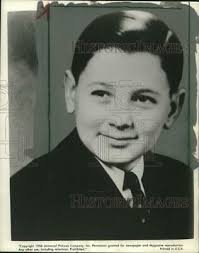
1. Rock Hudson at age 13 in 1956.
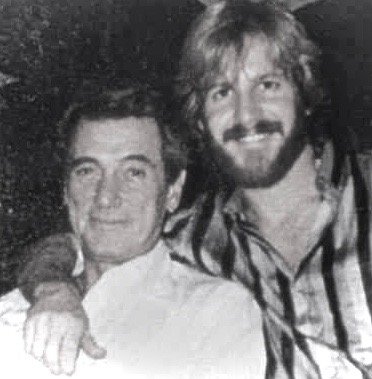
2. Rock Hudson and his lover Marc Christian.
3. Liza Minnelli and Rock Hudson are seen with actress Elizabeth Taylor after she won the Cecil B. DeMille Award in Beverly HIlls at the Golden Globe Awards, Jan. 26, 1985.
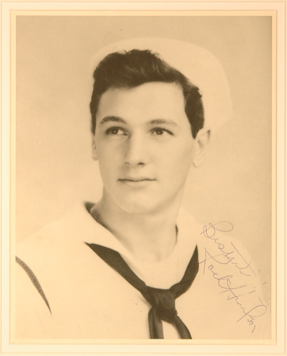
4. 1944 Roy Harold Scherer, Jr., (Roy Fitzgerald) Aircraft Mechanic, Philippines.
Biographies
1. winnetkahistory.org/gazette/rock-hudson/
2. imdb.com/name/nm0001369/bio
1. background from winnetkahistory.org/gazette/rock-hudson/
Rock Hudson
Gazette Article by: Maura Rogan
Appeared in the Gazette: Fall 2004
Rock Hudson: In Winnetka We Called Him Roy
The handsome, leading man of Pillow Talk and more than 70 other Hollywood pictures wasn’t always known as Rock Hudson. Roy Harold Scherer, Jr., was born on November 17, 1925, to Winnetka’s Katherine Wood Scherer, a telephone operator, and Roy Harold Scherer, an auto mechanic. A 1929 phone directory lists the Scherer’s home at 1017 Elm. Young Roy’s parents divorced c.1933, and his mother, along with her parents James and Mary Ellen Wood, cared for him. Katherine remarried c.1935 to Wallace Fitzgerald who adopted Roy and legally changed his name to Roy Fitzgerald. Telephone directories list the Fitzgerald family as moving frequently around the Village. In 1935, they lived in an apartment at 809 Chestnut Court and, from 1936-1939, at 511 Birch (now demolished). Magazine articles written about his life describe school-age Roy Fitzgerald as a very social boy, more interested in fun and mischief than in academics. One account claimed that he never acted in school plays because he couldn’t remember the lines.
The early 1940s brought more uprooting for the Fitzgeralds. In 1940, the family lived at 907 Ash and, in 1941, in an apartment above a store at 918 Linden. A 1942 directory lists Katherine, without Wallace, living at 882 Elm; the couple presumably divorced. Roy Fitzgerald graduated from New Trier in 1944 and became a postal employee in Winnetka. In January 1944, he enlisted in the U.S. Navy and trained at Great Lakes Naval Training Center. According to the war service record that he completed, now in the collection of the Historical Society, he served at Glenview Air Base and then, from May 1945 to April 1946, at the Naval Air Base in Samar, Phillippines. In Samar, Roy Fitzgerald worked on planes before being transferred to Public Works and then to Laundry. Upon discharge in May 1946, he arrived in Shoemaker, California, the state that would become his home. The war service record lists his mother as living at 794 Elm and his father, Roy Harold Scherer, as residing in Los Angeles.
Roy Fitzgerald worked as a truck driver, but had bigger plans in mind. Encouraged by his good looks and 6’4” stature, he idled outside Hollywood film studios and sent his photo to film executives. Apparently, he made an impression on an agent, Henry Wilson, who signed him on as a client. Fitzgerald’s teeth were capped and he took lessons in acting, dancing, singing, fencing, and riding. Hollywood legend has it that Wilson changed Fitzgerald’s name to be shorter and more masculine; he selected “Rock” after the Rock of Gibraltar and “Hudson” after the Hudson River. These steps paid off. In 1948, Rock Hudson landed his first role in a movie, the film Fighter Squadron . He had one line “You’d better get a bigger blackboard,” and he nailed it after 38 takes.
Hudson climbed the ladder to fame in the 1950s, making more than 20 films for Universal-International and other studios. While he earned his first lead part in the western Scarlet Angel (1952), his breakthrough role came in 1954 when he costarred with Jane Wyman in Magnificent Obsession. Two years later, he earned a Best Actor Academy Award nomination for his work in Giant with Elizabeth Taylor and, in 1958, was named “Star of the Year” in Look Magazine. (It was during the mid ’50s that Hudson was in a three-year marriage to studio employee Phyllis Gate and that his mother relocated to California.) Hudson’s 1959 foray into romantic comedies was enormously successful; Pillow Talk led to several more movies with Doris Day in the 1960s, including Lover Come Back (1961) and Send Me No Flowers (1961). His place was secure as one of Hollywood’s most dashing movie stars of the decade.
The 1970s saw the demise of the studio system and of Hudson as a box office draw. While continuing to act in movies, he turned his energies to the small screen where he top-lined the series McMillon and Wife (1971-77) with Susan St. James. When he appeared as a guest star on Dynasty in 1984, Hudson seemed gaunt and tired. Shortly after, he announced to the media that he was a homosexual and was dying from AIDS. He was the first celebrity to publicly acknowledge that he had the disease, changing forever the perception of the virus. Rock Hudson died on October 2, 1985, having both entertained and, in coming forth with his illness, educated millions of people around the world."
2. Background from imdb.com/name/nm0001369/bio
Rock Hudson Biography
Overview
Born November 17, 1925 in Winnetka, Illinois, USA
Died October 2, 1985 in Beverly Hills, Los Angeles, California, USA (AIDS)
Birth Name Roy Harold Scherer Jr.
Nicknames Roy; Leroy; Rock Pyle; Fitz; Mr Beefcake
Height 6' 5" (1.96 m)
Mini Bio
Rock Hudson was born Roy Harold Scherer, Jr. in Winnetka, Illinois, to Katherine (Wood), a telephone operator, and Roy Harold Scherer, an auto mechanic. He was of German, Swiss-German, English, and Irish descent. His parents divorced when he was eight years old. He failed to obtain parts in school plays because he couldn't remember lines. After high school he was a postal employee and during WW II served as a Navy airplane mechanic. After the war he was a truck driver. His size and good looks got him into movies. His name was changed to Rock Hudson, his teeth were capped, he took lessons in acting, singing, fencing and riding. One line in his first picture, Fighter Squadron (1948), needed 38 takes. In 1956 he received an Oscar nomination for Giant (1956) and two years later Look magazine named him Star of the Year. He starred in a number of bedroom comedies, many with Doris Day, and had his own popular TV series McMillan & Wife (1971). He had a recurring role in TV's Dynasty (1981) (1984-5). He was the first major public figure to announce he had AIDS, and his worldwide search for a cure drew international attention. After his death his long-time lover Marc Christian successfully sued his estate, again calling attention to the homosexuality Rock had hidden from most throughout his career.
- IMDb Mini Biography By: Ed Stephan < [login to see] .edu>
Spouse (1)
Phyllis Gates
(9 November 1955 - 13 August 1958) ( divorced)
Trade Mark (5)
Deep, sensous voice
Thick black hair
Moved from westerns to sob stories to sosphisticated comedies
Towering, sculpted frame
Ideal leading-man good looks
Trivia (51)
1. Chosen by Empire magazine as one of the 100 Sexiest Stars in film history (#28). [1995]
2. The Prudential Life Insurance Co. stopped using its slogan "Own A Piece Of The Rock" after Hudson's death from AIDS and the slogan became the subject of ridicule.
3. Went to the same school, New Trier Township High School East (Winnetka, Illinois), as Ann-Margret, Charlton Heston, Ralph Bellamy, Hugh O'Brian, Bruce Dern, Penelope Milford, Virginia Madsen and Liz Phair.
4. Worked as a truck driver when he first moved to Los Angeles, but he spent his spare time idling outside of studio gates and sending photographs of himself to various producers.
5. Talent scout Henry Willson coined the stage name, "Rock Hudson", by combining the Rock of Gibraltar and the Hudson River.
6. Although he tried out for roles in school plays, Hudson failed to win any because he could not remember lines.
7. Enamored of movies as a teenager, he worked as an usher. Before taking his first film role, he got his teeth capped and was coached intensively in acting, singing, dancing, fencing and riding. Still, it took no less than 38 takes before he could successfully complete one line in his first picture, Fighter Squadron (1948).
8. Hudson was the original choice to play Jason Colby in the Dynasty (1981) spin off The Colbys (1985), but had to turn it down due to his declining health. The part went to Charlton Heston instead. By the time he had taken the guest role of Daniel Reece on Dynasty (1981) in late 1984, the AIDS virus was consuming him. Before long, he was suffering from memory loss and was forced to use cue cards to read his lines. He also had difficulty speaking. When he went to Carmel, California, in July 1985 to help his Pillow Talk (1959) co-star Doris Day launch her cable series, Doris Day's Best Friends (1985), his gaunt appearance and obvious disorientation suddenly became the media focus of what was meant to be a joyous reunion of one of Hollywood's favorite on-screen couples. He died just three months later.
9. Involved with Marc Christian during the period he knew he had AIDS, but allegedly did not disclose it to Christian. Christian hired Marvin Mitchelson, and sued Hudson's estate for damages and emotional distress. He won a $21.7 million jury award in 1989, which was reduced to $5.5 million in 1991.
10. Underwent emergency quintuple heart bypass surgery to relieve severely clogged coronary arteries in November 1981 after suffering chest pains, and began smoking again soon after leaving the hospital. Consequently he was very frail during the filming of The Ambassador (1984), while in Israel during the winter of 1983-84, and he did not get along with his alcoholic co-star Robert Mitchum. Production on the television series The Devlin Connection (1982) was also suspended for a year while he was recovering from quintuple heart bypass surgery.
11. Is portrayed by Thomas Ian Griffith in Rock Hudson (1990)
12. Hudson and his partner Marc Christian went out of their way while traveling near downtown Los Angeles, so that the couple could meet Michael Jackson during the filming of his award-winning music video, Michael Jackson: Thriller (1983).
13. According to the book, "The Man Who Invented Rock Hudson", the original plan was to call him "Roc" but someone pointed out the possibility of confusion with the 1940s actress, Rochelle Hudson, so a "k" was added and "Roc" became "Rock".
14. Biography in: "The Scribner Encyclopedia of American Lives". Volume One, 1981- 1985, pages 405-407. New York: Charles Scribner's Sons, 1998.
15. Following a right-shoulder injury in 1973, often used his left hand to write and pick up objects on McMillan & Wife (1971).
16. In 1977 he toured 13 cities as King Arthur in the musical "Camelot".
17. A conservative Republican, Hudson joined Ronald Reagan, John Wayne, Irene Dunne and Raymond Massey in campaigning for Barry Goldwater in the 1964 presidential election. Hudson stayed at the White House in May 1984 as a guest of then President Ronald Reagan. First Lady Nancy Reagan wrote to Hudson saying how glad she and her husband were to see him looking well following his operation.
18. Made "Top 10 Stars of the Year" a record eight times, from 1957-1964.
19. Was very close friends with singer Dusty Springfield.
20. Grew a mustache and sideburns for his role in The Undefeated (1969). Afterwards he decided to retain that look throughout the 1970s.
21. Early in his career he had surgery on his vocal chords to make his voice deeper, and had his teeth capped. The surgery had the unfortunate side effect of making it impossible for Hudson to learn to sing. Therefore when he played King Arthur in "Camelot" he had to talk his way through the songs, just as Rex Harrison did in My Fair Lady (1964).
22. He was the original choice to play Jason Colby in the Dynasty (1981) spin off The Colbys (1985), but had to turn it down due to his declining health. The part went to Charlton Heston instead.
23. Was seriously considered for the male lead in Alfred Hitchcock's Marnie (1964), and actually met with Hitchcock, but was turned down in favor of Sean Connery.
24. In order to make A Farewell to Arms (1957), he turned down Marlon Brando's role in Sayonara (1957), William Holden's role in The Bridge on the River Kwai (1957), and Charlton Heston's role in Ben-Hur (1959). The three films he had turned down went on to become hugely successful and were critically acclaimed, while A Farewell to Arms (1957) proved to be one of the biggest flops in history.
25. After announcing he had AIDS in July 1985, Hudson received telegrams of support from Frank Sinatra, Gregory Peck, Marlene Dietrich, James Garner, Carol Burnett, Ali MacGraw, Jack Lemmon, Richard Dreyfuss, Ava Gardner, Mickey Rooney, Milton Berle and Madonna. President Ronald Reagan, who had recently undergone surgery for colon cancer, personally telephoned him at the hospital.
26. He was very near-sighted and wore glasses all the time off screen. He would rarely allow himself to be photographed wearing glasses though.
27. Although Hudson never publicly came out as gay during his lifetime, he did authorize a biography by Sara Davidson, "Rock Hudson: His Story" (1986), which discussed his private life in great detail.
28. Hudson was diagnosed with AIDS on 5 June 1984 but when the signs of illness became apparent, his publicity staff and doctors told the public that he had liver cancer. Less than a month after announcing he had AIDS, Hudson wrote a check for $250,000 to help get the then-fledgling National AIDS Research Foundation (NARF) off the ground. During the last 18 months of his life, Hudson's weight dropped from 215 lbs to 140 lbs. He weighed 126 lbs at the time of his death. He died the same day as George Savalas. He and Savalas' older brother, Telly Savalas, appeared in Pretty Maids All in a Row (1971). At the time of Hudson's death, his estate was valued at $22 million. He was cremated and his ashes are scattered into the sea. Pat Boone, an elder of The Church on the Way in Van Nuys, California, was allowed inside Hudson's Hollywood mansion to pray for his soul as the actor lay dying. Ironically, according to his close friends, Hudson, although nominally raised a Catholic, had been a lifelong atheist. A private nurse told reporters that she "asked him would he like to know Jesus now, would he like to invite him into his heart, and he said, 'Well, I guess it's about time.'" As well, a Roman Catholic priest, Father Sweeney, prayed the "sinner's prayer" with Hudson.
29. Had a priceless record collection, which was taken by Marc Christian after his death.
30. He stood six foot by the time he was fourteen.
31. He had always been critical of plastic surgery, although in 1981 he had surgery on his eyelids after a cameraman convinced him it would make him look better on screen.
32. He actively sought the leading role in Ice Station Zebra (1968), and after Laurence Harvey backed out of the project, Hudson was cast.
33. He was very disappointed by the box office failure of Seconds (1966), which he considered to be his best performance and had hoped would show the public that he could be a versatile film actor.
34. In 1979 he was involved in a DUI incident when he crashed his car into a palm tree in Los Angeles late one night.
35. Once said he knew had made it in Hollywood after he received more applause and cheers at the premiere of Bend of the River (1952) than the film's star, James Stewart.
36. He was reportedly Universal Studio's first choice to play Atticus Finch in To Kill a Mockingbird (1962), but was rejected as being too youthful looking at age 36.
37. Along with Cary Grant, he was regarded as one of the best-dressed male stars in Hollywood.
38. In the summer of 1966 he was released from his studio contract after filming Tobruk (1967). Five years later, he signed a contract with Universal Studios to do McMillan & Wife (1971) in 1971 for one of the largest salaries ever seen in television at the time.
39. Although commonly listed as 6'4", he is believed to have downplayed his height. His character is repeatedly referred to as being 6'6" in the film Pillow Talk (1959) and, upon co-starring with John Wayne and James Stewart, he was clearly taller than those very tall stars. Many sources list him 6'5", which would put him as equal to Vince Vaughn, Tim Robbins and, the tallest leading man per the Guinness Book of World Records, Christopher Lee as the tallest leading men.
40. His agent subtracted two years from his date of birth--from 1925 to 1923--in order to get Hudson more mature roles.
41. Was in talks, with Doris Day and Tony Randall, for a Pillow Talk (1959) sequel at the time he was diagnosed was AIDS. The story reportedly would have him and Doris Day's character being married and dealing with their daughter's upcoming marriage to Tony Randall's son.
42. Universal agreed to loan Hudson to his original studio Warner Bros. in exchange for the services of Warner contractee Virginia Mayo for the potboiler Congo Crossing (1956).
43. MGM offered Universal $750,000 for Hudson to play the starring role in Ben-Hur (1959) but the studio refused.
44. After Husdon had chosen his new name Rock, when it was suggested by agent Henry Willson, the actor objected when Universal tried to shorten the spelling to Roc.
45. After Raoul Walsh sold Rock Hudson's contract to Universal, he retained the right to his services in one film. This was ultimately settled a decade later, when Walsh was assigned a percentage of the profits from Come September (1961).
46. Hudson was assigned to The Golden Blade (1953) only after Tony Curtis and Farley Granger turned it down.
47. Hollywood writer Sidney Skolsky reportedly coined the term "Beefcake" with Hudson in mind.
48. Despite playing their father in Giant (1956), Hudson was just 6 years older than Carroll Baker, 9 years older than Fran Bennett and 11 years older than Dennis Hopper.
49. In June 2014, he was honored as Turner Classic Movies' Star of the Month.
50. His father was of German and Swiss-German descent. His maternal grandfather was an English immigrant, and his maternal grandmother was born in Illinois, to Irish parents. His father left the family and his mother married Wallace Fitzgerald. Hudson's legal name was then changed from Scherer to Fitzgerald.
51. He appeared in five films that have been selected for the National Film Registry by the Library of Congress as being "culturally, historically or aesthetically" significant: Winchester '73 (1950), All That Heaven Allows (1955), Giant (1956), Pillow Talk (1959) and Seconds (1966).
Personal Quotes (24)
1. His legal name was Roy Fitzgerald. When meeting John F. Kennedy, the American president remarked: "They say all Fitzgeralds are related", to which Hudson replied, "I guess that would make Ella happy".
2. I had to overcome the name Rock. If I'd been as hip then as I am now, I would have never consented to be named Rock.
3. John Wayne was then the Hollywood legend, and I was on screen with him. The guy is an angel. He saved my life back then when no other film maker wanted to know me. - On The Undefeated (1969)
4. I did a movie [The Undefeated (1969)] with Duke Wayne [John Wayne] and was very surprised to find out he had small feet, wore lifts, and a corset. Hollywood is seldom what it seems.
5. I can't play a loser - I don't look like one.
6. I have no philosophy about acting or anything else. You just do it. And I mean that. You just do it. However, I can say that with ease after thirty-five years.
7. "I am not happy that I am sick. I am not happy that I have AIDS. But if that is helping others, I can at least know that my own misfortune has had some positive worth." (1985)
8. (In the early 1980s, before his sickness was publicly known) " I always consider my job just as someone working in an office. Past 5 P.M., I lead my very own existence far from the cameras. It's essential for an actor to clearly separate private life from work... essential for me, anyway."
9. I also remember meeting Gary Cooper at a party. I was so impressed that I blurted out that all the stars I had met before had been terrific people. Cooper thought about it for a minute, then said, "Yes, I suppose we are, the ones who are on top. But watch out for the ones who haven't quite made it, or are past it." It was valuable advice.
10. [on Elizabeth Taylor] She's indestructible.
11. Someone asked me once what my philosophy of life was, and I said some crazy thing. I should have said, how the hell do I know?
12. I love to smoke. I keep hoping someone will discover it's a healthy habit because the smoke kills all the germs in your system. I love to drink, and I hate exercise. I don't mind going out on the side of a hill and chopping down a tree, but I hate organized exercise. I built a gym in my house but I never use it. I don't even like to walk through it.
13. Nobody is discovered. Ever. Publicity departments loved to say that Lana Turner was discovered sitting at a soda fountain counter, drinking a chocolate soda ... It isn't true. I mean, there are too many interesting-looking people on Earth for that to ever happen.
14. It was the biggest mistake of my career. - On A Farewell to Arms (1957)
15. It was better than I thought. Why didn't I put more into it? - On McMillan & Wife (1971)
16. I welcome my birthdays. Relish them, as a matter of fact. I have confidence now and can look forward to trying new things. I don't think fifty was a crucial age. Forty was, and thirty-nine because I was facing forty. But lately everything has fallen into place. (1983)
17. I've heard that rumor for years and I just don't care about it. I know lots of gays in Hollywood. Some have tried it on with me, but I've always said, 'Come on, you've got the wrong guy!' As soon as they know that, it's okay! (1978)
18. Television is the monster of all time that eats everything and everybody. When they wanted McMillan & Wife (1971) to go to two hours I said, 'Why? The thing doesn't even hold up for ninety minutes!'.
19. Right from the start, I hated the script. I just didn't believe in that man for one minute. Making fun of death is difficult and dangerous. That scene where I went out and bought a plot for myself in the cemetery - to me it was completely distasteful. - On Send Me No Flowers (1964)
20. If you're cast in crap like Taza, Son of Cochise (1954), it doesn't matter if you experiment with a scene and it goes wrong. Who's gonna notice? But if it works, you can use it in a better film. Like Giant (1956), perhaps.
21. Do you want to know the secret of my second youth? Well, it must have something to do with my being surrounded by men. Women put too much of a strain on the heart! (1984)
22. [After walking out of Los Angeles premiere of 2001: A Space Odyssey (1968)] Will someone tell me what the hell this is about?
23. He was like ol' Dad to me, and I was like a son to him, I think. When you're scared and new and you're trying to figure out this thing, and suddenly an older man will reach out and say, 'There, there, it's okay,' that was Douglas Sirk.
24. [on the scene in Pillow Talk (1959) in which he carries Doris Day through the streets of Manhattan] "I could have managed if only one take had been involved, but we went on endlessly, primarily because there was a bit actor who played a cop on the street, and as we passed him, Doris' line was 'Officer, arrest this man,' and the cop was supposed to say to me, 'How you doing, Brad?' but that stupid actor kept calling me Rock. So back to our marks we went for another take and another and another. I'll bet we did that scene twenty times. That's why we had the shelf for Doris to sit on." (Hudson ultimately had to carry Day on a shelf after numerous takes.)
Salary (6)
Giant (1956) $100,000
A Farewell to Arms (1957) $17,000 per week
McMillan & Wife (1971) $120,000 /episode
McMillan & Wife (1971) $120,000 /episode (first season)
McMillan & Wife (1971) $75,000 per 90 minutes episode
Dynasty (1981) $100,000 per episode
FYI COL Mikel J. Burroughs Lt Col John (Jack) Christensen LTC Greg Henning LTC Jeff Shearer Maj Bill Smith, Ph.D. Maj William W. 'Bill' Price CPT Scott Sharon CWO3 Dennis M. ] SSG William Jones SGT (Join to see) SGT John " Mac " McConnell SP5 Mark Kuzinski PO1 H Gene Lawrence PO2 Kevin Parker PO3 Bob McCord Maj Kim Patterson SMSgt Lawrence McCarter SSG Donald H "Don" Bates
Viewed as a prominent 'heartthrob' of the Hollywood Golden Age Rock Hudson who was born Roy Harold Scherer Jr.
He shocked many when he came out of the closet so to say to announce he was homosexual and had AIDS.
"Roy Fitzgerald enlisted in the U.S. Navy in 1943 and was shipped on the S.S. Lew Wallace, a Kaiser Liberty ship, to Samar, a sandy island in the Philippines. He returned to California in 1946.
US Navy 1943-1946 (Aircraft Mechanic, Philippines)"
Rock Hudson Documentary
https://www.youtube.com/watch?v=8XVcvAAZ4Tk
There is a story that Rock Hudson recognized his need for salvation through the Christ on his deathbed. We will learn in eternity of that is true. Hopefully it is but I won't lose any sleep over it.
Images:
1. Rock Hudson at age 13 in 1956.
2. Rock Hudson and his lover Marc Christian.
3. Liza Minnelli and Rock Hudson are seen with actress Elizabeth Taylor after she won the Cecil B. DeMille Award in Beverly HIlls at the Golden Globe Awards, Jan. 26, 1985.
4. 1944 Roy Harold Scherer, Jr., (Roy Fitzgerald) Aircraft Mechanic, Philippines.
Biographies
1. winnetkahistory.org/gazette/rock-hudson/
2. imdb.com/name/nm0001369/bio
1. background from winnetkahistory.org/gazette/rock-hudson/
Rock Hudson
Gazette Article by: Maura Rogan
Appeared in the Gazette: Fall 2004
Rock Hudson: In Winnetka We Called Him Roy
The handsome, leading man of Pillow Talk and more than 70 other Hollywood pictures wasn’t always known as Rock Hudson. Roy Harold Scherer, Jr., was born on November 17, 1925, to Winnetka’s Katherine Wood Scherer, a telephone operator, and Roy Harold Scherer, an auto mechanic. A 1929 phone directory lists the Scherer’s home at 1017 Elm. Young Roy’s parents divorced c.1933, and his mother, along with her parents James and Mary Ellen Wood, cared for him. Katherine remarried c.1935 to Wallace Fitzgerald who adopted Roy and legally changed his name to Roy Fitzgerald. Telephone directories list the Fitzgerald family as moving frequently around the Village. In 1935, they lived in an apartment at 809 Chestnut Court and, from 1936-1939, at 511 Birch (now demolished). Magazine articles written about his life describe school-age Roy Fitzgerald as a very social boy, more interested in fun and mischief than in academics. One account claimed that he never acted in school plays because he couldn’t remember the lines.
The early 1940s brought more uprooting for the Fitzgeralds. In 1940, the family lived at 907 Ash and, in 1941, in an apartment above a store at 918 Linden. A 1942 directory lists Katherine, without Wallace, living at 882 Elm; the couple presumably divorced. Roy Fitzgerald graduated from New Trier in 1944 and became a postal employee in Winnetka. In January 1944, he enlisted in the U.S. Navy and trained at Great Lakes Naval Training Center. According to the war service record that he completed, now in the collection of the Historical Society, he served at Glenview Air Base and then, from May 1945 to April 1946, at the Naval Air Base in Samar, Phillippines. In Samar, Roy Fitzgerald worked on planes before being transferred to Public Works and then to Laundry. Upon discharge in May 1946, he arrived in Shoemaker, California, the state that would become his home. The war service record lists his mother as living at 794 Elm and his father, Roy Harold Scherer, as residing in Los Angeles.
Roy Fitzgerald worked as a truck driver, but had bigger plans in mind. Encouraged by his good looks and 6’4” stature, he idled outside Hollywood film studios and sent his photo to film executives. Apparently, he made an impression on an agent, Henry Wilson, who signed him on as a client. Fitzgerald’s teeth were capped and he took lessons in acting, dancing, singing, fencing, and riding. Hollywood legend has it that Wilson changed Fitzgerald’s name to be shorter and more masculine; he selected “Rock” after the Rock of Gibraltar and “Hudson” after the Hudson River. These steps paid off. In 1948, Rock Hudson landed his first role in a movie, the film Fighter Squadron . He had one line “You’d better get a bigger blackboard,” and he nailed it after 38 takes.
Hudson climbed the ladder to fame in the 1950s, making more than 20 films for Universal-International and other studios. While he earned his first lead part in the western Scarlet Angel (1952), his breakthrough role came in 1954 when he costarred with Jane Wyman in Magnificent Obsession. Two years later, he earned a Best Actor Academy Award nomination for his work in Giant with Elizabeth Taylor and, in 1958, was named “Star of the Year” in Look Magazine. (It was during the mid ’50s that Hudson was in a three-year marriage to studio employee Phyllis Gate and that his mother relocated to California.) Hudson’s 1959 foray into romantic comedies was enormously successful; Pillow Talk led to several more movies with Doris Day in the 1960s, including Lover Come Back (1961) and Send Me No Flowers (1961). His place was secure as one of Hollywood’s most dashing movie stars of the decade.
The 1970s saw the demise of the studio system and of Hudson as a box office draw. While continuing to act in movies, he turned his energies to the small screen where he top-lined the series McMillon and Wife (1971-77) with Susan St. James. When he appeared as a guest star on Dynasty in 1984, Hudson seemed gaunt and tired. Shortly after, he announced to the media that he was a homosexual and was dying from AIDS. He was the first celebrity to publicly acknowledge that he had the disease, changing forever the perception of the virus. Rock Hudson died on October 2, 1985, having both entertained and, in coming forth with his illness, educated millions of people around the world."
2. Background from imdb.com/name/nm0001369/bio
Rock Hudson Biography
Overview
Born November 17, 1925 in Winnetka, Illinois, USA
Died October 2, 1985 in Beverly Hills, Los Angeles, California, USA (AIDS)
Birth Name Roy Harold Scherer Jr.
Nicknames Roy; Leroy; Rock Pyle; Fitz; Mr Beefcake
Height 6' 5" (1.96 m)
Mini Bio
Rock Hudson was born Roy Harold Scherer, Jr. in Winnetka, Illinois, to Katherine (Wood), a telephone operator, and Roy Harold Scherer, an auto mechanic. He was of German, Swiss-German, English, and Irish descent. His parents divorced when he was eight years old. He failed to obtain parts in school plays because he couldn't remember lines. After high school he was a postal employee and during WW II served as a Navy airplane mechanic. After the war he was a truck driver. His size and good looks got him into movies. His name was changed to Rock Hudson, his teeth were capped, he took lessons in acting, singing, fencing and riding. One line in his first picture, Fighter Squadron (1948), needed 38 takes. In 1956 he received an Oscar nomination for Giant (1956) and two years later Look magazine named him Star of the Year. He starred in a number of bedroom comedies, many with Doris Day, and had his own popular TV series McMillan & Wife (1971). He had a recurring role in TV's Dynasty (1981) (1984-5). He was the first major public figure to announce he had AIDS, and his worldwide search for a cure drew international attention. After his death his long-time lover Marc Christian successfully sued his estate, again calling attention to the homosexuality Rock had hidden from most throughout his career.
- IMDb Mini Biography By: Ed Stephan < [login to see] .edu>
Spouse (1)
Phyllis Gates
(9 November 1955 - 13 August 1958) ( divorced)
Trade Mark (5)
Deep, sensous voice
Thick black hair
Moved from westerns to sob stories to sosphisticated comedies
Towering, sculpted frame
Ideal leading-man good looks
Trivia (51)
1. Chosen by Empire magazine as one of the 100 Sexiest Stars in film history (#28). [1995]
2. The Prudential Life Insurance Co. stopped using its slogan "Own A Piece Of The Rock" after Hudson's death from AIDS and the slogan became the subject of ridicule.
3. Went to the same school, New Trier Township High School East (Winnetka, Illinois), as Ann-Margret, Charlton Heston, Ralph Bellamy, Hugh O'Brian, Bruce Dern, Penelope Milford, Virginia Madsen and Liz Phair.
4. Worked as a truck driver when he first moved to Los Angeles, but he spent his spare time idling outside of studio gates and sending photographs of himself to various producers.
5. Talent scout Henry Willson coined the stage name, "Rock Hudson", by combining the Rock of Gibraltar and the Hudson River.
6. Although he tried out for roles in school plays, Hudson failed to win any because he could not remember lines.
7. Enamored of movies as a teenager, he worked as an usher. Before taking his first film role, he got his teeth capped and was coached intensively in acting, singing, dancing, fencing and riding. Still, it took no less than 38 takes before he could successfully complete one line in his first picture, Fighter Squadron (1948).
8. Hudson was the original choice to play Jason Colby in the Dynasty (1981) spin off The Colbys (1985), but had to turn it down due to his declining health. The part went to Charlton Heston instead. By the time he had taken the guest role of Daniel Reece on Dynasty (1981) in late 1984, the AIDS virus was consuming him. Before long, he was suffering from memory loss and was forced to use cue cards to read his lines. He also had difficulty speaking. When he went to Carmel, California, in July 1985 to help his Pillow Talk (1959) co-star Doris Day launch her cable series, Doris Day's Best Friends (1985), his gaunt appearance and obvious disorientation suddenly became the media focus of what was meant to be a joyous reunion of one of Hollywood's favorite on-screen couples. He died just three months later.
9. Involved with Marc Christian during the period he knew he had AIDS, but allegedly did not disclose it to Christian. Christian hired Marvin Mitchelson, and sued Hudson's estate for damages and emotional distress. He won a $21.7 million jury award in 1989, which was reduced to $5.5 million in 1991.
10. Underwent emergency quintuple heart bypass surgery to relieve severely clogged coronary arteries in November 1981 after suffering chest pains, and began smoking again soon after leaving the hospital. Consequently he was very frail during the filming of The Ambassador (1984), while in Israel during the winter of 1983-84, and he did not get along with his alcoholic co-star Robert Mitchum. Production on the television series The Devlin Connection (1982) was also suspended for a year while he was recovering from quintuple heart bypass surgery.
11. Is portrayed by Thomas Ian Griffith in Rock Hudson (1990)
12. Hudson and his partner Marc Christian went out of their way while traveling near downtown Los Angeles, so that the couple could meet Michael Jackson during the filming of his award-winning music video, Michael Jackson: Thriller (1983).
13. According to the book, "The Man Who Invented Rock Hudson", the original plan was to call him "Roc" but someone pointed out the possibility of confusion with the 1940s actress, Rochelle Hudson, so a "k" was added and "Roc" became "Rock".
14. Biography in: "The Scribner Encyclopedia of American Lives". Volume One, 1981- 1985, pages 405-407. New York: Charles Scribner's Sons, 1998.
15. Following a right-shoulder injury in 1973, often used his left hand to write and pick up objects on McMillan & Wife (1971).
16. In 1977 he toured 13 cities as King Arthur in the musical "Camelot".
17. A conservative Republican, Hudson joined Ronald Reagan, John Wayne, Irene Dunne and Raymond Massey in campaigning for Barry Goldwater in the 1964 presidential election. Hudson stayed at the White House in May 1984 as a guest of then President Ronald Reagan. First Lady Nancy Reagan wrote to Hudson saying how glad she and her husband were to see him looking well following his operation.
18. Made "Top 10 Stars of the Year" a record eight times, from 1957-1964.
19. Was very close friends with singer Dusty Springfield.
20. Grew a mustache and sideburns for his role in The Undefeated (1969). Afterwards he decided to retain that look throughout the 1970s.
21. Early in his career he had surgery on his vocal chords to make his voice deeper, and had his teeth capped. The surgery had the unfortunate side effect of making it impossible for Hudson to learn to sing. Therefore when he played King Arthur in "Camelot" he had to talk his way through the songs, just as Rex Harrison did in My Fair Lady (1964).
22. He was the original choice to play Jason Colby in the Dynasty (1981) spin off The Colbys (1985), but had to turn it down due to his declining health. The part went to Charlton Heston instead.
23. Was seriously considered for the male lead in Alfred Hitchcock's Marnie (1964), and actually met with Hitchcock, but was turned down in favor of Sean Connery.
24. In order to make A Farewell to Arms (1957), he turned down Marlon Brando's role in Sayonara (1957), William Holden's role in The Bridge on the River Kwai (1957), and Charlton Heston's role in Ben-Hur (1959). The three films he had turned down went on to become hugely successful and were critically acclaimed, while A Farewell to Arms (1957) proved to be one of the biggest flops in history.
25. After announcing he had AIDS in July 1985, Hudson received telegrams of support from Frank Sinatra, Gregory Peck, Marlene Dietrich, James Garner, Carol Burnett, Ali MacGraw, Jack Lemmon, Richard Dreyfuss, Ava Gardner, Mickey Rooney, Milton Berle and Madonna. President Ronald Reagan, who had recently undergone surgery for colon cancer, personally telephoned him at the hospital.
26. He was very near-sighted and wore glasses all the time off screen. He would rarely allow himself to be photographed wearing glasses though.
27. Although Hudson never publicly came out as gay during his lifetime, he did authorize a biography by Sara Davidson, "Rock Hudson: His Story" (1986), which discussed his private life in great detail.
28. Hudson was diagnosed with AIDS on 5 June 1984 but when the signs of illness became apparent, his publicity staff and doctors told the public that he had liver cancer. Less than a month after announcing he had AIDS, Hudson wrote a check for $250,000 to help get the then-fledgling National AIDS Research Foundation (NARF) off the ground. During the last 18 months of his life, Hudson's weight dropped from 215 lbs to 140 lbs. He weighed 126 lbs at the time of his death. He died the same day as George Savalas. He and Savalas' older brother, Telly Savalas, appeared in Pretty Maids All in a Row (1971). At the time of Hudson's death, his estate was valued at $22 million. He was cremated and his ashes are scattered into the sea. Pat Boone, an elder of The Church on the Way in Van Nuys, California, was allowed inside Hudson's Hollywood mansion to pray for his soul as the actor lay dying. Ironically, according to his close friends, Hudson, although nominally raised a Catholic, had been a lifelong atheist. A private nurse told reporters that she "asked him would he like to know Jesus now, would he like to invite him into his heart, and he said, 'Well, I guess it's about time.'" As well, a Roman Catholic priest, Father Sweeney, prayed the "sinner's prayer" with Hudson.
29. Had a priceless record collection, which was taken by Marc Christian after his death.
30. He stood six foot by the time he was fourteen.
31. He had always been critical of plastic surgery, although in 1981 he had surgery on his eyelids after a cameraman convinced him it would make him look better on screen.
32. He actively sought the leading role in Ice Station Zebra (1968), and after Laurence Harvey backed out of the project, Hudson was cast.
33. He was very disappointed by the box office failure of Seconds (1966), which he considered to be his best performance and had hoped would show the public that he could be a versatile film actor.
34. In 1979 he was involved in a DUI incident when he crashed his car into a palm tree in Los Angeles late one night.
35. Once said he knew had made it in Hollywood after he received more applause and cheers at the premiere of Bend of the River (1952) than the film's star, James Stewart.
36. He was reportedly Universal Studio's first choice to play Atticus Finch in To Kill a Mockingbird (1962), but was rejected as being too youthful looking at age 36.
37. Along with Cary Grant, he was regarded as one of the best-dressed male stars in Hollywood.
38. In the summer of 1966 he was released from his studio contract after filming Tobruk (1967). Five years later, he signed a contract with Universal Studios to do McMillan & Wife (1971) in 1971 for one of the largest salaries ever seen in television at the time.
39. Although commonly listed as 6'4", he is believed to have downplayed his height. His character is repeatedly referred to as being 6'6" in the film Pillow Talk (1959) and, upon co-starring with John Wayne and James Stewart, he was clearly taller than those very tall stars. Many sources list him 6'5", which would put him as equal to Vince Vaughn, Tim Robbins and, the tallest leading man per the Guinness Book of World Records, Christopher Lee as the tallest leading men.
40. His agent subtracted two years from his date of birth--from 1925 to 1923--in order to get Hudson more mature roles.
41. Was in talks, with Doris Day and Tony Randall, for a Pillow Talk (1959) sequel at the time he was diagnosed was AIDS. The story reportedly would have him and Doris Day's character being married and dealing with their daughter's upcoming marriage to Tony Randall's son.
42. Universal agreed to loan Hudson to his original studio Warner Bros. in exchange for the services of Warner contractee Virginia Mayo for the potboiler Congo Crossing (1956).
43. MGM offered Universal $750,000 for Hudson to play the starring role in Ben-Hur (1959) but the studio refused.
44. After Husdon had chosen his new name Rock, when it was suggested by agent Henry Willson, the actor objected when Universal tried to shorten the spelling to Roc.
45. After Raoul Walsh sold Rock Hudson's contract to Universal, he retained the right to his services in one film. This was ultimately settled a decade later, when Walsh was assigned a percentage of the profits from Come September (1961).
46. Hudson was assigned to The Golden Blade (1953) only after Tony Curtis and Farley Granger turned it down.
47. Hollywood writer Sidney Skolsky reportedly coined the term "Beefcake" with Hudson in mind.
48. Despite playing their father in Giant (1956), Hudson was just 6 years older than Carroll Baker, 9 years older than Fran Bennett and 11 years older than Dennis Hopper.
49. In June 2014, he was honored as Turner Classic Movies' Star of the Month.
50. His father was of German and Swiss-German descent. His maternal grandfather was an English immigrant, and his maternal grandmother was born in Illinois, to Irish parents. His father left the family and his mother married Wallace Fitzgerald. Hudson's legal name was then changed from Scherer to Fitzgerald.
51. He appeared in five films that have been selected for the National Film Registry by the Library of Congress as being "culturally, historically or aesthetically" significant: Winchester '73 (1950), All That Heaven Allows (1955), Giant (1956), Pillow Talk (1959) and Seconds (1966).
Personal Quotes (24)
1. His legal name was Roy Fitzgerald. When meeting John F. Kennedy, the American president remarked: "They say all Fitzgeralds are related", to which Hudson replied, "I guess that would make Ella happy".
2. I had to overcome the name Rock. If I'd been as hip then as I am now, I would have never consented to be named Rock.
3. John Wayne was then the Hollywood legend, and I was on screen with him. The guy is an angel. He saved my life back then when no other film maker wanted to know me. - On The Undefeated (1969)
4. I did a movie [The Undefeated (1969)] with Duke Wayne [John Wayne] and was very surprised to find out he had small feet, wore lifts, and a corset. Hollywood is seldom what it seems.
5. I can't play a loser - I don't look like one.
6. I have no philosophy about acting or anything else. You just do it. And I mean that. You just do it. However, I can say that with ease after thirty-five years.
7. "I am not happy that I am sick. I am not happy that I have AIDS. But if that is helping others, I can at least know that my own misfortune has had some positive worth." (1985)
8. (In the early 1980s, before his sickness was publicly known) " I always consider my job just as someone working in an office. Past 5 P.M., I lead my very own existence far from the cameras. It's essential for an actor to clearly separate private life from work... essential for me, anyway."
9. I also remember meeting Gary Cooper at a party. I was so impressed that I blurted out that all the stars I had met before had been terrific people. Cooper thought about it for a minute, then said, "Yes, I suppose we are, the ones who are on top. But watch out for the ones who haven't quite made it, or are past it." It was valuable advice.
10. [on Elizabeth Taylor] She's indestructible.
11. Someone asked me once what my philosophy of life was, and I said some crazy thing. I should have said, how the hell do I know?
12. I love to smoke. I keep hoping someone will discover it's a healthy habit because the smoke kills all the germs in your system. I love to drink, and I hate exercise. I don't mind going out on the side of a hill and chopping down a tree, but I hate organized exercise. I built a gym in my house but I never use it. I don't even like to walk through it.
13. Nobody is discovered. Ever. Publicity departments loved to say that Lana Turner was discovered sitting at a soda fountain counter, drinking a chocolate soda ... It isn't true. I mean, there are too many interesting-looking people on Earth for that to ever happen.
14. It was the biggest mistake of my career. - On A Farewell to Arms (1957)
15. It was better than I thought. Why didn't I put more into it? - On McMillan & Wife (1971)
16. I welcome my birthdays. Relish them, as a matter of fact. I have confidence now and can look forward to trying new things. I don't think fifty was a crucial age. Forty was, and thirty-nine because I was facing forty. But lately everything has fallen into place. (1983)
17. I've heard that rumor for years and I just don't care about it. I know lots of gays in Hollywood. Some have tried it on with me, but I've always said, 'Come on, you've got the wrong guy!' As soon as they know that, it's okay! (1978)
18. Television is the monster of all time that eats everything and everybody. When they wanted McMillan & Wife (1971) to go to two hours I said, 'Why? The thing doesn't even hold up for ninety minutes!'.
19. Right from the start, I hated the script. I just didn't believe in that man for one minute. Making fun of death is difficult and dangerous. That scene where I went out and bought a plot for myself in the cemetery - to me it was completely distasteful. - On Send Me No Flowers (1964)
20. If you're cast in crap like Taza, Son of Cochise (1954), it doesn't matter if you experiment with a scene and it goes wrong. Who's gonna notice? But if it works, you can use it in a better film. Like Giant (1956), perhaps.
21. Do you want to know the secret of my second youth? Well, it must have something to do with my being surrounded by men. Women put too much of a strain on the heart! (1984)
22. [After walking out of Los Angeles premiere of 2001: A Space Odyssey (1968)] Will someone tell me what the hell this is about?
23. He was like ol' Dad to me, and I was like a son to him, I think. When you're scared and new and you're trying to figure out this thing, and suddenly an older man will reach out and say, 'There, there, it's okay,' that was Douglas Sirk.
24. [on the scene in Pillow Talk (1959) in which he carries Doris Day through the streets of Manhattan] "I could have managed if only one take had been involved, but we went on endlessly, primarily because there was a bit actor who played a cop on the street, and as we passed him, Doris' line was 'Officer, arrest this man,' and the cop was supposed to say to me, 'How you doing, Brad?' but that stupid actor kept calling me Rock. So back to our marks we went for another take and another and another. I'll bet we did that scene twenty times. That's why we had the shelf for Doris to sit on." (Hudson ultimately had to carry Day on a shelf after numerous takes.)
Salary (6)
Giant (1956) $100,000
A Farewell to Arms (1957) $17,000 per week
McMillan & Wife (1971) $120,000 /episode
McMillan & Wife (1971) $120,000 /episode (first season)
McMillan & Wife (1971) $75,000 per 90 minutes episode
Dynasty (1981) $100,000 per episode
FYI COL Mikel J. Burroughs Lt Col John (Jack) Christensen LTC Greg Henning LTC Jeff Shearer Maj Bill Smith, Ph.D. Maj William W. 'Bill' Price CPT Scott Sharon CWO3 Dennis M. ] SSG William Jones SGT (Join to see) SGT John " Mac " McConnell SP5 Mark Kuzinski PO1 H Gene Lawrence PO2 Kevin Parker PO3 Bob McCord Maj Kim Patterson SMSgt Lawrence McCarter SSG Donald H "Don" Bates
(5)
(0)
LTC Stephen F.
FYILTC Greg Henning SGT Gregory Lawritson SGT (Join to see) CWO3 (Join to see) PO1 William "Chip" Nagel SFC (Join to see)LTC (Join to see)1sg-dan-capriSGT Robert R.CPT Tommy CurtisSFC Jack ChampionA1C Ian WilliamsSSgt Boyd Herrst Col Carl WhickerPO2 John ZodunCpl James R. " Jim" Gossett JrSP5 Jeannie CarleSPC Chris Bayner-CwikTSgt David L.
(2)
(0)
SP5 Jeannie Carle
So was he Roy Fitzgerald, or Roy Harold Scherer Jr? I'm confused. I DO know he was a realllly good actor and played in some reallllly good movies - back before so many movies became trash.
(1)
(0)
LTC Stephen F.
Thank you my friend for sharing SP5 Jeannie Carle I modified my response to make it clearer [hopefully]. He was born as Roy Harold Scherer, Jr.. After his mother remarried he was adopted by Wallace Fitzgerald and his named changed to Roy Fitzgerald.
(1)
(0)
4
4
0

Read This Next


 Continue with Facebook
 Continue with Google