

18
18
0
Ethan Allen
https://en.wikipedia.org/wiki/Ethan_Allen
Ethan Allen (January 21, 1738 [O.S. January 10, 1737][4] – February 12, 1789) was a farmer, businessman, land speculator, philosopher, writer, lay theologian, American Revolutionary War patriot, and politician. He is best known as one of the founders of Vermont and for the capture of Fort Ticonderoga early in the Revolutionary War. He was the brother of Ira Allen and the father of Frances Allen.
Allen was born in rural Connecticut and had a frontier upbringing, but he also received an education that included some philosophical teachings. In the late 1760s, he became interested in the New Hampshire Grants, buying land there and becoming embroiled in the legal disputes surrounding the territory. Legal setbacks led to the formation of the Green Mountain Boys, whom Allen led in a campaign of intimidation and property destruction to drive New York settlers from the Grants. He and the Green Mountain Boys seized the initiative early in the Revolutionary War and captured Fort Ticonderoga in May 1775. In September 1775, he led a failed attempt on Montreal which resulted in his capture by British authorities. He was imprisoned aboard Royal Navy ships, then paroled in New York City, and finally released in a prisoner exchange in 1778.
Upon his release, Allen returned to the New Hampshire Grants which had declared independence in 1777, and he resumed political activity in the territory, continuing resistance to New York's attempts to assert control over the territory. He lobbied Congress for Vermont's official state recognition, and he participated in controversial negotiations with the British over the possibility of Vermont becoming a separate British province.
Allen wrote accounts of his exploits in the war that were widely read in the 19th century, as well as philosophical treatises and documents relating to the politics of Vermont's formation. His business dealings included successful farming operations, one of Connecticut's early iron works, and land speculation in the Vermont territory. Allen and his brothers purchased tracts of land that became Burlington, Vermont. He was married twice, fathering eight children.
https://en.wikipedia.org/wiki/Ethan_Allen
Ethan Allen (January 21, 1738 [O.S. January 10, 1737][4] – February 12, 1789) was a farmer, businessman, land speculator, philosopher, writer, lay theologian, American Revolutionary War patriot, and politician. He is best known as one of the founders of Vermont and for the capture of Fort Ticonderoga early in the Revolutionary War. He was the brother of Ira Allen and the father of Frances Allen.
Allen was born in rural Connecticut and had a frontier upbringing, but he also received an education that included some philosophical teachings. In the late 1760s, he became interested in the New Hampshire Grants, buying land there and becoming embroiled in the legal disputes surrounding the territory. Legal setbacks led to the formation of the Green Mountain Boys, whom Allen led in a campaign of intimidation and property destruction to drive New York settlers from the Grants. He and the Green Mountain Boys seized the initiative early in the Revolutionary War and captured Fort Ticonderoga in May 1775. In September 1775, he led a failed attempt on Montreal which resulted in his capture by British authorities. He was imprisoned aboard Royal Navy ships, then paroled in New York City, and finally released in a prisoner exchange in 1778.
Upon his release, Allen returned to the New Hampshire Grants which had declared independence in 1777, and he resumed political activity in the territory, continuing resistance to New York's attempts to assert control over the territory. He lobbied Congress for Vermont's official state recognition, and he participated in controversial negotiations with the British over the possibility of Vermont becoming a separate British province.
Allen wrote accounts of his exploits in the war that were widely read in the 19th century, as well as philosophical treatises and documents relating to the politics of Vermont's formation. His business dealings included successful farming operations, one of Connecticut's early iron works, and land speculation in the Vermont territory. Allen and his brothers purchased tracts of land that became Burlington, Vermont. He was married twice, fathering eight children.
 Birthday
 American History
 War of Independence
 Military History
 Farmer
Edited 6 y ago
Posted 6 y ago
Responses: 6

11
11
0

Ethan Allen: An Unnoticed, Incredible Leader
This is a documentary about the leadership and legacy of Ethan Allen. This was created for National History Day 2014-15; Leadership and Legacy.
Thank you, my friend Maj Marty Hogan for letting us know that January 21 is the anniversary of the birth of farmer, businessman, land speculator, philosopher, writer, lay theologian, and American Revolutionary War patriot, and politician Ethan Allen who led the Green Mountain Boys in the Revolutionary War.
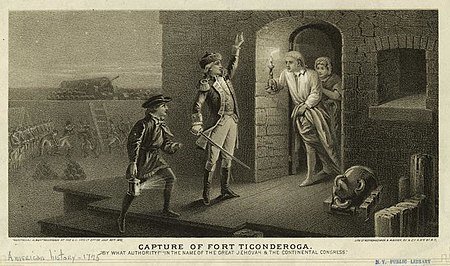
His challenge to the British Captain in command of Fort Ticonderoga "In the name of the Great Jehovah and the Continental Congress!" demonstrated his faith in God and that he was a patriot.[
Ironically now when most people hear or see Ethan Allen they think furniture
Rest in eternal peace Ethan Allen.
Images:
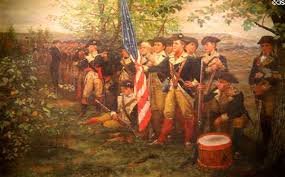
1. Green Mountain Boys at Hand's Cove painting by Julian Scott, shows troops of Ethan Allen & Benedict Arnold gathered to take Fort Ticonderoga.
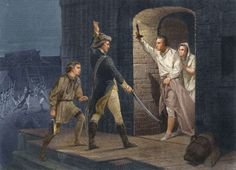
2. May 10, 1775 - Ethan Allen and his Green Mountain Boys, along with Col. Benedict Arnold, capture the British-held fortress at Ticonderoga, New York.
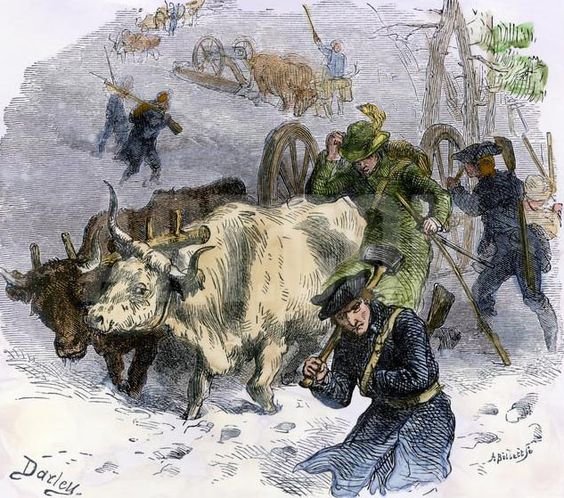
3. Ethan Allen, Benedict Arnold and the 'Green Mountain Boys' taking the captured British guns from Fort Ticonderoga to Boston in 1775
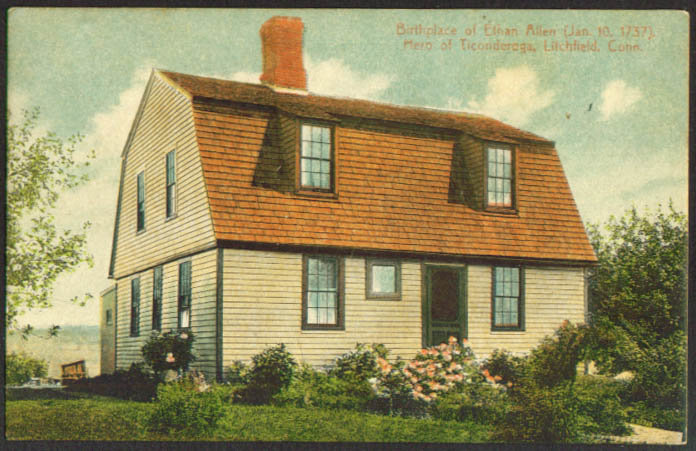
4. Postcard depicting Ethan Allen birthplace in Litchfield, postmarked in 1916,
Ethan Allen: An Unnoticed, Incredible Leader
This is a documentary about the leadership and legacy of Ethan Allen. This was created for National History Day 2014-15; Leadership and Legacy.
https://www.youtube.com/watch?v=8cCQa2Ynwfg
Biographies
1. revolutionary-war.net/ethan-allen.html"Ethan Allen by Janelle Pavao
2. ethanallenhomestead.org/a-short-biography-of-ethan-allen.html
1. Background from [https://www.revolutionary-war.net/ethan-allen.html"Ethan Allen by Janelle Pavao]
Ethan Allen is a Revolutionary War hero who was a general in the Continental Army, a British prisoner of war, and the founder of the legendary Green Mountain Boys.
Childhood
He was born on January 21, 1738 in Litchfield, Connecticut. He was the first child of Joseph and Mary Baker Allen. Shortly after he was born, they moved to Cornwall. His father was on a quest for religious freedom, and believed that he'd found it in the frontier land of Cornwall. In Cornwall, Joseph and Mary had seven more children, all of whom survived to adulthood.
Ethan's passion for philosophy emerged and blossomed, most likely from his father's religious passions. As a young boy, Allen could quote many verses from the Bible and loved to argue their meaning with the adults who came by.
Not much other than that is known about his childhood. He grew up in Cornwall, which was frontier land, so Ethan would have learned a lot about hunting, fighting, growing crops, and learning to survive off of your immediate surroundings. By the late 1740's, the frontier finally started to resemble a town.
As a young man, Ethan studied under a minister with the hope that it might help him get accepted into Yale. In the middle of his studies, his father died and he abandoned his schooling and went to be with his family. After his father's death, he joined the army, but it was not long before his time was up and he was back in Cornwall. There he met Mary Browson. After a very short courtship they were married, and to support his family, Allen took part-ownership with his brother Heman in an iron furnace in Salisbury. He and Mary settled in Cornwall at first, but a year later, the trips to Salisbury were too much, so they moved to Salisbury with their baby girl. He bought a small farm and kept developing his iron business.
His iron business began to cost him a lot of money. At first he financed it by selling a large sum of his land, but after that proved to not be enough, he sold his share in the business to Heman. His marriage was in bad shape; Ethan felt he did not know Mary well enough before he married her and their personalities clashed. He was miserable with her. Mary was very critical and complained a lot. She was also unable to read and write and could not enjoy his love of literature and learning. Ethan felt that she was very focused on the rules of religion, and he questioned everything and wanted to discover a relationship with his creator for himself. He loved to be very flamboyant with his beliefs and argue his views on religion. However, Ethan did not abandon the mother of his children, and he stayed with her until she died many years later.
During those years, he was introduced to the wrong side of the law. This became a recurring aspect in his life. He was first brought to court after his neighbor would not keep his pig from wandering onto Allen's land and destroying his crops, Ethan and Heman seized the beast and served it to their families for dinner.
The neighbor was very angry and the courts made Allen pay a fine of 10 shillings to replace the pig. His next visit to the court, Allen had given himself a smallpox immunization without the permission of the town selectman, which was against the law at the time. Allen protested that every man's safety should be up to himself, not the government. He was also fined for this.
While he was in Salisbury, he ran into Thomas Young, a doctor living on the border of New York, quite near Salisbury. The two became really great friends rather quickly. Young taught Allen a great deal about philosophy and political theory, and Allen taught Young about life in the frontier and the appreciation of nature. Shortly after, they decided to start writing a manuscript together. The writing went quite well, until Young had to move away in 1764 and took the manuscript with him. Ethan did not find it until years after Young had died, at which point he fleshed it out, edited and published the book he called Reason: the Only Oracle of Man.
The Green Mountain Boys
For the next few years, history loses sight of Ethan Allen. There is no new documentation on him until late April of 1775. After the battle of Lexington and Concord, a military group called on Ethan. They were planning on capturing Fort Ticonderoga and they wanted to know if he would help. Allen said that he felt a patriotic obligation, but others suggested that he may have seen it as a good way to make up for the run-ins with the law he'd recently had. Whatever his reasoning, Ethan Allen began rounding up the Green Mountain Boys. On May 2, 1775 Ethan Allen and the Green Mountain Boys met up with a group of soldiers from Massachusetts and Connecticut in Bennington. Allen and the other officials planned their attack on Ticonderoga for May 10.
Everyone voted, and Allen was dubbed in charge of the attack. On May 9, however, General Benedict Arnold showed up without warning, and asserted his right to command. The men said they would not follow Arnold, and they would only fight if Allen led the fight. Ethan Allen went to General Arnold and suggested they lead the attack together. At 2 o'clock the next morning, Arnold, Allen and the soldiers loaded into boats and headed across the lake to Fort Ticonderoga. Only 83 soldiers made it over before Allen and Arnold decided to attack for fear that dawn would take away their cover soon. As soon as the attack took place, Ethan headed straight for the Captain's quarters.
The Captain's second-in-command had aroused him at the first sight of attack, and the captain was dressing in the back. His second, trying to stall for time, demanded "In whose authority do you take this fort?!"
Allen, believing that he was talking to the captain, announced: "In the name of the Great Jehovah and the Continental Congress!" The Captain then came out fully clothed and surrendered his sword to Ethan Allen. Ethan Allen and Benedict Arnold successfully took Fort Ticonderoga without firing a single shot. This was the first win for the American Continental Army.
After their success at Fort Ticonderoga, Ethan Allen and the Green Mountain Boys were called on for many other battles. They became a small legend around the Northern regions of America. Later, the Boys became discontent with their chain of command, and held a vote to instill new leadership. Ethan Allen was not elected to any position at all. The Boys were most likely tired of Allen's egotistical behavior after their success at Fort Ticonderoga, and their growing fame around the country. Allen was distraught by the rejection, however most people around him thought it would be good for him to reduce his ego.
Prisoner of War
Starting on September 8, Allen and Massachusetts Major, John Brown, were sent out on a series of recruiting trips. They were very successful in the sense that they had many men sign up for the American army. However, while they were out on one of these recruits near New York, Ethan and several of their soldiers were captured and taken as prisoners by the British.
They were kept on a few different British ships before they were sent to England. The circumstances were harsh and filthy, and they were made to endure many hardships. A short while after they'd been in England, King George III decreed that all American prisoners were to be held in America and treated as prisoners of war. The next day, Allen was back on a ship on his way to America. During their stay in Ireland on the way back, a group of Irish men heard of the famous Ethan Allen being held on the ship, and took up a collection of clothes and supplies for him and his men.
After that, he was held on a ship outside of New York for several months. During his stay, the captain of the ship entertained a visit from the governor of New York. Allen reports that while he was on the ship the governor looked directly at him, and pretended not to recognize him, but it is very likely that he actually knew who Allen was and chose to leave him there.
After a while, the prisoners were moved on shore to New York, and Allen (being considered an officer) was afforded a limited parole. During his time in New York, he received news that his son had died from smallpox. Devastated, Allen wandered off and was arrested by the British for breaking his parole. He was put in solitary confinement and all comforts previously afforded him were taken away.
Allen was finally released to General George Washington on May 14, 1778, after three years of imprisonment. He arrived at home on May 25, only to find that his closest brother Heman had died one week before, and his brother Zimri, who had been taking care of Allen's family and farm, had died the spring after Allen's imprisonment. Ethan was really hit hard by the news and had a lot of trouble coping with the loss of his two brothers and his son. A few weeks later he traveled to Bennington to check in with the American army. His visit was highly anticipated and he was met with all the glory and honor deserved by a war hero.
There he learned of the Declaration of Independence and The US Constitution. This relit the flame in Ethan, and he was excited to start working on politics again. He spent the last years of the Revolutionary War fighting the political side of things.
After his unhappy wife died in 1783, Allen married Fanny Montresor Brush Buchanan. Allen was very happy with Fanny. She took good care of him, and supported him in all of his passions. He was woven in with politics until the day he died on February 11, 1789. Fanny supported him in all of his politics and studies because it was what made him happy, and Allen died a happy man because he had a wife who loved and cared for him very much. Even though Allen did not get to spend very many years with Fanny, she was truly the love of his life."
2. Background from [https://www.ethanallenhomestead.org/a-short-biography-of-ethan-allen.html]
"Who Was Ethan Allen?
Ethan Allen, who has become a folk hero in Vermont, was an unusually flamboyant backwoodsman-turned- statesman from Connecticut. He was one of the early inhabitants of Burlington and lived on his property in the Winooski River Intervale from 1787 until his death in 1789. He made a very significant contribution to the early history of Vermont, at that time called the New Hampshire Grants, then the territory constituted the northern frontier of the New England colonies, and of the emerging nation.
He is best known for the capture of Fort Ticonderoga at the outbreak of the Revolutionary War and his leadership of the Green Mountain Boys. He was also a Deist and philosopher. Towards the end of his life he published Reason the Only Oracle of Man, rewritten from a manuscript he and Dr. Thomas Young, a Deist friend and mentor from Connecticut, had written together years earlier.
As is so often the case with folk heroes, around whom myths grow up during and after their lives, it is hard to form an accurate picture of Ethan Allen. Indeed, there is no portrait of him! By most accounts, he was over six feet tall, unusual for that time, and, according to contemporary evidence, was a confrontational, even belligerent person, yet had that power to attract the most devoted and loyal followers. Persistent and independent like many frontiersmen, Ethan was, however, unusually well-read and articulate for a settler of the northern frontier.
Defender of the New Hampshire Land Grants
After the New York Supreme Court ruled that any claim to ownership of land granted by New Hampshire was invalid, Ethan became extremely involved in defending these Yankee grants. He did so to protect his own considerable interests and those of the pioneers who came north from Connecticut and Massachusetts after the end of the French and Indian War in 1759. He preferred to associate the newly developed lands with historically democratic New England rather than New York, where there was a less democratic tradition and a government influenced by wealthy landowners. He even went as far as proposing complete independence for the land between the Connecticut River and Lake Champlain, before the Revolutionary War intervened.
Fort Ticonderoga
In the Spring of 1775, Fort Ticonderoga was captured for the American Colonies by a troop led by Ethan Allen. The fort is situated at a very strategic point at the southern tip of Lake Champlain, and had been in British hands since the Peace of Paris in 1763. At the time of the attack it was neither well-maintained nor well-guarded; furthermore the garrison had no idea that hostilities had broken out in Concord and Lexington.
Ethan Allen recognized the significance of capturing the fort and was preparing to do so, with the Green Mountain Boys, when Benedict Arnold arrived with a military commission from the Massachusetts and Connecticut revolutionary councils to lead an attack.
The Green Mountain Boys refused to serve under anyone other than their own commander, so Ethan took charge leaving Benedict Arnold the honor of being co-commander of the force. At dawn on May 10th the fort was easily taken, as the garrison of a mere fifty men was indeed totally surprised.
Crown Point, another British fort a few miles to the north, was also taken without an engagement the following day. The capture of these two forts secured protection from the British to the north, and provided much needed cannon for the colonial army.
Although popular mythology attributed these early victories to Ethan's military skill, they were possible because of the total unpreparedness of the British.
Imprisoned
In June 1775, Ethan, who was by now at the northern end of Lake Champlain, proved himself to be somewhat successful at recruiting Indians and disenchanted Canadians to join the campaign to invade Canada, but never received a commission in the army assigned to the task. Frustrated by delays during the summer, Ethan decided on his own initiative, and in his impulsive fashion, to attack well-prepared and forewarned Montreal on September 25th. A second attack force failed to arrive and Ethan, deserted by some of his men, was easily captured, and sent to be tried as a traitor in England.
Ethan's experiences as a prisoner were varied, according to our only sources of information, his own action-packed account written some years later. At times he suffered greatly, particularly on board prison ships, but once his status changed from traitor to prisoner-of-war, he fared better. His fortunes as a prisoner were most favorable when he was incarcerated in Pendennis Castle, Cornwall, and on his return voyage, when the citizens of Cork in Ireland greeted him. After some time on parole on Long Island, Ethan was finally repatriated in the spring of 1778 in exchange for the release of a British officer.
The Haldimand Affair
In the late 1770s, after Vermont had declared itself an independent republic, the New York government was as hostile as ever. The Continental Congress, afraid of antagonizing the powerful state, was noticeably unsupportive, and New Hampshire and Massachusetts were making their own claims to the territory. The governor of Canada was, at that time, Frederick Haldimand. In order to guarantee land titles in the republic, negotiations began through Haldimand between members of the Vermont government and the British headquarters in New York for the republic of Vermont to become a part of the British Empire.
While a prisoner in England, Ethan had been approached to spy for the British after his release; but there is no evidence that he did so. There is written evidence of direct communication between members of the Vermont government, including Ethan Allen, and the British, from 1780 until 1783. It is difficult to understand the motives of the people involved; a desire to protect the sovereignty of Vermont, or concern for their own property?
Modern scholars still debate Allen's intent in his communications with the British, most recent scholarship indicates that the negotiations were a ruse to prevent a British invasion of Vermont and pressure Congress into recognizing Vermont independence.
It was not until 1791 that Vermont became the fourteenth state.
Ethan Allen's Final Years
From the early 1780's Ethan's influence on Vermont politics waned. Although he continued to involve himself by writing pamphlets and letters to further the Vermont cause, his pursuit of an alliance with the Empire certainly contributed to his failing popularity. At the same time, Vermont's population doubled, and its government required qualities of diplomacy, stability, and accountability, none of which were strong in Ethan.
He contented himself with rewriting a philosophical work begun in earlier years with his Deist friend, Dr. Thomas Young of Salisbury. In 1785 his Reason the Only Oracle of Man was published. This book was a financial disaster and not well-received, probably because its ideas were as controversial as its author. It most clearly reflected his personality as a free thinker and an independent spirit. He tore the Old Testament to shreds and ridiculed the New. He postulated a Natural Law and the ideal of a Good God in harmony with Nature, hardly ideas that would endear him to New England.
The last five years of Ethan's life were his most tranquil. He and his second wife, Fanny, moved to a home on their property in the Burlington Intervale. Ethan concentrated on farming and writing, and died in 1789. As so often in his life, Ethan presents yet another unanswered question as to the manner of his death. He either suffered a stroke returning across the frozen lake, or, as popular legend tells it, fell from the loaded sleigh in a drunken stupor. Whatever the cause of the trauma, he did not regain consciousness, and died the next day at home.
Without doubt, Ethan Allen's life had great impact upon and significance for the early history of Vermont, and it can be safely said that his frontier spirit and independent way of thought still linger here."
FYI COL Mikel J. Burroughs LTC Greg Henning Maj Bill Smith, Ph.D. Maj William W. 'Bill' Price LTC Orlando Illi CPT Jack Durish CMSgt (Join to see) MSG Andrew White Sgt Albert Castro Cynthia Croft SP5 Mark Kuzinski CPL Dave Hoover SPC Margaret Higgins SSG William Jones SGT (Join to see) PO1 H Gene Lawrence Lt Col John (Jack) Christensen PO3 Bob McCord TSgt Joe C.
His challenge to the British Captain in command of Fort Ticonderoga "In the name of the Great Jehovah and the Continental Congress!" demonstrated his faith in God and that he was a patriot.[
Ironically now when most people hear or see Ethan Allen they think furniture
Rest in eternal peace Ethan Allen.
Images:
1. Green Mountain Boys at Hand's Cove painting by Julian Scott, shows troops of Ethan Allen & Benedict Arnold gathered to take Fort Ticonderoga.
2. May 10, 1775 - Ethan Allen and his Green Mountain Boys, along with Col. Benedict Arnold, capture the British-held fortress at Ticonderoga, New York.
3. Ethan Allen, Benedict Arnold and the 'Green Mountain Boys' taking the captured British guns from Fort Ticonderoga to Boston in 1775
4. Postcard depicting Ethan Allen birthplace in Litchfield, postmarked in 1916,
Ethan Allen: An Unnoticed, Incredible Leader
This is a documentary about the leadership and legacy of Ethan Allen. This was created for National History Day 2014-15; Leadership and Legacy.
https://www.youtube.com/watch?v=8cCQa2Ynwfg
Biographies
1. revolutionary-war.net/ethan-allen.html"Ethan Allen by Janelle Pavao
2. ethanallenhomestead.org/a-short-biography-of-ethan-allen.html
1. Background from [https://www.revolutionary-war.net/ethan-allen.html"Ethan Allen by Janelle Pavao]
Ethan Allen is a Revolutionary War hero who was a general in the Continental Army, a British prisoner of war, and the founder of the legendary Green Mountain Boys.
Childhood
He was born on January 21, 1738 in Litchfield, Connecticut. He was the first child of Joseph and Mary Baker Allen. Shortly after he was born, they moved to Cornwall. His father was on a quest for religious freedom, and believed that he'd found it in the frontier land of Cornwall. In Cornwall, Joseph and Mary had seven more children, all of whom survived to adulthood.
Ethan's passion for philosophy emerged and blossomed, most likely from his father's religious passions. As a young boy, Allen could quote many verses from the Bible and loved to argue their meaning with the adults who came by.
Not much other than that is known about his childhood. He grew up in Cornwall, which was frontier land, so Ethan would have learned a lot about hunting, fighting, growing crops, and learning to survive off of your immediate surroundings. By the late 1740's, the frontier finally started to resemble a town.
As a young man, Ethan studied under a minister with the hope that it might help him get accepted into Yale. In the middle of his studies, his father died and he abandoned his schooling and went to be with his family. After his father's death, he joined the army, but it was not long before his time was up and he was back in Cornwall. There he met Mary Browson. After a very short courtship they were married, and to support his family, Allen took part-ownership with his brother Heman in an iron furnace in Salisbury. He and Mary settled in Cornwall at first, but a year later, the trips to Salisbury were too much, so they moved to Salisbury with their baby girl. He bought a small farm and kept developing his iron business.
His iron business began to cost him a lot of money. At first he financed it by selling a large sum of his land, but after that proved to not be enough, he sold his share in the business to Heman. His marriage was in bad shape; Ethan felt he did not know Mary well enough before he married her and their personalities clashed. He was miserable with her. Mary was very critical and complained a lot. She was also unable to read and write and could not enjoy his love of literature and learning. Ethan felt that she was very focused on the rules of religion, and he questioned everything and wanted to discover a relationship with his creator for himself. He loved to be very flamboyant with his beliefs and argue his views on religion. However, Ethan did not abandon the mother of his children, and he stayed with her until she died many years later.
During those years, he was introduced to the wrong side of the law. This became a recurring aspect in his life. He was first brought to court after his neighbor would not keep his pig from wandering onto Allen's land and destroying his crops, Ethan and Heman seized the beast and served it to their families for dinner.
The neighbor was very angry and the courts made Allen pay a fine of 10 shillings to replace the pig. His next visit to the court, Allen had given himself a smallpox immunization without the permission of the town selectman, which was against the law at the time. Allen protested that every man's safety should be up to himself, not the government. He was also fined for this.
While he was in Salisbury, he ran into Thomas Young, a doctor living on the border of New York, quite near Salisbury. The two became really great friends rather quickly. Young taught Allen a great deal about philosophy and political theory, and Allen taught Young about life in the frontier and the appreciation of nature. Shortly after, they decided to start writing a manuscript together. The writing went quite well, until Young had to move away in 1764 and took the manuscript with him. Ethan did not find it until years after Young had died, at which point he fleshed it out, edited and published the book he called Reason: the Only Oracle of Man.
The Green Mountain Boys
For the next few years, history loses sight of Ethan Allen. There is no new documentation on him until late April of 1775. After the battle of Lexington and Concord, a military group called on Ethan. They were planning on capturing Fort Ticonderoga and they wanted to know if he would help. Allen said that he felt a patriotic obligation, but others suggested that he may have seen it as a good way to make up for the run-ins with the law he'd recently had. Whatever his reasoning, Ethan Allen began rounding up the Green Mountain Boys. On May 2, 1775 Ethan Allen and the Green Mountain Boys met up with a group of soldiers from Massachusetts and Connecticut in Bennington. Allen and the other officials planned their attack on Ticonderoga for May 10.
Everyone voted, and Allen was dubbed in charge of the attack. On May 9, however, General Benedict Arnold showed up without warning, and asserted his right to command. The men said they would not follow Arnold, and they would only fight if Allen led the fight. Ethan Allen went to General Arnold and suggested they lead the attack together. At 2 o'clock the next morning, Arnold, Allen and the soldiers loaded into boats and headed across the lake to Fort Ticonderoga. Only 83 soldiers made it over before Allen and Arnold decided to attack for fear that dawn would take away their cover soon. As soon as the attack took place, Ethan headed straight for the Captain's quarters.
The Captain's second-in-command had aroused him at the first sight of attack, and the captain was dressing in the back. His second, trying to stall for time, demanded "In whose authority do you take this fort?!"
Allen, believing that he was talking to the captain, announced: "In the name of the Great Jehovah and the Continental Congress!" The Captain then came out fully clothed and surrendered his sword to Ethan Allen. Ethan Allen and Benedict Arnold successfully took Fort Ticonderoga without firing a single shot. This was the first win for the American Continental Army.
After their success at Fort Ticonderoga, Ethan Allen and the Green Mountain Boys were called on for many other battles. They became a small legend around the Northern regions of America. Later, the Boys became discontent with their chain of command, and held a vote to instill new leadership. Ethan Allen was not elected to any position at all. The Boys were most likely tired of Allen's egotistical behavior after their success at Fort Ticonderoga, and their growing fame around the country. Allen was distraught by the rejection, however most people around him thought it would be good for him to reduce his ego.
Prisoner of War
Starting on September 8, Allen and Massachusetts Major, John Brown, were sent out on a series of recruiting trips. They were very successful in the sense that they had many men sign up for the American army. However, while they were out on one of these recruits near New York, Ethan and several of their soldiers were captured and taken as prisoners by the British.
They were kept on a few different British ships before they were sent to England. The circumstances were harsh and filthy, and they were made to endure many hardships. A short while after they'd been in England, King George III decreed that all American prisoners were to be held in America and treated as prisoners of war. The next day, Allen was back on a ship on his way to America. During their stay in Ireland on the way back, a group of Irish men heard of the famous Ethan Allen being held on the ship, and took up a collection of clothes and supplies for him and his men.
After that, he was held on a ship outside of New York for several months. During his stay, the captain of the ship entertained a visit from the governor of New York. Allen reports that while he was on the ship the governor looked directly at him, and pretended not to recognize him, but it is very likely that he actually knew who Allen was and chose to leave him there.
After a while, the prisoners were moved on shore to New York, and Allen (being considered an officer) was afforded a limited parole. During his time in New York, he received news that his son had died from smallpox. Devastated, Allen wandered off and was arrested by the British for breaking his parole. He was put in solitary confinement and all comforts previously afforded him were taken away.
Allen was finally released to General George Washington on May 14, 1778, after three years of imprisonment. He arrived at home on May 25, only to find that his closest brother Heman had died one week before, and his brother Zimri, who had been taking care of Allen's family and farm, had died the spring after Allen's imprisonment. Ethan was really hit hard by the news and had a lot of trouble coping with the loss of his two brothers and his son. A few weeks later he traveled to Bennington to check in with the American army. His visit was highly anticipated and he was met with all the glory and honor deserved by a war hero.
There he learned of the Declaration of Independence and The US Constitution. This relit the flame in Ethan, and he was excited to start working on politics again. He spent the last years of the Revolutionary War fighting the political side of things.
After his unhappy wife died in 1783, Allen married Fanny Montresor Brush Buchanan. Allen was very happy with Fanny. She took good care of him, and supported him in all of his passions. He was woven in with politics until the day he died on February 11, 1789. Fanny supported him in all of his politics and studies because it was what made him happy, and Allen died a happy man because he had a wife who loved and cared for him very much. Even though Allen did not get to spend very many years with Fanny, she was truly the love of his life."
2. Background from [https://www.ethanallenhomestead.org/a-short-biography-of-ethan-allen.html]
"Who Was Ethan Allen?
Ethan Allen, who has become a folk hero in Vermont, was an unusually flamboyant backwoodsman-turned- statesman from Connecticut. He was one of the early inhabitants of Burlington and lived on his property in the Winooski River Intervale from 1787 until his death in 1789. He made a very significant contribution to the early history of Vermont, at that time called the New Hampshire Grants, then the territory constituted the northern frontier of the New England colonies, and of the emerging nation.
He is best known for the capture of Fort Ticonderoga at the outbreak of the Revolutionary War and his leadership of the Green Mountain Boys. He was also a Deist and philosopher. Towards the end of his life he published Reason the Only Oracle of Man, rewritten from a manuscript he and Dr. Thomas Young, a Deist friend and mentor from Connecticut, had written together years earlier.
As is so often the case with folk heroes, around whom myths grow up during and after their lives, it is hard to form an accurate picture of Ethan Allen. Indeed, there is no portrait of him! By most accounts, he was over six feet tall, unusual for that time, and, according to contemporary evidence, was a confrontational, even belligerent person, yet had that power to attract the most devoted and loyal followers. Persistent and independent like many frontiersmen, Ethan was, however, unusually well-read and articulate for a settler of the northern frontier.
Defender of the New Hampshire Land Grants
After the New York Supreme Court ruled that any claim to ownership of land granted by New Hampshire was invalid, Ethan became extremely involved in defending these Yankee grants. He did so to protect his own considerable interests and those of the pioneers who came north from Connecticut and Massachusetts after the end of the French and Indian War in 1759. He preferred to associate the newly developed lands with historically democratic New England rather than New York, where there was a less democratic tradition and a government influenced by wealthy landowners. He even went as far as proposing complete independence for the land between the Connecticut River and Lake Champlain, before the Revolutionary War intervened.
Fort Ticonderoga
In the Spring of 1775, Fort Ticonderoga was captured for the American Colonies by a troop led by Ethan Allen. The fort is situated at a very strategic point at the southern tip of Lake Champlain, and had been in British hands since the Peace of Paris in 1763. At the time of the attack it was neither well-maintained nor well-guarded; furthermore the garrison had no idea that hostilities had broken out in Concord and Lexington.
Ethan Allen recognized the significance of capturing the fort and was preparing to do so, with the Green Mountain Boys, when Benedict Arnold arrived with a military commission from the Massachusetts and Connecticut revolutionary councils to lead an attack.
The Green Mountain Boys refused to serve under anyone other than their own commander, so Ethan took charge leaving Benedict Arnold the honor of being co-commander of the force. At dawn on May 10th the fort was easily taken, as the garrison of a mere fifty men was indeed totally surprised.
Crown Point, another British fort a few miles to the north, was also taken without an engagement the following day. The capture of these two forts secured protection from the British to the north, and provided much needed cannon for the colonial army.
Although popular mythology attributed these early victories to Ethan's military skill, they were possible because of the total unpreparedness of the British.
Imprisoned
In June 1775, Ethan, who was by now at the northern end of Lake Champlain, proved himself to be somewhat successful at recruiting Indians and disenchanted Canadians to join the campaign to invade Canada, but never received a commission in the army assigned to the task. Frustrated by delays during the summer, Ethan decided on his own initiative, and in his impulsive fashion, to attack well-prepared and forewarned Montreal on September 25th. A second attack force failed to arrive and Ethan, deserted by some of his men, was easily captured, and sent to be tried as a traitor in England.
Ethan's experiences as a prisoner were varied, according to our only sources of information, his own action-packed account written some years later. At times he suffered greatly, particularly on board prison ships, but once his status changed from traitor to prisoner-of-war, he fared better. His fortunes as a prisoner were most favorable when he was incarcerated in Pendennis Castle, Cornwall, and on his return voyage, when the citizens of Cork in Ireland greeted him. After some time on parole on Long Island, Ethan was finally repatriated in the spring of 1778 in exchange for the release of a British officer.
The Haldimand Affair
In the late 1770s, after Vermont had declared itself an independent republic, the New York government was as hostile as ever. The Continental Congress, afraid of antagonizing the powerful state, was noticeably unsupportive, and New Hampshire and Massachusetts were making their own claims to the territory. The governor of Canada was, at that time, Frederick Haldimand. In order to guarantee land titles in the republic, negotiations began through Haldimand between members of the Vermont government and the British headquarters in New York for the republic of Vermont to become a part of the British Empire.
While a prisoner in England, Ethan had been approached to spy for the British after his release; but there is no evidence that he did so. There is written evidence of direct communication between members of the Vermont government, including Ethan Allen, and the British, from 1780 until 1783. It is difficult to understand the motives of the people involved; a desire to protect the sovereignty of Vermont, or concern for their own property?
Modern scholars still debate Allen's intent in his communications with the British, most recent scholarship indicates that the negotiations were a ruse to prevent a British invasion of Vermont and pressure Congress into recognizing Vermont independence.
It was not until 1791 that Vermont became the fourteenth state.
Ethan Allen's Final Years
From the early 1780's Ethan's influence on Vermont politics waned. Although he continued to involve himself by writing pamphlets and letters to further the Vermont cause, his pursuit of an alliance with the Empire certainly contributed to his failing popularity. At the same time, Vermont's population doubled, and its government required qualities of diplomacy, stability, and accountability, none of which were strong in Ethan.
He contented himself with rewriting a philosophical work begun in earlier years with his Deist friend, Dr. Thomas Young of Salisbury. In 1785 his Reason the Only Oracle of Man was published. This book was a financial disaster and not well-received, probably because its ideas were as controversial as its author. It most clearly reflected his personality as a free thinker and an independent spirit. He tore the Old Testament to shreds and ridiculed the New. He postulated a Natural Law and the ideal of a Good God in harmony with Nature, hardly ideas that would endear him to New England.
The last five years of Ethan's life were his most tranquil. He and his second wife, Fanny, moved to a home on their property in the Burlington Intervale. Ethan concentrated on farming and writing, and died in 1789. As so often in his life, Ethan presents yet another unanswered question as to the manner of his death. He either suffered a stroke returning across the frozen lake, or, as popular legend tells it, fell from the loaded sleigh in a drunken stupor. Whatever the cause of the trauma, he did not regain consciousness, and died the next day at home.
Without doubt, Ethan Allen's life had great impact upon and significance for the early history of Vermont, and it can be safely said that his frontier spirit and independent way of thought still linger here."
FYI COL Mikel J. Burroughs LTC Greg Henning Maj Bill Smith, Ph.D. Maj William W. 'Bill' Price LTC Orlando Illi CPT Jack Durish CMSgt (Join to see) MSG Andrew White Sgt Albert Castro Cynthia Croft SP5 Mark Kuzinski CPL Dave Hoover SPC Margaret Higgins SSG William Jones SGT (Join to see) PO1 H Gene Lawrence Lt Col John (Jack) Christensen PO3 Bob McCord TSgt Joe C.
(11)
(0)
LTC Stephen F.
"Ethan Allen in His Own Words" with Jim Hogue
Using excerpts from Ethan’s writings, Jim Hogue makes a case that Ethan’s vision for Vermont was that of a sovereign state where reason and science would fin...
"Ethan Allen in His Own Words" with Jim Hogue
"Using excerpts from Ethan’s writings, Jim Hogue makes a case that Ethan’s vision for Vermont was that of a sovereign state where reason and science would find a welcome, and where international trade and cultural exchange would bring peace, prosperity, and understanding."
https://www.youtube.com/watch?v=d1gC_DbgGgU
Images:
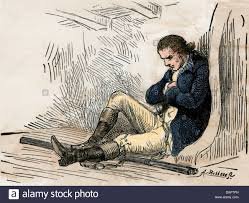
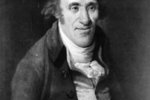
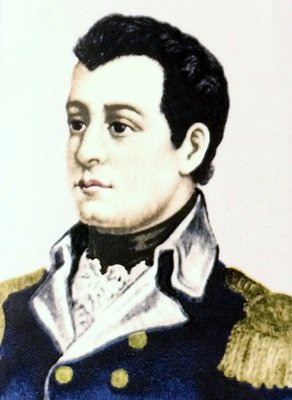
1. American patriot Ethan Allen imprisoned after his capture in Montreal, 1775-1778. Hand-colored woodcut
2. Colonel Ethan Allen
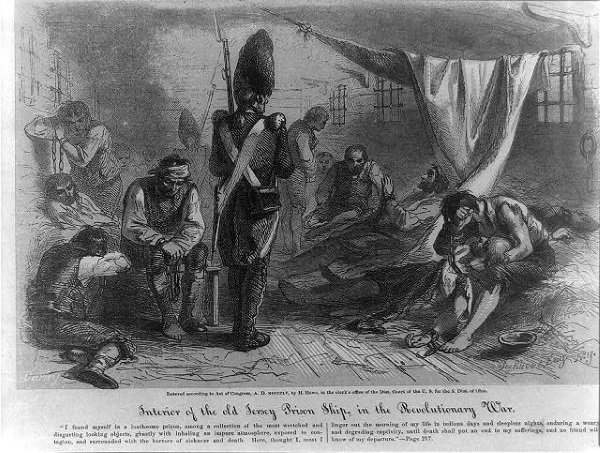
3. Interior of a British POW ship, the Jersey, during the American Revolution.
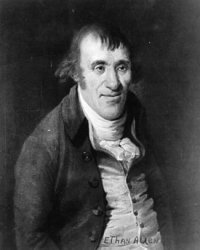
4. Ethan Allen later in life
Background from [https://www.newenglandhistoricalsociety.com/how-the-british-tortured-ethan-allen/]
"How the British Tortured Ethan Allen
Today we’d call it torture, but when the British tortured Ethan Allen in prison they called it ‘harsh treatment.’
On Sept. 25, 1775, the British captured Allen, a Continental Army colonel, when he retreated from a poorly planned attack on Montreal. They seemed delighted at the downfall of the man who captured Fort Ticonderoga.
Ethan Allen then spent more than two years as a prisoner of war.
HOW THE BRITISH TORTURED ALLEN
From the beginning the British tortured Allen psychologically as well as physically. They often confined him with privates, though he considered himself an officer and a gentleman. They also threatened to hang him in England.
Gen. Richard Prescott hurled a typical insult at Ethan Allen upon his capture:
I shall not execute you now; but you shall grace a halter at Tyburn, God damn you.
They took him to the Gaspee schooner of war and bound his hands and feet in irons. His leg irons weighed 30 pounds and consisted of an eight-foot long iron bar and the irons shut tight around his ankles. He could only sleep on his back.
He sat on a chest, days and most nights, guarded round the clock by men with bayonets. They refused to loosen his shackles. Sailors came below to insult him.
Ethan Allen won a brief reprieve, when he spent a little more than a week on another vessel under a British captain who treated him well. Then the British tortured him again by herding aboard the Adamant.
During the 40-day voyage to England, Allen and 33 other prisoners were confined in a small enclosure, 20 feet by 22 feet. It had two excrement tubs. Not only were they to eat in those cramped and filthy quarters, Allen reported, ‘but every blackguard sailor and tory aboard insulted them.’ One lieutenant spat in his face as he was herded into the small space. Allen partly knocked him down despite his handcuffs.
ABOARD THE ADAMANT
Allen wrote that the British tortured the prisoners by giving them only a small amount of water, though the men all came down with diarrhea and fever. The enclosure had no light, so the prisoners couldn’t see each other, and lice covered all their bodies. They only survived, wrote Allen, because the British gave them rum.
After 40 days they arrived in Falmouth, England, and finally saw sunshine and breathed fresh air. Crowds came to see them, and Ethan Allen was self-conscious about his outfit. He wore a short fawn hunting jacket, twill breeches and a red cap. The English had never seen anything quite like it and gawked at him.
He didn’t know it at the time, but Parliament debated his fate, and decided against executing him for treason. They reasoned the Americans might retaliate against the many British prisoners they held.
The British authorities confined him in close quarters in a castle, where he received much better treatment. He ate well and had a bottle of wine delivered to him every day. Still, he anticipated a cruel death by hanging.
BACK IN AMERICA
After about two weeks, The British decided to send him back to America as a prisoner of war. With about three dozen other prisoners he boarded the frigate Solebay and sailed to Cork in Ireland. There, generous Irishmen – no fans of the English — gave the prisoners clothing and stores of food.
After arriving in Cape Fear, North Carolina, the prisoners boarded another ship bound for Halifax. They received little food and no medical treatment for the scurvy.
Ethan Allen survived the scurvy, which afflicted Ethan Allen but little. In Halifax, however, he was locked in a room with the other prisoners and excrement tubs. There he grew sick and weak and couldn’t eat.
His situation improved when the British sent him to New York. Eventually they paroled him, limiting him to the city.
MORE POWS
New York’s churches were filled with American prisoners, captured after Washington’s defeat on Long Island. As the Continental Army retreated across New Jersey, Ethan Allen visited the American prisoners. The British tortured them too, promising better treatment if they enlisted in the British Army.
The prisoners had only small portions of moldy bread and bad meat to eat. Many starved to death, and 2,000 ultimately died of hunger, cold and sickness. Allen saw the dead lying in their own excrement.
When Gen. John Burgoyne retook Ticonderoga, the British retook Ethan Allen. They seized him in a tavern, claimed he violated parole and confined him in a dungeon from Aug. 26, 1777, to May 3, 1778.
Finally, the British exchanged him for Archibald Campbell, and he returned to Bennington where his Green Mountain Boays thought he had died.
They celebrated by firing off three cannon upon his return and 14 the next day, 13 for the colonies and one for Young Vermont.
And then they ‘passed a flowing bowl’ in celebration.
With thanks to A Narrative of Ethan Allen’s Captivity, by Ethan Allen."
General respond
LTC Stephen C. LTC (Join to see) SGT Jim Arnold SPC Douglas Bolton SSgt Boyd Herrst PVT Mark Zehner]1SG John Millan SPC Tom DeSmetSSgt Terry P. SFC (Join to see) SGT Steve McFarland SGT Gregory Lawritson CWO3 (Join to see) PO1 William "Chip" Nagel Col Carl Whicker SP5 Jeannie CarleSPC Chris Bayner-CwikTSgt David L.PO1 Robert GeorgeSSG Robert Mark Odom
"Using excerpts from Ethan’s writings, Jim Hogue makes a case that Ethan’s vision for Vermont was that of a sovereign state where reason and science would find a welcome, and where international trade and cultural exchange would bring peace, prosperity, and understanding."
https://www.youtube.com/watch?v=d1gC_DbgGgU
Images:
1. American patriot Ethan Allen imprisoned after his capture in Montreal, 1775-1778. Hand-colored woodcut
2. Colonel Ethan Allen
3. Interior of a British POW ship, the Jersey, during the American Revolution.
4. Ethan Allen later in life
Background from [https://www.newenglandhistoricalsociety.com/how-the-british-tortured-ethan-allen/]
"How the British Tortured Ethan Allen
Today we’d call it torture, but when the British tortured Ethan Allen in prison they called it ‘harsh treatment.’
On Sept. 25, 1775, the British captured Allen, a Continental Army colonel, when he retreated from a poorly planned attack on Montreal. They seemed delighted at the downfall of the man who captured Fort Ticonderoga.
Ethan Allen then spent more than two years as a prisoner of war.
HOW THE BRITISH TORTURED ALLEN
From the beginning the British tortured Allen psychologically as well as physically. They often confined him with privates, though he considered himself an officer and a gentleman. They also threatened to hang him in England.
Gen. Richard Prescott hurled a typical insult at Ethan Allen upon his capture:
I shall not execute you now; but you shall grace a halter at Tyburn, God damn you.
They took him to the Gaspee schooner of war and bound his hands and feet in irons. His leg irons weighed 30 pounds and consisted of an eight-foot long iron bar and the irons shut tight around his ankles. He could only sleep on his back.
He sat on a chest, days and most nights, guarded round the clock by men with bayonets. They refused to loosen his shackles. Sailors came below to insult him.
Ethan Allen won a brief reprieve, when he spent a little more than a week on another vessel under a British captain who treated him well. Then the British tortured him again by herding aboard the Adamant.
During the 40-day voyage to England, Allen and 33 other prisoners were confined in a small enclosure, 20 feet by 22 feet. It had two excrement tubs. Not only were they to eat in those cramped and filthy quarters, Allen reported, ‘but every blackguard sailor and tory aboard insulted them.’ One lieutenant spat in his face as he was herded into the small space. Allen partly knocked him down despite his handcuffs.
ABOARD THE ADAMANT
Allen wrote that the British tortured the prisoners by giving them only a small amount of water, though the men all came down with diarrhea and fever. The enclosure had no light, so the prisoners couldn’t see each other, and lice covered all their bodies. They only survived, wrote Allen, because the British gave them rum.
After 40 days they arrived in Falmouth, England, and finally saw sunshine and breathed fresh air. Crowds came to see them, and Ethan Allen was self-conscious about his outfit. He wore a short fawn hunting jacket, twill breeches and a red cap. The English had never seen anything quite like it and gawked at him.
He didn’t know it at the time, but Parliament debated his fate, and decided against executing him for treason. They reasoned the Americans might retaliate against the many British prisoners they held.
The British authorities confined him in close quarters in a castle, where he received much better treatment. He ate well and had a bottle of wine delivered to him every day. Still, he anticipated a cruel death by hanging.
BACK IN AMERICA
After about two weeks, The British decided to send him back to America as a prisoner of war. With about three dozen other prisoners he boarded the frigate Solebay and sailed to Cork in Ireland. There, generous Irishmen – no fans of the English — gave the prisoners clothing and stores of food.
After arriving in Cape Fear, North Carolina, the prisoners boarded another ship bound for Halifax. They received little food and no medical treatment for the scurvy.
Ethan Allen survived the scurvy, which afflicted Ethan Allen but little. In Halifax, however, he was locked in a room with the other prisoners and excrement tubs. There he grew sick and weak and couldn’t eat.
His situation improved when the British sent him to New York. Eventually they paroled him, limiting him to the city.
MORE POWS
New York’s churches were filled with American prisoners, captured after Washington’s defeat on Long Island. As the Continental Army retreated across New Jersey, Ethan Allen visited the American prisoners. The British tortured them too, promising better treatment if they enlisted in the British Army.
The prisoners had only small portions of moldy bread and bad meat to eat. Many starved to death, and 2,000 ultimately died of hunger, cold and sickness. Allen saw the dead lying in their own excrement.
When Gen. John Burgoyne retook Ticonderoga, the British retook Ethan Allen. They seized him in a tavern, claimed he violated parole and confined him in a dungeon from Aug. 26, 1777, to May 3, 1778.
Finally, the British exchanged him for Archibald Campbell, and he returned to Bennington where his Green Mountain Boays thought he had died.
They celebrated by firing off three cannon upon his return and 14 the next day, 13 for the colonies and one for Young Vermont.
And then they ‘passed a flowing bowl’ in celebration.
With thanks to A Narrative of Ethan Allen’s Captivity, by Ethan Allen."
General respond
LTC Stephen C. LTC (Join to see) SGT Jim Arnold SPC Douglas Bolton SSgt Boyd Herrst PVT Mark Zehner]1SG John Millan SPC Tom DeSmetSSgt Terry P. SFC (Join to see) SGT Steve McFarland SGT Gregory Lawritson CWO3 (Join to see) PO1 William "Chip" Nagel Col Carl Whicker SP5 Jeannie CarleSPC Chris Bayner-CwikTSgt David L.PO1 Robert GeorgeSSG Robert Mark Odom
(5)
(0)
LTC Stephen F.
BookTV: Willard Randall, "Ethan Allen: His Life and Times"
"Willard Sterne Randall, history professor at Champlain College, recounts the life of American Revolutionary War figure, Ethan Allen. The leader of the Green Mountain Boys, Allen is remembered for his attack on Fort Ticonderoga in 1775 and his time spent as a prisoner-of-war
https://www.youtube.com/watch?v=F6A7PfhXOTA
Images:
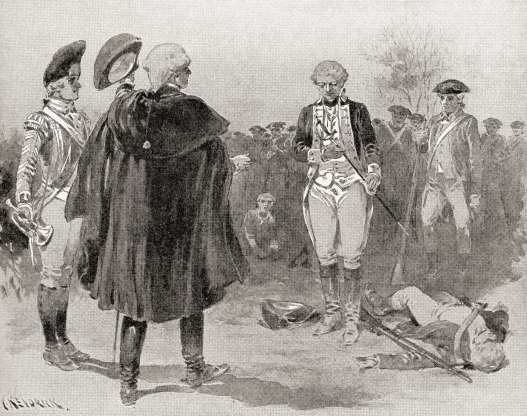
1. Continental Army Colonel Ethan Allen was captured on September 25, 1775 attempted to capture Montreal from British forces in the early days of the American Revolutionary War.
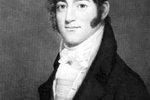
2. With the help of his good friend Dr. Thomas Young, Ethan Allen became an activist in 1764. After morning services concluded, in the meeting house of the town, Ethan stripped down to the waist in front of the congregation and the horrified minister. Ethan, who was drunk and shouting obscenities, had the doctor inoculate him. Picture the scene, in a church that preached against the cure, these two non-believers desecrated the room with not only the forbidden act but nakedness, drunkenness, and unclean speech. The town was displeased, but the inoculation worked.
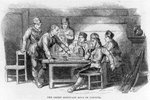
3. The Green Mountain Boys in conference
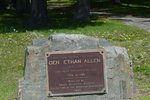
4. Gen Ethan Allen memorial - this farm became the home of Ethan Allen and was near where he died. on February 12, 1789
Background from [https://steemit.com/freedom/@adamkokesh/the-true-rebel-ethan-allen-forgotten-freedom-fighters]
"The True Rebel: Ethan Allen - Forgotten Freedom Fighters
Somewhere in our psyche, we human beings feel the need to seek out a hero. We long for stories of those who overcome trials, defend the less fortunate, and fight against evil. In the American culture this kind of devotion to heroes is no less prevalent than in any other culture. The American hero is slightly different than some of the traditional heroes. We prefer Batman or Wolverine in our comic books. The people in this country like when our sports star is also a rebel. Sure, we still want them to be good, just not too good. I think this is our understanding that perfection is seldom actually real. Another place that this is found is in Star Wars. Luke is an important character who grows up in front of us and goes through many trials to become the Jedi that saves everyone. Yet, is he your favorite? He isn’t mine. Does he have his own movie? My favorite, and obviously America’s, is Han Solo. The recent movie that has hit the theaters proves he is also the favorite of many others.
Han Solo is a good guy, he is also imperfect. He is a scoundrel, a criminal, and an outlaw. It is his character who allows for the actual victories to come into being on countless occasions, even if he comes in to save the day at the last minute. That character, brought to life by Harrison Ford, is the reluctant hero in so many of us. Many of the people who are involved in the Freedom Movement would rather be doing other things than taking up this fight, but we are compelled to action because, like Han Solo in that crazy tavern, we found ourselves needed and we felt that we had to act.
I like the people who rebelled against the British Government in the Revolutionary War. George Washington, Thomas Jefferson, and Benjamin Franklin all give us heroes and freedom fighters we can be proud of. They are almost deified in history. What if I told you that they were not the most important characters in the drama that is the Revolutionary War? Thus far, I have covered a couple of forgotten freedom fighters that were actually more important to the winning of that war, Thomas Young and Thomas Paine. Obviously, the real people responsible for the success of this rebellion were the countless men and women who waged the guerilla warfare that brought more freedom to the former colonies and led to the foundation of the United States. That being said, there was one more player that made all of the efforts of people from John Adams to George Washington possible. His name was Ethan Allen. This one man, just like Han Solo, was not exactly the picture of virtue that the writers of history like to praise. He was certainly an outlaw, an uncontrollable man, a bold blasphemer, and maybe the best leader that this hemisphere has ever known.
Ethan Allen was born January 31st, 1738. His father taught him all of the skills that a man needed to live in the challenging conditions of New England in the 1700s. Heavy farm work left him with enormous strength in his over six foot body at a time when most men were about a head shorter. He also would become self educated and even memorized large portions of the only book he had access to, the Bible. Eventually, he would marry Mary Brownson, a miller’s daughter. Ethan was devoted to her and their four children. His friends would include the native Mohawk Indians, who also would teach him their ways.
When he was 16, he became friends with an upcoming and well educated firebrand doctor named Thomas Young. If you would like to know more about Thomas Young follow this link: https://steemit.com/freedom/@adamkokesh/forgotten-freedom-fighters-dr-thomas-young-the-first-american-revolutionary
The good doctor and Ethan would sit around for hours and talk about everything that Young found interesting and the brilliant mind of Ethan Allen could soak up. They talked about everything from religion to politics. Every conversation would be filled with rebellion. He learned the writings of Locke and Hobbes. He became a fierce defender of natural rights and a devout Deist. From Thomas Young, Ethan Allen learned what it meant to be free. He also learned that he was not. He made up his mind to change that. Thomas Young would go on to be one of the most influential men in the revolution and Ethan would be its most successful warrior. There lifelong friendship would change the face of America forever.
With the help of his good friend, Ethan became an activist. North America, at this time, was being ravaged by smallpox. The disease killed thousands. There was a cure. The inoculation which involved applying the live virus to an open wound was illegal. The religious authority said that it was god’s will whether the people would die or not.
Both Thomas Young and Ethan Allen decided to take a stand publicly. In the summer of 1764, when Ethan was 26, the peaceful town that the pair lived in, Salisbury, Connecticut, had one Sunday disrupted. After morning services concluded, in the meeting house of the town, Ethan stripped down to the waist in front of the congregation and the horrified minister. Ethan, who was drunk and shouting obscenities, had the doctor inoculate him. Picture the scene, in a church that preached against the cure, these two non-believers desecrated the room with not only the forbidden act but nakedness, drunkenness, and unclean speech. The town was displeased, but the inoculation worked.
To add insult to injury, when the minister and the town authorities arrived, they had intended on doing little but confining Ethan to a room to make sure he did not become contagious and fining both he and Dr. Young. Ethan wanted to make a larger point. He felt that religion and government were conspiring to keep this cure from the people. It was his intent to take them both on. Ethan Allen, drunk, went a little too far for his puritan neighbors when he said,
“By Jesus Christ, I wish I may be bound down in hell with old Belzabub a thousand years in the lowest pit in hell and ask the reason why of Allen lying there, if it should be said that he made a promise… that he would have Lee (the Minister) and Stoddard (the most powerful man in the local government) and did not fulfill it.”
They might have intended little more than charging him with inoculation, but they wound up charging him with Blasphemy which held a stiff punishment. To the amazement of everyone, during the trial Ethan argued that the oath was merely hypothetical. The now sober Ethan Allen pointed out that the offensive parts only became effective if he himself did not keep his promises. It was his argument that he could only have blasphemed if he was prosecuted for the inoculation, which he was not. Therefore he made the case that the “King’s Peace” had not been breached. This was brought howls of approval from the courtroom. He was acquitted. His first act as an activist had paid off. He brought attention publicly to the nonsense preventing the saving of lives.
Not all of Ethan’s activities would be in the cause of freedom. Just like many other unlikely heroes, he liked to fight. After he was wrongfully robbed of property, a theme that will replay itself later, he started a fight with the man who had cheated him in court. These are the words of the official complaint,
“(Ethan Allen) did in a tumultuous and offensive manner with threatening words and angry looks, strip himself even to his naked body and with force and arms without law or right, did assault and actually strike the person of George Caldwell of Salisbury in the presence and to the disturbance of many of His Majesty’s subjects.”
He was convicted and fined. A few days later he found Caldwell. This time he stripped his enemy naked and beat him with a club. He also told the man who had swindled him out of a considerable amount of money, “You lie, you dog,” and threatened to kill both Caldwell and his friend. He was kicked out of town.
This and other misadventures led to Ethan and his family moving to what is today Vermont in 1767. The name of the state, as an aside, would be given to it by Dr. Thomas Young. At this time, claim to the land between New Hampshire and New York was disputed between the two colonies. Growing older and more mature, Allen settled down and became a member of the frontier community. He found a real home in the beautiful “Green Mountains.”
Eventually, the entire area where Ethan and his neighbors lived would be in danger. They had acquired land grants from New Hampshire and had worked and lived on that property for years. As the population of New York exploded, the wealthy land owners looked to the same land as an opportunity, to not only expand the lands governed by the New York colony but also to enrich themselves by the sale of lands that already had settlers. The people of these grants had come to respect their new leader, Ethan Allen. They elected him to represent them in the court case in New York over whether these farmers had any right to the property that they had already paid for.
In the biography of Ethan Allen, written by Willard Sterne Randall, he says this of Ethan’s cause to the people of the grants, “It was impossible for Allen to fathom, much less to explain to assemblage, the extraordinary level of defalcation of corrupt British imperial official’s intent on subjugating while increasingly taxing their troublesome American subjects.” Ethan Allen, according to Randall, “explained that, if this trend continued, all settlers already on the grants would end up as impoverished tenant farmers paying rent to wealthy landlords in New York.”
As Ethan Allen sat in the court room that would decide the official ruling of the crown on this dispute, he had this to say of the proceedings,
“The plaintiffs appearing in great state and magnificence,… together with their junto of land thieves, made a brilliant appearance, but the defendants (including himself) appearing in but ordinary fashion, having been greatly fatigued by hard labour wrought on the disputed premises,… In fine, interest, connection, and grandeur… easily turned the scale against the honest defendants.”
Ethan had seen that everyone in the court room from the lawyer for the plaintiffs to the Judges stood to profit from New York winning this case. He saw the corruption of the government and their obvious theft of land from the settlers. When almost all of the land in question was ruled to be the property of these same wealthy men and the entire New Hampshire grants void, Ethan Allen, fully steeped in an understanding of John Locke’s ideas of property, became enraged. He wondered how he could break the news to his neighbors and friends, that not only did they rule that they did not own the land, but they would now have to pay rent to the wealthy owner, who had never stepped foot on any of the land they had been working on for years.
As Ethan prepared to leave court and report the news, he was approached by the plaintiff’s lawyer and a couple other men. They offered him a bribe and a good horse to smooth over the news with his friends. These men wanted Ethan to, “go among his people to quiet them.” The men told him, “We have might on our side, and you know that might often prevails against right.” To this Ethan Allen retorted, “The gods of the valleys are not Gods of the hills.” Although he was a deist, Ethan Allen knew the Bible far better than most people. If these men had known the Bible, they would have known what Ethan referred to when he quoted 1 Kings 20:28. He had basically said, come back with me and we will kill you. Ethan smiled, knowing they had no idea what he had just told them, he took their money and the horse and rode back home.
A meeting was called after he arrived. He told them everything, including the bribe he received. The proof they had of their rights granted from New Hampshire had not even been allowed to be entered in as evidence. The group was told that the entire proceeding was a farce and their land had been taken. Far from appeasing them, he rallied them into what would be known as “The Green Mountain Boys.” He understood the law and knew that it was tilted in favor of New York, but he said that there was, “Justice without mercy.” Everyone including the minister rose to support him. These forced evictions would be resisted. The Green Mountain Boys would stand against the tyrannical government of New York. It was Ethan’s plan to wait for the New Hampshire governor’s appeal to the crown. “Everything would be adjusted,” he told them.
The Green Mountain Boys started defending the farms of Vermont. When the officials of New York showed up to evict them, they were met with armed resistance. In one instance, when the “Yorkers” arrived, they were surrounded by a superior number of men with their faces blackened. When the Yorkers demanded the eviction, Ethan shot back, “they damned the Laws of New York.” He told them that they had their own laws. The Boys then chased them back to the New York boundary line. When they returned a few days later with a sheriff, Ethan warned him that he was ready to, “blow his brains out,” if he did not leave.
Over the next few months, the Green Mountain Boys grew, and eventually they would be the second largest army in all of America, second only to the British army, which was spread all over the colonies. Ethan Allen would be elected their leader and was given the title of “Colonel Commander.” He was given the power to fight New York and instantly became a legend. Stories were told of him both in the grants and New York. Ethan Allen was a giant who could lift soldiers up and throw them to their death. He was also a protector who saved lost children who wondered away from town. He had become a reverse Moses protecting the “virtuous frontier pioneers,” in the Promised Land.
New York continued to try to both kick the farmers off their land and move new settlements in. The Green Mountain Boys attacked the new settlements. When one of the new settlers begged for his new home given to him by New York, Ethan Allen responded, “They will burn it, for that morning they had resolved to offer a burnt sacrifice to the gods of the world in burning the logs of that house.” They then sent him on his way and Ethan commented, “Go your way now and complain to that damned scoundrel, your governor, God damn your governor, laws, King, Council and Assembly.”
Ethan began writing pamphlets that would be read all over, not only Vermont, but all of the colonies. New York responded by putting a price on his and the other leaders of the Green Mountain Boy’s heads. Meanwhile, Ethan Allen had become the, “voice of the oppressed.” In his pamphlets he challenged royal authority.
“When New York, by the handle of jurisdiction, aims at the property of the inhabitants, and that flagrantly, can they expect obedience? Can the New York scribblers, by the art of printing, alter wrong into right? Or make any person of good sense believe that that a great number of hard laboring peasants, going through the fatigues of settlement, and cultivation of howling wilderness, are a community of riotous, disorderly, licentious, treasonable persons?”
People all over New England saw Ethan Allen and his people’s plight as their own. Massachusetts, in particular, was suffering from the taxes and tyranny of King George. They found brothers in the cause. The first group of people to stand with Massachusetts in their resistance to Britain was the Green Mountain Boys of Vermont. Together in the words of Ethan Allen they would stand against, “crafty, defying, and monopolizing government!”
This is what made Ethan Allen a hero. What would follow made him a freedom fighter that absolutely would lead directly to the success of the Revolutionary War. In one night, Ethan Allen and his Green Mountain Boys would give the blossoming American rebels a chance against the most powerful empire the world had ever known. His hot tempered and charismatic leadership would deliver the most important victory of the early revolution. His writings, which were only slightly less popular than those of his friend Thomas Paine, and huge volunteer militia would make him the first choice to lead an offensive against the British.
In 1758, during the French and Indian war, the British attacked an unfinished French fort in the undeveloped land between New York and New Hampshire later to be named Vermont. In one afternoon, 3 thousand British troops lay dead before Fort Ticonderoga. The French would eventually lose the war, and as they retreated, they torched everything as they fled, and they blew up their prized fort on Lake Champlain. As the British took control of the fort and rebuilt the walls, it became more than a strategic fort between Canada and the New England colonies. It became a symbol of British power and a temple dedicated to the men lost trying to take it from the French.
Ethan Allen, in his forest green coat and commanding a huge army, knew that when war came with England, Ticonderoga would need to be captured. The English Army had stocked it with hundreds of cannons that the American forces would need.
When word came of the hostilities in of the events at Lexington and Concord, Ethan Allen was sitting at the bar of the headquarters of the Green Mountain Boys, Catamount Tavern. When the breathless courier delivered the news, Ethan pounded the table angrily, finished his drink, and set out with his Boys to devise the plan to take the fort. Ethan said of his plan to help in the war of independence,
“Ever since I arrived to a state of manhood, and acquainted myself with the general history of mankind, I have felt a sincere passion for liberty.”
The American blood spilled in Massachusetts was to him a “systematical and bloody attempt,” by England to, “enslave America.” He set out with around 2 thousand troops, the largest militia in America. Put this in to perspective; the attack would take place 6 days before the Continental Congress in Philadelphia would pass a resolution declaring, “Congress had nothing in mind but the defense of the colonies.” When those three founders who I said we all could be proud of, were still trying to reconcile with the Crown, Ethan Allen had already won victory in the north.
While Ethan was on the move towards Ticonderoga, John Adams, Samuel Adams, and John Hancock, the revolutionary leaders in Massachusetts, decided to send him some help. Benedict Arnold was dispatched with orders to get their brother in arms, Ethan Allen and his Boys to attack the Fort. They had no idea he was already on his way to do just that.
Arnold would quickly make it to the tavern that served as the base of operations, for the Green Mountain Boys. He and his 3 companions walked into the bar dressed in red uniforms. Sure, it was a different shade, but all that the Green Mountain Boys saw was 4 Redcoats walking in asking where to find Ethan Allen. Needless to say, the 4 barely made it out alive, but were eventually able to show their orders and prove who they were. They were escorted in the direction of the Fort. They soon overtook the Green Mountain Boys on their way to Lake Champlain.
After Arnold demanded that Ethan turn over command, Ethan Allen calmly announced that Benedict Arnold would be in command. His unusual demeanor sent a signal to his men. Without even a word, every man stacked their weapons and silently made their way to the edge of the woods. Not a single man would fight for this red coated buffoon that stood a full head shorter than their elected leader, Ethan Allen. Realizing that Arnold and he were on the same side, Ethan, proposed a joint command. As a sign of good faith, Ethan handed his new partner a weapon. Arnold had gone to war without a gun.
The plan was to send a large portion of the Green Mountain boys to commandeer some British ships and quickly carry all of the men a mile across the lake to the fort. When, by early morning, they did not arrive, Ethan knew he had to act. The fort was severely undermanned and the wicker door that led into the fort was, according to reports, left open. By daybreak, the element of surprise would be lost and this same fort had held out against 3 thousand trained British soldiers. They had to get in before dawn. At 4 in the morning, on May 10th 1775, Ethan Allen and Benedict Arnold with around only 80 Green Mountain Boys, arrived on the banks just outside of Fort Ticonderoga. Before the offensive, Allen addressed the men.
“Friends and fellow soldiers, you have, for a number of years past, been a scourge and terror to arbitrary power. Your valour has been famed abroad… I now propose to advance before you, and in person conduct you through the wicket-gate; for we must this morning either to quit our pretensions to valor, or possess ourselves of this fortress in a few minutes; in as much as it is a desperate attempt, which none but the bravest of men dare undertake, I do not urge it on any contrary to his will.”
Silently led by Ethan Allen on the right and Arnold on the left, they approached the gate. Their intelligence was wrong, it was locked. Quietly, they worked on the gate. The lone sentry, just beyond the gate, had fallen asleep. Arnold, who was smaller, made it through first. Amidst the noise of the men slipping through the gate, the guard awakened. Terrified, he fired his musket. It had been a damp night, and it misfired. The soldier threw down his weapon.
Suddenly a second sentry appeared. He shot, but missed. Ethan Allen smacked the man in the head with his cutlass. The only thing that saved the man was a piece of wood in his powdered wig. Ethan later wrote, “My first thought was to kill him with my sword, but; in an instant, I altered the design and fury of the blow to a slight cut to the side of the head.” They made the stunned guard guide them to the officers. They first found a lieutenant naked from the waist down and scared to death. They made him lead them to the room of the officer in charge, who was calmly dressing. His thoughts were that he was in command and no one would dare attack him directly.
When Ethan Allen reached the door and began breaking it down, he yelled at the commanding officer, Captain Delaplace. There is argument to exactly what was said. The record of the events at the continental congress reads that Ethan Allen said, “Come out, in the name of the great Jehovah, and the Continental Congress!” The account of what was reported by the people who were actually there has two versions. The first one is, “Come out of there you goddamn rat.” The other, which is my favorite, was “Come out of there you damned British sons of whores.” Today, we really don’t know what he said, but I can guess which ones are more likely.
Seeing that he had no other choice, Delaplace opened the door and the Captain was face to face with the legendarily huge Ethan Allen, without a weapon. The two redcoats were told, “if there were a single gun fired, neither man, woman or child would be left alive.” Captain Delaplace surrendered. The fort was taken without a single man being killed.
At the Continental Congress in Philadelphia, Ethan Allen rode into a hero’s welcome. He had secured artillery for the army, took a strategic fort and symbolically took control of British power. Ethan Allen was made the commander of the northern forces and ordered to return with a plan to invade Quebec and cut off reinforcements from the north.
The political influence of the more traditional leaders in the revolution, like Benedict Arnold and George Washington, challenged Ethan’s authority before he could even return to Vermont. They, with the help of the ministers, who feared Ethan’s religious beliefs, stripped him of command. Most of his Boys had returned to tend to their fields. Ethan Allen, the man who, not long ago, had won the prize fort of the North, had to practically beg to be used as a scout. The plans to move into Canada were delayed allowing reinforcements. While Ethan urged action, a visit from General Washington showed that the famous father of the country was more concerned about the uniforms that the men were wearing, rather than the timely weakness of the British forces.
I wonder at what would have happened if Ethan Allen had been left to carry out his orders. Would there be a Canada? The Revolutionary forces may have taken large portions of Canadian land. Could the war have ended more quickly by shutting off reinforcements from the North? In my own opinion, there would not even be a United States. Ethan Allen went on to eventually be captured and imprisoned by the British. He would survive, but his fame had waned.
Early in this country, we were organized under The Articles of Confederation. This was only a loose set of rules and each state was assured its own sovereign rights. Many people clamored for a more powerful central government. This effort would be led by people like Alexander Hamilton and James Madison, their hero was George Washington. These men would be known as the Federalists.
The Anti-Federalists opposed this action. Arguing for decentralization, people like Patrick Henry wanted to protect individual rights and opposed any form of executive power. Ethan Allen, who was already friends with Anti-Federalists like Thomas Paine, and hated all governments he had come into contact with, likely, would have sided with Henry. What if they had a successful war hero of their own? We will never know.
Ethan Allen was rash and rebellious. He did not always say what was proper. Again, these are the kind of leaders we look to. We want honest leaders, who tell us the truth even if it is not easy. Those who followed him did so of their own free will. Ethan Allen respected the voluntary nature of his militia. He led them because they asked him to. Compare that to the military of this country today. As with all forms of government control, they coerce and lie to fill the ranks. Ethan Allen fought to save the farms of his people. While fighting New York, he amassed lots of land and money. When one of his Boys was without land, he sometimes just gave it to him."
FYI LTC Bill Koski CW5 (Join to see) MSG Brad Sand SGM Steve Wettstein SSG James J. Palmer IV aka "JP4" PO1 John Miller SP5 Robert Ruck PO3 Steven Sherrill SN Greg Wright SCPO Morris Ramsey TSgt Joe C. SGT Michael Thorin SP5 Dave (Shotgun) Shockley SPC Margaret Higgins SGM David W. Carr LOM, DMSM MP SGT CSM Charles Hayden Passed 7/29/2025 SSgt Robert Marx SSgt (Join to see) SFC William Farrell
"Willard Sterne Randall, history professor at Champlain College, recounts the life of American Revolutionary War figure, Ethan Allen. The leader of the Green Mountain Boys, Allen is remembered for his attack on Fort Ticonderoga in 1775 and his time spent as a prisoner-of-war
https://www.youtube.com/watch?v=F6A7PfhXOTA
Images:
1. Continental Army Colonel Ethan Allen was captured on September 25, 1775 attempted to capture Montreal from British forces in the early days of the American Revolutionary War.
2. With the help of his good friend Dr. Thomas Young, Ethan Allen became an activist in 1764. After morning services concluded, in the meeting house of the town, Ethan stripped down to the waist in front of the congregation and the horrified minister. Ethan, who was drunk and shouting obscenities, had the doctor inoculate him. Picture the scene, in a church that preached against the cure, these two non-believers desecrated the room with not only the forbidden act but nakedness, drunkenness, and unclean speech. The town was displeased, but the inoculation worked.
3. The Green Mountain Boys in conference
4. Gen Ethan Allen memorial - this farm became the home of Ethan Allen and was near where he died. on February 12, 1789
Background from [https://steemit.com/freedom/@adamkokesh/the-true-rebel-ethan-allen-forgotten-freedom-fighters]
"The True Rebel: Ethan Allen - Forgotten Freedom Fighters
Somewhere in our psyche, we human beings feel the need to seek out a hero. We long for stories of those who overcome trials, defend the less fortunate, and fight against evil. In the American culture this kind of devotion to heroes is no less prevalent than in any other culture. The American hero is slightly different than some of the traditional heroes. We prefer Batman or Wolverine in our comic books. The people in this country like when our sports star is also a rebel. Sure, we still want them to be good, just not too good. I think this is our understanding that perfection is seldom actually real. Another place that this is found is in Star Wars. Luke is an important character who grows up in front of us and goes through many trials to become the Jedi that saves everyone. Yet, is he your favorite? He isn’t mine. Does he have his own movie? My favorite, and obviously America’s, is Han Solo. The recent movie that has hit the theaters proves he is also the favorite of many others.
Han Solo is a good guy, he is also imperfect. He is a scoundrel, a criminal, and an outlaw. It is his character who allows for the actual victories to come into being on countless occasions, even if he comes in to save the day at the last minute. That character, brought to life by Harrison Ford, is the reluctant hero in so many of us. Many of the people who are involved in the Freedom Movement would rather be doing other things than taking up this fight, but we are compelled to action because, like Han Solo in that crazy tavern, we found ourselves needed and we felt that we had to act.
I like the people who rebelled against the British Government in the Revolutionary War. George Washington, Thomas Jefferson, and Benjamin Franklin all give us heroes and freedom fighters we can be proud of. They are almost deified in history. What if I told you that they were not the most important characters in the drama that is the Revolutionary War? Thus far, I have covered a couple of forgotten freedom fighters that were actually more important to the winning of that war, Thomas Young and Thomas Paine. Obviously, the real people responsible for the success of this rebellion were the countless men and women who waged the guerilla warfare that brought more freedom to the former colonies and led to the foundation of the United States. That being said, there was one more player that made all of the efforts of people from John Adams to George Washington possible. His name was Ethan Allen. This one man, just like Han Solo, was not exactly the picture of virtue that the writers of history like to praise. He was certainly an outlaw, an uncontrollable man, a bold blasphemer, and maybe the best leader that this hemisphere has ever known.
Ethan Allen was born January 31st, 1738. His father taught him all of the skills that a man needed to live in the challenging conditions of New England in the 1700s. Heavy farm work left him with enormous strength in his over six foot body at a time when most men were about a head shorter. He also would become self educated and even memorized large portions of the only book he had access to, the Bible. Eventually, he would marry Mary Brownson, a miller’s daughter. Ethan was devoted to her and their four children. His friends would include the native Mohawk Indians, who also would teach him their ways.
When he was 16, he became friends with an upcoming and well educated firebrand doctor named Thomas Young. If you would like to know more about Thomas Young follow this link: https://steemit.com/freedom/@adamkokesh/forgotten-freedom-fighters-dr-thomas-young-the-first-american-revolutionary
The good doctor and Ethan would sit around for hours and talk about everything that Young found interesting and the brilliant mind of Ethan Allen could soak up. They talked about everything from religion to politics. Every conversation would be filled with rebellion. He learned the writings of Locke and Hobbes. He became a fierce defender of natural rights and a devout Deist. From Thomas Young, Ethan Allen learned what it meant to be free. He also learned that he was not. He made up his mind to change that. Thomas Young would go on to be one of the most influential men in the revolution and Ethan would be its most successful warrior. There lifelong friendship would change the face of America forever.
With the help of his good friend, Ethan became an activist. North America, at this time, was being ravaged by smallpox. The disease killed thousands. There was a cure. The inoculation which involved applying the live virus to an open wound was illegal. The religious authority said that it was god’s will whether the people would die or not.
Both Thomas Young and Ethan Allen decided to take a stand publicly. In the summer of 1764, when Ethan was 26, the peaceful town that the pair lived in, Salisbury, Connecticut, had one Sunday disrupted. After morning services concluded, in the meeting house of the town, Ethan stripped down to the waist in front of the congregation and the horrified minister. Ethan, who was drunk and shouting obscenities, had the doctor inoculate him. Picture the scene, in a church that preached against the cure, these two non-believers desecrated the room with not only the forbidden act but nakedness, drunkenness, and unclean speech. The town was displeased, but the inoculation worked.
To add insult to injury, when the minister and the town authorities arrived, they had intended on doing little but confining Ethan to a room to make sure he did not become contagious and fining both he and Dr. Young. Ethan wanted to make a larger point. He felt that religion and government were conspiring to keep this cure from the people. It was his intent to take them both on. Ethan Allen, drunk, went a little too far for his puritan neighbors when he said,
“By Jesus Christ, I wish I may be bound down in hell with old Belzabub a thousand years in the lowest pit in hell and ask the reason why of Allen lying there, if it should be said that he made a promise… that he would have Lee (the Minister) and Stoddard (the most powerful man in the local government) and did not fulfill it.”
They might have intended little more than charging him with inoculation, but they wound up charging him with Blasphemy which held a stiff punishment. To the amazement of everyone, during the trial Ethan argued that the oath was merely hypothetical. The now sober Ethan Allen pointed out that the offensive parts only became effective if he himself did not keep his promises. It was his argument that he could only have blasphemed if he was prosecuted for the inoculation, which he was not. Therefore he made the case that the “King’s Peace” had not been breached. This was brought howls of approval from the courtroom. He was acquitted. His first act as an activist had paid off. He brought attention publicly to the nonsense preventing the saving of lives.
Not all of Ethan’s activities would be in the cause of freedom. Just like many other unlikely heroes, he liked to fight. After he was wrongfully robbed of property, a theme that will replay itself later, he started a fight with the man who had cheated him in court. These are the words of the official complaint,
“(Ethan Allen) did in a tumultuous and offensive manner with threatening words and angry looks, strip himself even to his naked body and with force and arms without law or right, did assault and actually strike the person of George Caldwell of Salisbury in the presence and to the disturbance of many of His Majesty’s subjects.”
He was convicted and fined. A few days later he found Caldwell. This time he stripped his enemy naked and beat him with a club. He also told the man who had swindled him out of a considerable amount of money, “You lie, you dog,” and threatened to kill both Caldwell and his friend. He was kicked out of town.
This and other misadventures led to Ethan and his family moving to what is today Vermont in 1767. The name of the state, as an aside, would be given to it by Dr. Thomas Young. At this time, claim to the land between New Hampshire and New York was disputed between the two colonies. Growing older and more mature, Allen settled down and became a member of the frontier community. He found a real home in the beautiful “Green Mountains.”
Eventually, the entire area where Ethan and his neighbors lived would be in danger. They had acquired land grants from New Hampshire and had worked and lived on that property for years. As the population of New York exploded, the wealthy land owners looked to the same land as an opportunity, to not only expand the lands governed by the New York colony but also to enrich themselves by the sale of lands that already had settlers. The people of these grants had come to respect their new leader, Ethan Allen. They elected him to represent them in the court case in New York over whether these farmers had any right to the property that they had already paid for.
In the biography of Ethan Allen, written by Willard Sterne Randall, he says this of Ethan’s cause to the people of the grants, “It was impossible for Allen to fathom, much less to explain to assemblage, the extraordinary level of defalcation of corrupt British imperial official’s intent on subjugating while increasingly taxing their troublesome American subjects.” Ethan Allen, according to Randall, “explained that, if this trend continued, all settlers already on the grants would end up as impoverished tenant farmers paying rent to wealthy landlords in New York.”
As Ethan Allen sat in the court room that would decide the official ruling of the crown on this dispute, he had this to say of the proceedings,
“The plaintiffs appearing in great state and magnificence,… together with their junto of land thieves, made a brilliant appearance, but the defendants (including himself) appearing in but ordinary fashion, having been greatly fatigued by hard labour wrought on the disputed premises,… In fine, interest, connection, and grandeur… easily turned the scale against the honest defendants.”
Ethan had seen that everyone in the court room from the lawyer for the plaintiffs to the Judges stood to profit from New York winning this case. He saw the corruption of the government and their obvious theft of land from the settlers. When almost all of the land in question was ruled to be the property of these same wealthy men and the entire New Hampshire grants void, Ethan Allen, fully steeped in an understanding of John Locke’s ideas of property, became enraged. He wondered how he could break the news to his neighbors and friends, that not only did they rule that they did not own the land, but they would now have to pay rent to the wealthy owner, who had never stepped foot on any of the land they had been working on for years.
As Ethan prepared to leave court and report the news, he was approached by the plaintiff’s lawyer and a couple other men. They offered him a bribe and a good horse to smooth over the news with his friends. These men wanted Ethan to, “go among his people to quiet them.” The men told him, “We have might on our side, and you know that might often prevails against right.” To this Ethan Allen retorted, “The gods of the valleys are not Gods of the hills.” Although he was a deist, Ethan Allen knew the Bible far better than most people. If these men had known the Bible, they would have known what Ethan referred to when he quoted 1 Kings 20:28. He had basically said, come back with me and we will kill you. Ethan smiled, knowing they had no idea what he had just told them, he took their money and the horse and rode back home.
A meeting was called after he arrived. He told them everything, including the bribe he received. The proof they had of their rights granted from New Hampshire had not even been allowed to be entered in as evidence. The group was told that the entire proceeding was a farce and their land had been taken. Far from appeasing them, he rallied them into what would be known as “The Green Mountain Boys.” He understood the law and knew that it was tilted in favor of New York, but he said that there was, “Justice without mercy.” Everyone including the minister rose to support him. These forced evictions would be resisted. The Green Mountain Boys would stand against the tyrannical government of New York. It was Ethan’s plan to wait for the New Hampshire governor’s appeal to the crown. “Everything would be adjusted,” he told them.
The Green Mountain Boys started defending the farms of Vermont. When the officials of New York showed up to evict them, they were met with armed resistance. In one instance, when the “Yorkers” arrived, they were surrounded by a superior number of men with their faces blackened. When the Yorkers demanded the eviction, Ethan shot back, “they damned the Laws of New York.” He told them that they had their own laws. The Boys then chased them back to the New York boundary line. When they returned a few days later with a sheriff, Ethan warned him that he was ready to, “blow his brains out,” if he did not leave.
Over the next few months, the Green Mountain Boys grew, and eventually they would be the second largest army in all of America, second only to the British army, which was spread all over the colonies. Ethan Allen would be elected their leader and was given the title of “Colonel Commander.” He was given the power to fight New York and instantly became a legend. Stories were told of him both in the grants and New York. Ethan Allen was a giant who could lift soldiers up and throw them to their death. He was also a protector who saved lost children who wondered away from town. He had become a reverse Moses protecting the “virtuous frontier pioneers,” in the Promised Land.
New York continued to try to both kick the farmers off their land and move new settlements in. The Green Mountain Boys attacked the new settlements. When one of the new settlers begged for his new home given to him by New York, Ethan Allen responded, “They will burn it, for that morning they had resolved to offer a burnt sacrifice to the gods of the world in burning the logs of that house.” They then sent him on his way and Ethan commented, “Go your way now and complain to that damned scoundrel, your governor, God damn your governor, laws, King, Council and Assembly.”
Ethan began writing pamphlets that would be read all over, not only Vermont, but all of the colonies. New York responded by putting a price on his and the other leaders of the Green Mountain Boy’s heads. Meanwhile, Ethan Allen had become the, “voice of the oppressed.” In his pamphlets he challenged royal authority.
“When New York, by the handle of jurisdiction, aims at the property of the inhabitants, and that flagrantly, can they expect obedience? Can the New York scribblers, by the art of printing, alter wrong into right? Or make any person of good sense believe that that a great number of hard laboring peasants, going through the fatigues of settlement, and cultivation of howling wilderness, are a community of riotous, disorderly, licentious, treasonable persons?”
People all over New England saw Ethan Allen and his people’s plight as their own. Massachusetts, in particular, was suffering from the taxes and tyranny of King George. They found brothers in the cause. The first group of people to stand with Massachusetts in their resistance to Britain was the Green Mountain Boys of Vermont. Together in the words of Ethan Allen they would stand against, “crafty, defying, and monopolizing government!”
This is what made Ethan Allen a hero. What would follow made him a freedom fighter that absolutely would lead directly to the success of the Revolutionary War. In one night, Ethan Allen and his Green Mountain Boys would give the blossoming American rebels a chance against the most powerful empire the world had ever known. His hot tempered and charismatic leadership would deliver the most important victory of the early revolution. His writings, which were only slightly less popular than those of his friend Thomas Paine, and huge volunteer militia would make him the first choice to lead an offensive against the British.
In 1758, during the French and Indian war, the British attacked an unfinished French fort in the undeveloped land between New York and New Hampshire later to be named Vermont. In one afternoon, 3 thousand British troops lay dead before Fort Ticonderoga. The French would eventually lose the war, and as they retreated, they torched everything as they fled, and they blew up their prized fort on Lake Champlain. As the British took control of the fort and rebuilt the walls, it became more than a strategic fort between Canada and the New England colonies. It became a symbol of British power and a temple dedicated to the men lost trying to take it from the French.
Ethan Allen, in his forest green coat and commanding a huge army, knew that when war came with England, Ticonderoga would need to be captured. The English Army had stocked it with hundreds of cannons that the American forces would need.
When word came of the hostilities in of the events at Lexington and Concord, Ethan Allen was sitting at the bar of the headquarters of the Green Mountain Boys, Catamount Tavern. When the breathless courier delivered the news, Ethan pounded the table angrily, finished his drink, and set out with his Boys to devise the plan to take the fort. Ethan said of his plan to help in the war of independence,
“Ever since I arrived to a state of manhood, and acquainted myself with the general history of mankind, I have felt a sincere passion for liberty.”
The American blood spilled in Massachusetts was to him a “systematical and bloody attempt,” by England to, “enslave America.” He set out with around 2 thousand troops, the largest militia in America. Put this in to perspective; the attack would take place 6 days before the Continental Congress in Philadelphia would pass a resolution declaring, “Congress had nothing in mind but the defense of the colonies.” When those three founders who I said we all could be proud of, were still trying to reconcile with the Crown, Ethan Allen had already won victory in the north.
While Ethan was on the move towards Ticonderoga, John Adams, Samuel Adams, and John Hancock, the revolutionary leaders in Massachusetts, decided to send him some help. Benedict Arnold was dispatched with orders to get their brother in arms, Ethan Allen and his Boys to attack the Fort. They had no idea he was already on his way to do just that.
Arnold would quickly make it to the tavern that served as the base of operations, for the Green Mountain Boys. He and his 3 companions walked into the bar dressed in red uniforms. Sure, it was a different shade, but all that the Green Mountain Boys saw was 4 Redcoats walking in asking where to find Ethan Allen. Needless to say, the 4 barely made it out alive, but were eventually able to show their orders and prove who they were. They were escorted in the direction of the Fort. They soon overtook the Green Mountain Boys on their way to Lake Champlain.
After Arnold demanded that Ethan turn over command, Ethan Allen calmly announced that Benedict Arnold would be in command. His unusual demeanor sent a signal to his men. Without even a word, every man stacked their weapons and silently made their way to the edge of the woods. Not a single man would fight for this red coated buffoon that stood a full head shorter than their elected leader, Ethan Allen. Realizing that Arnold and he were on the same side, Ethan, proposed a joint command. As a sign of good faith, Ethan handed his new partner a weapon. Arnold had gone to war without a gun.
The plan was to send a large portion of the Green Mountain boys to commandeer some British ships and quickly carry all of the men a mile across the lake to the fort. When, by early morning, they did not arrive, Ethan knew he had to act. The fort was severely undermanned and the wicker door that led into the fort was, according to reports, left open. By daybreak, the element of surprise would be lost and this same fort had held out against 3 thousand trained British soldiers. They had to get in before dawn. At 4 in the morning, on May 10th 1775, Ethan Allen and Benedict Arnold with around only 80 Green Mountain Boys, arrived on the banks just outside of Fort Ticonderoga. Before the offensive, Allen addressed the men.
“Friends and fellow soldiers, you have, for a number of years past, been a scourge and terror to arbitrary power. Your valour has been famed abroad… I now propose to advance before you, and in person conduct you through the wicket-gate; for we must this morning either to quit our pretensions to valor, or possess ourselves of this fortress in a few minutes; in as much as it is a desperate attempt, which none but the bravest of men dare undertake, I do not urge it on any contrary to his will.”
Silently led by Ethan Allen on the right and Arnold on the left, they approached the gate. Their intelligence was wrong, it was locked. Quietly, they worked on the gate. The lone sentry, just beyond the gate, had fallen asleep. Arnold, who was smaller, made it through first. Amidst the noise of the men slipping through the gate, the guard awakened. Terrified, he fired his musket. It had been a damp night, and it misfired. The soldier threw down his weapon.
Suddenly a second sentry appeared. He shot, but missed. Ethan Allen smacked the man in the head with his cutlass. The only thing that saved the man was a piece of wood in his powdered wig. Ethan later wrote, “My first thought was to kill him with my sword, but; in an instant, I altered the design and fury of the blow to a slight cut to the side of the head.” They made the stunned guard guide them to the officers. They first found a lieutenant naked from the waist down and scared to death. They made him lead them to the room of the officer in charge, who was calmly dressing. His thoughts were that he was in command and no one would dare attack him directly.
When Ethan Allen reached the door and began breaking it down, he yelled at the commanding officer, Captain Delaplace. There is argument to exactly what was said. The record of the events at the continental congress reads that Ethan Allen said, “Come out, in the name of the great Jehovah, and the Continental Congress!” The account of what was reported by the people who were actually there has two versions. The first one is, “Come out of there you goddamn rat.” The other, which is my favorite, was “Come out of there you damned British sons of whores.” Today, we really don’t know what he said, but I can guess which ones are more likely.
Seeing that he had no other choice, Delaplace opened the door and the Captain was face to face with the legendarily huge Ethan Allen, without a weapon. The two redcoats were told, “if there were a single gun fired, neither man, woman or child would be left alive.” Captain Delaplace surrendered. The fort was taken without a single man being killed.
At the Continental Congress in Philadelphia, Ethan Allen rode into a hero’s welcome. He had secured artillery for the army, took a strategic fort and symbolically took control of British power. Ethan Allen was made the commander of the northern forces and ordered to return with a plan to invade Quebec and cut off reinforcements from the north.
The political influence of the more traditional leaders in the revolution, like Benedict Arnold and George Washington, challenged Ethan’s authority before he could even return to Vermont. They, with the help of the ministers, who feared Ethan’s religious beliefs, stripped him of command. Most of his Boys had returned to tend to their fields. Ethan Allen, the man who, not long ago, had won the prize fort of the North, had to practically beg to be used as a scout. The plans to move into Canada were delayed allowing reinforcements. While Ethan urged action, a visit from General Washington showed that the famous father of the country was more concerned about the uniforms that the men were wearing, rather than the timely weakness of the British forces.
I wonder at what would have happened if Ethan Allen had been left to carry out his orders. Would there be a Canada? The Revolutionary forces may have taken large portions of Canadian land. Could the war have ended more quickly by shutting off reinforcements from the North? In my own opinion, there would not even be a United States. Ethan Allen went on to eventually be captured and imprisoned by the British. He would survive, but his fame had waned.
Early in this country, we were organized under The Articles of Confederation. This was only a loose set of rules and each state was assured its own sovereign rights. Many people clamored for a more powerful central government. This effort would be led by people like Alexander Hamilton and James Madison, their hero was George Washington. These men would be known as the Federalists.
The Anti-Federalists opposed this action. Arguing for decentralization, people like Patrick Henry wanted to protect individual rights and opposed any form of executive power. Ethan Allen, who was already friends with Anti-Federalists like Thomas Paine, and hated all governments he had come into contact with, likely, would have sided with Henry. What if they had a successful war hero of their own? We will never know.
Ethan Allen was rash and rebellious. He did not always say what was proper. Again, these are the kind of leaders we look to. We want honest leaders, who tell us the truth even if it is not easy. Those who followed him did so of their own free will. Ethan Allen respected the voluntary nature of his militia. He led them because they asked him to. Compare that to the military of this country today. As with all forms of government control, they coerce and lie to fill the ranks. Ethan Allen fought to save the farms of his people. While fighting New York, he amassed lots of land and money. When one of his Boys was without land, he sometimes just gave it to him."
FYI LTC Bill Koski CW5 (Join to see) MSG Brad Sand SGM Steve Wettstein SSG James J. Palmer IV aka "JP4" PO1 John Miller SP5 Robert Ruck PO3 Steven Sherrill SN Greg Wright SCPO Morris Ramsey TSgt Joe C. SGT Michael Thorin SP5 Dave (Shotgun) Shockley SPC Margaret Higgins SGM David W. Carr LOM, DMSM MP SGT CSM Charles Hayden Passed 7/29/2025 SSgt Robert Marx SSgt (Join to see) SFC William Farrell
(7)
(0)
6
6
0

5
5
0

Read This Next


 Continue with Facebook
 Continue with Google