
Posted on Jan 13, 2017

What was the most terrifying weapon of World War I?

24.5K
129
51
20
20
0


When the Great War began in 1914, the armies on both sides brought new technologies to the battlefield the likes of which the world had never seen. The destruction and carnage caused by these new weapons was so extensive that portions of old battlefields are still uninhabitable.
Some of the weapons devised during the war were truly terrifying.
Some of the weapons devised during the war were truly terrifying.
 WWI
WWI Equipment
 Warfare
 Weapons
Posted 9 y ago
Responses: 25
9
9
0

Answer - All the above:
1. The Flamethrower
The idea of being able to burn one’s enemies to death has consistently been on the minds of combatants throughout history; however, it was not until 1915 Germany was able to deploy a successful man-portable flamethrower.
The flamethrower was especially useful because even just the idea of being burned alive drove men from the trenches into the open where they could be cut down by rifle and machine gun fire.
The terrible nature of the flamethrower, Flammenwerfer in German, meant that the troops carrying them were marked men. As soon as they were spotted, they became the targets of gunfire. Should one happen to be taken prisoner, they were often subjected to summary execution.
The British went a different way with their flamethrowers and developed the Livens Large Gallery Flame Projector. These were stationary weapons deployed in long trenches forward of the lines preceding an attack. The nozzle would spring out of the ground and send a wall of flame 300 feet in the enemy’s direction.
These were used with great effectiveness at the Somme on July 1, 1916 when they burned out a section of the German line before British infantry was able to rush in and capture the burning remnants.
2. Trench Knife
Even with the advent of the firearm, hand-to-hand combat was still a given on the battlefield. However, with the introduction of trench warfare, a new weapon was needed in order to fight effectively in such close quarters. Enter the trench knife.
The most terrifying trench knives were developed by the United States. The M1917, America’s first trench knife, combined three killing tools in one. The blade of the weapon was triangular which meant it could only be used for stabbing, but it inflicted terrible wounds.
Triangular stab wounds were so gruesome that they were eventually banned by the Geneva Conventions in 1949 because they cause undue suffering. The knife also had a “knuckle duster” hand guard mounted with spikes in order to deliver maximum damage with a punching attack. Finally, the knife had a “skull crusher” pommel on the bottom in order to smash the enemy’s head with a downward attack.
An improved design, the Mark I Trench Knife, was developed in 1918 but didn’t see use until WWII.
3. Poison Gas
Of course any list of terrifying weapons of war has to include poison gas; it is the epitome of horrible weapons. Poisonous gas came in three main forms: Chlorine, Phosgene, and Mustard Gas.
The first poison gas attack was launched by the Germans against French forces at Ypres in 1915. After that, both sides began to develop their chemical weapon arsenals as well as countermeasures.
The true purpose of the gas was generally not to kill — though it certainly could — but to produce large numbers of casualties or to pollute the battlefield and force the enemy from their positions.
Gas also caused mass panic amongst the troops because of the choking and blindness brought on by exposure causing them to flee their positions. Mustard gas was particularly terrible because in addition to severely irritating the throat, lungs, and eyes, it also burned exposed skin, creating large painful blisters.
4. Artillery
Though artillery had been around for centuries leading up to WWI, its use on the battlefields of Europe was unprecedented. This was because of two reasons.
First, some of the largest guns ever used in combat were employed during the war.
Second, because the world had never seen such concentrations of artillery before.
Artillery shells were fired in mass concentrations that turned the earth into such a quagmire that later shells would fail to detonate and instead they would simply bury themselves into the ground. Massive bombardments destroyed trenches and buried men alive.
Artillery bombardments were so prolific that a new term, shell shock, was developed to describe the symptoms of survivors of horrendous bombardments.
@ SMSgt Minister Gerald A. Thomas Capt Christopher MuellerCOL Mikel J. BurroughsSgt Joe LaBrancheSSgt (Join to see)Capt Seid WaddellSrA Christopher Wright LTC Stephen F.PO2 Ed C. SFC(P) Hercules Lobo MSG Tom EarleyPVT James Strait Alan K. PO1 William "Chip" NagelSGT John " Mac " McConnellSSG Leo Bell SFC William Farrell LTC Stephen Conway SPC Britanny *Winnie* Balthaser Maj Kim Patterson
1. The Flamethrower
The idea of being able to burn one’s enemies to death has consistently been on the minds of combatants throughout history; however, it was not until 1915 Germany was able to deploy a successful man-portable flamethrower.
The flamethrower was especially useful because even just the idea of being burned alive drove men from the trenches into the open where they could be cut down by rifle and machine gun fire.
The terrible nature of the flamethrower, Flammenwerfer in German, meant that the troops carrying them were marked men. As soon as they were spotted, they became the targets of gunfire. Should one happen to be taken prisoner, they were often subjected to summary execution.
The British went a different way with their flamethrowers and developed the Livens Large Gallery Flame Projector. These were stationary weapons deployed in long trenches forward of the lines preceding an attack. The nozzle would spring out of the ground and send a wall of flame 300 feet in the enemy’s direction.
These were used with great effectiveness at the Somme on July 1, 1916 when they burned out a section of the German line before British infantry was able to rush in and capture the burning remnants.
2. Trench Knife
Even with the advent of the firearm, hand-to-hand combat was still a given on the battlefield. However, with the introduction of trench warfare, a new weapon was needed in order to fight effectively in such close quarters. Enter the trench knife.
The most terrifying trench knives were developed by the United States. The M1917, America’s first trench knife, combined three killing tools in one. The blade of the weapon was triangular which meant it could only be used for stabbing, but it inflicted terrible wounds.
Triangular stab wounds were so gruesome that they were eventually banned by the Geneva Conventions in 1949 because they cause undue suffering. The knife also had a “knuckle duster” hand guard mounted with spikes in order to deliver maximum damage with a punching attack. Finally, the knife had a “skull crusher” pommel on the bottom in order to smash the enemy’s head with a downward attack.
An improved design, the Mark I Trench Knife, was developed in 1918 but didn’t see use until WWII.
3. Poison Gas
Of course any list of terrifying weapons of war has to include poison gas; it is the epitome of horrible weapons. Poisonous gas came in three main forms: Chlorine, Phosgene, and Mustard Gas.
The first poison gas attack was launched by the Germans against French forces at Ypres in 1915. After that, both sides began to develop their chemical weapon arsenals as well as countermeasures.
The true purpose of the gas was generally not to kill — though it certainly could — but to produce large numbers of casualties or to pollute the battlefield and force the enemy from their positions.
Gas also caused mass panic amongst the troops because of the choking and blindness brought on by exposure causing them to flee their positions. Mustard gas was particularly terrible because in addition to severely irritating the throat, lungs, and eyes, it also burned exposed skin, creating large painful blisters.
4. Artillery
Though artillery had been around for centuries leading up to WWI, its use on the battlefields of Europe was unprecedented. This was because of two reasons.
First, some of the largest guns ever used in combat were employed during the war.
Second, because the world had never seen such concentrations of artillery before.
Artillery shells were fired in mass concentrations that turned the earth into such a quagmire that later shells would fail to detonate and instead they would simply bury themselves into the ground. Massive bombardments destroyed trenches and buried men alive.
Artillery bombardments were so prolific that a new term, shell shock, was developed to describe the symptoms of survivors of horrendous bombardments.
@ SMSgt Minister Gerald A. Thomas Capt Christopher MuellerCOL Mikel J. BurroughsSgt Joe LaBrancheSSgt (Join to see)Capt Seid WaddellSrA Christopher Wright LTC Stephen F.PO2 Ed C. SFC(P) Hercules Lobo MSG Tom EarleyPVT James Strait Alan K. PO1 William "Chip" NagelSGT John " Mac " McConnellSSG Leo Bell SFC William Farrell LTC Stephen Conway SPC Britanny *Winnie* Balthaser Maj Kim Patterson
(9)
(0)
SPC Johnny Velazquez, PhD
I think, poison gas. But on a lighter note, Sgt York should also be included.
(0)
(0)
4
4
0

SSG Jessica Bautista
Based on my experience, I'd choose mustard over nerve, blood, or asphyxiating agents. At least with mustard, you have a small time frame to prevent serious injury.
(2)
(0)
SSgt Boyd Herrst
Very on point... back then I don't think the blood, nerve or asphyxiating agents had been developed.. maybe..
slightly before I was scheduled to exit, (a week)s'body scheduled me to go to do the gas-mask thing... I wasn't going to fret over it.. I processed out and was done. The same doofus wasn't paying attention that I was gone, they sent me a make-up date.. ha-ha, ok! That went by.. SSGT. Herrst if you do not take care of this requirement, disciplinary action will be pursued. Signed Joseph F.Doofus, GS7. Admin. N....
Now for some fun! I replied with the letter and pic with me and my certificate and some other items of release...
finally no more letters.. two months later I get one last latter; apologizing for the mistake made in reference to the NBC
Training sitrep and another note from the friendly orderly room clerk.. he apologized for not notifying the NBC section.. and a funny note on that..
(That's between him and I).. just love the humor..
SSG Jessica Bautista -
slightly before I was scheduled to exit, (a week)s'body scheduled me to go to do the gas-mask thing... I wasn't going to fret over it.. I processed out and was done. The same doofus wasn't paying attention that I was gone, they sent me a make-up date.. ha-ha, ok! That went by.. SSGT. Herrst if you do not take care of this requirement, disciplinary action will be pursued. Signed Joseph F.Doofus, GS7. Admin. N....
Now for some fun! I replied with the letter and pic with me and my certificate and some other items of release...
finally no more letters.. two months later I get one last latter; apologizing for the mistake made in reference to the NBC
Training sitrep and another note from the friendly orderly room clerk.. he apologized for not notifying the NBC section.. and a funny note on that..
(That's between him and I).. just love the humor..
SSG Jessica Bautista -
(1)
(0)
3
3
0

Based on the type of warfare conducted I’d have to say both the British and French general officers were the most terrifying weapons. Unfortunately, their stupid tactics had a terribly deleterious effect on their own troops rather than on the Germans.
As far as physical weapons I’d have to say gas. The only weapon to be outlawed by treaty has been the use of poison gas. It continues to have a lasting effect.
http://www.messynessychic.com/2015/05/26/the-real-no-go-zone-of-france-a-forbidden-no-mans-land-poisoned-by-war/
As far as physical weapons I’d have to say gas. The only weapon to be outlawed by treaty has been the use of poison gas. It continues to have a lasting effect.
http://www.messynessychic.com/2015/05/26/the-real-no-go-zone-of-france-a-forbidden-no-mans-land-poisoned-by-war/

(3)
(0)
SSG Richard Hackwith
Have to agree on the stupidity of the generals, but both sides were guilty, the brits probably the worst.
(0)
(0)
3
3
0

PO3 Donald Murphy
Indeed. Gas was the only weapon banned after WW1. And despite the ten-fold violence in WW2, such was gas' fear/hatred that the ban was observed all throughout the next war.
(0)
(0)
SP5 Mark Kuzinski
SPC (Join to see) - I think that the Trench Knives were banned by the Geneva Conventions in 1949 because they cause undue suffering.
(0)
(0)
2
2
0

Gas was the most terrifying but starting shortly after WWII they discovered it had a positive effect. Nitrogen Mustard has saved countless lives in the form of the first chemotherapy and is still used today. While studying the effects of mustard gas on soldiers that had been exposed to it during WWI trying to find an antidote for it in case it was used again it was found that it was active at destroying rapidly reproducing cells. Cancers being rapid reproducers they tried it and found that they could actually treat cancer with it. This was one of the most fascinating things I learned when I went to school for my oncology nurse certification.
(2)
(0)
2
2
0
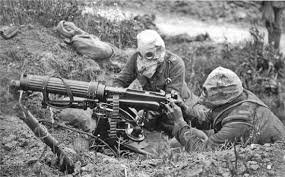
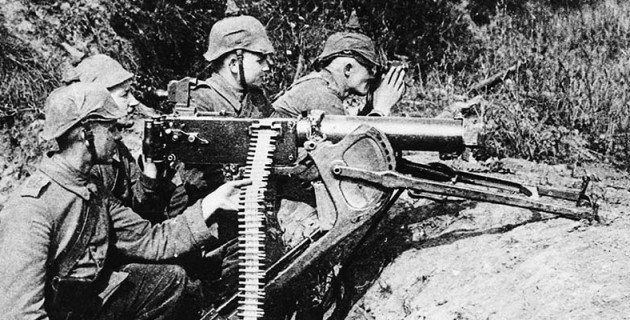
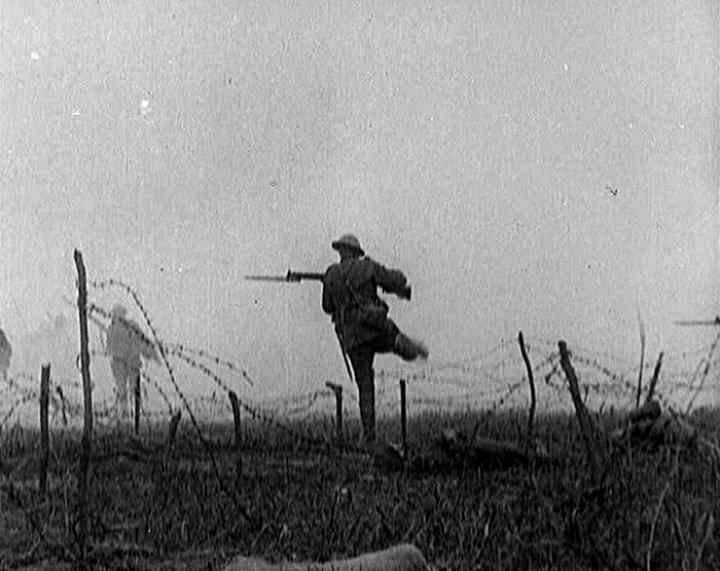
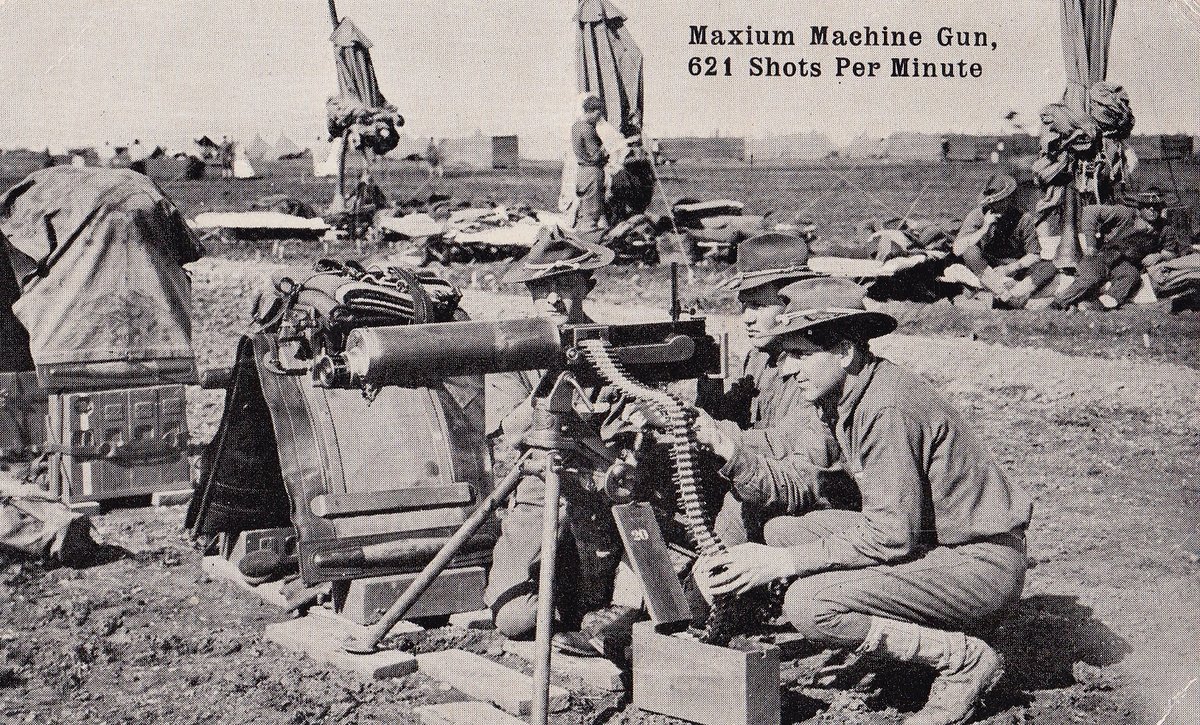
For my paternal grandfather and his fellow British soldiers who fought in the trenches the use of poison gas was probably the most terrifying SP5 Mark Kuzinski.
Yet it was the machine gun which was used in WWI for the first time in a major war was probably second and it's use caused many more causalities. WWI has been known as the "Machine Gun War."
I realize that "historians" will try to figure out what was most terrifying by reading journals and perhaps talking with those who fought especially - French, German, British, Russian, Austrian and Turkish soldiers [if that was done decades ago].
Artillery had been used to devastating effect for centuries and was perfected in the US Civil War as rifled guns were used to a great extent by the wars end.
Trench knives and bayonets with blood gutters had been used for many years
Images: Machine gunners in gas masks; German machine gunners; No Man's Land; Maxim or "Maxium" Machine Gun; World War I became known as the machine gun war
] LTC Stephen C. Capt Seid Waddell Capt Tom Brown CW5 (Join to see) CW5 Charlie Poulton SGM David W. Carr LOM, DMSM MP SGT SFC Joe S. Davis Jr., MSM, DSL SFC William Farrell SSgt Robert Marx SSG James J. Palmer IV aka "JP4" SSgt (Join to see) TSgt Joe C. SGT (Join to see) SGT John " Mac " McConnell SP5 Mark Kuzinski SGT Forrest Stewart SPC (Join to see) SrA Christopher Wright
Yet it was the machine gun which was used in WWI for the first time in a major war was probably second and it's use caused many more causalities. WWI has been known as the "Machine Gun War."
I realize that "historians" will try to figure out what was most terrifying by reading journals and perhaps talking with those who fought especially - French, German, British, Russian, Austrian and Turkish soldiers [if that was done decades ago].
Artillery had been used to devastating effect for centuries and was perfected in the US Civil War as rifled guns were used to a great extent by the wars end.
Trench knives and bayonets with blood gutters had been used for many years
Images: Machine gunners in gas masks; German machine gunners; No Man's Land; Maxim or "Maxium" Machine Gun; World War I became known as the machine gun war
] LTC Stephen C. Capt Seid Waddell Capt Tom Brown CW5 (Join to see) CW5 Charlie Poulton SGM David W. Carr LOM, DMSM MP SGT SFC Joe S. Davis Jr., MSM, DSL SFC William Farrell SSgt Robert Marx SSG James J. Palmer IV aka "JP4" SSgt (Join to see) TSgt Joe C. SGT (Join to see) SGT John " Mac " McConnell SP5 Mark Kuzinski SGT Forrest Stewart SPC (Join to see) SrA Christopher Wright
(2)
(0)
SP5 Mark Kuzinski
Thanks for the added comments. I would not want to be on the receiving end of any of them!
(0)
(0)
2
2
0

1
1
0
1
1
0
I believe large caliber artillery and use of artillery was the most terrifying. Artillery was used on all fronts and all terrain. The terrain around the French forts at Verdun still bares the scares and craters from German artillery used to reduce those forts. The top soil was burned, and could not support the growth of large trees or support agriculture. During battles the craters hampered the maneuver of infantry formations before they made it to the wire obstacles. So attacks on enemy trenches more often that not unsuccessful. Finally, the conditions caused by artillery affected the Germans and the allies equally.
(1)
(0)
1
1
0

Probably poison gas and the machine gun. Gas for obvious reasons and the machine gun because no one had experienced them before and thus were using old tactics against new technology.
(1)
(0)
Read This Next


 Continue with Facebook
 Continue with Google